May 31, 2026 | 23:30 GMT +7
Hotline: 0913.378.918

May 31, 2026 | 23:30 GMT +7
Hotline: 0913.378.918
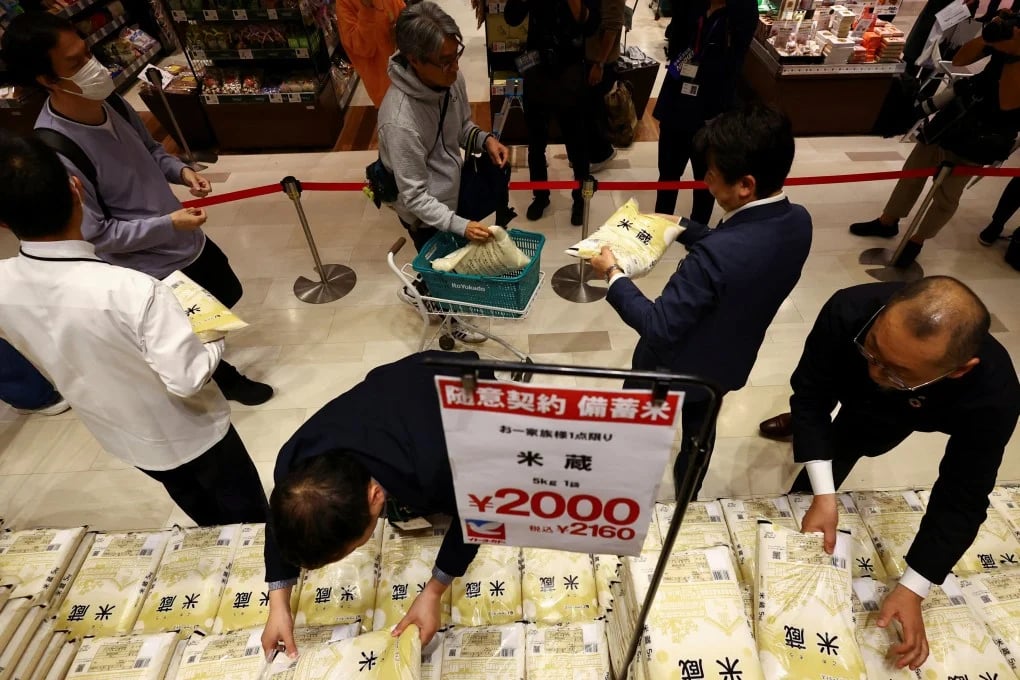
People queue up to buy government-stockpiled rice at an Ito Yokado outlet in Tokyo on Saturday. Photo: SCMP.
Japanese shoppers braved the rain on Saturday morning to secure cheap rice from the government’s stockpiles, as it hit supermarket shelves amid soaring prices for the staple.
Household goods supplier Iris Ohyama began selling the rice, procured through a direct contract with the government, at two of its locations at 9am.
It became the first bricks-and-mortar retailer in the country to release the stockpiled grain, narrowly beating supermarket chain Ito Yokado, which launched sales at its branch in Tokyo’s Ota ward an hour later.
In spite of steady rain, a queue began forming early at the Iris Ohyama store in Matsudo city, according to The Japan Times newspaper. It snaked from the store entrance around the building and into the car park, with about 100 people in line by 6am. Some customers had begun lining up as early as 8pm the previous evening.
Numbered tickets were distributed at 8am, with each person limited to one bag of rice.
The 5kg (11lbs) bags were sold for 2,000 yen (US$14) each before tax – less than half the average price in recent weeks. All of the 65 bags prepared for the day sold out quickly, with many leaving empty-handed.
“We came early because it’s hard to pass up rice at this price,” a woman in her sixties said.
“Of course we’re a little worried about how it’ll taste, but the cheapness matters more than anything. If it doesn’t taste good, we’ll just mix it with ice or cook it with lots of other things. There’s always a way.”
The elderly woman was concerned about taste because the rice was from old stockpiles – which Democratic Party for the People head Yuichiro Tamaki referred to as “animal feed”, drawing backlash from the public.
However, that did not appear to deter consumers. The queues at Iris Ohyama’s physical store reflected its online pre-orders, which sold out just 45 minutes after starting at 1pm on Thursday, according to a report from public broadcaster NHK.
The company received the rice that same day and immediately began milling and packaging the grain. By Friday, the first packages were shipped out, ahead of schedule.
Iris Ohyama had signed a deal through its parent company on Tuesday to buy 9,000 tonnes (9,900 tons) of the government’s stockpiled rice from the 2022 harvest, to be delivered and sold in stages over the next two months.
Ito Yokado secured 4,500 tonnes (5,000 tons) of grain from the same harvest.
The average price of rice at Japanese supermarkets has risen steadily in recent months – hitting a record 4,285 yen per 5kg in mid-May, roughly double last year’s level.
The persistent price surge, which began last summer, has been fuelled by a multitude of factors, including long-standing agricultural policies, record inbound tourism, crop damage and heightened hoarding.
Japan’s National Consumer Affairs Centre said complaints related to scam websites claiming to sell rice at heavily discounted rates had spiked since March.
(SCMP)

(VAN) Vietnamese firms showcased deeply processed farm produce at THAIFEX-Anuga Asia 2026, expanding chances to join the global food supply chain.

(VAN) Following a sharp decline in 2025, Viet Nam’s pepper exports to the United States have rebounded strongly, driving impressive growth in the country’s overall pepper export performance.

(VAN) The Huu Nghi Int'l border gate at Pingxiang stands as China's largest land-based fruit import crossing, widely regarded as the ‘golden channel’ connecting Vietnamese agricultural produce to a market of 1.4 billion consumers.
/2026/05/28/1912-2-175230_122.jpg)
(VAN) The Bac Ninh Provincial People's Committee has pledged to ensure the smoothest administrative procedures, optimize logistics and warehouse infrastructure, and coordinate with Chinese authorities to export Thieu lychees.

(VAN) As China tightens traceability requirements, Viet Nam’s durian industry must shift production practices and strengthen business-farmer linkages.

(VAN) Businesses exporting food products to China are now better supported in navigating registration procedures, as many required documents must be uploaded to the system.

(VAN) Lam Dong’s 2030 aim is to increase the value of 30% of total fruit and vegetable output through deep processing and value chain development.
