December 1, 2025 | 08:57 GMT +7
Hotline: 0913.378.918

December 1, 2025 | 08:57 GMT +7
Hotline: 0913.378.918
In her opening message for Vinamilk's 2024 Sustainability Report, CEO Mai Kieu Lien emphasized, “The moment of transformation is not just a slogan, but it is an affirmation that Vinamilk is ready, proactive, and determined in its green and digital transformation, driven by a sustainable development mindset.” This direction has been materialized through concrete actions and tangible results.
In 2024, Vinamilk continued to maintain carbon neutrality at three of its units, including two factories and one farm. Green energy replaced nearly 89% of fossil fuel use in Vinamilk's production operations. The company also maintained ISO 14064-compliant greenhouse gas measurement at all of its factories nationwide. These are typical results showcasing the effective integration of production, energy, and technology, which is a major lesson that Vinamilk has drawn from its green transition journey, reinforcing its confidence in fulfilling the Net Zero commitment by 2050.
Speaking on the subject, Mr. Le Hoang Minh, Executive Director of Production and Head of Vinamilk’s Net Zero Project, has shared his insights at various forums and conferences on sustainable development, centering on keywords such as “technology,” “AI,” “energy,” “data,” and “transparency.”

Mr. Le Hoang Minh shares about Vinamilk's application of technology for green transition at the Forbes Vietnam's Sustainability Leaders' Summit 2025. Photo: Vinamilk.
When asked about the position of technology in Vinamilk’s green transition, the company representative stated that technology is consistently prioritized across the entire value chain and regarded as a key to accelerating the green transition process.
At factories built over a decade ago, fully automated production lines based on European technology have helped increase productivity by 10–20% while reducing energy consumption proportionately. Smart warehouses, with a storage capacity of 50,000 pallets, not only save 70% of operational energy but also optimize space utilization, occupying just one-sixth of the area required by conventional warehouses.
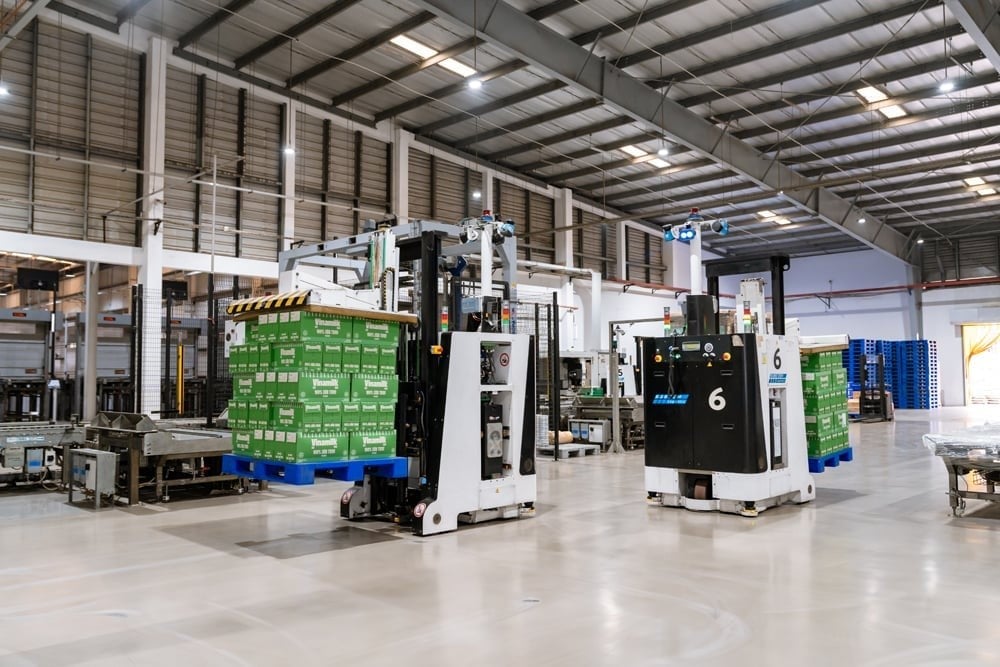
The integration of energy-efficient high technology, robotics, and automation solutions has enabled Vinamilk to improve production efficiency while promoting its green transition. Photo: Vinamilk.
At its farms, Vinamilk applied wastewater treatment technology to generate biogas, which is an effective circular economy model. This not only allows for water reuse in irrigation and organic fertilizer production for crops but also utilizes methane for drying grass, heating water, and pasteurizing milk. The model saves the farm hundreds of millions of VND each month.
Keeping pace with the “age of AI,” Vinamilk has gradually applied it in management, demand forecasting, and production planning optimization. These efforts have helped save raw materials and energy while also lowering production costs, increasing profits, and enhancing competitive advantage.
“We are also gradually applying AI to analyze energy consumption per 1,000 product units based on packaging sizes. This helps us more accurately identify energy consumption patterns across the factory, thereby taking actions to maintain or improve production processes to minimize unnecessary energy waste and enhance energy efficiency,” Mr. Minh shared.
To reduce carbon footprint and move toward Net Zero, energy must be a top priority for all manufacturing businesses from the very first steps. Vinamilk has installed solar power systems at all of its factories and farms. In addition, the company utilizes biomass energy sources, including sawdust and sugarcane bagasse, as well as compressed natural gas (CNG), to replace fossil fuels, thereby significantly reducing carbon emissions. As a result of this transition, 89% of fossil fuel energy used in its factories has been replaced by green energy. This is an impressive figure for the manufacturing sector.
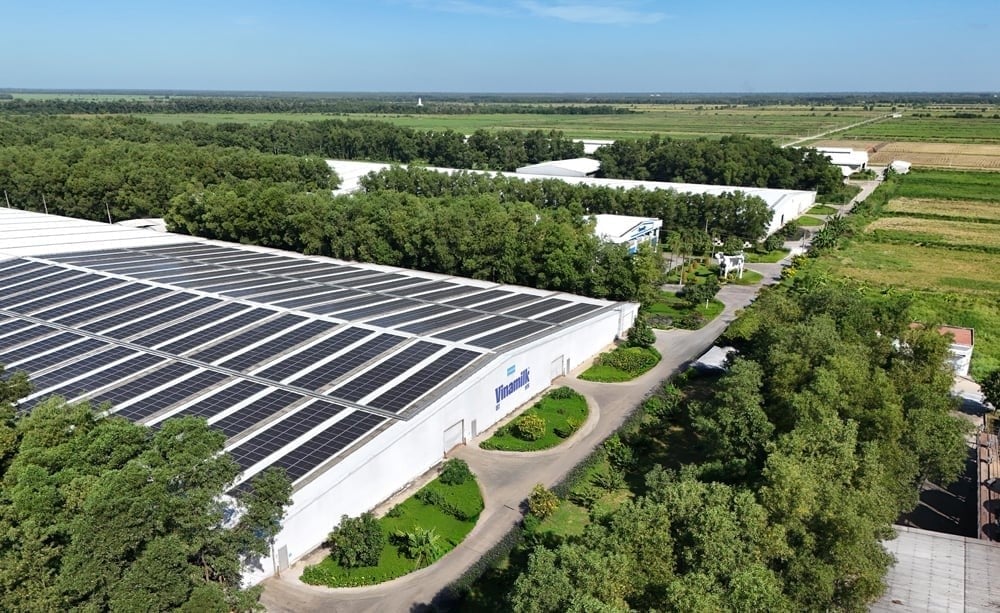
Solar energy now covers Vinamilk's factories and farms, alongside other green energy sources such as biomass, CNG, and biogas, with usage rates continuing to rise. Photo: Vinamilk.
“These applications help reduce production costs. Lower costs lead to lower product prices, increased profits, and enhanced competitiveness. Saving is the simplest and most effective action we can take. Moreover, savings in electricity or packaging can be converted into the amount of reduced CO2e emissions, accelerating our journey to Net Zero,” Mr. Minh noted.
As one of Vietnam’s pioneers in sustainable development, Vinamilk emphasizes that transformation is not just about innovation but also about becoming more transparent and sustainable in practice.
“Beyond solutions related to energy, technology, and the circular economy, green transition also requires building a database that allows us to assess our emissions picture and carbon footprint accurately. This enables us to design a roadmap for emissions reduction and achieve sustainability goals in a transparent and effective manner,” the representative of Vinamilk shared at a conference organized by the Ministry of Agriculture and Environment within the framework of the 2025 P4G Summit.
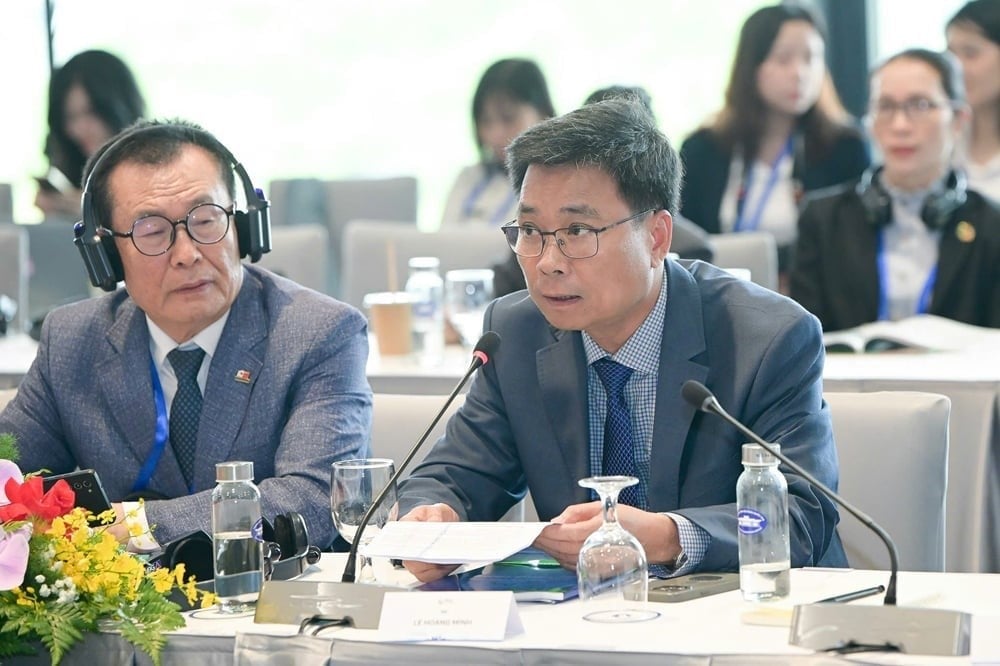
Mr. Le Hoang Minh emphasized the role of ESG data while sharing Vinamilk’s experience in implementing sustainable development. Photo: Vinamilk.
Specifically, Vinamilk is deploying an ESG and greenhouse gas data management software across its entire system, contributing to retrieving data in a timely manner, forecasting trends, and ensuring data integrity and security. This is a crucial step toward building a clear picture of emissions, thereby facilitating a transparent and effective roadmap for emissions reduction. The group's ESG data system also supports real-time and transparent sustainability governance.
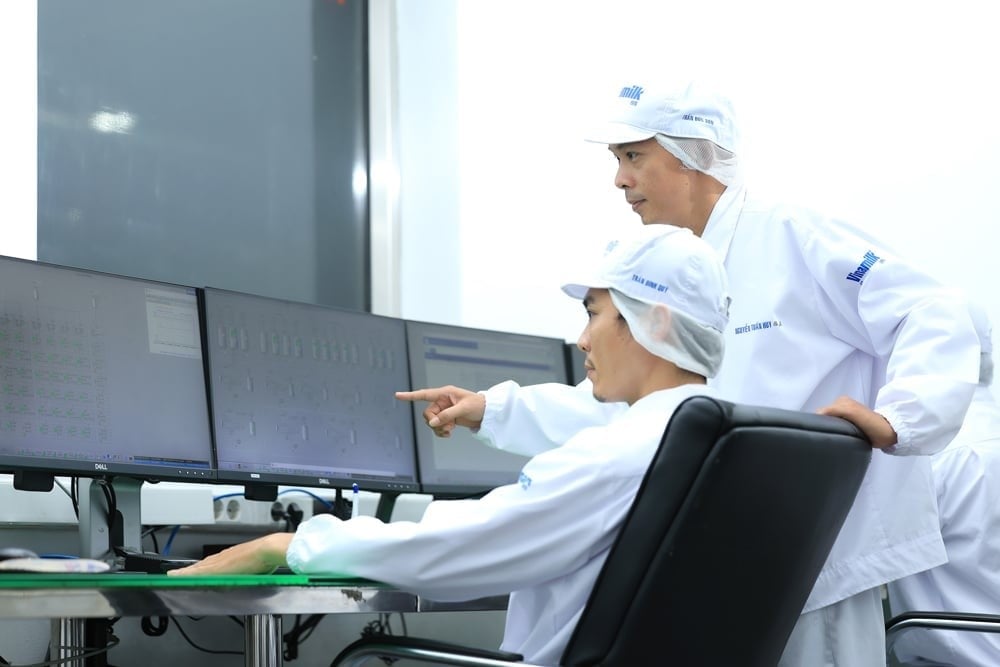
The group's ESG data system also supports real-time and transparent sustainability governance. Photo: Vinamilk.
Drawing from practical experience, the Vinamilk representative also encouraged the application of international sustainable development standards, such as Global GAP and EU Organic for farms, ISO 50001 for energy management, ISO 14064 for greenhouse gas inventories, PAS 2060:2014, and the upcoming ISO 14068 for carbon neutrality certification. These standards not only help businesses implement sustainable development in a more standardized manner but also foster good practices and precedents for the entire industry.
“Vinamilk has begun implementing green production goals aimed at sustainable development since 2010. Over the past nearly 15 years, energy transition, the application of cutting-edge technologies, data integration, and governance aligned with international standards have enabled us to build a unified and sustainable production ecosystem,” Mr. Le Hoang Minh summarized.
Translated by Thu Huyen

(VAN) An increasing number of livestock farms are using biogas generators to create a source of renewable electricity, helping to save costs and mitigate environmental pollution.

(VAN) Small changes in rice cultivation, from irrigation methods and straw collection to input management, are paving a new way for Vietnam's agriculture in the journey toward emission reduction.

(VAN) With the project of converting biogas into renewable electricity, Australia is both helping pig farms reduce their energy costs by up to 25% and contributing to environmental protection.
![Hue aims for Net Zero: [1] Initial steps from green transportation](https://t.ex-cdn.com/nongnghiepmoitruong.vn/608w/files/huytd/2025/11/28/0853-anh-6-giao-thong-xanh-hue-094717_940-153724.jpg)
(VAN) For sustainable development, Hue City is implementing many solutions to promote green transportation, which is an important initial step on the journey to building a Net Zero Hue.

(VAN) Nghe An Province, one of the localities with the largest forest area in Vietnam, is set to gain significant benefits from the implementation of forest carbon credit payments.

(VAN) Circular agriculture helps Mekong Delta farmers cut greenhouse gas emissions while boosting incomes through efficient reuse of agricultural by-products.

(VAN) According to Mr. Vo Minh Thanh, Director of the Tay Ninh Department of Agriculture and Environment, Resolution 57 has created a new development pathway for the locality, shifting from traditional toward modern agriculture.
