December 30, 2025 | 15:30 GMT +7
Hotline: 0913.378.918

December 30, 2025 | 15:30 GMT +7
Hotline: 0913.378.918
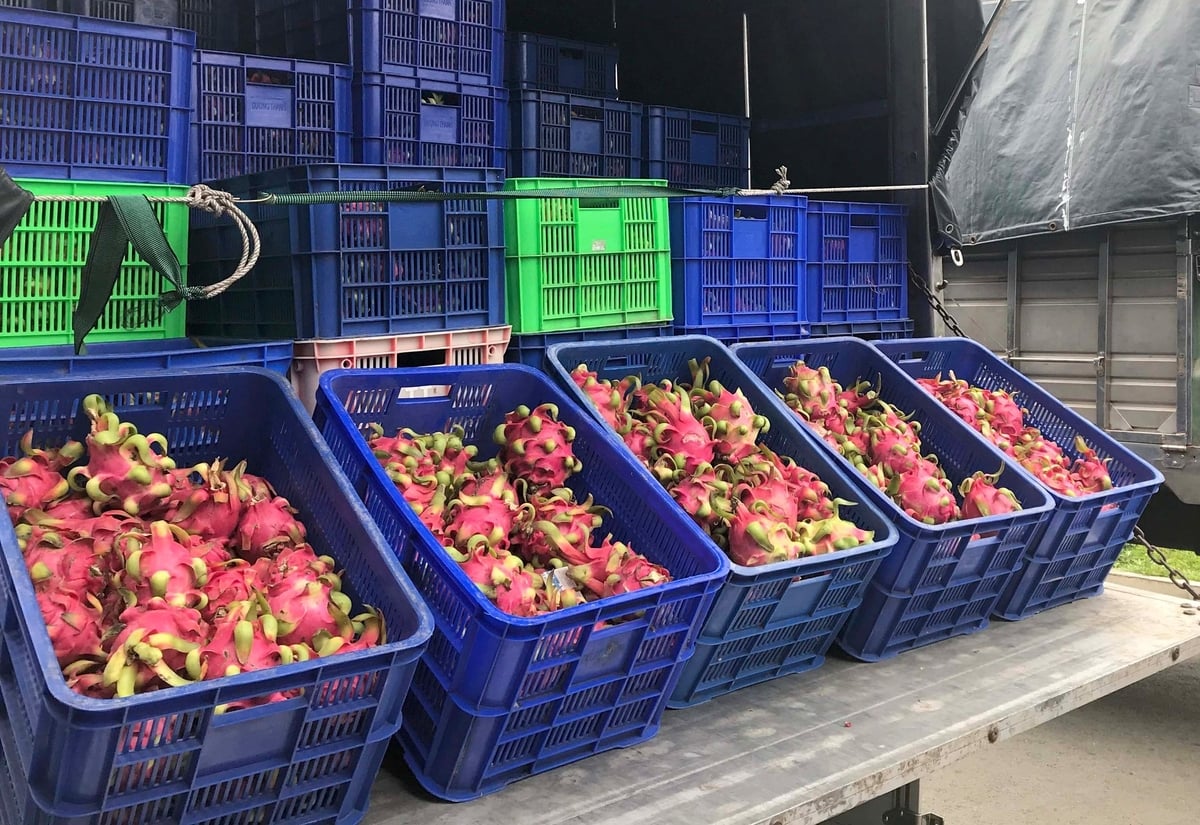
Fruit-importing markets now all have high requirements for quality and food safety. Photo: Minh Sang.
To reduce reliance on the Chinese market, Vietnamese fruits can boost exports to many other destinations. However, for fruits to establish a stable foothold in alternative markets and even within China itself, quality and food safety must always be prioritized.
Market diversification not only helps minimize risks from policy changes in any single country but also opens up new opportunities for Vietnamese agricultural products to access consumer segments with higher demands and a greater willingness to pay for high-quality goods.
Nguyen Thanh Binh, Chairman of the Vietnam Fruit and Vegetable Association, affirmed that in the past, markets were categorized as either demanding or easygoing based on their quality and especially food safety requirements. However, nowadays, every market is considered demanding, with all requiring high-quality and safe products for consumers.
Even the Chinese market, which was once considered “easygoing,” has now tightened its regulations on plant quarantine, traceability, and emphasizes production standards that are clean and sustainable.
Therefore, for Vietnamese fruits to enter any market, the first and foremost requirement is to ensure quality and food safety throughout the entire fruit value chain.
At the same time, fruit production must be reorganized to create products with sufficient scale, uniformity, and consistency in size, shape, and quality. According to Mr. Binh, it is essential to foster collaboration among orchard owners and farms to produce the same type of product with large volumes and consistent quality. This will help the fruit industry gain greater control over high-quality raw materials and make consumption easier.
It is also necessary to improve logistics infrastructure, including cold storage and transportation systems, to maintain product freshness and reduce post-harvest losses during export.
In addition, fruit production needs to accelerate the adoption of new technologies, scientific and technical innovations, and increase levels of automation and mechanization. These improvements can enhance productivity, product quality, and reduce production costs.
The application of new technologies will also help reduce resource use in fruit production and strengthen environmental protection, thereby improving the global image of Vietnamese fruits. According to Mr. Binh, this is a crucial requirement, as all global markets today demand green production and emissions reduction.

Plum season in the Moc Chau plateau, Son La. Photo: Minh Sang.
Moving toward sustainable production certifications such as GlobalG.A.P, VietG.A.P, and Organic not only improves competitiveness but also opens doors to premium markets, where consumers are willing to pay higher prices for agricultural products that are transparent in origin and environmentally friendly.
Developing the fruit processing industry is also a critical solution to help Vietnamese fruits reach further. Mr. Binh noted that China, as a nearby market, is convenient for exporting fresh fruits. However, for more distant markets such as Europe and the United States, relying solely on fresh fruit makes it difficult to export in large quantities due to the short shelf life of fresh produce. Additionally, many markets tend to prefer processed fruits over fresh ones for convenience.
Therefore, it is essential to increase investment in fruit processing to overcome the limitations of fresh fruit while creating a wider range of products to meet the diverse demands of consumers in distant and large markets. The production and export of processed fruit can significantly increase the value of Vietnamese fruit.
Moreover, developing deep processing also helps reduce the long-standing problem of “bumper crop, price drop,” which has persisted in Vietnam’s agricultural sector for many years.
Alongside these efforts, the management, inspection, and supervision by regulatory agencies and local authorities must ensure that businesses and farmers strictly comply with regulations related to fruit exports. Violations should be addressed promptly to deter organizations and individuals who intend to breach regulations concerning planting area codes, plant quarantine, and food safety.
Policies to encourage and support the establishment of internationally standardized planting area codes and packing facilities should be more vigorously implemented to facilitate the deeper integration of Vietnamese fruits into the global supply chain.
In terms of market development, in addition to maximizing the potential of traditional markets, there must be practical policies to develop new markets for fruits in particular and agricultural products in general. Specifically, the government should establish funds to support businesses in activities such as trade promotion and market exploration.
Translated by Huong Giang
/2025/12/29/2812-1-182339_699.jpg)
(VAN) The price of mangrove forest carbon credits is high because this forest type not only delivers significant environmental value but also plays a crucial role in addressing other issues.
/2025/12/29/5840-0-115141_514.jpg)
(VAN) From 2026, many EU markets will require shrimp to be electrically stunned before ice immersion, forcing exporters to change technologies to retain market share.
/2025/12/28/4951-2-104623_113.jpg)
(VAN) Rubber exports are forecast to remain under downward pressure in the coming period, as global rubber consumption shows signs of slowing, according to ANRPC's projections.
/2025/12/28/5120-1-093308_94.jpg)
(VAN) Many agricultural products are of sufficient quality to join global supply chains, yet fail to pass the first gateway when entering international markets due to packaging and information in English.
/2025/12/27/2453-2-172141_426.jpg)
(VAN) The sharp decline in the number of EU warnings in 2025 is regarded as a positive signal for the future orientation of Viet Nam’s agricultural exports.
/2025/12/27/1547-2-220434_536.jpg)
(VAN) For many businesses, exporting is a costly trial. But for those choosing a long-term path, small orders are a way to keep markets and learn the rules.
/2025/12/27/2522-1-090748_662.jpg)
(VAN) The 'Large-Scale Rice Field' project has been implemented in An Giang across a total area of more than 5,582 ha, comprising 73 large-scale fields and attracting the participation of 2,027 farmer households.
