July 21, 2026 | 11:06 GMT +7
Hotline: 0913.378.918

July 21, 2026 | 11:06 GMT +7
Hotline: 0913.378.918
Vietnamese agricultural products are entering an extremely important transition period: from "pilot" cooperation to practical implementation. In the South Korean market, due to climate differences, the agricultural products of the two countries are complementary rather than directly competitive. This is an ideal foundation for expanding sustainable trade.
That potential is clearly demonstrated through telling figures. In 2025, bilateral trade turnover reached 89.5 billion USD, up 9.6% compared to the previous year. Moving into the first quarter of 2026, this figure reached 26.9 billion USD, soaring by 30% over the same period. In that trade structure, although agricultural products still account for a modest proportion, they are the fastest-growing and most dynamic product group, playing an important role in the roadmap toward the target of 150 billion USD in balanced bilateral trade by 2030. This is precisely the time when cooperation steps out of paper reports to transform into physical products, measurable by real value.

Mr. Bui Hai Nam is the Vietnamese Agricultural Counselor to South Korea. Photo: VAN.
Our advantage lies in both traditional commodity groups and high-value niche products. In the current export structure to South Korea, vegetables and fruits rank third, cassava accounts for more than 51% of their import market share, and coffee turnover has reached 117 million USD.
However, the real spearhead drivers for a breakthrough are cinnamon, star anise, and the forestry product group. Viet Nam possesses a cinnamon and star anise raw material zone of over 250.000 hectares, accounting for up to 60-70% of global export volume. With wood and biomass materials like wood chips and pellets, we rank second in the world in exports. This raw material advantage is massive, but to truly break through, it needs to be combined with South Korea's advanced technology for deep processing to create refined products for global export. That is the only way to generate sustainable added value.
Besides, the livestock product group is welcoming highly positive signals: the export market for processed chicken meat has officially opened, and the two countries are accelerating negotiations on exporting high-quality pork.
New doors are continuously opening. The South Korean side is accelerating the import process for lychees and passion fruit from Viet Nam. They are also very interested in and proposing strong cooperation in the field of green bio-agriculture (green bio), while remaining ready to support with experts to help Viet Nam develop winter crops in temperate microclimate regions.
An equally proud signal is that our scientific and technological capacity has been internationally recognized in the reverse direction: Viet Nam has successfully produced three types of African Swine Fever (ASF) vaccines by itself with protection rates reaching 92-99%, and South Korea itself has proactively proposed research cooperation to jointly improve efficiency and commercialize the version for breeding sows. This shows that Vietnamese agriculture is shifting from a passive state to an active mindset, from technology reception to technology co-ownership.

South Korean Agricultural Attaché Kim Hyunwoo surveying a greenhouse within the framework of the "Smart Agriculture for Future Generations" Project funded by the South Korean Government through FAO and implemented in Son La province, May 2025. Photo: Quynh Chi.
The biggest and most persistent bottleneck is the barrier of technical standards. South Korea is implementing the Positive List System (PLS) with strict rules: a default pesticide residue limit of only 0.01 mg/kg for active ingredients without specific regulations. The lesson from early 2024, when a shipment of Vietnamese mangoes was found to have Permethrin residues and had to be completely recalled, is the clearest testament to the price to pay when production control is loose.
Similarly, processed meat exporting enterprises faced the requirement to complete the Import Sanitary Assessment (ISA) before the June 14, 2025 deadline. Just one shipment suspended at the port is not only a financial loss for a single business but also leaves a long-term "scar" on the reputation of the entire industry in the international market.
The issue here is not just technical, it is a matter of mindset. We are compelled to change from the roots: do it for real, do it properly, and do it consistently at every stage of the chain.
The greatest challenge is not technical barriers or tariffs, but the "mismatch" between the speed of high-level negotiations and the actual production capacity of domestic farmers and enterprises. Negotiations can move fast, but if raw material zones are not ready, growing area codes are incomplete, or quality control processes remain loose, then all agreements on paper are merely promises.
A Counselor cannot simply act as a "mailman" - receiving and forwarding documents and then waiting for results. Reality shows that for a shipment to succeed, a systematic "closed-loop coordination" is required: domestically, discipline must be tightened from the growing area to traceability; abroad, the Counselor is both a "pioneer" negotiating to untangle technical bottlenecks and an "antenna" providing early warnings and connecting with local distribution networks; meanwhile, enterprises need the courage and vision to invest in deep processing instead of being satisfied with raw exports.
The presence of the Agricultural Counselor is a "catalyst" to translate paper commitments into practical actions on the ground. We do not merely engage in simple trade; we also act as a bridge to acquire and bring back the advanced knowledge, technology, and management models of our partner country. Connecting Vietnamese localities to directly learn from South Korea's Saemaul Undong model is a prime example, this is not trade cooperation but in-depth development cooperation, helping our New Rural Program move faster and in the right direction.

South Korea is a country rich in experience in high-tech cultivation. Photo: Yonhap.
When managers, agricultural counselors, and enterprises operate in harmony, every shipment that hits the shelves of international supermarkets like Lotte Mart will not just be an export figure. It will be living proof of a Vietnamese agricultural sector that does business decently, reputably, and responsibly with the international community, including commitments to Net-Zero emission reductions.
I expect that the two fronts, domestic and overseas, will coordinate increasingly smoothly and seamlessly. The Ministry of Agriculture and Environment of Viet Nam and the Ministry of Agriculture, Food and Rural Affairs of South Korea (MAFRA) have taken a correct and timely step, creating a mechanism that tightly links information between domestic production and signals from the international market.
The ultimate goal remains building a professional agriculture: opening up for cooperation, learning from global technology to enrich farmers, and elevating the standing of Vietnamese agricultural products. Today's generation no longer has to traverse battlefields, but we are standing shoulder to shoulder on highly competitive "fields of integration". The spirit of solidarity from inside to outside the country is the strategic weapon that no technical barrier can block.
Translated by Ha Chi
![Gia Lai agricultural extension milestones: [1] Bringing red tilapia to Japan](https://t.ex-cdn.com/nongnghiepmoitruong.vn/608w/files/content/2026/07/20/1-094213_494-122051.jpg)
(VAN) In recent years, Gia Lai's agricultural extension service has been connecting businesses with red tilapia farmers to bring this product to Japan.

(VAN) Facing strict environmental demands, China - Viet Nam supply chains must replace fragmented logistics with modern 'green road corridors'.

(VAN) Viet Nam's pepper sector is adopting regenerative agriculture models to reduce greenhouse gas emissions and enhance sustainability.
![Five markets, one strategy: [4] A new game in the US market](https://t.ex-cdn.com/nongnghiepmoitruong.vn/608w/files/chidhctv/2026/07/17/2354-5-thi-truong-1-chien-luoc-bai-4-thong-diep-tu-thi-truong-hoa-ky-180013_702-191039-0916281.jpg)
(VAN) According to Mr.Huy, Agricultural Counselor to the US, opportunities to access this market are reserved for suppliers with the capacity to fully comply.
![Five markets, one strategy: [3] Preparing early for export](https://t.ex-cdn.com/nongnghiepmoitruong.vn/608w/files/chidhctv/2026/07/16/2032-aeon2-15234345-130423_61-141655-0915081.jpg)
(VAN) According to Counselor Vu Cuong, if Vietnamese enterprises actively prepare, they are fully capable of meeting the requirements of the Japanese market.
/2026/07/16/4921-3-114416_964.jpg)
(VAN) Despite its vast fruit-growing areas and export growth, Dong Thap's fruit industry still faces bottlenecks in logistics, value chain linkages, and deep-processing capacity, limiting its ability to expand into international markets.
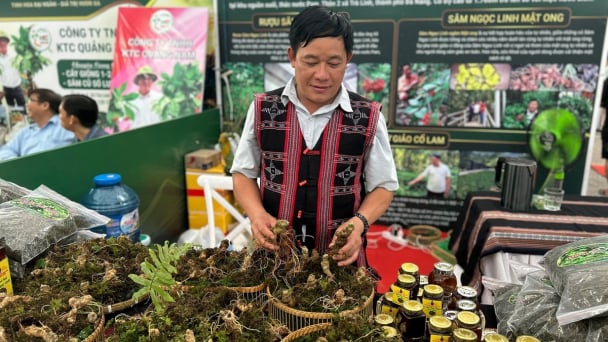
(VAN) Viet Nam's 'national treasure' carries with it the story of its native land while also opening opportunities for Ngoc Linh ginseng to reach a much broader market.
