June 3, 2026 | 16:29 GMT +7
Hotline: 0913.378.918

June 3, 2026 | 16:29 GMT +7
Hotline: 0913.378.918
A desperate plea echoed from the depths of the ocean, not through sound, but through the emotional and dramatic words of a young schoolgirl from Danang, written in a letter addressed to renowned director James Cameron.
The letter was awarded First Prize at the 2025 UPU International Letter-Writing Contest — an annual global competition organized by the Universal Postal Union (UPU), themed: “Imagine you are the ocean. Write a letter to someone explaining why and how they should take good care of you”.
With remarkable imagination, Minh Khue, a schoolgirl from Vietnam, transformed herself into the voice of the ocean, sending a desperate plea to humanity. Her letter resonated deeply with one of the most pressing issues of our time: the ocean teetering on the brink of extinction.
By “borrowing” symbolic elements from renowned films such as Titanic, The Abyss, and Avatar, Khue conveyed a powerful message about cherishing and protecting the ocean, all through a graceful and emotionally resonant letter.
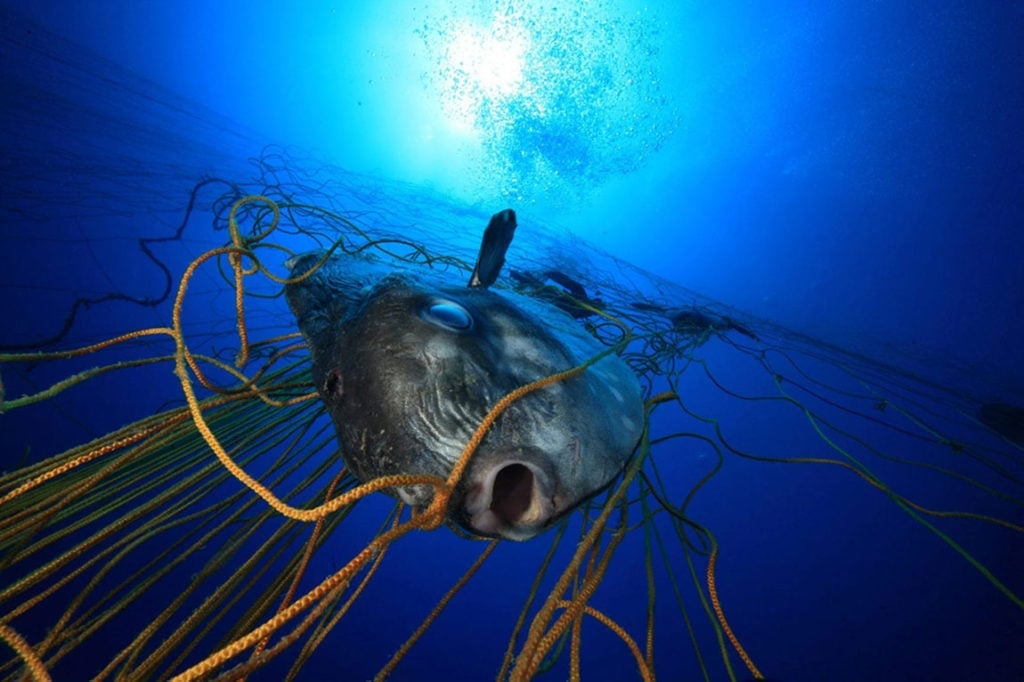
The ocean has been threatened by humans. Illustration photo.
The letter is not merely a reminder of the ocean’s beauty, power, and mystery in the human imagination, it is, more profoundly, a stark warning: “I am being killed. And when I die, it will be the end of the world for humanity”. These words resonate like an alarm bell, striking directly at the core of our collective consciousness — especially among those who still turn a blind eye to the grim realities of plastic pollution, rising sea levels, ocean acidification, overexploitation, and the rapid loss of marine biodiversity.
Minh Khue’s letter is not merely a contest submission, but a powerful affirmation of the right of the younger generation to be heard, those who, though not yet able to “set sail” or step into international conference rooms, possess the creativity and conviction to move the world. The ability of a schoolgirl to create a “film script” that resonates with such depth and critical insight underscores the importance of environmental education. It is clear that this education is not merely a luxury or an extracurricular activity; rather, it is an essential component for fostering a sustainable future.
The ocean, which spans over 70% of the Earth's surface, contains 97% of the planet's water, produces approximately 50% of the oxygen we rely on, plays a crucial role in climate regulation, and supports billions of life forms, including humans. Yet this vast, life-sustaining realm is turning into humanity’s largest dumping ground.
The United Nations Environment Programme (UNEP) reports that more than 11 million tonnes of plastic goes into the ocean annually. This statistic could nearly triple by 2040 without the implementation of urgent solutions. Areas known as “dead zones”, regions severely depleted of oxygen to the point where life cannot be sustained, are on the rise. Coral reefs are experiencing bleaching events. Whales are found to ingest plastic bags, leading to serious health risks. Microplastics have been found to infiltrate fish cells and are also present in the salt that is consumed daily.
Numerous nations, international organizations, and grassroots movements have undertaken significant initiatives: cleaning up beaches, restoring coral reefs, reducing single-use plastic, promoting circular economies, and striving to create a “blue continent.” However, the letter cautions that “All of these efforts are just a drop in the ocean without the united hands of ALL HUMANITY.”
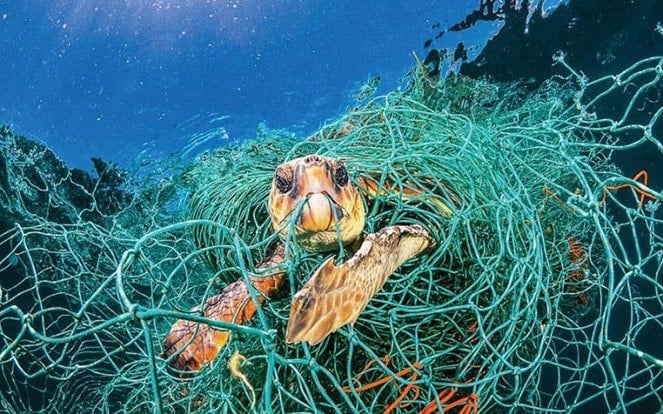
Sea turtles struggle in "ghost" nets discarded from human fishing activitíe. Illustration photo.
The situation is increasingly critical as Southeast Asian waters approach the status of a global “plastic pollution hotspot.” Vietnam boasts a coastline that stretches over 3,260 kilometers, setting the country as a maritime nation. The livelihoods of millions depend on the health of its ocean ecosystems, which support a range of activities including fisheries, marine tourism, shipping, and various spiritual and cultural traditions. If the ocean collapses, so too will our blue economy and food security.
Minh Khue’s letter stands as a powerful reminder that the time for delay has passed. Immediate action is imperative, beginning with simple measures such as staying away from littering in the ocean, opting for eco-friendly products, and participating in coastal clean-up initiatives. Additionally, more extensive solutions are necessary, including investments in waste treatment technology, the expansion of marine protected areas, and the incorporation of ocean education into school curricula from an early age.
It will no longer be “just a fictional letter” if, in the near future, the ocean truly becomes irreversibly damaged. At that moment, the plea will transform into a eulogy. And the film titled “A Plea from the Ocean” could become the last documentary ever made on its behalf.
Minh Khue has done her part — crafting a stirring message to inspire change. Now it is our turn — as adults, policymakers, journalists, educators, and global citizens — to transform that emotion into real, tangible action.
The ocean has made its plea. The moment has arrived for humanity to take action. Efforts to protect the ocean are not solely about preserving marine ecosystems; they are fundamentally about safeguarding our own future.
Translated by Linh Linh

(VAN) Viet Nam presents advantages for developing agricultural tourism including low costs, diverse climate conditions, landscapes, and a tropical agricultural system.

(VAN) Permanent Deputy Prime Minister Pham Gia Tuc, Chairman of the National Committee for APEC 2027, chaired the third meeting of the Committee.

(VAN) To celebrate World Environment Day, Lao Cai residents are exchanging plastic waste and used books for green plants through a community recycling campaign.

(VAN) Local authorities across Hai Phong are rolling out a series of activities to mark World Environment Day 2026 and the Month of Action for the Environment.

(VAN) In the fight against antibiotic resistance, urgent cross-sectoral coordination among health, agriculture and environment is key to protecting communities.

(VAN) Muong Nhe Nature Reserve focuses on conserving biodiversity and developing native plants, while surveying eco-tourism potential to achieve sustainable development linked with forest protection.

(VAN) The 'Resilience First Programme', funded by the Government of Ireland, is helping vulnerable communities in Quang Tri Province strengthen their livelihoods and enhance resilience to climate-related risks.
