July 21, 2026 | 13:13 GMT +7
Hotline: 0913.378.918

July 21, 2026 | 13:13 GMT +7
Hotline: 0913.378.918
On this journey, the Bich Thao Son La Coffee Cooperative stands out as a model that demonstrates how the systematic application of science and technology can consistently increase the value of coffee beans, paving the way toward sustainable development for the locality's flagship industry.
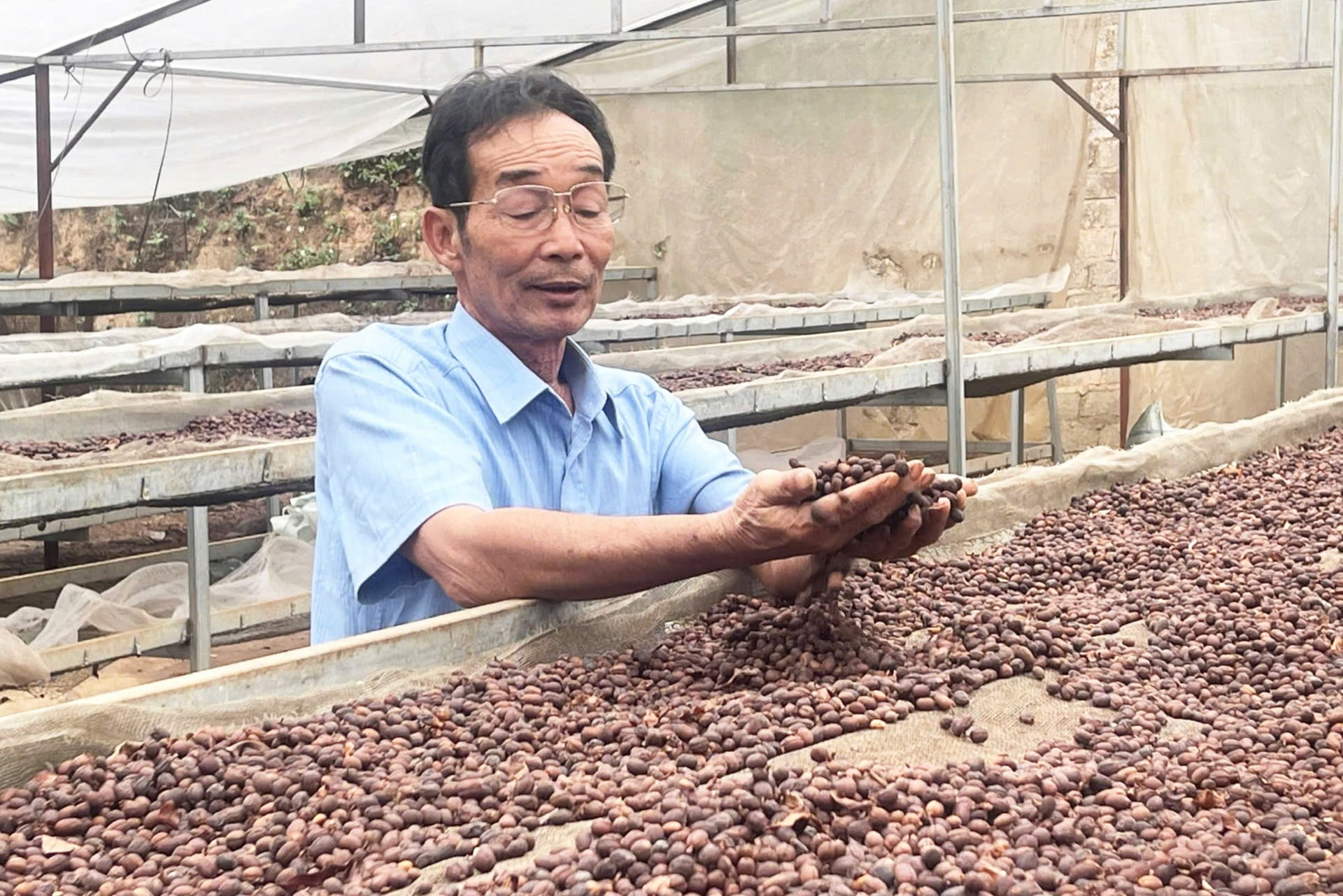
Nguyen Xuan Thao, director of the Bich Thao Coffee Cooperative, checks the quality of coffee beans after preliminary processing in the greenhouse area. Photo: Nguyen Nga.
Established in 2017 with 11 members in Hoang Van Thu village, Hua La commune (now part of Chieng Coi ward, Son La), the Bich Thao Coffee Cooperative was founded with the goal of linking coffee growers and raising the value of local agricultural products through deep processing and brand building.
In its early years, the cooperative's greatest challenge was changing farmers' mindsets and production habits. Growers were accustomed to traditional methods, relied heavily on middlemen, and paid little attention to market requirements.
According to Nguyen Xuan Thao, director of the cooperative, the unit chose not to expand acreage at any cost but instead focused on building a team of farmers with a professional production mindset. Cooperative members receive regular training, gradually shifting from "growing what we have" to "producing what the market needs," and from working by experience to following a unified process.
Having identified science and technology as the key factor across the entire production chain, the cooperative has focused on technical training, applying VietGAP standards, using organic fertilizer, managing pests through an integrated approach, and testing and expanding the high-yield, high-quality THA1 coffee variety. The harvesting process is tightly controlled, requiring the picking of only evenly ripened cherries to ensure the quality of the raw material for processing.
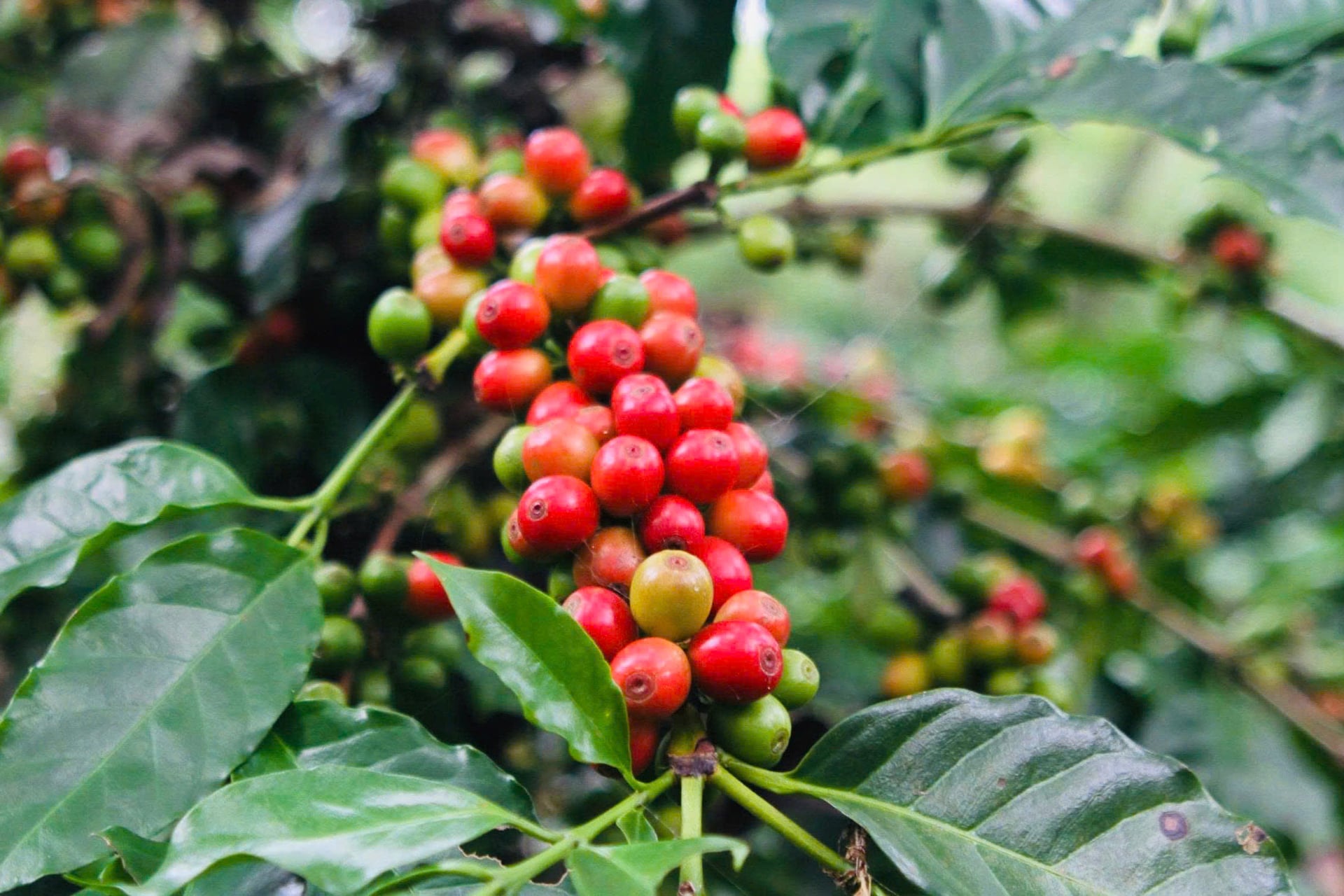
The growing area of the Bich Thao Coffee Cooperative is gradually shifting toward organic production, with strict control over harvesting to ensure coffee bean quality. Photo: Courtesy of the cooperative.
In processing, the cooperative applies dry processing technology that uses no water, combined with the Honey method, which helps preserve the beans' natural flavor, save resources, and reduce waste generation. By-products from processing are reused to make organic fertilizer, forming a closed-loop, circular production process.
Notably, much of the equipment used in preliminary processing and deep processing was researched and improved by the cooperative itself to suit local production conditions. Alongside this, digital technology has been applied to product management and sales through the development of trademarks, packaging, and traceability stamps, as well as the use of digital platforms and e-commerce sites, helping to expand the market for the cooperative's products.
The effectiveness of applying science and technology is clearly reflected in concrete results. The cooperative currently maintains a growing area of about 300 hectares with an annual output of more than 1,500 tons. From its original 11 members, the cooperative has expanded production linkages to around 800 households across nearly 2,000 hectares. The purchase price for ripe coffee cherries is consistently 2,000 to 4,000 VND per kilogram (roughly USD 0.08 to USD 0.16) above the market rate, motivating farmers to shift their production practices toward higher quality.
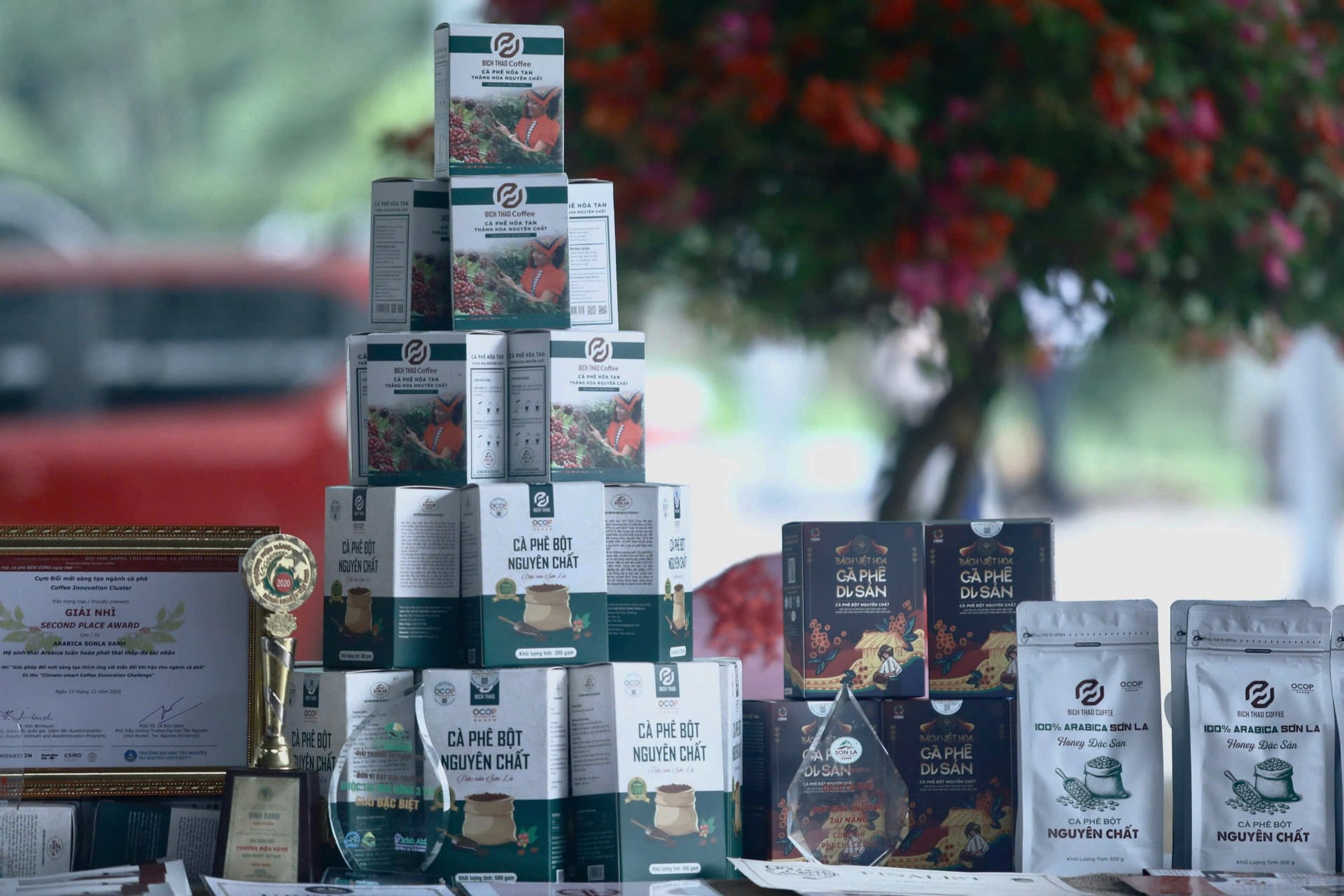
Building on its technology foundation, the Bich Thao Coffee Cooperative has developed a range of high-value, deeply processed products from Arabica coffee. Photo: Courtesy of the cooperative.
Building on this technological foundation, the cooperative has also developed additional deeply processed product lines, including coffee cherry tea, drip-filter coffee, and pure freeze-dried instant coffee. To date, Bich Thao Son La's pure ground coffee has achieved a 5-star OCOP certification, while the coffee cherry tea and pure freeze-dried instant coffee have received 4-star OCOP certification.
In particular, the Honey processing technology combined with greenhouse drying raises product value two to three times higher than conventional preliminary processing methods and has been well received by the market, especially international tourists. Over the past three years, the cooperative's revenue has exceeded 164 billion VND (approximately $6.4 million), creating stable jobs and raising incomes for many local households.
The experience of the Bich Thao Coffee Cooperative shows that applying science and technology is no longer an isolated approach but has become one of the guiding directions for the development of Son La's coffee industry as a whole. As the country's largest Arabica coffee-growing region, Son La has advantages in geographic location and natural conditions for developing high-quality coffee.
Since the late 1980s, Son La has carried out a development program for Arabica coffee trees. Particularly since 2017, a series of mechanisms and policies have been issued to encourage businesses, cooperatives, and farmers to apply science and technology and to build a sustainable coffee value chain.
These policies focus on supporting the adoption of advanced production processes, the application of high technology in water-saving irrigation combined with fertigation, nutrient management using GIS/GPS technology, the development of organic production, and the promotion of linkages between growing areas and processing, consumption, and export.
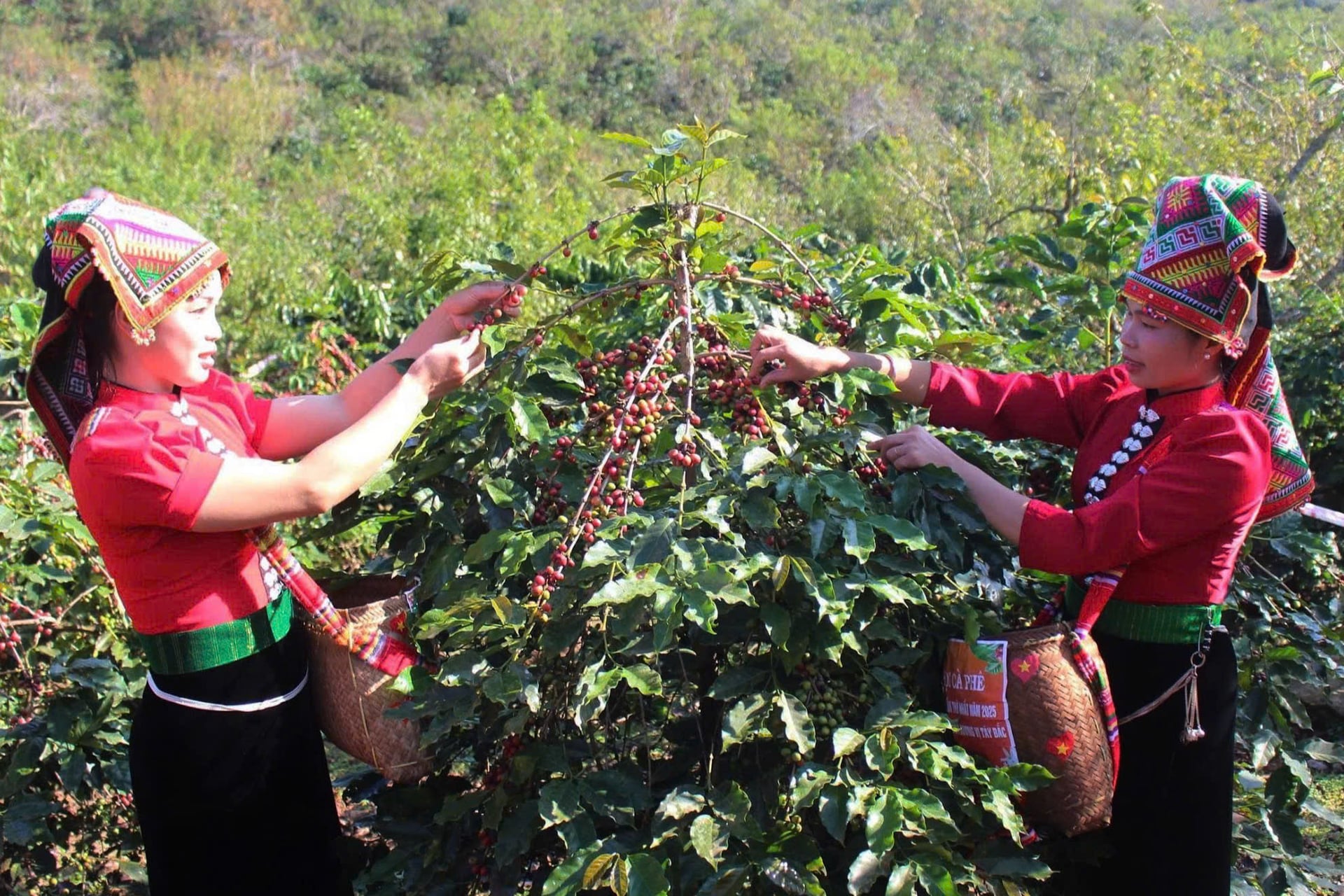
Photo caption: Son La continues to expand its high-quality coffee-growing area and step up the application of science and technology in production and processing to raise the value of Arabica coffee beans. Photo: Courtesy of the cooperative.
To date, the province has more than 33,600 hectares of coffee, of which nearly 20,000 hectares are currently in harvest, yielding more than 37,700 tons of green coffee beans.
Son La has developed 1,120 hectares of specialty coffee, with more than 35,400 hectare-turns certified under sustainability and equivalent standards, and over 543 hectares under organic-oriented production. Two high-tech coffee production zones spanning more than 1,000 hectares have attracted 1,560 participating households, gradually demonstrating the effectiveness of applying science and technology.
Pham Thi Lan, director of the Son La Sub-Department of Cultivation and Plant Protection, said that to develop coffee sustainably, the province is continuing to review growing areas for conversion to specialty and organic coffee production. It is also carrying out replanting and grafting to renovate aging, low-yield areas with new varieties that offer higher yields, better quality, and stronger resistance to pests and diseases.
Alongside this, the province continues to develop growing areas that meet sustainable production standards such as Rainforest Alliance, 4C, GAP, and organic certification. It is also stepping up digitalization in growing areas and strengthening supply chain management and traceability to meet market requirements, particularly the European Union's Deforestation Regulation (EUDR).
Son La aims to have more than 90 percent of its coffee-growing area certified under sustainability and equivalent standards by 2035, to replant around 12,000 hectares, to cut greenhouse gas emissions from cultivation by at least 20 percent compared with the 2020 baseline, and to have more than 90 percent of growing areas digitized with traceability control in place. The province also plans to establish and develop six high-tech coffee production zones, building Son La's coffee industry toward a green, modern, and sustainable future.
$ 1 = VND 26,463 - Source: Vietcombank.
Translated by Linh Linh
![Gia Lai agricultural extension milestones: [1] Bringing red tilapia to Japan](https://t.ex-cdn.com/nongnghiepmoitruong.vn/608w/files/content/2026/07/20/1-094213_494-122051.jpg)
(VAN) In recent years, Gia Lai's agricultural extension service has been connecting businesses with red tilapia farmers to bring this product to Japan.

(VAN) Facing strict environmental demands, China - Viet Nam supply chains must replace fragmented logistics with modern 'green road corridors'.

(VAN) Viet Nam's pepper sector is adopting regenerative agriculture models to reduce greenhouse gas emissions and enhance sustainability.
![Five markets, one strategy: [4] A new game in the US market](https://t.ex-cdn.com/nongnghiepmoitruong.vn/608w/files/chidhctv/2026/07/17/2354-5-thi-truong-1-chien-luoc-bai-4-thong-diep-tu-thi-truong-hoa-ky-180013_702-191039-0916281.jpg)
(VAN) According to Mr.Huy, Agricultural Counselor to the US, opportunities to access this market are reserved for suppliers with the capacity to fully comply.
![Five markets, one strategy: [3] Preparing early for export](https://t.ex-cdn.com/nongnghiepmoitruong.vn/608w/files/chidhctv/2026/07/16/2032-aeon2-15234345-130423_61-141655-0915081.jpg)
(VAN) According to Counselor Vu Cuong, if Vietnamese enterprises actively prepare, they are fully capable of meeting the requirements of the Japanese market.
/2026/07/16/4921-3-114416_964.jpg)
(VAN) Despite its vast fruit-growing areas and export growth, Dong Thap's fruit industry still faces bottlenecks in logistics, value chain linkages, and deep-processing capacity, limiting its ability to expand into international markets.
(VAN) Viet Nam's 'national treasure' carries with it the story of its native land while also opening opportunities for Ngoc Linh ginseng to reach a much broader market.
