December 5, 2025 | 00:11 GMT +7
Hotline: 0913.378.918

December 5, 2025 | 00:11 GMT +7
Hotline: 0913.378.918
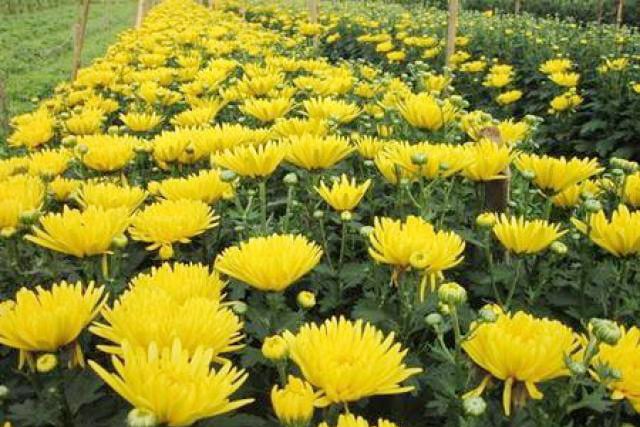
Vietnam's flowers are selling more and more in Japan. Photo: TL.
According to the Import-Export Department (Ministry of Industry and Trade), Vietnam is the sixth largest flower supplier to Japan in January 2022, reaching JPY 352.1 million (equivalent to US$ 2.8 million), up 19.3% compared to January 2021.
In Japan, the number of people from Asian countries currently living and working is up to 10 million people. Also, the number of Vietnamese people has increased rapidly in recent years, estimated at nearly 500,000 people in 2021.
Therefore, imported vegetables and fruits in general and Vietnamese flowers are increasingly widely known, well-received, and consumed by the Japanese, the Vietnamese community, and the people of other Asian countries in the Japanese market.
These are positive signals that show that Vietnamese fruit and vegetable products in general and flower products still have a lot of potentials to increase their market share in the Japanese market in the coming time.
According to statistics from Japan Customs, Japan's flower imports in 2021 reached a turnover of JPY 65.3 billion (equivalent to US$ 528.3 million), up 10.4% over the previous year. 2020.
In January 2022, Japan's flower import turnover reached JPY 4.56 billion (equivalent to US$ 36.9 million), up 16.1% compared to January 2021.
Japan imports flowers mainly from China, Taiwan, Colombia, and Malaysia; the import value from these four markets accounted for 62.4% of Japan's flower imports in January 2022.
Translated by Ha Phuc

(VAN) As of 2025, the ASEAN region has a total of 69 ASEAN Heritage Parks recognized across its 10 member states. Among them, Viet Nam contributes 15 ASEAN Heritage Parks.

(VAN) Yok Don National Park has high biodiversity with numerous endemic plant and animal species, and it is also the only dipterocarp forest ecosystem conservation area in Viet Nam.

(VAN) Viet Nam and Brunei signed two important MOUs on fisheries and IUU, expanding cooperation in agriculture, the environment, and Halal exports, aiming to substantively implement joint projects.

(VAN) The Viet Nam Coconut Association worked with the International Finance Corporation (IFC) and businesses to promote the supply chain, enhance competitiveness, and develop the coconut industry sustainably.
![Hue aims for Net Zero: [2] Pioneering low-emission tourism](https://t.ex-cdn.com/nongnghiepmoitruong.vn/608w/files/huytd/2025/12/04/0633-dulichzero-4-095634_236-161125.jpg)
(VAN) The ancient capital of Hue has developed Net Zero tourism products and models, aiming to reduce carbon emissions and pioneer the establishment of Viet Nam's green tourism destination.

(VAN) C.P. Viet Nam has announced the successful completion of its goal to plant 1.5 million trees during the 2021-2025 period, a key milestone within company's long-term ESG strategy and its roadmap for emission reduction.

(VAN) This is an initiative of MAE aimed at creating a unified coordination mechanism to implement agricultural cooperation programs with developing countries.
