December 20, 2025 | 23:42 GMT +7
Hotline: 0913.378.918

December 20, 2025 | 23:42 GMT +7
Hotline: 0913.378.918
The forum “Vietnam–Japan Public–Private Agricultural Cooperation Dialogue” focused on “Reducing greenhouse gas emissions, minimizing environmental impact, and promoting technology exchange to improve productivity.” Japan’s Ministry of Agriculture, Forestry and Fisheries organized the event, which included senior officials and departmental representatives from both countries as well as nearly 100 enterprises from Vietnam and Japan.
This significant gathering not only commemorates over 50 years of diplomatic relations between the two nations but also marks nearly two years since the upgrade to a “Comprehensive Strategic Partnership,” opening a new chapter for deeper, more effective agricultural cooperation between Vietnam and Japan.
Minister Koizumi Shinjiro expressed his strong belief that the forum would create numerous opportunities for businesses from both countries to strengthen their collaboration in agricultural trade and investment. Such enhanced cooperation is expected to generate tangible benefits for the people, support national development, and further consolidate the Vietnam–Japan comprehensive strategic partnership.
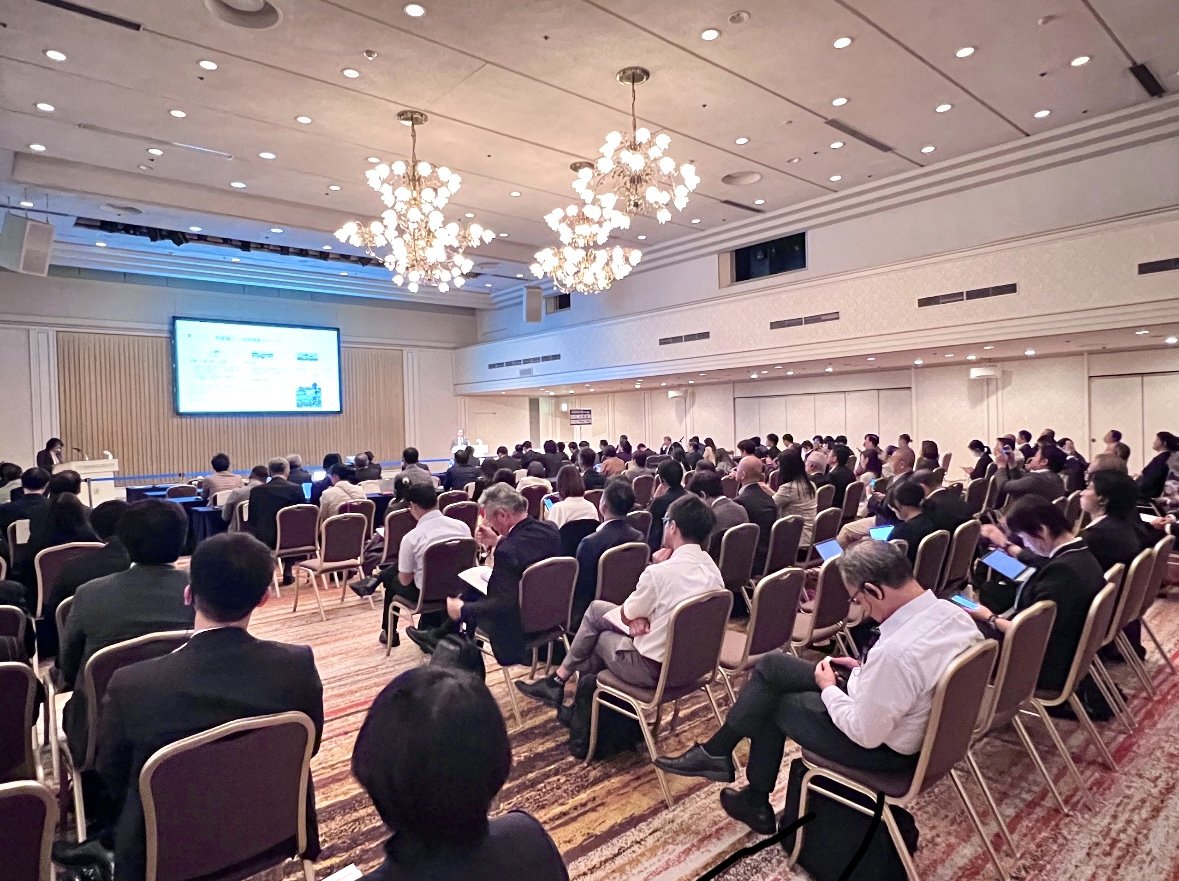
Overview of the “Vietnam–Japan Public–Private Agricultural Cooperation Dialogue” forum. Photo: PAN Group.
In a conversation with Koizumi Shinjiro, Acting Minister of Agriculture and Environment Tran Duc Thang highlighted a famous saying in Japanese culture: “Sit on a stone for three years.” He explained that this proverb reminds us that patience, persistence, and steadfast effort are essential keys to achieving success. Similarly, agricultural cooperation between Vietnam and Japan requires dedication, mutual trust, and joint effort to cultivate it, which will ultimately yield meaningful and lasting results.
Mr. Tran Duc Thang further emphasized that the active participation of the private sector is crucial to driving cooperation and development between the two countries. The governments of Vietnam and Japan are committed to continuing to create supportive mechanisms, enabling businesses, associations, and cooperatives to take the lead in implementing initiatives, fostering innovation, and guiding the market. By empowering the private sector in this way, both countries can ensure that agricultural collaboration is practical, sustainable, and mutually beneficial.
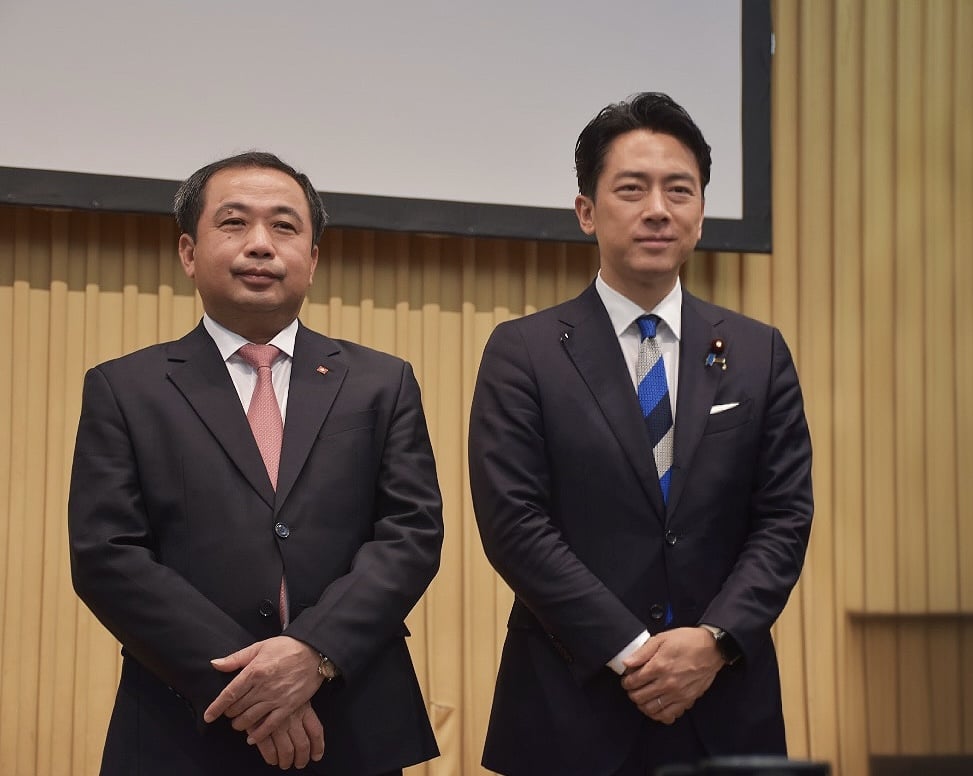
Acting Minister Tran Duc Thang and Japan’s Minister of Agriculture, Forestry and Fisheries Koizumi Shinjiro expressed confidence that agricultural cooperation between the two countries will continue to grow in the coming period. Photo: ICD.
Building on this foundation, he proposed that the two countries work to expand agricultural trade not only in key products such as seafood, tropical fruits, and coffee, but also in emerging areas like organic produce, OCOP-certified products, biologically recycled by-products, and broader agricultural services.
At the same time, efforts should focus on developing sustainable supply chains and strengthening bilateral investment linkages across the entire value chain - from production and processing to distribution - to reduce costs, improve product quality, and meeting stringent international market standards.
Vietnam encourages Japanese enterprises to step up investment in deep processing and to help develop sustainable value chains based on the principles of balanced benefits and shared risks. Both countries also prioritize advancing green agriculture, reducing greenhouse gas emissions, and adapting to climate change.
In addition, they aim to promote innovation, digital transformation, and mechanization throughout the sector, while enhancing the capacity of farmers and small- to medium-sized enterprises through comprehensive training programs, knowledge transfer, and the introduction of new cooperative models. These measures are intended to ensure that bilateral agricultural cooperation is effective, forward-looking, and mutually beneficial.
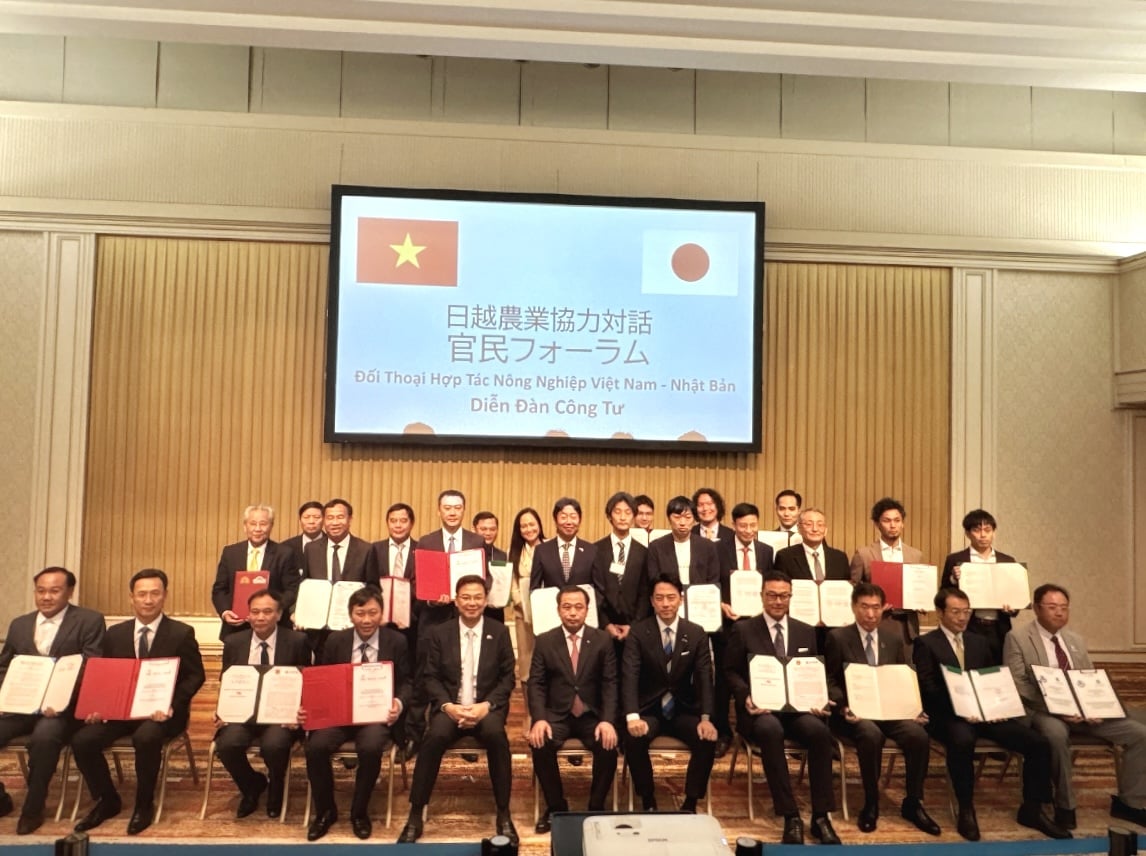
Ten memoranda of understanding on cooperation were announced at the forum. Photo: PAN Group.
In the presence of the two ministers, ten memoranda of understanding in business, trade, and investment were successfully signed. Specifically:
Ministry of Agriculture and Environment (Department of Cooperative Economy) – Sorimachi Company
Sustainable Development Partner (PSAV) – Ministry of Agriculture and Environment (Department of Cooperative Economy) – MUFG Bank – VietinBank
National Agricultural Extension Center – Dong Giao Company (DOVECO) – AEON Top Value
Intimex Group – Kanematsu Group
Trong Khoi Company – Chubu Ecotec Company
Institute of Agricultural Environment – Green Carbon Company
Thanh Thanh Cong Group (TTC) – Itochu Group
Loc Troi Group (LTG) – New Green Company
PAN Group (The PAN Group) – AGRI SMILE – Mitsubishi Research Institute
Lam Son Sugar Corporation – Idemitsu – Agri
These agreements reaffirm the trust and commitment of both sides to agricultural cooperation - a sector that is closely linked to people’s livelihoods, food security, and sustainable development. They also serve as a vivid testament to the soundness and effectiveness of the Medium- to Long-Term Vision for Vietnam–Japan Agricultural Cooperation.
Translated by Phuong Linh

(VAN) Risk assessment in food safety management not only helps protect public health but also promotes sustainable development.

(VAN) Prime Minister chaired the 26th meeting of the National Steering Committee on Illegal, Unreported, and Unregulated (IUU) Fishing.

(VAN) Cuba is currently streamlining procedures to attract investors, with many new policies shaped by the practical experiences of Vietnamese projects operating in the country.

(VAN) Patrol Team No. 15 has been executing patrol, inspection, and control duties in the Southwest waters, a region identified as having a high risk of violations.

(VAN) UNICEF, IOM, and the U.S. Department of State have worked together to ensure the justice system becomes a protective shield for children and other vulnerable groups.

(VAN) As a key driving force of green transition, the circular economy is being identified as a strategic pillar of Viet Nam's new growth model.

(VAN) UNICEF and IOM receive this aid and provide essential services to assist families affected by recent storms and floods.
