December 31, 2025 | 04:23 GMT +7
Hotline: 0913.378.918

December 31, 2025 | 04:23 GMT +7
Hotline: 0913.378.918
On May 20, in Buon Ma Thuot city (Dak Lak province), the “Increasing the Sustainability, Productivity, and Economic Value of Coffee and Black Pepper Farming Systems and Value Chains in the Central Highlands Region of Viet Nam” project (V-SCOPE project) held a meeting to review and share key findings and achievements throughout the project implementation.
Representatives from the Ministry of Agriculture and Environment (MAE), departments and branches of Dak Lak, Dak Nong, and Gia Lai provinces, independent evaluation units and experts, research institutes, universities and centers, enterprises, companies, and domestic and international partners attended the experience-sharing meeting.
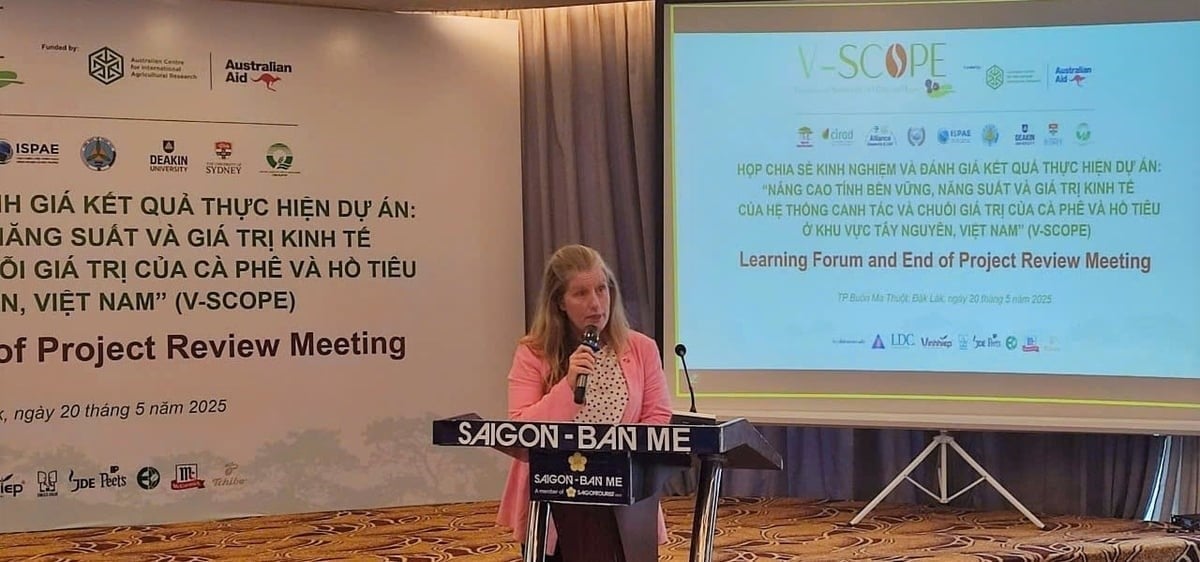
Ms. Monica Finlayson, Agricultural Counselor, speaks at the meeting. Photo: Tran Tho.
The V-SCOPE project aims to improve livelihoods among smallholder farmers and rural communities while managing natural resources, producing agri-food products more sustainably, and fostering more inclusive agri-food market chains through collaboration with the private sector and farmers.
Funded by the Australian Centre for International Agricultural Research (ACIAR), the project is led in implementation by the International Centre for Research in Agroforestry (ICRAF - also known as World Agroforestry) and in collaboration with the French Agricultural Research Centre for International Development (CIRAD), which also provides personnel to the project.
During the meeting, delegates listened and engaged in discussions with a dynamic and forward-looking perspective on numerous topics related to the V-SCOPE project, from sustainable development potential, soil health, market transformation, and quality prospects to lessons learned from farmers' and communities' practices, pathways to sustainable development, livelihood diversity, and transformative journeys.
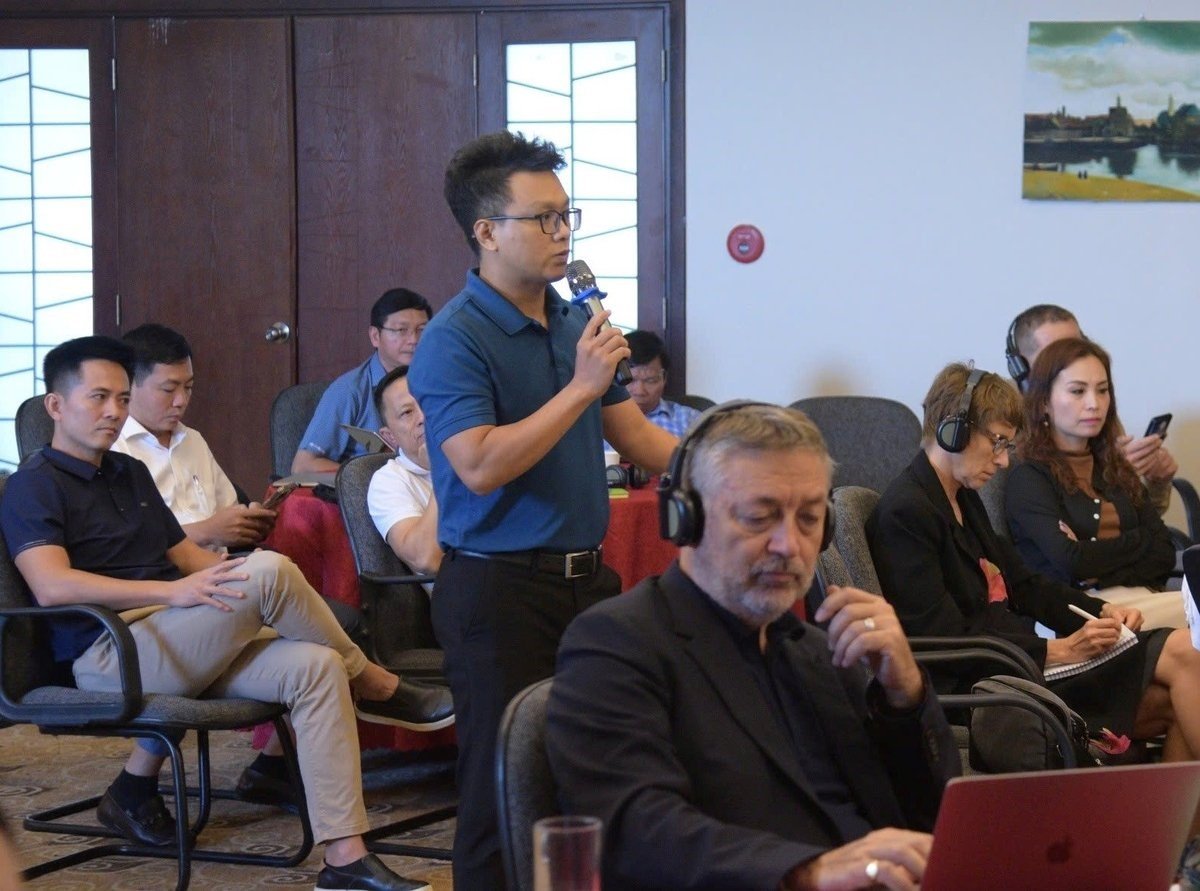
Delegates share insights on the V-SCOPE project at the meeting. Photo: Tran Tho.
Delegates also discussed landscape-level approaches and management methods while listening to feedback from relevant stakeholders. The experience-sharing meeting received support from the Central Highlands Innovation Forum, funded by the Aus4Innovation program.
Ms. Nguyen Thi Thanh An, Country Manager of ACIAR in Vietnam, said, “The agricultural research cooperation under the ACIAR Viet Nam Program brings together international, Australian, and Vietnamese scientists to develop science-based and practical solutions that work for farmers and policymakers. The V-SCOPE project is a strong example of this approach. It provides solution options to smallholder farmers, strengthens value chains, and fosters inclusive, sustainable rural transformation through research.”
Since 2021, the V-SCOPE project has implemented activities in soil health, agricultural economics, farming systems, and landscape planning and management, achieving numerous valuable findings and results.
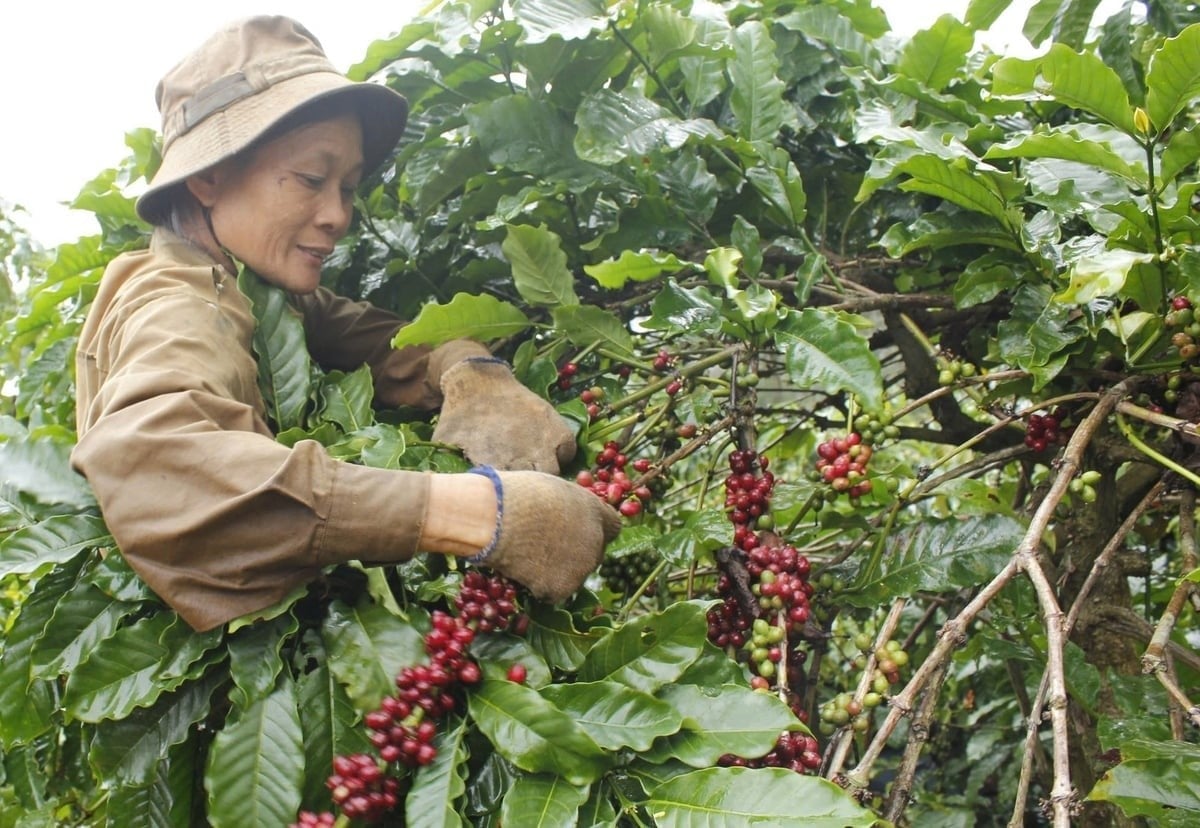
V-SCOPE helps improve livelihoods for smallholder farmers and rural communities. Photo: Tran Tho.
The V-SCOPE project has made direct contributions to three of the six pillars of the Comprehensive Strategic Partnership between Vietnam and Australia. These include enhancing economic engagement; strengthening cooperation on climate, environment, and energy; and supporting science, technology, innovation, and digital transformation.
Ms. Gillian Bird, Australian Ambassador to Vietnam, affirmed, “The Australia–Vietnam Comprehensive Strategic Partnership is deepening our collaboration across key areas that matter to both our nations. Agricultural research cooperation, led by ACIAR, is a powerful example of this. Through ACIAR, Australia proudly partners with Viet Nam to advance innovation in agriculture and rural development, supporting smallholder farmers, improving livelihoods, and building resilience for a more sustainable future.”
Implemented during the 2021–2025 period, the V-SCOPE project has delivered some key findings and results, including identifying major soil-borne pests and diseases as well as the most effective bioinoculants, which have been proven under greenhouse conditions, and providing understanding on crop diversification to improve agronomic performance and farmer livelihoods, supporting better resilience against price volatility as well as reduced labor peaks during harvest time.
At the same time, the project aims to build irrigation guidelines for coffee, which will help enhance water-use efficiency. It also plans to develop methods to reduce chemical fertilizer use and improve soil health. In addition, V-SCOPE has assessed landscape approaches toward sustainability, enhanced the forecast for climate change impact in the Central Highlands, and fostered partnerships with the private sector, including cooperatives, to support the development of high-quality coffee.
With its research findings, the V-SCOPE project is contributing to livelihood improvement for smallholder farmers and more sustainable agri-food systems in the Central Highlands. As part of Australia’s broader cooperation with Vietnam, V-SCOPE exemplifies how agricultural research can support inclusive rural transformation and strengthen the foundation for long-term, strategic partnership between the two nations.
Translated by Thu Huyen

(VAN) From extensive shrimp ponds, baskets of don gathered on the mudflats, to boats carrying visitors to watch birds, all livelihoods here depend on clean water, green forests, and the calls of migratory birds.
/2025/12/26/0703-3-204813_117.jpg)
(VAN) Transparency in information and listening to local people have helped address ground clearance bottlenecks and build social consensus, thereby accelerating the progress of the JICA3 irrigation project.
/2025/12/27/0609-3-233846_327.jpg)
(VAN) The JICA3 project is expected to become a 'water shield,' helping control saltwater intrusion, proactively secure water resources, protect livelihoods, and promote sustainable development in coastal areas.
/2025/12/26/5654-3-164509_655.jpg)
(VAN) As Viet Nam makes strong commitments toward achieving net-zero emissions, controlling and reducing methane emissions in livestock production is increasingly becoming a mandatory requirement.

(VAN) 'People, Primates, Plants: Co-managing Biodiversity and Improving Livelihoods in Vietnam' (the PPP Project) is an international initiative implemented in Vietnam by BGCI, CEGORN, and ICRAF/World Agroforestry.

(VAN) Dak Nong established a risk-level zoning map for coffee, built a digital data platform for the sector, and promoted certified production in line with EUDR.
/2025/12/25/2709-1-211551_295.jpg)
(VAN) In response to the U.S. Marine Mammal Protection Act (MMPA), Gia Lai province is implementing many solutions to protect marine mammals and develop sustainable, responsible fisheries.
