December 18, 2025 | 12:33 GMT +7
Hotline: 0913.378.918

December 18, 2025 | 12:33 GMT +7
Hotline: 0913.378.918
“Working in agriculture means accepting setbacks, like ‘banging your head against a rock,’” Nguyen Khac Hoang says of his more than 20 years pursuing sustainable farming. “What matters is whether you’re tough enough to get through them.”
A graduate of the Vietnam National University of Agriculture, Hoang once worked at the former Vinh Phuc Sub-Department of Plant Production and Protection. Driven by a passion for green agriculture and emissions reduction, he left the state system to start Van Hoi Xanh Clean Vegetables Cooperative, supplying safe produce to schools and industrial kitchens in the region.
His connection with Cuba came almost by chance. On a trip through South America with friends, when everyone else wrapped up and headed home, Hoang took a solo flight from Venezuela to Cuba. He wanted to feel for himself a land he had only read about in books and newspapers. There, he saw the “promised land” he had been searching for. Resolute in his plan to lease 1,000 hectares of farmland and develop agriculture for the island nation, he founded the Viet Minh-Cuba Joint Stock Company (VIMICUBA).
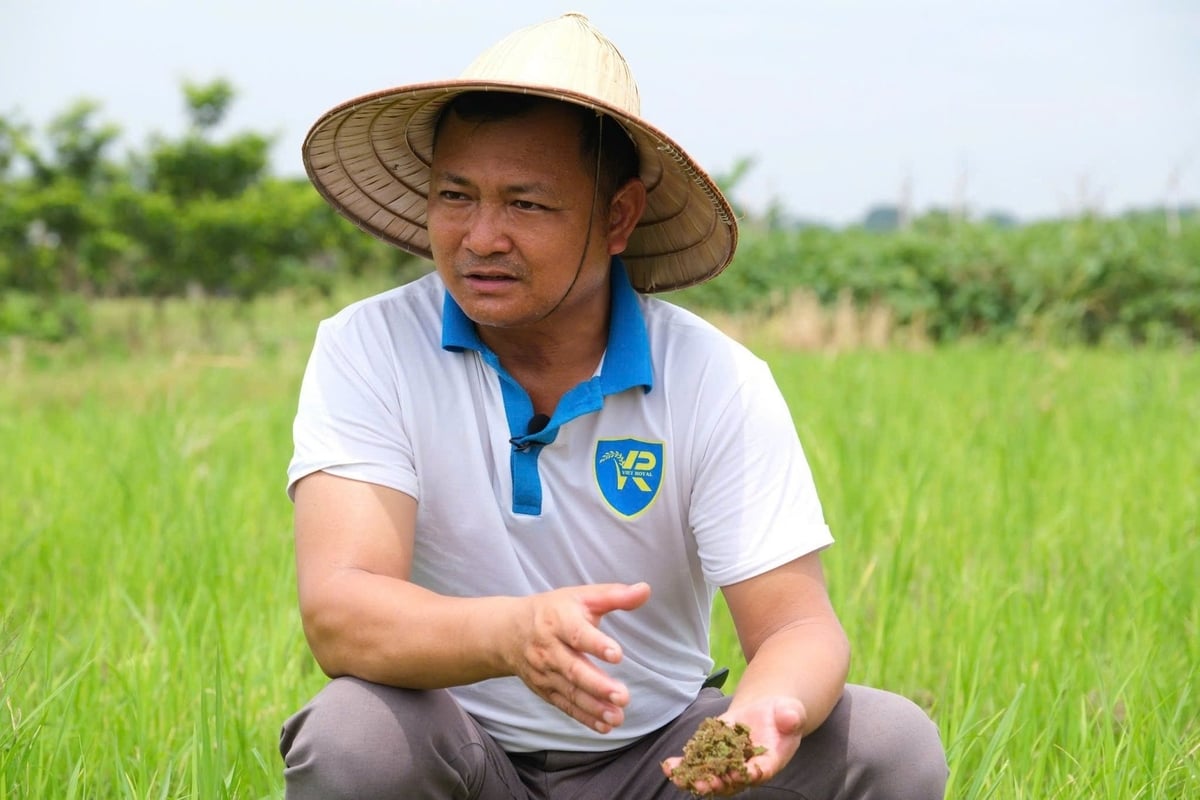
Nguyen Khac Hoang is an intellectual farmer with a dream of reviving azolla. Photo: Quynh Chi.
In September 2024, during General Secretary To Lam’s state visit to Cuba, the two countries signed a cooperation agreement on rice production. The Ministry of Agriculture and Rural Development (now the Ministry of Agriculture and Environment) was assigned to lead the cooperation program, with the goal of helping Cuba secure food security in the 2025–2027 period. This high-level commitment opened the door for entrepreneurs like Hoang to pilot new models.
Vietnam-Cuba relations were forged in the hardest years for both nations. Since diplomatic ties were established in 1960, Cuba has been the first and most steadfast supporter of Vietnam in Latin America during the struggle for independence and reunification. Fidel Castro’s famous declaration, “For Vietnam, Cuba is prepared to shed its own blood,” has become a lasting symbol of solidarity.
Today, Hoang’s ambition to “sow” Vietnamese green-agriculture know-how on Cuban soil is a new piece in the 60-plus-year story linking the two countries.
To him, the name “Viet Minh” not only evokes the revolutionary spirit of the early days, it also reflects the guerrilla strategy he believes fits small and medium-sized enterprises. “Guerrilla investment,” in his words, means going into market niches, splitting capital into smaller tranches to reduce risk.
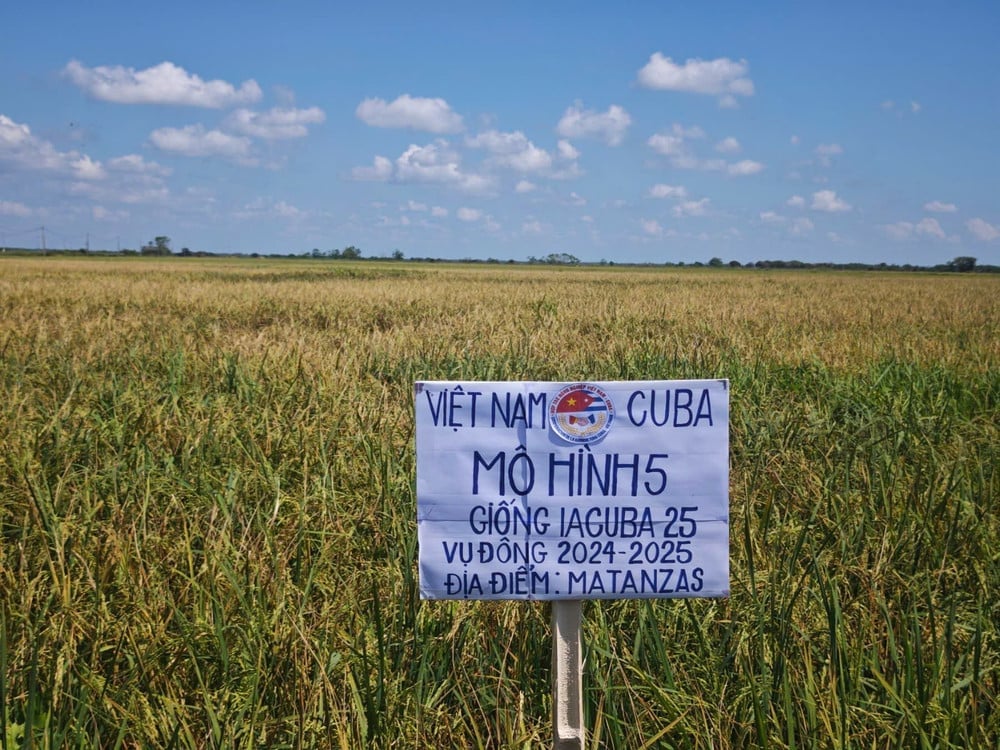
The rice production cooperation project has become a vivid symbol of Vietnam-Cuba friendship. Photo: Embassy of Vietnam in Cuba.
Vietnam is a land of limited arable area and high population density, where access to production land often requires large financial trade-offs. Cuba, by contrast, has flat, fertile, largely untouched land. Hoang sees it as ideal for developing food crops and short-cycle industrial crops.
But the promised land comes with serious challenges. Cuba lacks basic inputs: even screws, electrical cables, or pump nozzles can be hard to find. Transport is difficult, language is a barrier, and economic policy still has many bottlenecks.
Yet these constraints are offset, in his view, by the sincerity and warmth he has felt, from the Cuban Government and the Vietnamese Embassy to local authorities and the Vietnamese business community on the island. Recognizing a rare opportunity, Hoang did not hesitate to commit to a sustainable model on the far side of the globe.
When he took over the 1,000 hectares, Hoang did not rush into commercial planting. Instead, he started with something that seems simple but is deeply strategic: reviving azolla, an aquatic fern traditionally used as green manure. On the first 100-200 hectares, he plans to plow, flood the fields, and then release native strains of beo.
For nearly two years, he has tried to restore azolla on his fields in Vietnam, without success. In the delta, irrigation water is often contaminated with pesticide residues, causing the fern to die off quickly and produce very little biomass. In Cuba, he found a local strain capable of withstanding temperatures above 40°C and growing year-round. He sees it as a “lifeline” for the sustainable agriculture model he has long pursued.
To Hoang, azolla is more than a technical solution. It connects him to a historic period stretching from the resistance against the French to the liberation of the South, when the entire nation rallied behind the front lines.
During those difficult years, Vietnamese farmers relied on collectivization, irrigation expansion, mechanization, and, crucially, on azolla as green manure. Thanks to its natural nitrogen-fixing ability, the fern helped trigger a quiet revolution in Asian wet rice cultivation: when fields are flooded, beo thrives and absorbs nitrogen; when fields are drained, the fern dies and decomposes, releasing rich nutrients back into the soil for rice plants.
Hoang also views azolla through a modern scientific lens. He has studied research showing that this small floating plant can absorb CO₂ at a rate several times higher than ordinary trees. Combined with mechanization and precise water management, a rice-growing model incorporating azolla could drastically cut greenhouse gas emissions from paddy fields.
Following this Vietnamese farmer, azolla now takes on a new mission: standing with the Cuban people in their fight against climate change.
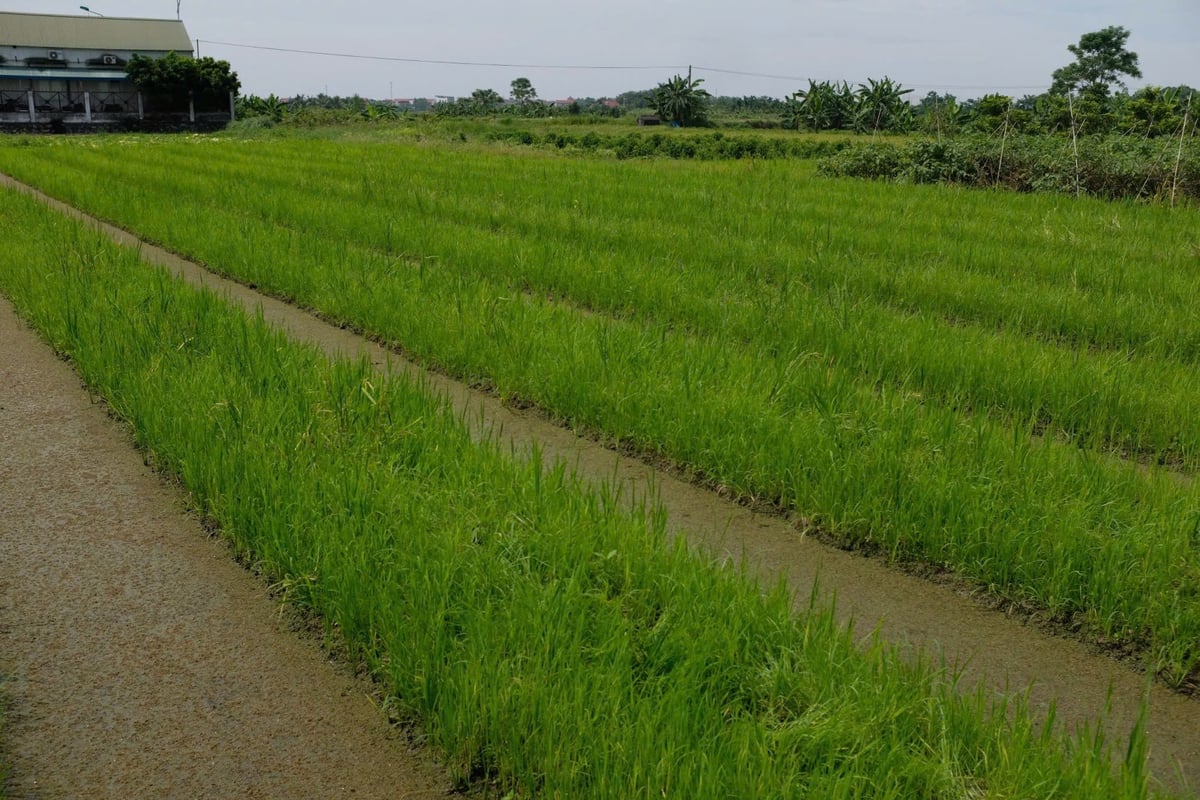
Hoang’s model of using azolla as green manure for vegetables and rice at Van Hoi Xanh Cooperative. Photo: Quynh Chi.
On the technical side, Hoang plans full mechanization from land preparation and seeding to spraying and harvesting. In particular, he is working with businesses in the Mekong Delta to finalize a “three-in-one” machine that can cluster-sow seeds, apply deep-placed fertilizer pellets, and spray pre-emergent herbicide in a single pass.
By his calculations, this technology could reduce fertilizer use by up to 30%, with only one application of chemical fertilizer needed for the entire crop.
He also believes that dividing fields into smaller plots will make water control easier and production management more efficient. Vietnamese pure-line rice varieties will be prioritized for trials in Cuba, as they adapt well to diverse climates and are nutritionally rich. For inputs like fertilizers, he is exploring supply from countries near Cuba to cut transport costs, while gradually building a local fertilizer production base.
On distant Cuban soil, Hoang is, in a sense, “reviving” the culture of wet rice that once sustained Vietnam. Azolla has become a symbol of the Viet Minh spirit: patient, inventive, turning something small into a source of great strength. It is his chosen way to plant the first green shoots on this new promised land.
Translated by Linh Linh
/2025/12/16/3554-1-192458_116.jpg)
(VAN) Minister Tran Duc Thang held a working session with the Viet Nam Seaculture Association to discuss solutions for developing marine farming in a methodical, industrial, sustainable, and well-organized manner.

(VAN) Trading forest carbon credits is to reduce greenhouse gas emissions while creating sustainable livelihoods for local communities.

(VAN) Expanding the area of forests with FSC certification creates a foundation for elevating the economic value of forests, promoting sustainable management, and offering opportunities to participate in the carbon credit market.

(VAN) MAE and GIZ organized the conference to strengthening capacity and readiness for EUDR implementation in Vietnam.

(VAN) When women, men, children, and people with disabilities all have the opportunity to maximize their potential, the economy will grow, and the country will prosper.

(VAN) Effective disaster prevention and the creation of sustainable livelihoods through practical forestry policies are the distinct and crucial values of special-use and protection forests.

(VAN) The policy movement regarding carbon emission reduction is opening up a new approach, linking national goals with practical agricultural production.
