July 21, 2026 | 21:41 GMT +7
Hotline: 0913.378.918

July 21, 2026 | 21:41 GMT +7
Hotline: 0913.378.918
After the merger, Thai Nguyen Province has more than 585,000 hectares of forestry land. Developing the forest economy in a sustainable manner, linked to improving land-use efficiency and environmental protection in line with the function of each forest type, continues to be a key orientation for the locality.

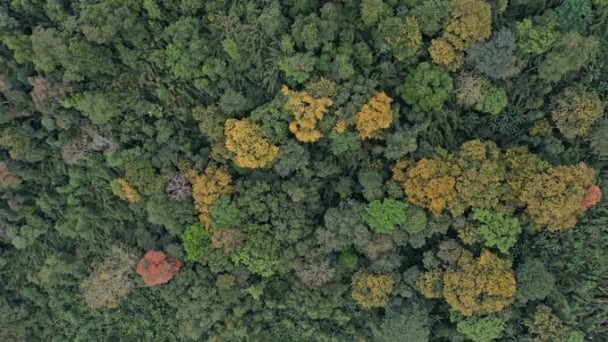
Expanding the area of forests certified under the FSC scheme is one of the practical solutions for sustainable forest economic development. Photo: Quang Linh.
Recognizing its inherent potential and the opportunities presented by the carbon market, the Yen Trach Commune People's Committee has identified the development of FSC-certified forests as a central mission to enhance forestry value, foster sustainable economic development, and protect the environment.
Yen Trach commune was established by merging the administrative units of three former communes: Yen Trach, Yen Ninh, and Yen Do. Following the reorganization, Yen Trach has a total forest area of nearly 6,500 hectares, with over 4,100 hectares already granted FSC certification (accounting for 64.64% of the total forest area).
For the 2026-2030 period, the commune aims to expand the FSC-protected forest area to 4,800-5,200 hectares, maintain a stable forest cover rate of 50-52%, and align FSC forest development with the value chains for timber products, non-timber forest products, and forest environmental services.
Crucially, maintaining and expanding the FSC forest area creates the foundation for the commune to participate in the carbon credit market. This aligns with the Government's policy to develop a domestic carbon market during 2025-2030. This strategic direction will be key to helping the locality not only increase the economic value derived from forests but also tap into a new revenue stream, thereby raising local incomes, promoting sustainable forest management, and contributing to the national goal of reducing greenhouse gas emissions.

Mr. Nguyen Van Hoang’s family hopes to receive support to develop FSC-certified forests. Photo: Quang Linh.
The family of Mr. Nguyen Van Hoang (Yen Trach commune) manages nearly 1 hectare of forest. Previously, cultivation was primarily driven by habit, and economic efficiency was low. In recent years, guided by commune officials and Forest Protection Unit No. 13 (under the Thai Nguyen Forest Protection Department), Mr. Hoang began managing his forest using a more systematic process, paying close attention to soil preparation, seed selection, thinning, and pest and disease control. Consequently, his forest productivity has stabilized, his income has markedly improved, and his family's living conditions have gradually improved.
"Currently, I am researching how to manage my forest according to FSC standards. Although there are many strict requirements initially, I believe that if implemented correctly, timber value will be higher, the output market will be more favorable, and the environment will be better protected. My family sees sustainable forest development as a long-term path that provides stable income while helping to green our hometown of Yen Trach," he stated.
According to Ms. Nguyen Thu Huong, Chairwoman of the Yen Trach Commune People's Committee, to effectively carry out the management, protection, and development of forests in the area, the Commune People's Committee has been coordinating with Forest Protection Unit No. 13 to regularly organize training sessions and provide guidance to commune and hamlet officials, and the local community on forest management, fire prevention and fighting, forest allocation, forest leasing, changing forest land use purposes, and managing forestry records. They also provide technical consultation support for expanding the area of FSC-certified forests and linking it with carbon credits.

Forest development helps green barren hills and mitigate environmental pollution. Photo: Quang Linh.
"The Commune People's Committee is coordinating with the Forest Protection force to provide data on forest changes, forestry maps, and forest fire risk warnings so that the commune can be proactive in management, coordinate updates, and confirm commune-level forest inventory records.
Concurrently, we are implementing programs and projects in sustainable forestry development, forest environmental services, and carbon credit initiatives. We are mobilizing and guiding the local community and households to participate in the management, protection, and development of forests," she added.
Mr. Nguyen Duc Tu, Head of Forest Protection Station No. 13, evaluated the impact: "Granting FSC forest certification is an important basis for businesses to qualify for exporting timber products to markets such as Europe, South Korea, and Japan. For individuals, businesses, cooperatives, and forestry organizations, this certification raises awareness about sustainable development, environmental protection consciousness, and the economic value derived from forests."
With the inherent potential and strengths in forest resources, obtaining FSC certification not only aids in sustainable forest management but also enhances economic efficiency for the community. Simultaneously, it creates opportunities to affirm the brand value of local forestry products.
In the northern communes of Thai Nguyen, the forest-planting movement is rapidly developing, leading to the emergence of numerous models of forest-based economic success. Many households now own an average of about 10 hectares of planted forests, with some families possessing hundreds of hectares.
In Nghia Ta commune, Ms. Hoang Thi Yen currently owns a hill of 10-year-old Mo trees (Manglietia conifera). Due to limited family labor, she can only expand the area incrementally each year. The first three years were the hardest period, requiring intensive care; once the canopy closed, maintenance became easier. Today, Ms. Yen's 10 hectares of Manglietia forest provide the primary source of income for her entire family.
With guidance from specialized agencies and local authorities, many households have also flexibly shifted the structure of their forestry crops to suit the climate, soil, and market demands.

Wood processing factory in Thai Nguyen of Lechenwood Vietnam Co., Ltd. Photo: Quang Linh.
In addition to expanding forest area, Thai Nguyen is aggressively taking action to boost the wood processing industry, bringing new value to the plantation forest economy with over 860 active wood processing facilities.
Each year, these facilities purchase and process hundreds of thousands of cubic meters of timber, focusing on products such as veneer, plywood, wooden chopsticks, and sawn timber. Following the administrative merger (or reorganization), the province's potential and capacity for the wood processing industry have significantly expanded. Currently, numerous factories operate in the area, including Dongwha Company's MDF Board plant, Hoang Van Thu Paper Company, Viet Bac Plywood Company, Lechenwood Vietnam Co., Ltd., and Govina Investment Joint Stock Company, among others.
According to Ms. Nong Thi Kiem, representative of Lechenwood Vietnam Co., Ltd. at Thanh Binh Industrial Park, the enterprise has invested in a production line to process plywood and flooring boards, primarily for export to the US market. Thanks to the abundant raw material supply in the northern communes, the company operates stably, creating jobs for approximately 300 local workers and consuming large volumes of plantation timber.
The expansion of forests with FSC certification is currently opening a new direction for Thai Nguyen in the sustainable development of its forest economy. FSC not only contributes to elevating the value of plantation timber and creating an advantage in exports, but also helps the locality access the carbon credit market - a potential source of revenue in the near future.
With sustainably managed forests, Thai Nguyen is gradually establishing a new position in the forestry economy, contributing actively to the national goals of green growth and emissions reduction.
Translated by Phuong Linh

(VAN) International resource mobilization for energy transition investment projects has yet to keep pace with Vietnam’s efforts to improve its energy policy framework.
(VAN) Viet Nam's forestry sector is shifting from resource extraction to the development of strategic ecological infrastructure, opening new drivers for the green economy and the carbon market.
![Scientists' strength: [8] Fairness and creative motivation](https://t.ex-cdn.com/nongnghiepmoitruong.vn/608w/files/content/2026/07/16/pgsts-dang-van-dong-cham-soc-hoa-lay-on-103239_191-082039.jpg)
(VAN) Scientists must enjoy proportionate benefits from the intellectual products they create.

(VAN) The sugarcane industry is shifting its focus from expanding cultivation area to improving the quality of raw material zones in order to build sustainable competitive advantage.
![HCMC fisheries complies with the law: [Final] Technology fills the gaps](https://t.ex-cdn.com/nongnghiepmoitruong.vn/608w/files/huytd/2026/07/17/1455-3-133654_171.jpg)
(VAN) Through smart vessel positioning solutions and the digitalization of fishing logbooks, HCMC is proactively tightening control of inactive fishing vessels, closing management loopholes from shore.
![Scientists' strength: [7] Waiting for a broad mechanism](https://t.ex-cdn.com/nongnghiepmoitruong.vn/608w/files/anhntk/2026/06/23/1119-dsc00323-nongnghiep-081103.jpeg)
(VAN) Besides developing new rice varieties, scientists also have to worry about finances, resources, and research aspirations.
![Scientists' strength: [6] Need a medicine strong enough](https://t.ex-cdn.com/nongnghiepmoitruong.vn/608w/files/benlc/2026/07/12/1618-chatgpt-image-12_15_17-10-thg-7-2026-122814_896.jpeg)
(VAN) Retaining scientists requires not only income but also a conducive research environment, a meritocratic mechanism, and trust.
