July 21, 2026 | 16:27 GMT +7
Hotline: 0913.378.918

July 21, 2026 | 16:27 GMT +7
Hotline: 0913.378.918
In recent years, many coastal shrimp farming areas in Vinh Long province have seen marked changes. Farming ponds that once relied heavily on manual experience are now increasingly equipped with automated paddlewheel aerators, lined ponds, dissolved-oxygen monitoring devices, salinity monitoring systems, and cameras that continuously monitor environmental conditions.
According to the Vinh Long Department of Agriculture and Environment, the province’s whiteleg shrimp farming area increased from 19,640 ha in 2020 to around 21,500 ha in 2025. Of this, the high-tech farming area expanded rapidly from 2,382 ha to approximately 7,000 ha. Shrimp output also surged from more than 121,000 tons to around 293,000 tons.
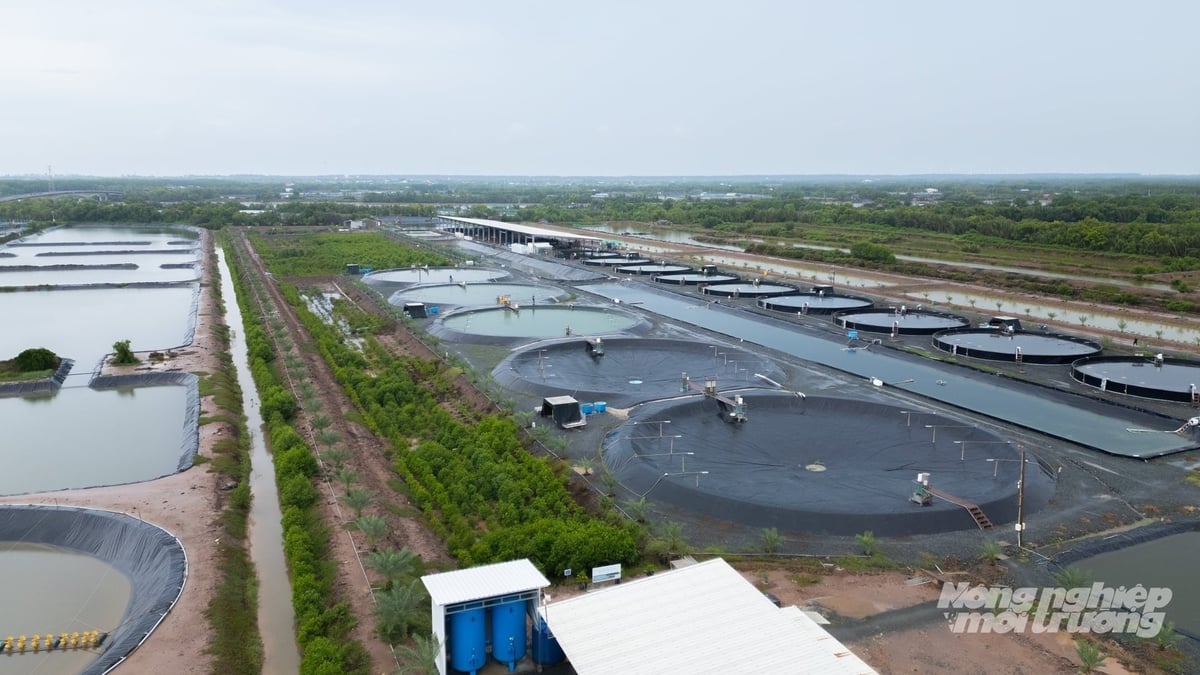
In Vinh Long, the high-tech whiteleg shrimp farming area has increased rapidly from 2,382 ha to around 7,000 ha. Photo: Minh Dam.
In the first four months of 2026 alone, the province’s total whiteleg shrimp stocking area reached over 11,125 ha, up more than 5% compared to the same period, while harvest output reached over 53,000 tons. Of which, high-tech shrimp farming accounted for around 3,625 ha, with an output of more than 31,000 tons. Beyond the expansion of the farming area, a more notable shift is the transformation of farming practices toward technology- and data-driven management rather than relying entirely on traditional experience.
In many coastal farming areas such as My Long, Long Vinh, Long Hoa, and Duyen Hai Ward, multi-stage and recirculating shrimp farming models are becoming increasingly common. Farmers are shifting from extensive and semi-intensive methods to intensive and super-intensive farming with stricter environmental controls.
In Long Hoa commune, Mr. Pham Dac Tam, Chairman of the Commune People’s Committee, said the locality currently has 2,592 aquaculture households, with an area of more than 2,634 ha, fulfilling over 90% of the annual target. Of the total, 264 households operate industrial farming on 322 ha, while the remainder practice integrated extensive farming.
Total seafood output harvested to date has exceeded 5,476 tons, equivalent to nearly 52% of the annual plan, with aquaculture production at around 2,898 tons. According to Mr. Tam, the locality recently recorded losses among 17 industrial whiteleg shrimp farming households across more than 5.5 ha, with suspected causes related to white spot disease and acute hepatopancreatic necrosis disease (AHPND).
"This shows that shrimp farming no longer depends solely on experience but increasingly requires stronger environmental monitoring, tighter biosafety control, and the application of technology in pond management," Mr. Pham Dac Tam said.
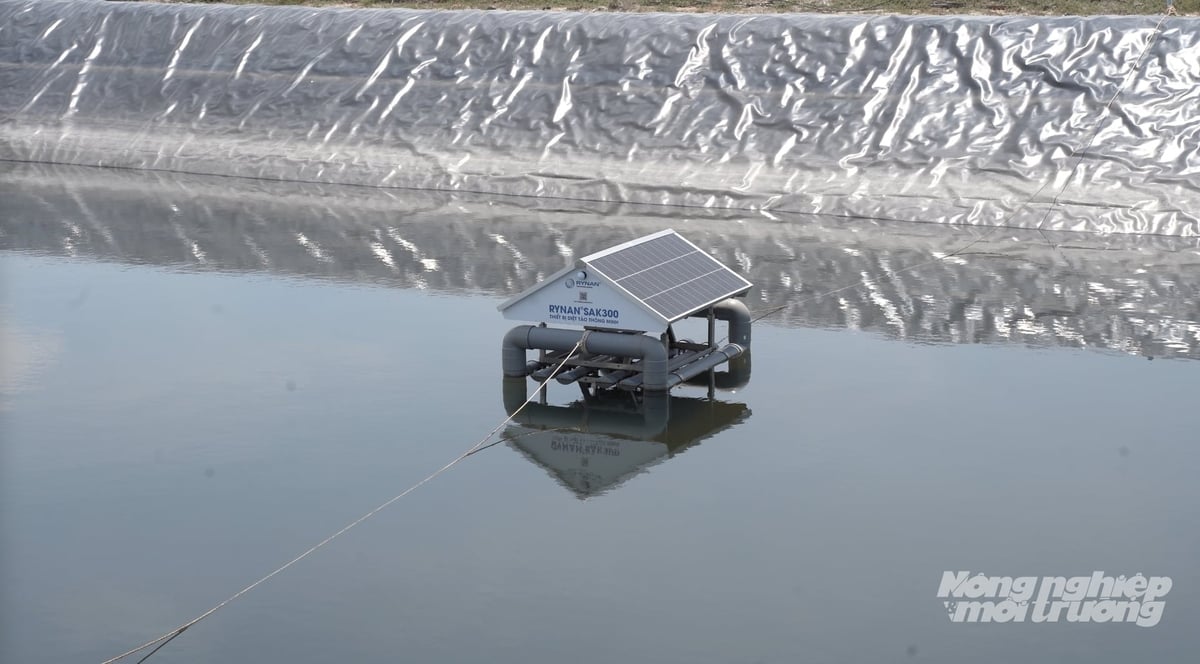
Smart devices are being applied to support environmental monitoring in shrimp farming. Photo: Minh Dam.
According to the specialized sector, multi-stage farming models help shrimp gradually adapt to environmental conditions, reduce loss rates, and limit the risk of disease outbreaks. Meanwhile, lined pond systems combined with recirculating treatment technologies help control water quality, reduce organic pollution, and save water resources amid increasingly complex climate change conditions.
In addition, automated monitoring devices are helping farmers continuously track indicators such as pH, dissolved oxygen, alkalinity, and salinity. Many systems can send direct warnings to mobile phones when pond conditions fluctuate abnormally, enabling farmers to respond early instead of waiting for disease outbreaks as in the past.
Beyond pond automation, many technology companies are beginning to approach shrimp farming in a low-emission direction. As major markets such as the EU, the U.S., and Japan increasingly tighten low-carbon, net-zero, and emissions traceability standards, Viet Nam’s shrimp industry is facing the requirement to transition toward farming models that are energy-efficient and manage the environment based on data.
According to aquaculture experts, emissions from shrimp farming mainly stem from electricity consumption for paddlewheel aerators and oxygen systems, as well as from organic feed losses in ponds. Therefore, the application of IoT, AI, and automation technologies is becoming an important direction for optimizing operations and reducing resource consumption.
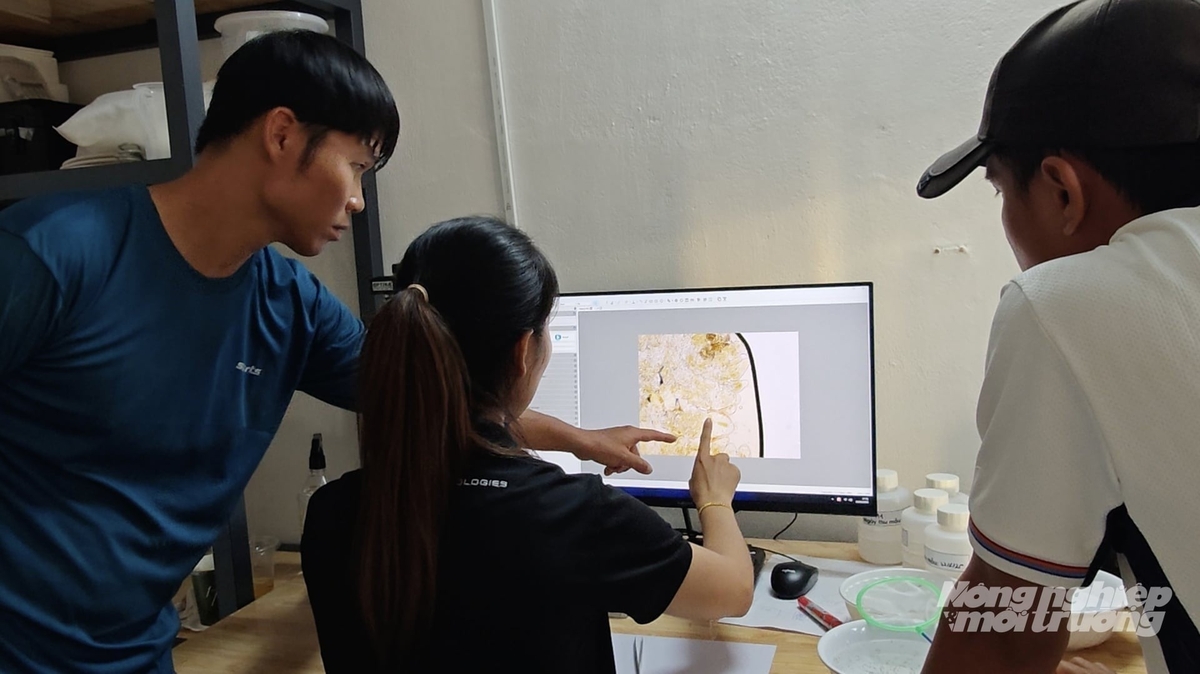
By optimizing operations and controlling the farming environment through data, TOMGOXY® helps reduce electricity consumption from around 5,000 kWh to approximately 2,000 kWh per ton of commercial shrimp. Photo: Minh Dam.
According to Dr. Nguyen Thanh My, a representative of RYNAN Technologies, the TOMGOXY® farming model employs a real-time pond-environment monitoring system, combined with automated control of paddlewheel aerators and oxygen systems, to reduce electricity consumption and limit CO₂ and CH₄ emissions during the farming process.
The model also integrates various technological devices, including high-efficiency oxygen-generation systems, automatic shrimp feeders, and equipment to limit algae growth and deter birds around farming ponds. By optimizing operations and managing the farming environment through data, TOMGOXY® helps reduce electricity consumption from around 5,000 kWh to approximately 2,000 kWh per ton of commercial shrimp, while also minimizing feed losses and improving pond management efficiency.
According to industry experts, the trend toward reducing carbon emissions in aquaculture is no longer an experimental option but is becoming a key condition for maintaining the competitiveness of Vietnamese shrimp in the global market.
Another notable shift is the gradual reduction in dependence on antibiotics. Biological products, biosafe farming procedures, and standards such as VietGAP, GlobalGAP, and ASC are being expanded to meet increasingly stringent requirements from import markets.
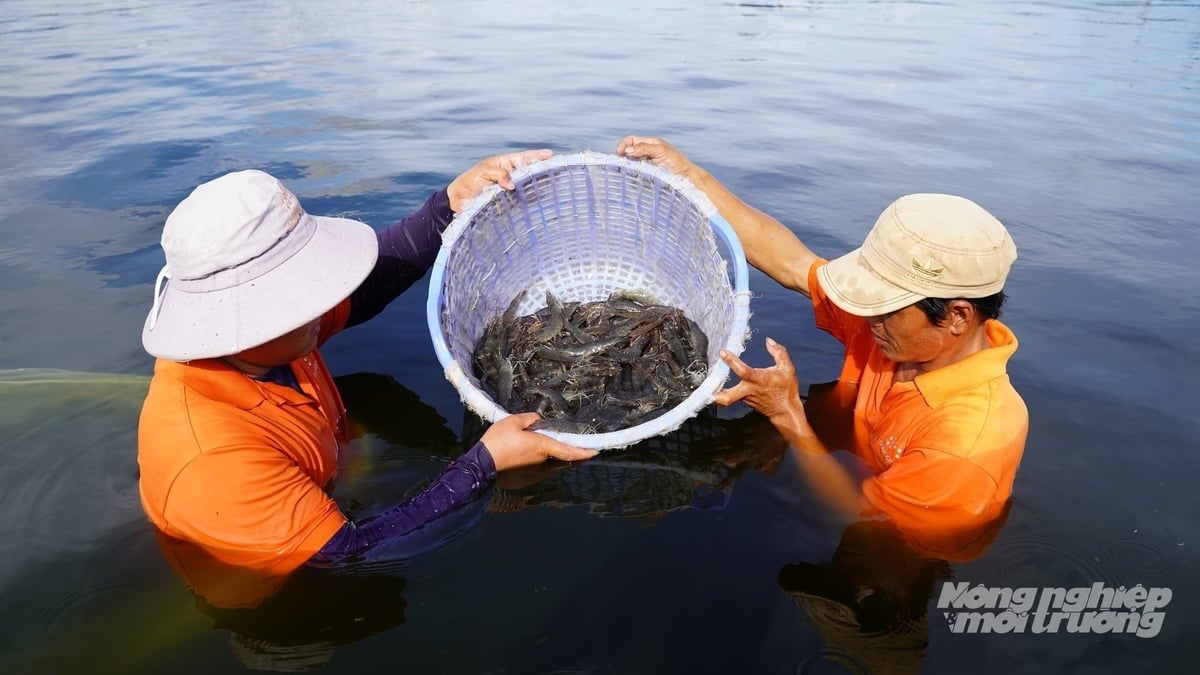
Under the development orientation toward 2030, the total whiteleg shrimp farming area in Vinh Long province is projected to reach around 26,200 ha, of which approximately 10,000 ha will apply high technology. Photo: Minh Dam.
According to seafood processing enterprises, traceability and residue control have now become a "mandatory passport" for maintaining exports to major markets such as the EU, the U.S., and Japan. This is forcing the shrimp farming sector to gradually shift toward a transparent, digitalized production model with tightly controlled farming processes.
However, the technological transition also poses significant challenges. High-tech shrimp farming requires substantial investment costs for electricity systems, ponds, water treatment infrastructure, monitoring equipment, and high-quality seeds. Environmental pressure in concentrated farming areas is also increasing if development is not properly controlled.
According to Mr. Pham Minh Truyen, Deputy Director of the Vinh Long Department of Agriculture and Environment, the province will continue developing shrimp farming in an industrial, high-tech, and sustainable direction, prioritizing recirculating farming models, two-stage farming, wastewater treatment technologies, and biosafety management.
Alongside the planning of concentrated farming zones, the province also aims to strengthen digital transformation in production management, environmental monitoring, and product traceability. The locality will also promote linkages between enterprises, cooperatives, and farmers to form sustainable value chains.
By 2030, the total whiteleg shrimp farming area in the province is projected to reach around 26,200 ha, of which approximately 10,000 ha will apply high technology.
In 2025, the total shrimp farming area in Vinh Long province reached approximately 69,800 ha, of which 7,500 ha applied high-tech farming. Whiteleg shrimp production reached around 293,000 tons, while black tiger shrimp output reached over 18,820 tons. In key farming areas, high-tech farming models achieved productivity of 50–70 tons/ha, generating profits of VND 500–700 million/ha/crop. Particularly, the "Tra Vinh Shrimp" certification trademark has been protected by the Intellectual Property Office of Viet Nam since 2023 for multiple categories of commercial shrimp and shrimp seed products.
Translated by Thu Huyen
/2026/07/20/1547-1-180442_204.jpg)
(VAN) A farmer in Can Tho has found the secret to raising giant water bugs that produce intensely aromatic essence, earning annual profits of hundreds of millions of dong.

(VAN) From crop conversion to deep processing, Ba Che Commune in Quang Ninh Province is building a comprehensive cinnamon value chain that creates sustainable livelihoods while strengthening the local forestry economy.

(VAN) The ACIAR-SunRice public-private partnership, rooted in science and sustainable development, is expected to support rice farmers in the Mekong Delta.

(VAN) Linking the shrimp, rice, and coffee sectors through a circular economy model is opening up a new pathway for Viet Nam's agriculture.

(VAN) HCMC is accelerating the transition to circular industry by transforming industrial parks into eco-industrial zones, fostering industrial symbiosis, and expanding international partnerships for green manufacturing.
(VAN) The digital map of raw material zones is expected to resolve overlapping investments, ensure production transparency, and accelerate deep processing in the coconut industry.
(VAN) Transforming barren hills once dedicated only to acacia and cassava, the Anh Mai Medicinal Plant Cooperative has found a new direction with red turmeric, opening up sustainable livelihoods for local residents.
