July 21, 2026 | 19:36 GMT +7
Hotline: 0913.378.918

July 21, 2026 | 19:36 GMT +7
Hotline: 0913.378.918
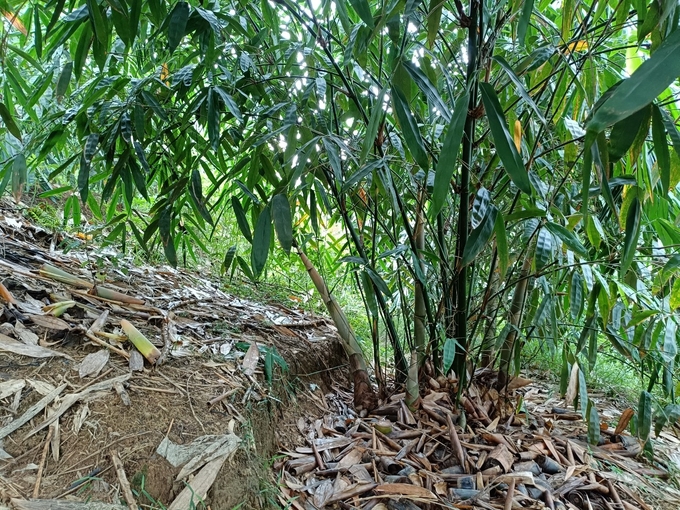
Farmers mark contour lines to plant Bat Do bamboo to help limit soil erosion and leaching. Photo: Thanh Tien.
Tran Yen district possesses the largest area of Bat Do bamboo in Yen Bai province with more than 4,600 ha. The local policy of planting Bat Do bamboo on forest hills and steep areas has proven to be highly effective, both preventing erosion and landslides and solving economic problems. This opens more options for people in remote and mountainous communes to reduce poverty.
To sustainably develop Bat Do bamboo shoots on sloping land, the agricultural sector of Tran Yen district has been researching and applying technical measures such as creating contour lines, maintaining green grass cover, intercropping short-term crops to increase soil fertility and nutrition as well as productivity and quality of bamboo shoots.
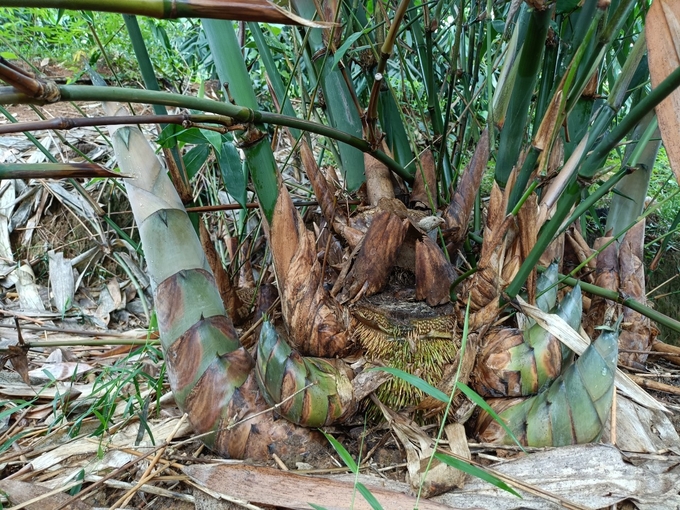
Bat Do bamboo shoots can be harvested after 1.5 years of planting. Photo: Thanh Tien.
At the end of 2022, after harvesting cinnamon, Bui Van Lan's family in Tan Viet village, Quy Mong commune (Tran Yen district) decided to convert more than 1 ha of land to grow Bat Do bamboo. Lan rented a small excavator to mark contour lines in a spiral shape from the top to the bottom of the hill. He then prepared the land, dug holes, and composted organic fertilizer. In the spring of 2023, he bought Bat Do bamboo tubers to plant.
“For generations, people in the commune have mainly grown acacia, bodhi or cinnamon. For these crops, the first 3 - 4 years of care are very difficult, particularly the weeding stage, so people often abuse herbicides to reduce labor. This makes the hilly land increasingly infertile, the microorganisms in the soil are destroyed. The soil becomes very susceptible to erosion, leaching, and landslides when the rainy season comes,” he said.
Seeing the economic efficiency and environmental protection value of Bat Do bamboo, Lan's family decided to switch from cinnamon to Bat Do bamboo last year. After only 1.5 years the bamboo shoots were ready for harvest. Since the beginning of the season (mid-June), his family has harvested more than 4 tons of bamboo shoots, with an average selling price of VND 5,500/kg, bringing in an income of more than VND 20 million.
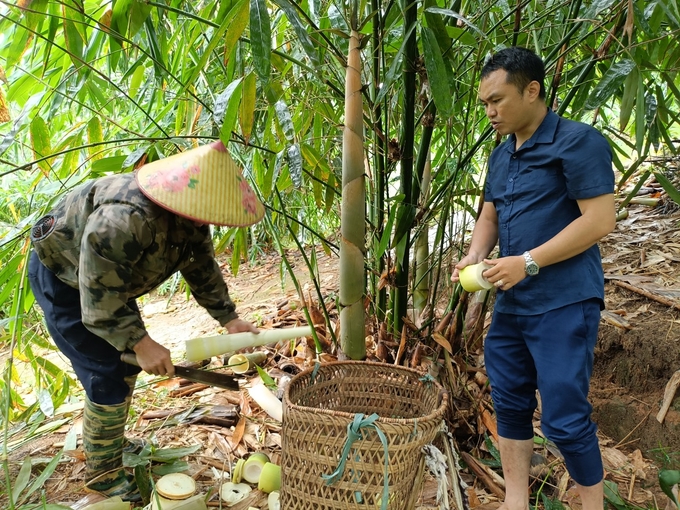
In one morning, each person can harvest hundreds of kilograms of Bat Do bamboo shoots. Photo: Thanh Tien.
In one morning, Lan his wife can easily harvest 200 kg of bamboo shoots, earning VND 1 million. This is just the first crop, but it is estimated that by the end of the season, Lan's family will earn more than VND 40 million from 1 ha of Bat Do bamboo. In the coming years, when the bamboo bushes grow, the bamboo shoot yield will be much higher, with an expected income of VND 70 - 100 million/year.
According to Lan, contour lines have many benefits, in some sense similar to the way Mong people make terraced fields in the highlands. When making contour lines, they will draw it from the top of the hill down, each bed is approximately 2 m wide, and the outer line is higher to form a bank. This method will minimize erosion and leaching, helping to maintain fertility and nutrition in the soil.
In order to further improve soil health, every year he buys chicken manure from local farms to compost and fertilize the bamboo clumps after each harvest and before the bamboo shoot season. Between the bamboo clumps, Lan keeps the green grass on the surface, only using a weed cutter when necessary. This method helps to maintain moisture in the bamboo garden, helping bamboo shoots grow more.
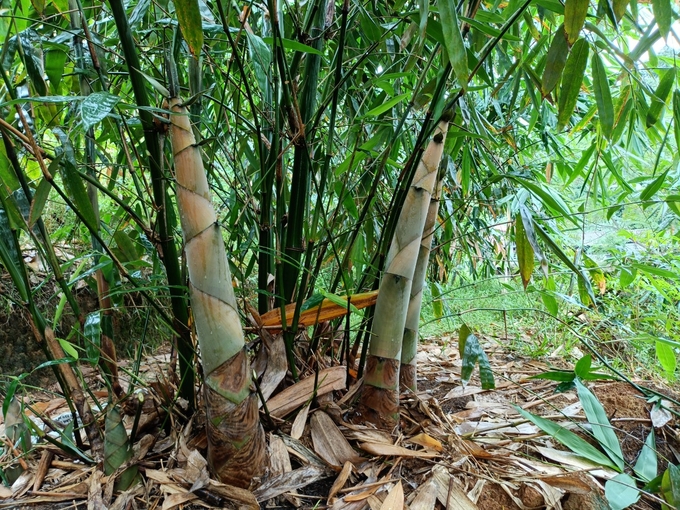
Keeping the surface grass cover helps increase soil moisture, bamboo bushes can grow well and produce many shoots. Photo: Thanh Tien.
Seeing Lan's effective model, in early 2024, Vu Giap Luong's family in Quy Mong commune also converts 1.5 ha of cinnamon hill land to plant Bat Do bamboo. In the sloping hill area, Luong applies the method of marking contour lines. As a result, the bamboo area planted in January achieves a survival rate of nearly 100%. Now most of the bamboo clumps grow taller than a person.
"Although marking contour lines means high costs at first, this method has many long-term benefits. Plant care and fertilization are more effective because the nutrients are not washed away. Particularly during the harvest season, it would be less difficult when you can ride a motorbike to the top of the hill and bring bamboo shoots back home," he said.
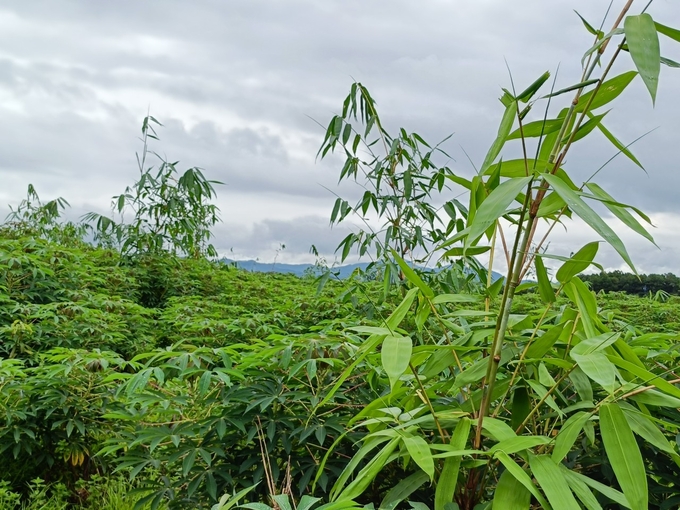
The Bat Do bamboo area, newly planted 7 months ago, is intercropped with cassava to retain moisture on the steep hill. Photo: Thanh Tien.
Tran Yen district has currently become the largest bamboo shoot plantation in the country. During the harvest season from July to October, businesses and cooperatives from everywhere flock to purchase bamboo shoots. Many businesses such as Van Dat Co., Ltd., Yen Thanh Joint Stock Company, and Yamazaki Vietnam Co., Ltd even invest in expanding the scale, production and processing technologies to export products.
Realizing the industry’s big potential, in addition to expanding the raw material area by 300 - 400 ha per year, the district authorities at all levels also focus on mobilizing people to replant old bamboo areas that have low productivity and quality.
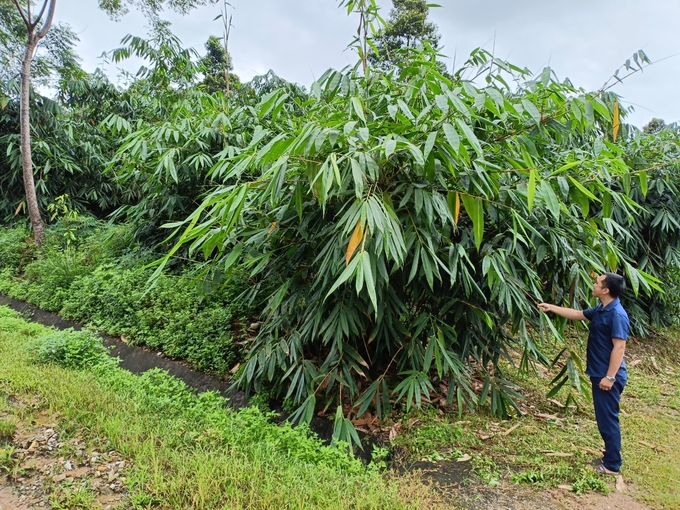
Farmers are expanding the bamboo shoot area. They also have their focus on intensive farming and applying scientific and technological advances to increase the efficiency of bamboo shoot production on sloping land. Photo: Thanh Tien.
“It feels much better growing Bat Do bamboo because we no longer have to use herbicide sprayers. Bamboo is not vulnerable to many pests and diseases, there is no need to use pesticides. After 1 year, the bamboo canopy has closed, so there are fewer weeds. We only need to clean up floating tubers and old plants after each harvest. Every year, in June and July, we gain a steady income. The most important thing is that the soil and water environment is kept unpolluted," said Bui Van Lan.
Translated by Samuel Pham

(VAN) Viet Nam is actively preparing to participate in GREEN EXPO 2027 to promote its image as a green, sustainable, and innovative nation on the global stage.

(VAN) Lai Chau is passing by in a hurried rhythm at this time. Everyone is working tirelessly against the clock, devoting all efforts to overcoming the aftermath of the disaster.

(VAN) Some countries consider agriculture a public service, so the state must invest in it, according to Ass. Prof Dr. Dao The Anh, former Deputy Director of the Viet Nam Academy of Agricultural Sciences.

(VAN) The Minister of Agriculture and Environment of the Lao PDR recognizes the VRG's significant contributions over two decades of investment and operations in Laos.

(VAN) The VNMHA held a conference to review its work over the first six months of the year and set out priority directions and tasks for the second half of 2026.

(VAN) Khanh Hoa Sea Festival 2026, themed ‘Colors of the Ocean - Reaching International Scale,’ conveys a message of green marine economic development, integration, and Khanh Hoa's rising position.

(VAN) Viet Nam and the Food and Agriculture Organization of the United Nations (FAO) have launched a project to strengthen water resources management, reduce pollution and restore water quality in the Gulf of Tonkin.
