December 30, 2025 | 21:41 GMT +7
Hotline: 0913.378.918

December 30, 2025 | 21:41 GMT +7
Hotline: 0913.378.918
“That is a very positive result,” said Dr. Ngo Xuan Nam, noting that the 50% decrease in warnings from the EU in the first nine months of 2025 compared to the same period last year shows that Vietnamese agricultural products have achieved high quality and met the stringent standards of key markets such as the EU.
According to Mr. Nam, this result was achieved thanks to the strong direction from the Prime Minister and leaders of the Ministry of Agriculture and Environment in implementing both urgent and long-term solutions to maintain the reputation and enhance the position of Vietnamese agricultural products in the international market.

Dr. Ngo Xuan Nam, Deputy Director of the Vietnam SPS. Photo: Bao Thang.
Currently, Viet Nam still has four products under EU border control: durian (inspection frequency 20%), okra and bell pepper (50% with certificate), and dragon fruit (30%). Compared with many other countries, reducing the number of monitored products to four is a remarkable achievement, confirming the effectiveness of close cooperation between authorities and enterprises.
Since the EVFTA came into effect on August 1, 2020, bilateral agricultural trade has yielded positive results, contributing to an increase in added value and strengthening the position of Vietnamese agricultural products in the global market. Key sectors, including coffee, pepper, seafood, and vegetables, have effectively leveraged tariff preferences and quality standards.
In the United Kingdom, after four years of implementing the UKVFTA, Viet Nam’s agri-food exports have grown by an average of 10% annually. This is a positive signal reflecting great potential from the implementation of bilateral trade commitments.
However, Mr. Nam warned that businesses must not be complacent. “Even small shipments, just a few kilograms, can be subject to EU warnings if pesticide residue limits are exceeded,” he said. This demonstrates that strict adherence to SPS regulations remains crucial for maintaining the reputation of Vietnamese goods.
According to data from the Vietnam SPS, Viet Nam receives around 1,000 notifications of regulatory changes each year from 166 WTO members, with the EU and the United Kingdom being the two most active in adjustments. Regulations on maximum residue limits (MRLs) for pesticides, antibiotics, and border control are frequently updated, requiring enterprises to proactively monitor and adapt.
Mr. Nam noted that the EU evaluates residue levels by product type, and even by crop variety. “For the same type of fruit, different varieties may have different residue limits for each active substance. This is something businesses must pay close attention to when exporting to the EU,” he added.

The conference attracted the attention and participation of hundreds of delegates both in person and online. Photo: Bao Thang.
Clarifying EU regulations, Dr. Dao Van Cuong, an expert at the SPS Viet Nam, explained that the EU has the authority to inspect, verify, and reject production facilities that fail to meet safety standards, while requiring every export shipment to be accompanied by a phytosanitary certificate compliant with international standards.
SPS Viet Nam recommends that enterprises proactively consult the EU pesticide database to understand updated maximum residue limits (MRLs) and strictly control residues before export. In addition, companies should establish internal early warning systems and coordinate with inspection agencies to promptly address warnings, thereby avoiding shipment rejections and market losses.
“In the context of increasingly stringent SPS standards, compliance is not only a technical requirement but also a factor of sustainable competitiveness. Every enterprise should consider updating and implementing SPS regulations as part of its long-term export strategy rather than react passively when a warning occurs,” emphasized Mr. Cuong.
At the conference, experts continued to update SPS regulations under the EVFTA and UKVFTA, including food safety measures, animal and plant disease control, packaging procedures, labeling, and cold chain management for agricultural exports.
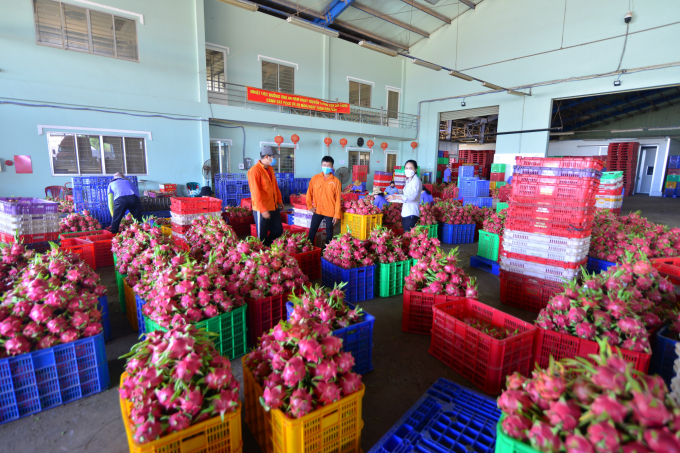
SPS warnings from Europe drop 50% in the first nine months of the year.
Appreciating the joint efforts of stakeholders in improving agricultural quality, especially for exports to demanding markets, Mr. Nguyen Hoang Phuc, Deputy Director of the Lam Dong Department of Agriculture and Environment, said the province is committed to developing standardized raw material areas.
At the same time, the province will continuously disseminate import market regulations, upgrade processing facilities to meet international standards, and strengthen cooperation with central agencies, enterprises, and industry associations to expand export markets to the EU and North America.
Strict compliance with SPS regulations is a key factor to ensure the credibility, quality, and sustainable competitiveness of Vietnamese agricultural products, according to Mr. Phuc. Each improvement in reducing warnings not only reflects product quality but also demonstrates the nation’s responsibility in the global supply chain.
The EU ranks among the top three markets for Viet Nam's agricultural, forestry, and fishery exports, with an export value of about USD 5.5–6 billion per year, accounting for around 15% of the country’s total agricultural export turnover. Major export groups include coffee, cashew nuts, pepper, rice, fresh fruit, and processed wood products.
Beyond its high export value, the EU is also a high-standard market that serves as a “quality compass” for Vietnamese agricultural products. Once products meet the EU’s stringent requirements for food safety, traceability, and environmental protection, enterprises will have more opportunities to expand into other markets such as the United Kingdom, Japan, South Korea, and the United States.
Translated by Huong Giang
/2025/12/29/2812-1-182339_699.jpg)
(VAN) The price of mangrove forest carbon credits is high because this forest type not only delivers significant environmental value but also plays a crucial role in addressing other issues.
/2025/12/29/5840-0-115141_514.jpg)
(VAN) From 2026, many EU markets will require shrimp to be electrically stunned before ice immersion, forcing exporters to change technologies to retain market share.
/2025/12/28/4951-2-104623_113.jpg)
(VAN) Rubber exports are forecast to remain under downward pressure in the coming period, as global rubber consumption shows signs of slowing, according to ANRPC's projections.
/2025/12/28/5120-1-093308_94.jpg)
(VAN) Many agricultural products are of sufficient quality to join global supply chains, yet fail to pass the first gateway when entering international markets due to packaging and information in English.
/2025/12/27/2453-2-172141_426.jpg)
(VAN) The sharp decline in the number of EU warnings in 2025 is regarded as a positive signal for the future orientation of Viet Nam’s agricultural exports.
/2025/12/27/1547-2-220434_536.jpg)
(VAN) For many businesses, exporting is a costly trial. But for those choosing a long-term path, small orders are a way to keep markets and learn the rules.
/2025/12/27/2522-1-090748_662.jpg)
(VAN) The 'Large-Scale Rice Field' project has been implemented in An Giang across a total area of more than 5,582 ha, comprising 73 large-scale fields and attracting the participation of 2,027 farmer households.
