July 21, 2026 | 14:13 GMT +7
Hotline: 0913.378.918

July 21, 2026 | 14:13 GMT +7
Hotline: 0913.378.918
In Hanoi, the Department of Climate Change under the Ministry of Agriculture and Environment hosted a workshop titled "Training on the Capacity for the Facility-Level Greenhouse Gas Inventory Reporting System and GHG Emission Mitigation for the Thermal Power, Cement, and Iron and Steel Sectors". The event was organized under the SIM-NDC Project with support from the Japan International Cooperation Agency (JICA).
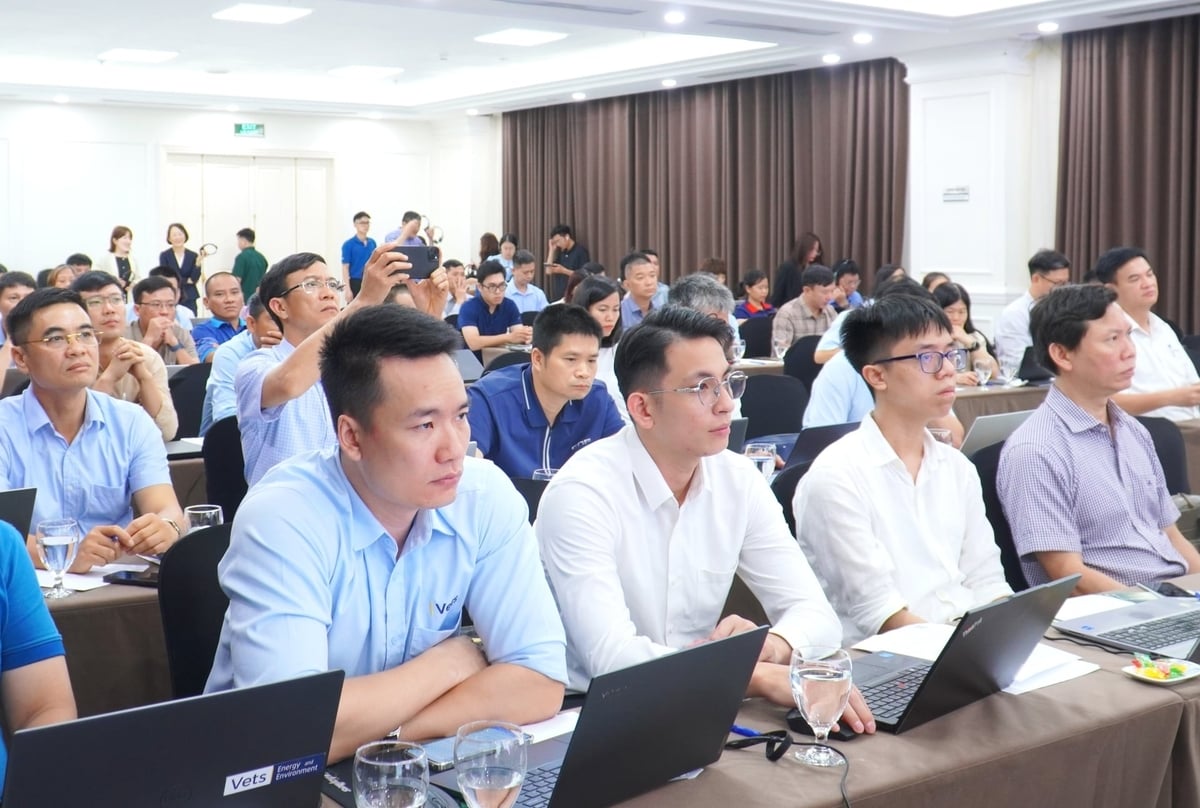
Representatives of thermal power plants and cement manufacturers participate in the training workshop on June 29. Photo: Trung Nguyen.
Speaking at the workshop, Makiko Inamori, Project Formulation Advisor at JICA, noted that the international landscape continues to face numerous challenges, including geopolitical uncertainties. Nevertheless, she emphasized that global efforts toward carbon neutrality remain firmly on track.
Alongside the establishment of a greenhouse gas reporting system and preparations for an emissions trading system, Viet Nam is also advancing the development of its domestic carbon market. Through these efforts, Viet Nam has emerged as one of ASEAN's leading countries in carbon pricing.
These initiatives also provide an important foundation for businesses to gradually adapt to cross-border carbon adjustment mechanisms and increasingly stringent green standards adopted by major export markets. Strengthening greenhouse gas inventory and reporting systems will enhance the competitiveness of Vietnamese enterprises as the global transition toward a green economy accelerates.
"Japan has extensive experience in facility-level emissions reporting and in implementing energy-efficiency measures across the thermal power, cement, and iron and steel industries. We remain committed to working alongside Viet Nam and sharing practical lessons that can support its transition to a low-carbon economy", Inamori said.
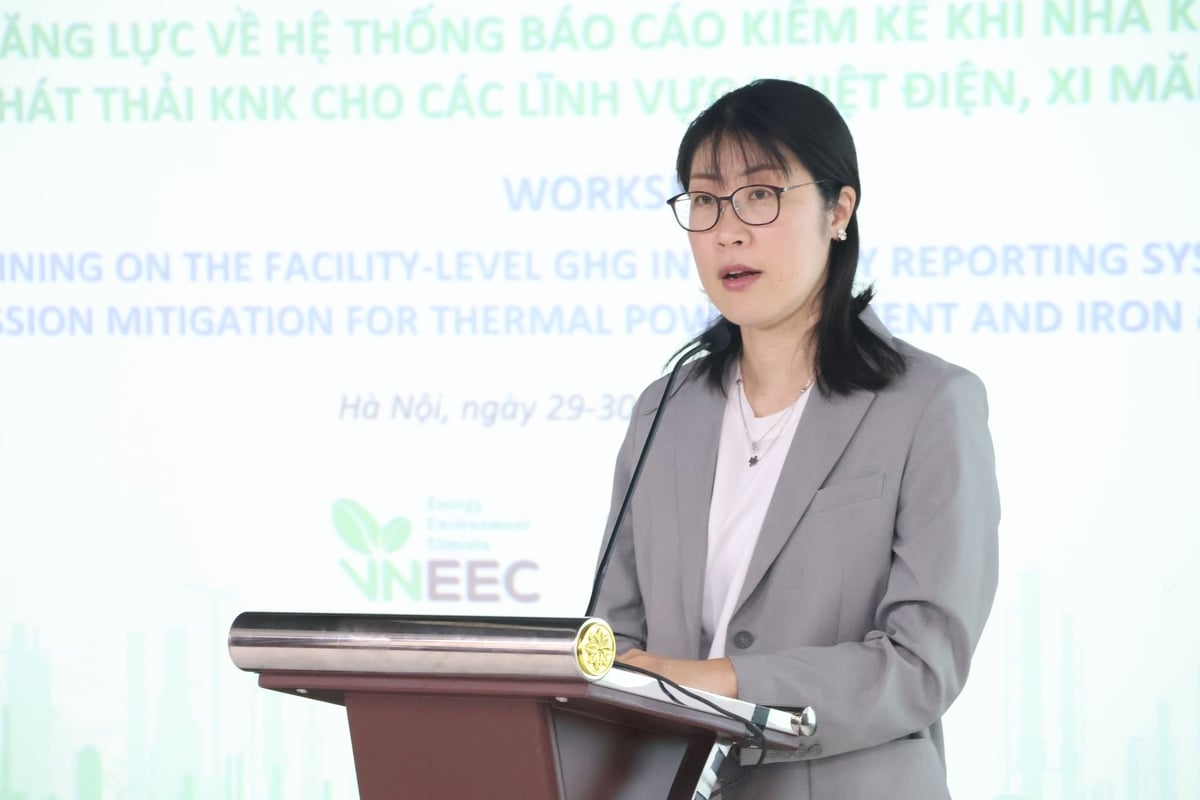
Makiko Inamori, Project Formulation Advisor at the Japan International Cooperation Agency (JICA), discusses the international challenges facing efforts to achieve global greenhouse gas emission reduction goals. Photo: Trung Nguyen.
The training program consisted of two sessions. The first focused on updates to Viet Nam's legal framework. Luong Quang Huy, head of the Greenhouse Gas Emissions Management and Ozone Layer Protection Division of the Department of Climate Change, presented the latest regulatory developments. Viet Nam's legal framework is now anchored in Article 91 of the 2020 Law on Environmental Protection, Decree No. 06/2022/ND-CP, and most recently, Decree No. 119/2025/ND-CP, which amends and supplements previous regulations, establishing a mandatory compliance framework that moves beyond voluntary implementation.
The program continued with Akiko Ishii, Technical Expert at JICA, on greenhouse gas mitigation planning, who shared international best practices in developing greenhouse gas inventories. Nguyen Tien Hai, Technical Director of the Viet Nam Energy and Environment Consultancy Joint Stock Company (VNEEC), then provided detailed guidance on methodologies for calculating greenhouse gas emissions in key sectors, including thermal power, cement, and iron and steel.
To help businesses translate inventory results into concrete actions, Yumi Ito, Technical Expert at JICA, and Duong Anh Dung, a GHG Inventory Expert from VNEEC, jointly introduced a process for developing and implementing facility-level greenhouse gas mitigation plans, enabling enterprises to translate emissions data into practical mitigation measures.
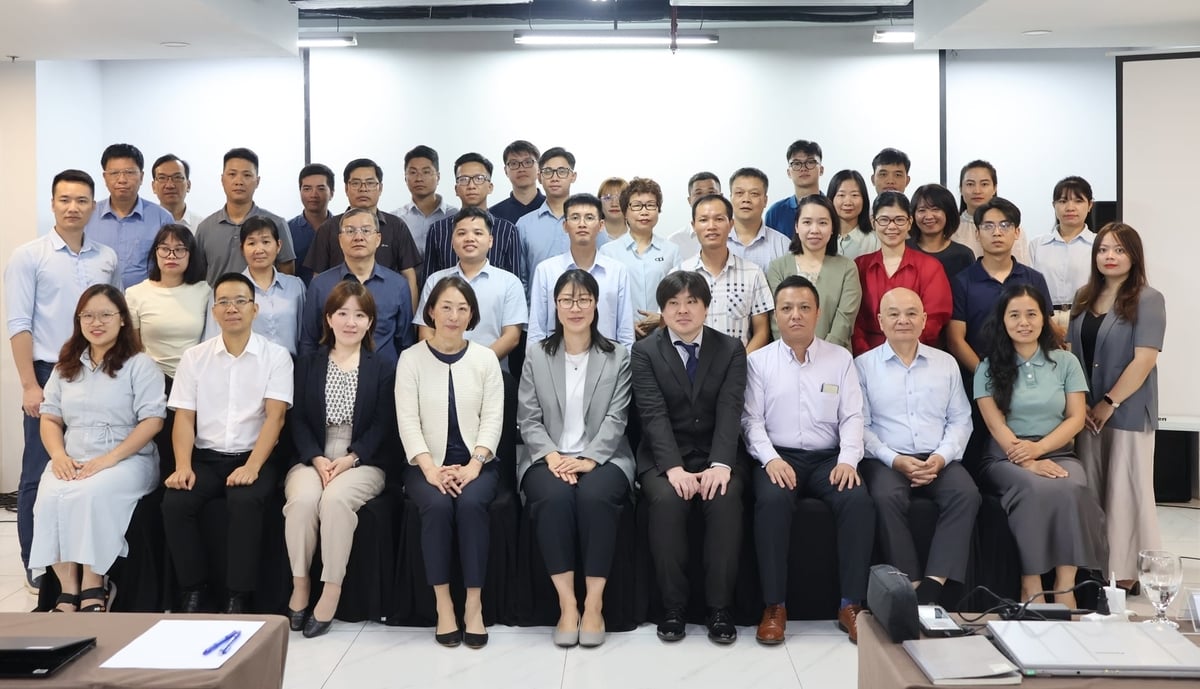
Japanese experts and representatives from iron and steel and cement manufacturing companies participate in the training workshop on June 30. Photo: Trung Nguyen.
The experts also emphasized that emission reduction plans should be tailored to the specific conditions of each production facility, taking into account technological feasibility, available resources, and investment roadmaps. Regularly updating emissions data will allow businesses to monitor the effectiveness of mitigation measures while meeting transparency requirements for participation in the carbon market.
The second session focused on hands-on training using Viet Nam’s online Facility-Level Greenhouse Gas (GHG) Inventory Reporting System. Wataru Tohze, Technical Expert at JICA on the online greenhouse gas inventory system, introduced the platform's interface and core functions.
The online platform incorporates standardized calculation methodologies approved by relevant ministries and agencies, simplifying emissions calculations for businesses. Under Tohze's guidance, participants practiced each step of the reporting process, from accessing the system and entering sector-specific operational data to generating reports and conducting trial submissions. The system clearly distinguishes between direct emissions from stationary and mobile sources (Scope 1), indirect emissions from purchased electricity (Scope 2), and encourages reporting of other indirect emissions across the value chain (Scope 3).
According to experts, as domestic and international emissions-reduction requirements continue to tighten, accurately measuring and reporting facility-level greenhouse gas emissions has become an urgent priority. The online reporting system is expected to become fully operational in the near future. Businesses are encouraged to apply the knowledge and practical skills gained during the workshop to future reporting cycles, beginning with the second greenhouse gas inventory reporting period in March 2027.
Translated by Huong Giang

(VAN) Viet Nam is actively preparing to participate in GREEN EXPO 2027 to promote its image as a green, sustainable, and innovative nation on the global stage.

(VAN) Lai Chau is passing by in a hurried rhythm at this time. Everyone is working tirelessly against the clock, devoting all efforts to overcoming the aftermath of the disaster.

(VAN) Some countries consider agriculture a public service, so the state must invest in it, according to Ass. Prof Dr. Dao The Anh, former Deputy Director of the Viet Nam Academy of Agricultural Sciences.

(VAN) The Minister of Agriculture and Environment of the Lao PDR recognizes the VRG's significant contributions over two decades of investment and operations in Laos.

(VAN) The VNMHA held a conference to review its work over the first six months of the year and set out priority directions and tasks for the second half of 2026.

(VAN) Khanh Hoa Sea Festival 2026, themed ‘Colors of the Ocean - Reaching International Scale,’ conveys a message of green marine economic development, integration, and Khanh Hoa's rising position.

(VAN) Viet Nam and the Food and Agriculture Organization of the United Nations (FAO) have launched a project to strengthen water resources management, reduce pollution and restore water quality in the Gulf of Tonkin.
