December 30, 2025 | 14:51 GMT +7
Hotline: 0913.378.918

December 30, 2025 | 14:51 GMT +7
Hotline: 0913.378.918
After graduating from university, Le Thanh Trien, a native of Nam Ba Don commune, Quang Tri province, moved to Ho Chi Minh City to earn a living and secured a job with a private company. A few years later, he was sent on a business trip to Japan, where he had the opportunity to visit a workshop that specialized in the production of high-end wooden chopsticks for export. Inspired by what he saw and recognizing the abundance of raw materials available in Vietnam, he became determined to pursue this craft as a business venture.
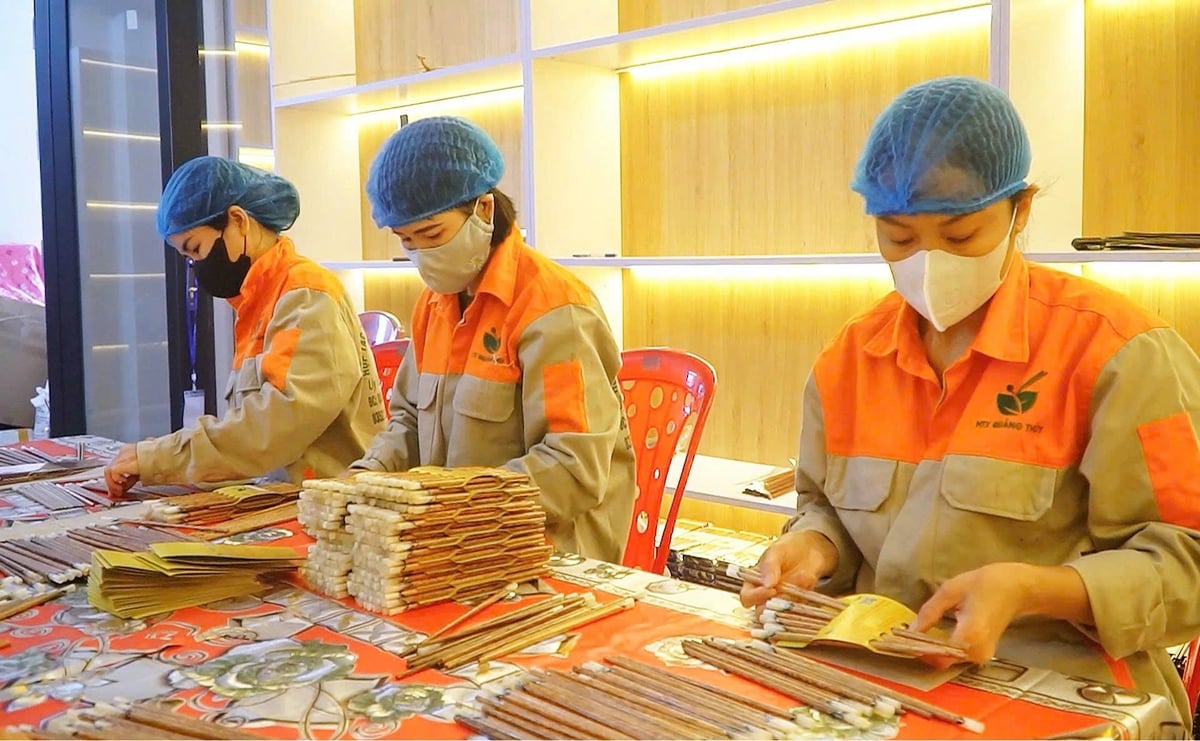
Workshop producing handicraft chopsticks of Quang Thuy wooden chopsticks cooperative. Photo: T.P
Upon his return home, he became engaged in the study of chopstick production and, as a result, established a modest workshop in Ho Chi Minh City. Despite the numerous initial challenges he encountered, his desire to establish his own brand only escalated. In 2017, Trien and his wife commenced the sale of premium, crafted wooden chopsticks at the Ben Thanh wholesale market.
Trien unexpectedly decided to return to his rural village and establish a business there, having realized that starting production in his hometown would considerably reduce input costs, including rent and materials. He established the Quang Thuy Wooden Chopsticks Production, Trading, and Business Cooperative in Quang Thuy commune, Ba Don town, Quang Binh province (now Nam Ba Don commune, Quang Tri province), thereby initiating a new chapter with a new name.
Due to its limited capital, the cooperative initially focused on producing basic wooden chopsticks and distributing them to neighboring towns. “I started by building our brand through affordable everyday items, mainly chopsticks made from wood, coconut wood, and some spoons and ladles," Trien shared.
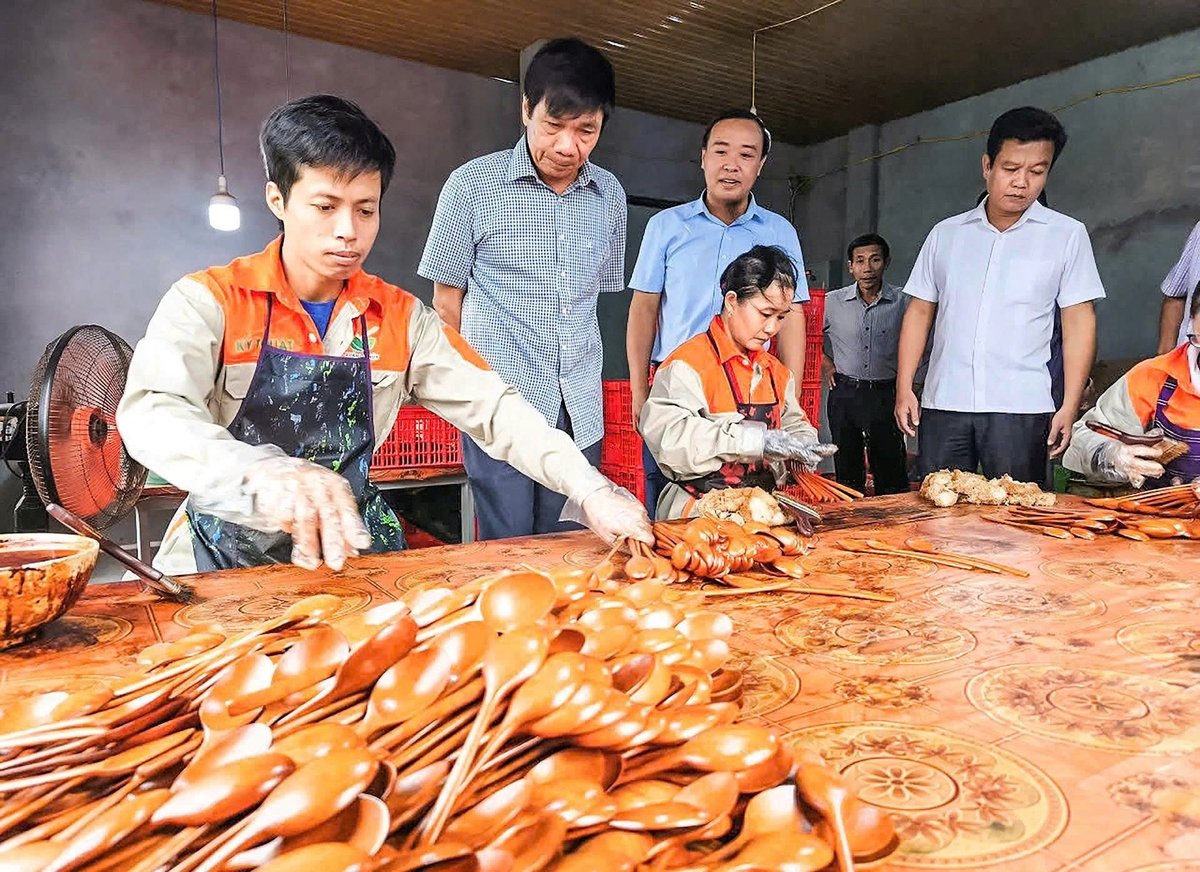
In the workshop producing handicraft chopsticks using lacquer technology to meet the export market. Photo: T.P.
To ensure quality, the cooperative invested in modern technology and equipment. Today, it manufactures chopsticks of varying complexity, from simple designs to complicated carvings, on a daily basis, with a production rate of 5,000 to 7,000 pairs. Not only are the products famous for their durability and aesthetic appeal, but they are also affordable, making them accessible to a diverse audience. Additionally, chopsticks of superior quality are manufactured from horn, bone, mother-of-pearl, and abalone shell, and they are exceedingly well-received in both domestic and international markets. "We have begun exporting to a variety of Asian countries in addition to satisfying domestic demand", Trien stated.
Initially, an intermediary company was responsible for exporting Quang Thuy's utensils to South Korea. However, as demand increased, international consumers began to notice. As quickly as possible, the cooperative formed direct partnerships with buyers from abroad.
Quang Thuy's wooden chopsticks were granted a 4-star OCOP (One Commune One Product) certification in 2022 due to their market-driven designs and exceptional product standards.
Following this success, a South Korean partner directly approached the cooperative to place large orders for wooden chopsticks and other handicrafts. “However, they had stricter requirements than what we were used to. The chopsticks had to be made from renewable wood sources and finished with natural lacquer to ensure consumer and environmental safety", Trien explained.
To satisfy these requirements, the cooperative created a new line of lacquered chopsticks that incorporates a combination of pine resin and natural lacquer resin from the historic Phu Yen region. These products, with their smooth finish and sustainable qualities, have become popular in East Asian markets.
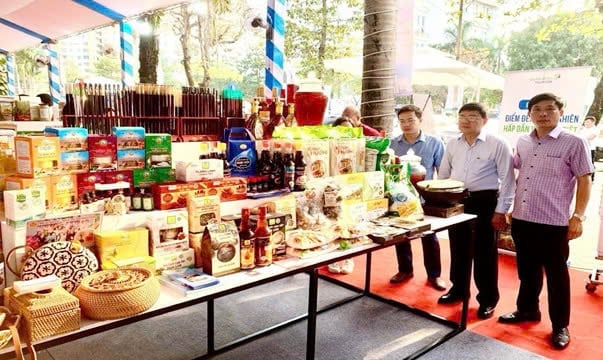
The cooperative's product showroom in the countryside of Quang Thuy. Photo: T.P.
At present, the cooperative exports approximately 1.5 million products annually, with around one million of these products being shipped to South Korea and the remaining products being sold domestically. The company generates an annual revenue exceeding VND 8 billion (around USD 315,000) with a product portfolio that includes approximately 30 artisan chopstick models. Additionally, a Chinese partner has recently expressed interest in placing a substantial order, which represents another optimistic development in the growth of Quang Thuy's global presence.
The cooperative currently has over 20 full-time employees and collaborates with over 50 households to facilitate at-home production. A dream wage for many in this impoverished rural region, monthly revenues range from VND 3.5 to 7 million.
In June, the Ministry of Agriculture and Environment officially certified Quang Thuy’s chopsticks as an OCOP 5-star product.
Looking ahead, Trien shared plans to lease more land and expand the factory in hopes of increasing output and exports. “I also want to create more stable jobs for locals here in my hometown. My dream is to establish Trung Thuy as a village known for producing high-quality artisanal chopsticks—a place truly worth living in", he said.
Translated by Linh Linh
/2025/12/29/2812-1-182339_699.jpg)
(VAN) The price of mangrove forest carbon credits is high because this forest type not only delivers significant environmental value but also plays a crucial role in addressing other issues.
/2025/12/29/5840-0-115141_514.jpg)
(VAN) From 2026, many EU markets will require shrimp to be electrically stunned before ice immersion, forcing exporters to change technologies to retain market share.
/2025/12/28/4951-2-104623_113.jpg)
(VAN) Rubber exports are forecast to remain under downward pressure in the coming period, as global rubber consumption shows signs of slowing, according to ANRPC's projections.
/2025/12/28/5120-1-093308_94.jpg)
(VAN) Many agricultural products are of sufficient quality to join global supply chains, yet fail to pass the first gateway when entering international markets due to packaging and information in English.
/2025/12/27/2453-2-172141_426.jpg)
(VAN) The sharp decline in the number of EU warnings in 2025 is regarded as a positive signal for the future orientation of Viet Nam’s agricultural exports.
/2025/12/27/1547-2-220434_536.jpg)
(VAN) For many businesses, exporting is a costly trial. But for those choosing a long-term path, small orders are a way to keep markets and learn the rules.
/2025/12/27/2522-1-090748_662.jpg)
(VAN) The 'Large-Scale Rice Field' project has been implemented in An Giang across a total area of more than 5,582 ha, comprising 73 large-scale fields and attracting the participation of 2,027 farmer households.
