July 21, 2026 | 21:57 GMT +7
Hotline: 0913.378.918

July 21, 2026 | 21:57 GMT +7
Hotline: 0913.378.918
On the afternoon of June 30, 2026, a ceremony was held in the Co To special zone (Quang Ninh Province) to announce the decision on allocating marine areas and to kick off the Concentrated Aquaculture Zone Project. This event marks a historical milestone initiating Quang Ninh Province's strategy to develop modern, industrial offshore aquaculture.
Approved for investment by the Quang Ninh Provincial People's Committee with an acreage of nearly 210 hectares, a total capital of nearly 67 billion VND, and an operational lifespan extending to the year 2050, the project is executed by the Bien Dong Jumping Squid Joint Stock Company. This enterprise previously built a highly successful high-tech marine aquaculture model in Khanh Hoa Province, managing over 13.000 square meters of aquaculture cages with an operational volume of approximately 151.000 cubic meters, while owning the largest semi-natural squid farming zone in Southeast Asia.
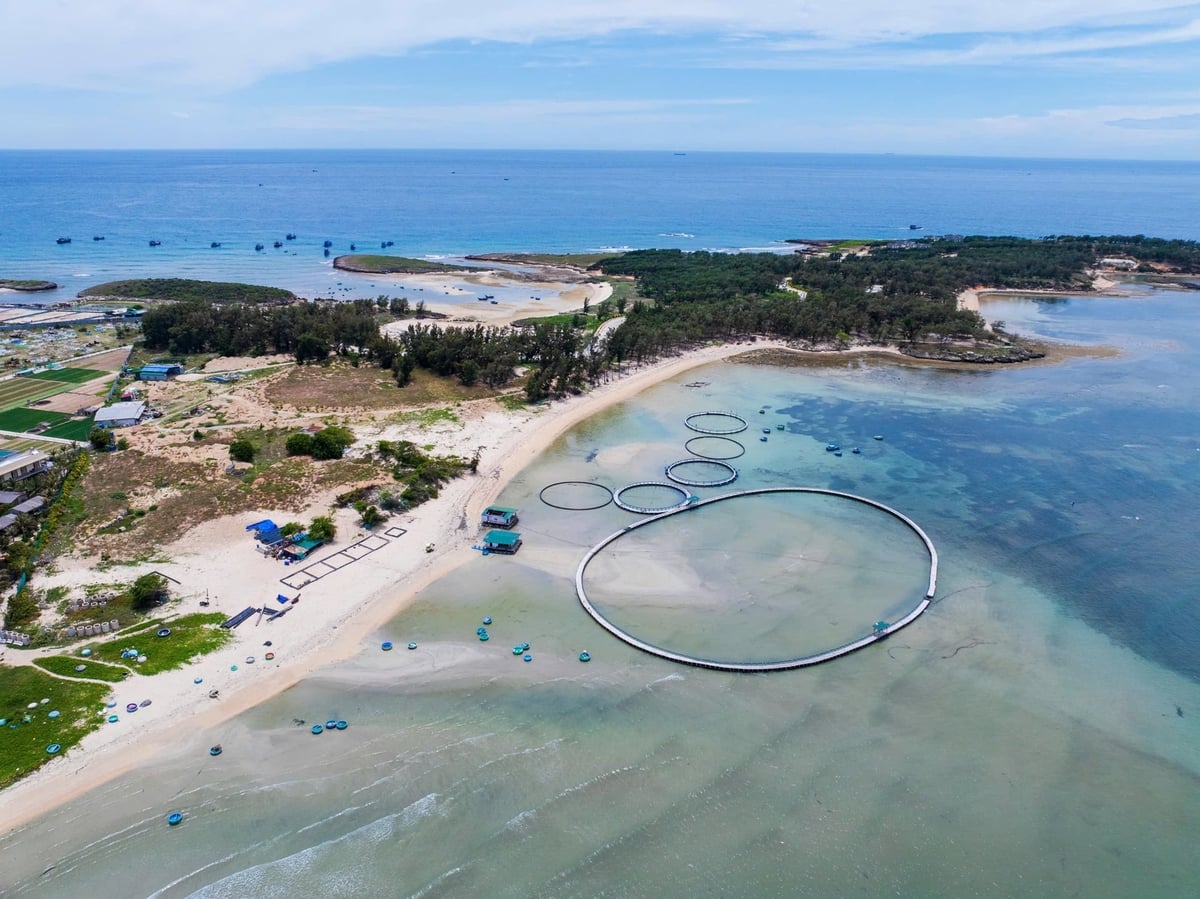
The marine aquaculture model of the Bien Dong Jumping Squid Company in the waters of Khanh Hoa. Photo: Provided by the company.
Deploying this project in the marine territory of the Co To special zone is recognized as a strategic step that institutionalizes the sustainable blue economy policy, which aims to phase out wild catching and accelerate industrial marine aquaculture as championed by Quang Ninh Province.
Distinct from traditional farming models that restrict focus to one or two species, this project establishes a highly diversified marine ecosystem including squid, cuttlefish, loligo squid, pompano, cobia, grouper, clams, sweet snails, gracilaria seaweed, and sea cucumbers, with an expected annual harvest exceeding 839 tons.
Among these, Co To squid has been selected as the flagship product. This is considered a bold direction because, up to this point, this marine species has depended almost entirely on wild catching. If successful, the project will open up the ability to control raw material sources, reduce natural fishing pressure, and elevate the "Co To Squid" brand into a high-value aquaculture product.
Mr. Nguyen Ba Ngoc, Director of the Bien Dong Jumping Squid Joint Stock Company, stated that the enterprise aims to construct a complete value chain for the marine economy, building alliances with local citizens spanning from breeding production and commercial grow-out to harvesting and market consumption.
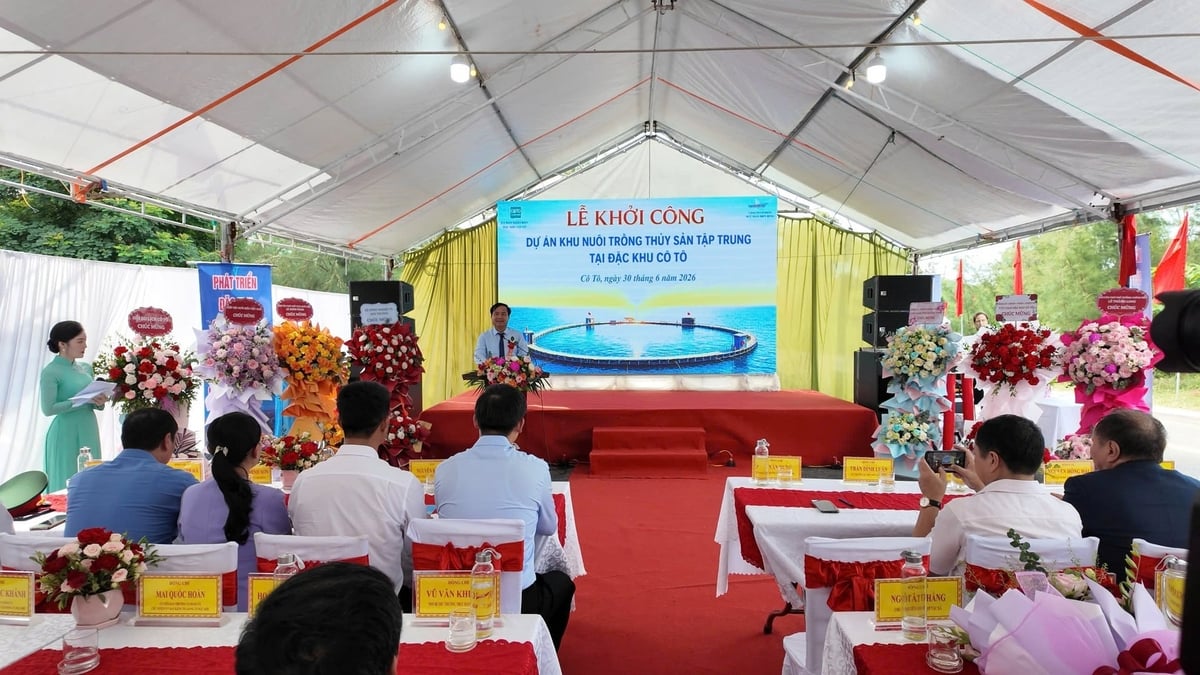
The groundbreaking ceremony of the concentrated aquaculture project in the Co To special zone. Photo: Nguyen Thanh.
Accordingly, the enterprise will invest in technical infrastructure, technology, and management systems; meanwhile, local residents can participate via capital contributions for breeding stocks and feed to produce directly on the modern cage systems. This approach significantly minimizes initial investment costs, offering favorable conditions for fishers to transform their livelihoods and start up businesses within high-tech marine aquaculture.
Beyond securing livelihoods, the project is expected to create stable employment for approximately 100 local workers, while establishing a sustainable alliance chain linking the corporation with cooperatives, collaborative groups, and residents on the island.
The distinct highlight of the project lies in its industrial offshore aquaculture design. Structurally, the entire system utilizes high-tech HDPE cages capable of withstanding severe waves and winds, holding an extended lifespan and high environment-friendliness. The infrastructure comprises 43 circular HDPE cages for fish and squid; 160 square cages for mollusks and seaweed; 20 square cages for marine fish; and 20 square cages for nursing fish and squid fingerlings, alongside an administrative house, a floating power station, and connection bridges serving production.
The entire farming territory is partitioned into specialized zones, such as squid farming, marine fish farming, mollusk and seaweed farming, sea cucumber zones, and nursing zones. This spatial organization allows for much better control over diseases, water quality, and technical workflows compared to individual, small-scale farming practices of the past.
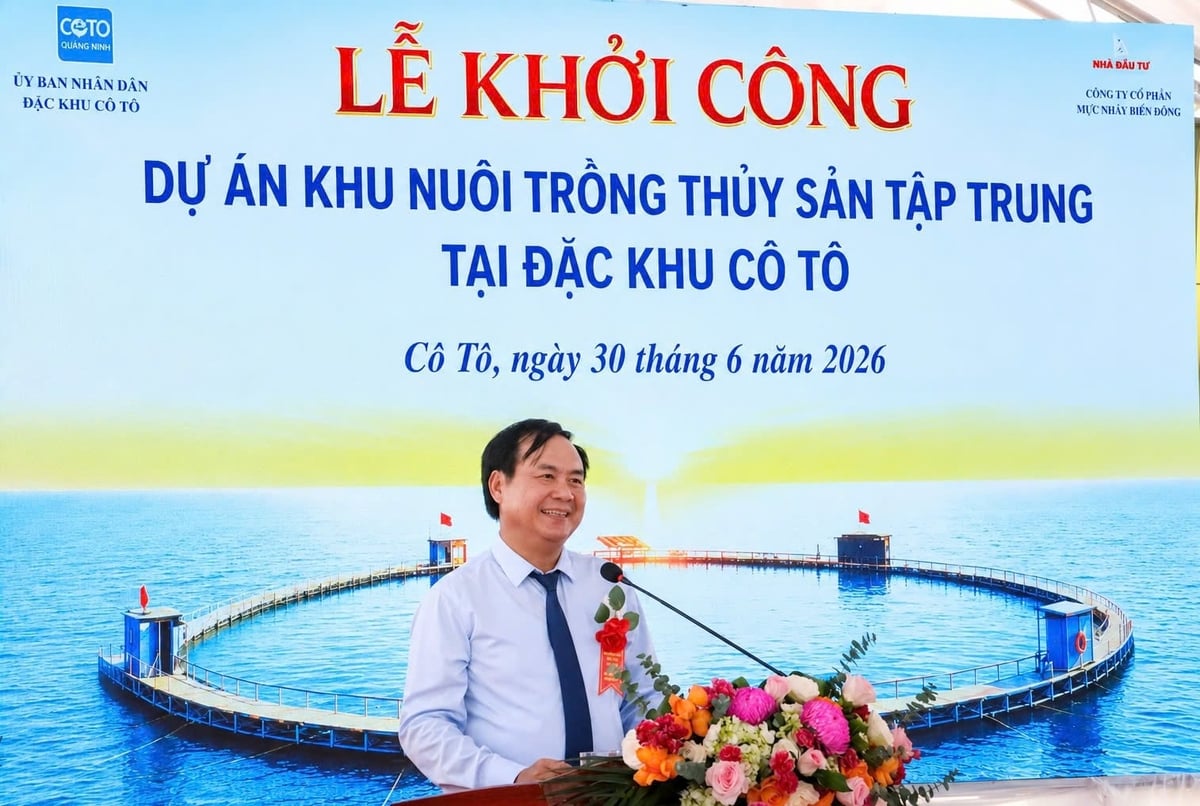
Deputy Minister of Agriculture and Environment Vo Van Hung speaking at the ceremony. Photo: Nguyen Thanh.
Notably, right from the investment preparation phase, the investor was required to conduct biodiversity assessments and build solutions to protect the marine ecosystem before deployment. During operations, the enterprise must strictly comply with environmental regulations, ensuring no polluting discharges, no degradation of the marine ecosystem, and no interference with other legal activities at sea.
In parallel with traditional aquaculture species, the project is conducting pilot research on green pufferfish farming to expand the portfolio of high-economic-value marine species. Another highly anticipated direction is integrating marine aquaculture with experiential tourism, allowing visitors to tour the high-tech cages, explore the production workflows, and enjoy specialties right within the marine space of Co To.
Speaking at the launch ceremony, Deputy Minister of Agriculture and Environment Vo Van Hung emphasized that the event is not merely the groundbreaking of an investment project, but marks a profound transformation in the development mindset of Vietnam's fisheries sector. According to the Deputy Minister, marine aquaculture is transitioning from fragmented, small-scale production to a modern marine aquaculture economy; from merely extracting marine surface potential to actively creating economic value from the ocean; and from competing by output volume to competing via science, technology, quality, branding, and advanced governance capacity.
The Deputy Minister affirmed that the ocean is no longer just a space for survival but is emerging as a fresh growth frontier for the national economy. Marine aquaculture is evolving from a traditional trade into a modern, high-added-value, green, circular, and globally integrated economic sector.
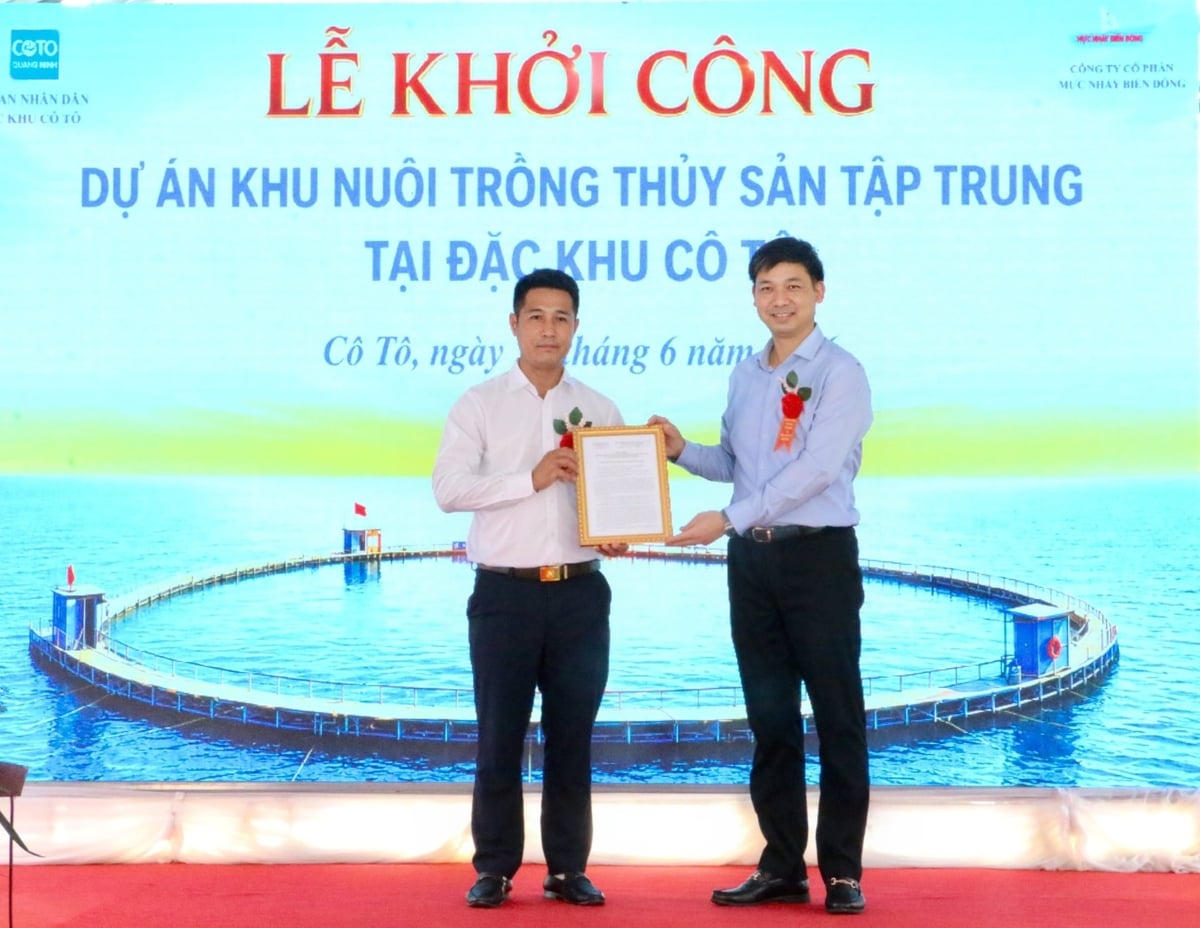
Vice Chairman of the Quang Ninh Provincial People's Committee Nguyen Van Cong (right) handing over the Decision on Marine Area Allocation to the Bien Dong Jumping Squid Company. Photo: Nguyen Thanh.
Highly appreciating Quang Ninh's potential, Deputy Minister Vo Van Hung stated that the province converges all necessary conditions to become the country's pioneer in industrial marine aquaculture. However, the ultimate target must extend beyond manufacturing growth to establishing Quang Ninh as Vietnam's center for marine aquaculture innovation, a birthplace for modern governance models, pioneering technologies, and new value chains that can be replicated across coastal provinces nationwide.
To materialize this ambition, the Deputy Minister noted that Quang Ninh must continue perfecting its planning and organizing the efficient use of marine space; developing synchronized infrastructure for marine farming; accelerating digital transformation in farming zone management; strengthening environmental monitoring and early warning systems; and actively attracting corporate leaders with the technical, financial, and managerial capacities to develop large-scale marine aquaculture.
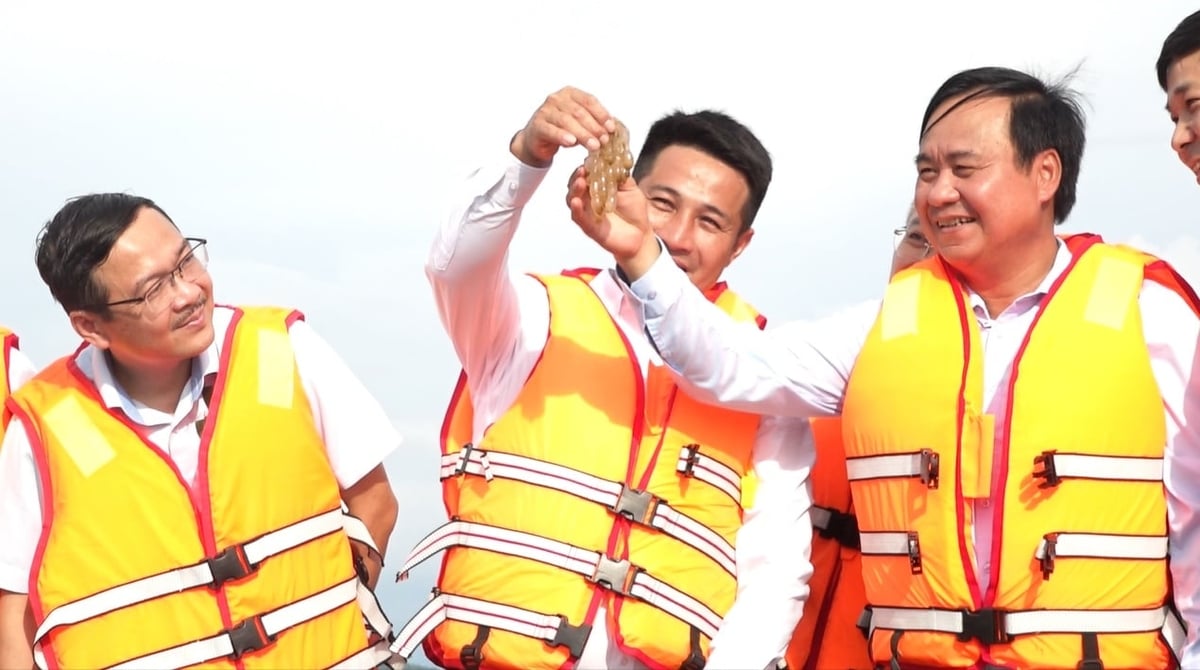
Delegates visiting the squid farming model. Photo: Nguyen Thanh.
Concurrently, expanding marine aquaculture must always remain tightly linked with conserving marine ecosystems, protecting the environment, adapting to climate change, securing national defense and safety, and fostering sustainable livelihoods for the fishing community.
With a coastline spanning over 250 km, more than 2.000 islands, and a vast marine territory, Quang Ninh possesses ideal advantages for large-scale aquaculture. Following years of transition toward eco-friendly floating materials, zoning aquaculture areas, and perfecting management mechanisms, the launch of the Co To Jumping Squid Project is considered the first concrete step to turn marine farming into a modern industrial economic sector.
Deputy Minister Vo Van Hung also urged enterprises to view investing in marine aquaculture as an investment for the future, placing severe focus on science and technology, digital transformation, artificial intelligence, automation, high-quality breeding stocks, deep processing, and constructing national brands for Vietnamese marine aquaculture products.
Enterprises need to develop along closed value chains, strengthening ties with cooperatives and local citizens to share benefits, generate jobs, and uplift the incomes of coastal fishing communities.
Rather than just adding a new investment project, Co To Jumping Squid is highly expected to become a benchmark model for industrial offshore aquaculture across the Northeastern region, contributing to building a sustainable fisheries value chain, maximizing fishers' incomes, and lowering natural wild-catching pressures.
Translated by Ha Chi

(VAN) Viet Nam is actively preparing to participate in GREEN EXPO 2027 to promote its image as a green, sustainable, and innovative nation on the global stage.

(VAN) Lai Chau is passing by in a hurried rhythm at this time. Everyone is working tirelessly against the clock, devoting all efforts to overcoming the aftermath of the disaster.

(VAN) Some countries consider agriculture a public service, so the state must invest in it, according to Ass. Prof Dr. Dao The Anh, former Deputy Director of the Viet Nam Academy of Agricultural Sciences.

(VAN) The Minister of Agriculture and Environment of the Lao PDR recognizes the VRG's significant contributions over two decades of investment and operations in Laos.

(VAN) The VNMHA held a conference to review its work over the first six months of the year and set out priority directions and tasks for the second half of 2026.

(VAN) Khanh Hoa Sea Festival 2026, themed ‘Colors of the Ocean - Reaching International Scale,’ conveys a message of green marine economic development, integration, and Khanh Hoa's rising position.

(VAN) Viet Nam and the Food and Agriculture Organization of the United Nations (FAO) have launched a project to strengthen water resources management, reduce pollution and restore water quality in the Gulf of Tonkin.
