December 7, 2025 | 11:40 GMT +7
Hotline: 0913.378.918

December 7, 2025 | 11:40 GMT +7
Hotline: 0913.378.918
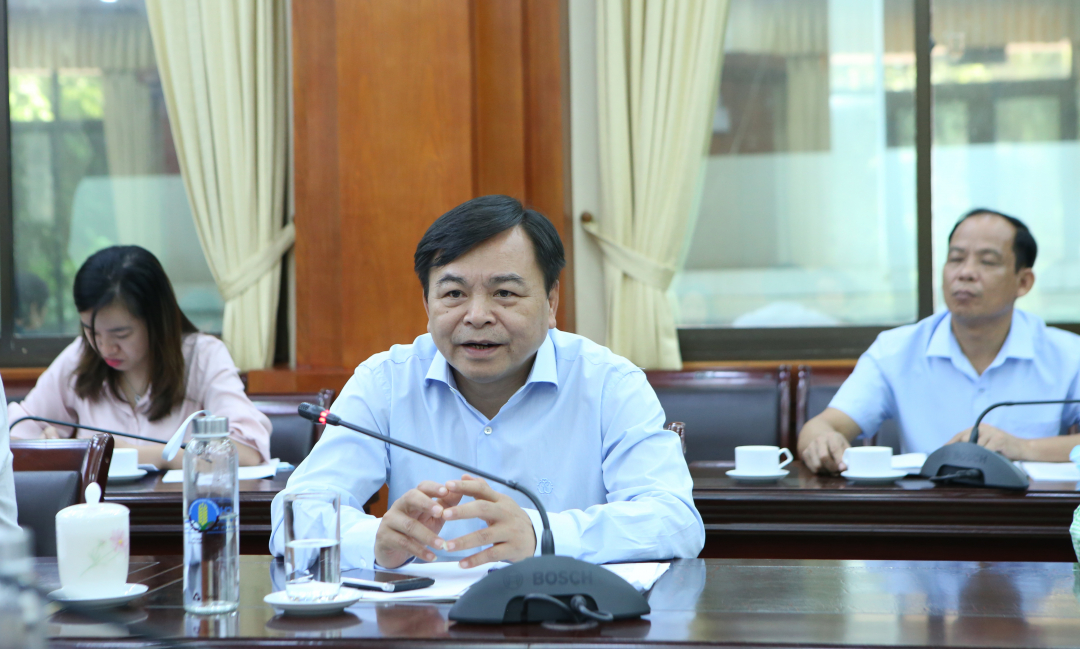
Mr. Nguyen Hoang Hiep, Deputy Minister of Agriculture and Rural Development, discusses clean water, sanitation, and disaster risk management with UNICEF. Photo: Minh Phuc.
Mrs. Lesley Miller, Deputy Representative of the United Nations Children's Fund (UNICEF) in Vietnam, shared: "The two areas are clean water, sanitation, and disaster risk management are the most important activities among the cooperation framework between UNICEF and Vietnam's Ministry of Agriculture and Rural Development, to reduce damage caused by climate change and natural disasters."
MARD is an essential partner, according to Ms. Lesley Miller. Both sides have the same mission as to improve the lives of people in rural areas, emergency response, relief, and humanitarian assistance. Therefore, the cooperation between the two sides is extraordinary.
Within the cooperation framework with MARD in the 2022-2026 period, UNICEF is expected to prioritize four clean water and environmental sanitation activities.
UNICEF keeps doing unfinished tasks related to children's health, especially clean water and sanitation for disadvantaged groups in society.
UNICEF will continue to cooperate in communication and public mobilization. Thereby, it can raise people's and children's awareness and change their behavior to have healthy habits and the need to use clean water with sanitation.
In addition, UNICEF will prioritize activities to improve people's resilience related to climate change and emergency disaster preparedness, applying modern and smart technologies at reasonable prices, creating opportunities for children and people to access clean water, especially in schools.
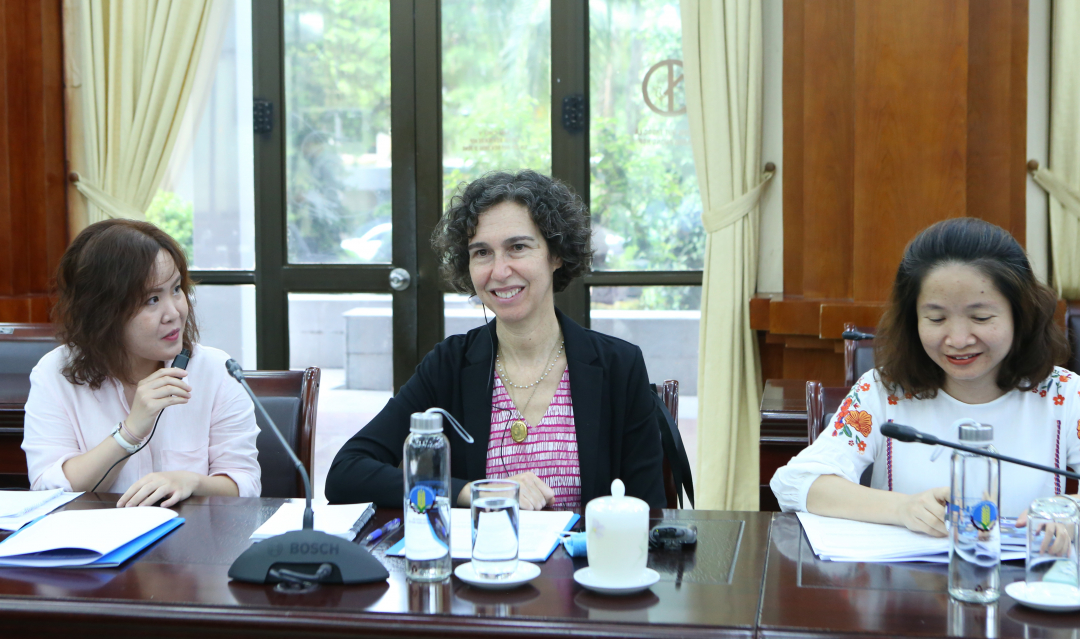
Mrs. Lesley Miller, Deputy Representative of UNICEF in Vietnam. Photo: Minh Phuc.
According to the General Department of Disaster Prevention and Control, UNICEF has supported nearly USD 1 million in the past five years.
UNICE had many meaningful activities such as emergency support for storms and floods in the Central region in 2020 (providing water purification equipment); supporting water tanks for people in the Mekong Delta suffering from drought and saltwater intrusion in 2019 - 2020; supporting the development of a legal document system: supporting the assessment of the capacity of the disaster prevention system; assist in the revision of the Law on Natural Disaster Prevention and Control; develop a communication plan in the Mekong Delta region; mapping disaster risk reduction, etc.
Currently, UNICEF is supporting Vietnam in disaster risk reduction activities in the context of the risk of dual effects of natural disasters and the Covid-19 epidemic, as well as cooperating in the 2021-2025 period to implement the project "Strengthen the resilience of the children to disaster risks and climate change".
In the context of increasingly severe natural disasters in Vietnam, the General Department of Natural Disaster Prevention and Control proposed UNICEF continue to support Vietnam in coordination, response preparation, and timely response in the areas of UNICEF's strengths. In particular, communication plays an important role in disaster prevention.
As for the policy, this is a critical component in institutional reform. There is a new provision on database collection in the revised Law on Natural Disaster Prevention and Control. MARD has asked UNICEF to assist in collecting and building a disaster prevention database, especially the community level's data on the vulnerability of children, families, and communities.
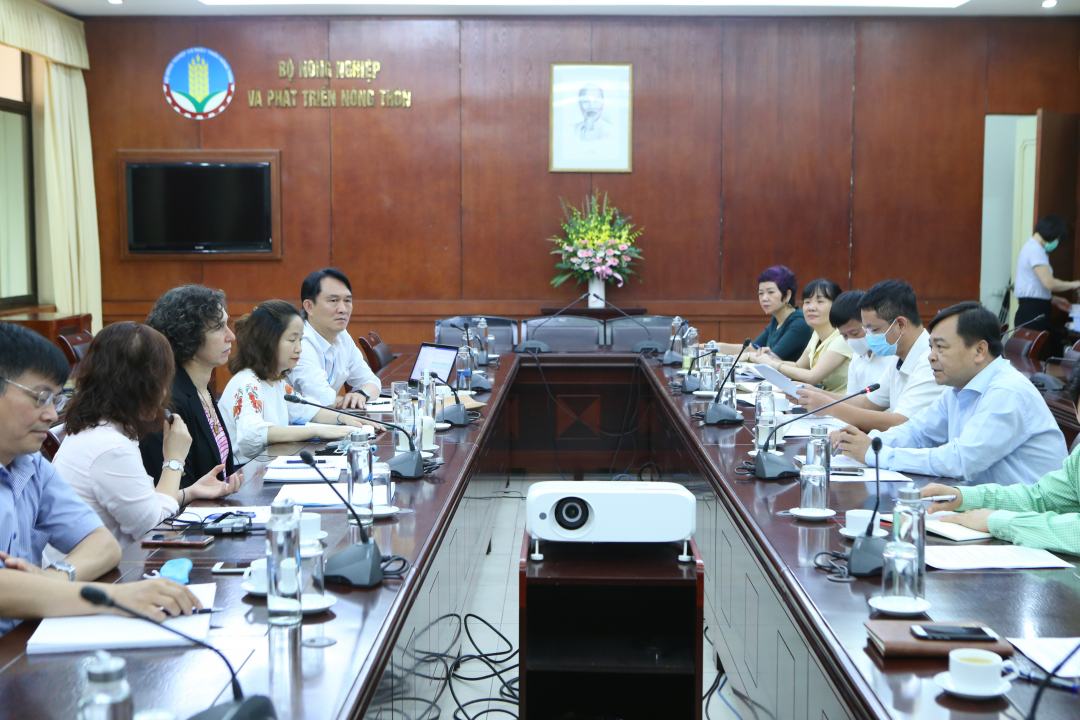
The meeting is held on 29 June morning between MARD and UNICEF. Photo: Minh Phuc.
The last component is implementing a safe, green, clean, and beautiful community. UNICEF has supported the model development, so MARD requested UNICEF to help pilot implementation and replication of the model to complete Project No.553 on Community awareness-raising and community-based disaster risk management approved by the Prime Minister before.
Mr. Nguyen Hoang Hiep, Deputy Minister of Agriculture and Rural Development, said that the Vietnamese Government would allocate a budget in the coming time to completely solve the problems of rural clean water in difficult areas, especially those in the northern mountainous extreme areas such as Meo Vac, Dong Van districts, Ha Giang province, and areas affected by drought and saltwater intrusion in the Mekong Delta.
Simultaneously, the Government of Vietnam will continue to get a loan from the World Bank to provide clean water for the remaining 17 provinces facing difficulties in water resources.
In the next 5 years, MARD will cooperate with UNICEF to build and propose to the Government appropriate policies, especially policies in a public-private partnership, whereby the private sector can participate in the clean water sector in easy ways.

(VAN) As of 2025, the ASEAN region has a total of 69 ASEAN Heritage Parks recognized across its 10 member states. Among them, Viet Nam contributes 15 ASEAN Heritage Parks.

(VAN) Yok Don National Park has high biodiversity with numerous endemic plant and animal species, and it is also the only dipterocarp forest ecosystem conservation area in Viet Nam.

(VAN) Viet Nam and Brunei signed two important MOUs on fisheries and IUU, expanding cooperation in agriculture, the environment, and Halal exports, aiming to substantively implement joint projects.

(VAN) The Viet Nam Coconut Association worked with the International Finance Corporation (IFC) and businesses to promote the supply chain, enhance competitiveness, and develop the coconut industry sustainably.
![Hue aims for Net Zero: [2] Pioneering low-emission tourism](https://t.ex-cdn.com/nongnghiepmoitruong.vn/608w/files/huytd/2025/12/04/0633-dulichzero-4-095634_236-161125.jpg)
(VAN) The ancient capital of Hue has developed Net Zero tourism products and models, aiming to reduce carbon emissions and pioneer the establishment of Viet Nam's green tourism destination.

(VAN) C.P. Viet Nam has announced the successful completion of its goal to plant 1.5 million trees during the 2021-2025 period, a key milestone within company's long-term ESG strategy and its roadmap for emission reduction.

(VAN) This is an initiative of MAE aimed at creating a unified coordination mechanism to implement agricultural cooperation programs with developing countries.
