December 17, 2025 | 14:31 GMT +7
Hotline: 0913.378.918

December 17, 2025 | 14:31 GMT +7
Hotline: 0913.378.918
If you believe that digital technology is exclusively for offices, consider the outdated smartphone that the refuse collector at your street corner is currently employing. You might be surprised: from that modest device, tons of urban waste are being recorded, digitized, and contributing to lowering the greenhouse gas emissions in your city.
This is the story of Waznet, the first digital app made by the Center for Environment and Community Research (CECR). The app was introduced as part of the "Promoting Human Rights and Gender Equality through Climate Change and Disaster Risk Reduction Actions" initiative, which was implemented by UN Women with the assistance of the governments of Sweden and New Zealand. In an effort to combat climate change, Waznet targets Vietnam's informal women laborers, converting their silent efforts into tangible data.
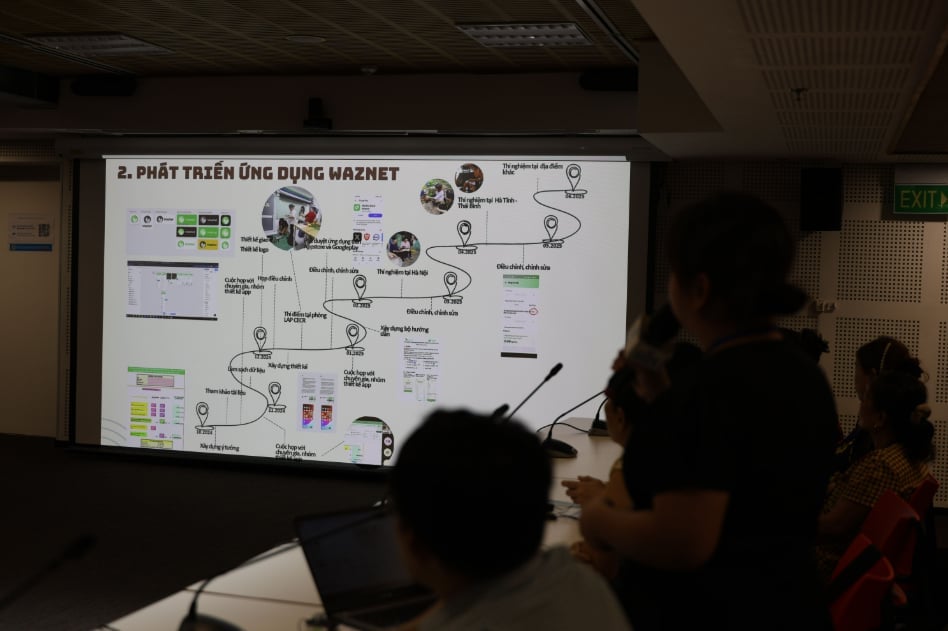
Waznet allows informal women waste laborers to digitally monitor their contributions to Vietnam's climate initiatives. Photo: UN Women.
The initiative has transitioned to a new phase, "Women for Climate-Resilient and Adaptive Societies: Promoting Gender Equality and Women's Rights through Climate Action and Disaster Risk Reduction (2025–2026)," following its initial success. The objective of this phase is to enhance the leadership and participation of women in the reduction of disaster risk and climate resilience in Vietnam.
The project's primary objective is to guarantee that "women's groups and other vulnerable communities are represented as environmental stakeholders in decision-making related to climate and disaster risk".
Vietnam is not an exception to the crisis of climate change, which affects all nations. From catastrophic floods to record-breaking heatwaves, the consequences of greenhouse gas emissions are increasingly apparent. In this context, female scrap collectors are quietly helping clean up cities, reduce landfill waste, and thus cut emissions. However, their contributions are typically not officially recognized.
"In the past, I was capable of collecting as much as 3,000 kg of scrap per day; however, this figure has decreased to approximately 800–1,200 kg". Prices have gone down, salaries are uncertain, and living is more dangerous, but we're still holding on to the job, Ms. Ngo Thi Thu, a rubbish picker in Me Tri Thuong, said. "It's easy work, but I'm happy to know that I'm helping to keep the city clean and the air fresh".
Approximately 1.8 million urban women in Vietnam, who serve as silent warriors in the environmental protection movement, identify with Thu's narrative.
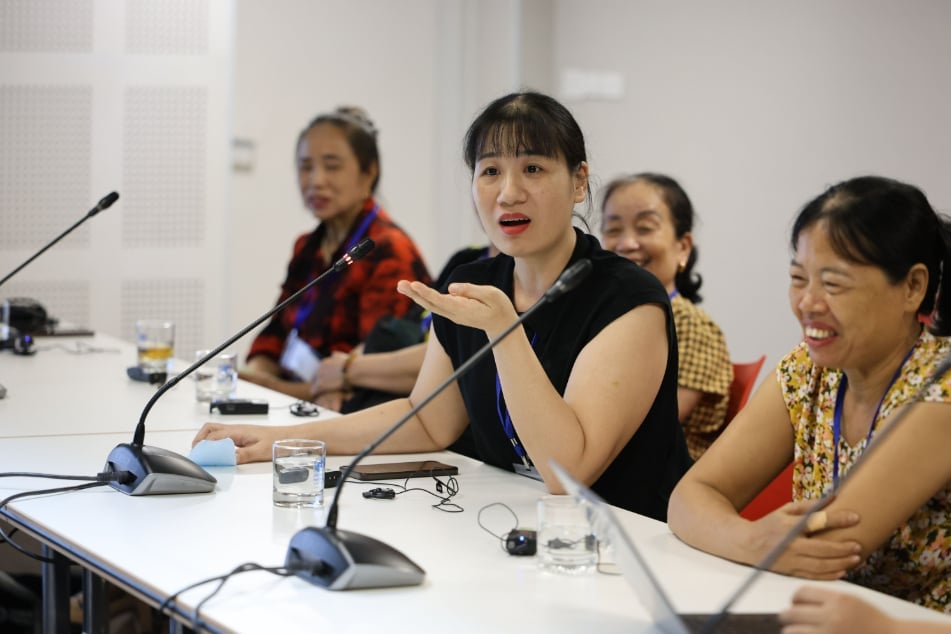
Ms. Ngo Thi Thu (center, in black) and millions of women scrap collectors remain dedicated to their position in the clean-up of Vietnam's cities, despite their low earnings. Photo: UN Women.
Recognizing the uncredited value of their work, CECR and its partners began developing Waznet in 2019, a mobile app designed specifically for informal women waste workers. It enables users to document each bag, bottle, or can they collect, thereby converting their endeavors into transparent data for climate policy, reporting, and national commitments.
In comparison to the business-as-usual scenario, Vietnam's updated Nationally Determined Contributions (NDC) target an 18.3% reduction in greenhouse gas emissions from the waste sector by 2030, which is equivalent to 8.46 million tons of CO₂e. It is impossible to achieve this objective without the involvement of informal waste collectors, and Waznet is establishing a platform for them to express their opinions and have their influence acknowledged.
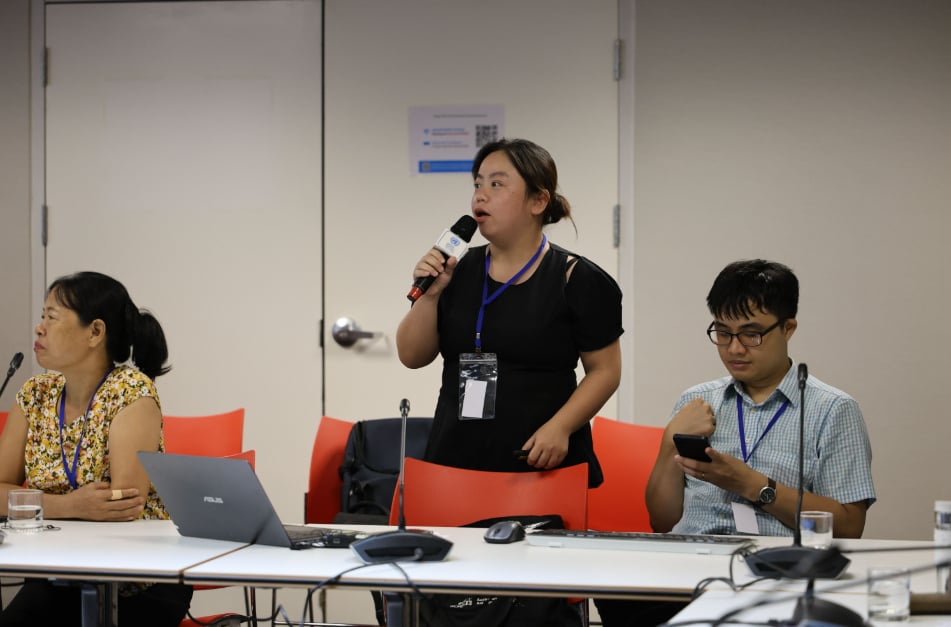
According to Ms. Doan Bao Han (CECR), the recycling initiative has enabled numerous women in Hanoi, Thai Binh, and Ha Tinh to increase their income, while simultaneously contributing to the reduction of emissions on a large scale. Photo: UN Women.
Six households and 15 waste collectors in Hanoi collected 4.6 kg of recyclable refuse (from households), resulting in a 61.8 kg reduction in CO₂ emissions, and 86 tons of waste (from the collectors), resulting in a 38 tons reduction in CO₂ emissions, in just a 7-day pilot. Other provinces are implementing the model, which has transformed "waste picking" into a tangible climate action.
The innovation has not gone unnoticed. Ms. Parimita Mohanti, Director of the Empower II initiative under the UN Environment Programme (UNEP), commended Vietnam's innovative approach to waste management, which not only mitigates emissions but also generates employment opportunities for women.
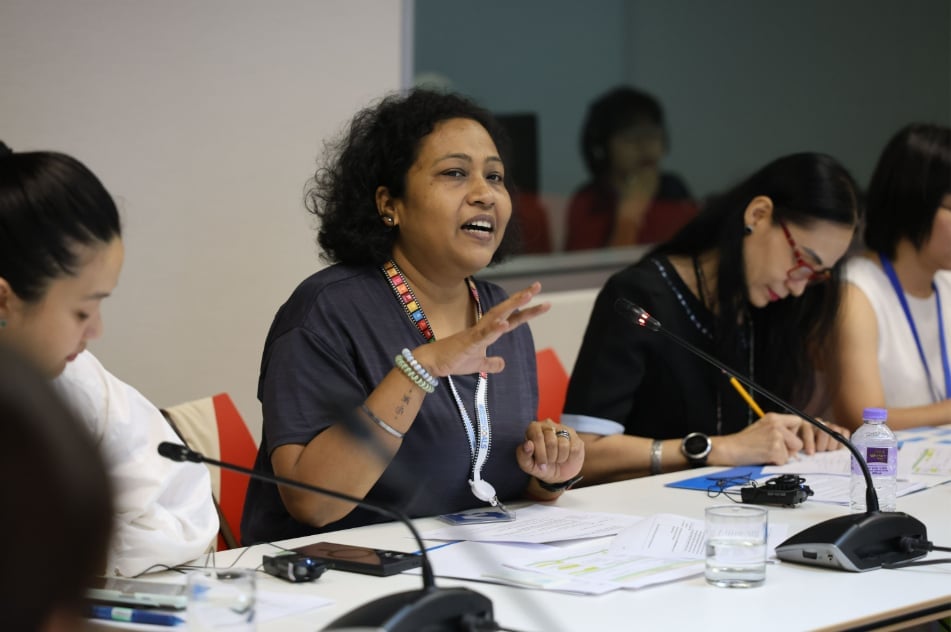
Ms. Parimita Mohanti, Director of the Empower II project (United Nations Environment Programme - UNEP), highly appreciated Vietnam's pioneering role in waste management, contributing to reducing greenhouse gas emissions and creating more livelihoods for women. Photo: UN Women.
"Waste management is a critical area for reducing emissions and facilitating economic opportunities for women." She stated that Vietnam has succeeded in a feat that many nations continue to strive for: the transformation of a local initiative into a global solution.
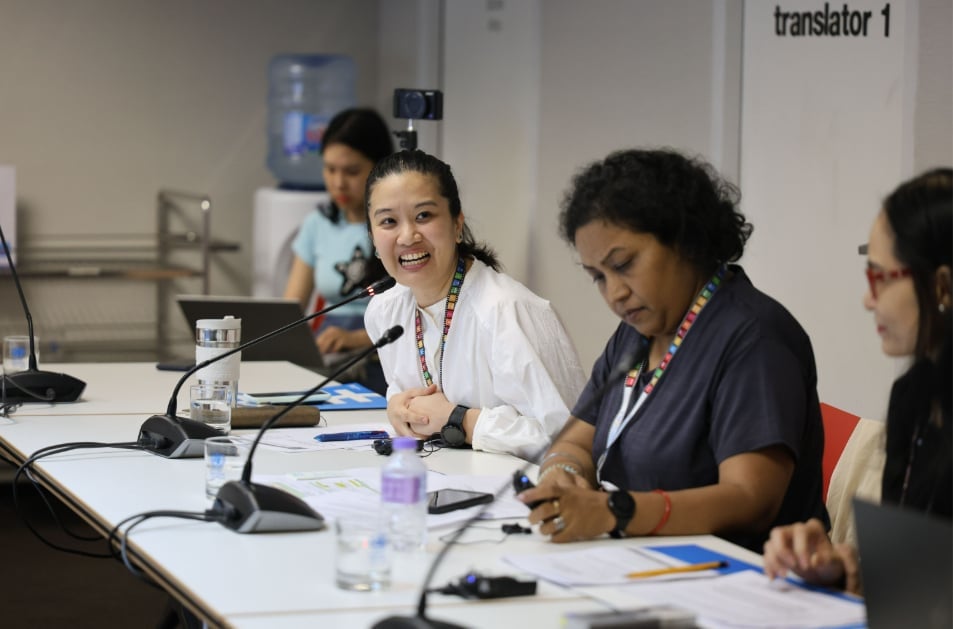
Ms. Athena Denise Galao, Head of Climate Change, Disaster and Humanitarian Response Team for Asia and the Pacific, UN Women Vietnam. Photo: UN Women.
Ms. Athena Denise Galao, Head of Climate Change and Humanitarian Action for UN Women Asia-Pacific, also emphasized the importance of Vietnamese civil society organizations developing digital tools specifically designed to meet the community's needs. That is exceedingly uncommon and necessitates expansion. Women's voices will be more effectively represented in all climate policies as a result of this foundation.
Waznet has demonstrated that even the most marginalized individuals can become "digital warriors" with the appropriate instrument, despite the fact that not everyone is comfortable using smartphones and there are still remaining barriers. These small devices and hardworking hands have the potential to be a critical link in assisting Vietnam in achieving its climate objectives, thereby constructing greener cities that flourish not only in reports but also in the daily lives of each citizen.
Translated by Linh Linh

(VAN) UNICEF and IOM receive this aid and provide essential services to assist families affected by recent storms and floods.

(VAN) Circular economy is regarded as a suitable pathway for Viet Nam’s fisheries sector, helping to improve production efficiency, optimize resources, and reduce environmental pressure.

(VAN) Vietnam and the UK are promoting cooperation in agriculture, environment, renewable energy, and green transition, with the goal of achieving Net Zero.

(VAN) Switzerland highly values carbon credit cooperation potential with Viet Nam and hopes to begin negotiations under Article 6 of the Paris Agreement.

(VAN) Northwestern women not only preserve traditional weaving but also leverage their cultural identity to create livelihoods, while spreading it to tourists through authentic experiences.

(VAN) Based on research results and production practices, the international scientific community evaluates UNI 126 as one of the world's best Panama disease-resistant banana varieties.

(VAN) More than 10,000 hectares of Cavendish bananas (Philippines), once abandoned due to the Panama Fusarium wilt Tropical Race 4 (TR4) disease, have now been brought back into production by switching to the Formosana variety.
