July 21, 2026 | 16:46 GMT +7
Hotline: 0913.378.918

July 21, 2026 | 16:46 GMT +7
Hotline: 0913.378.918
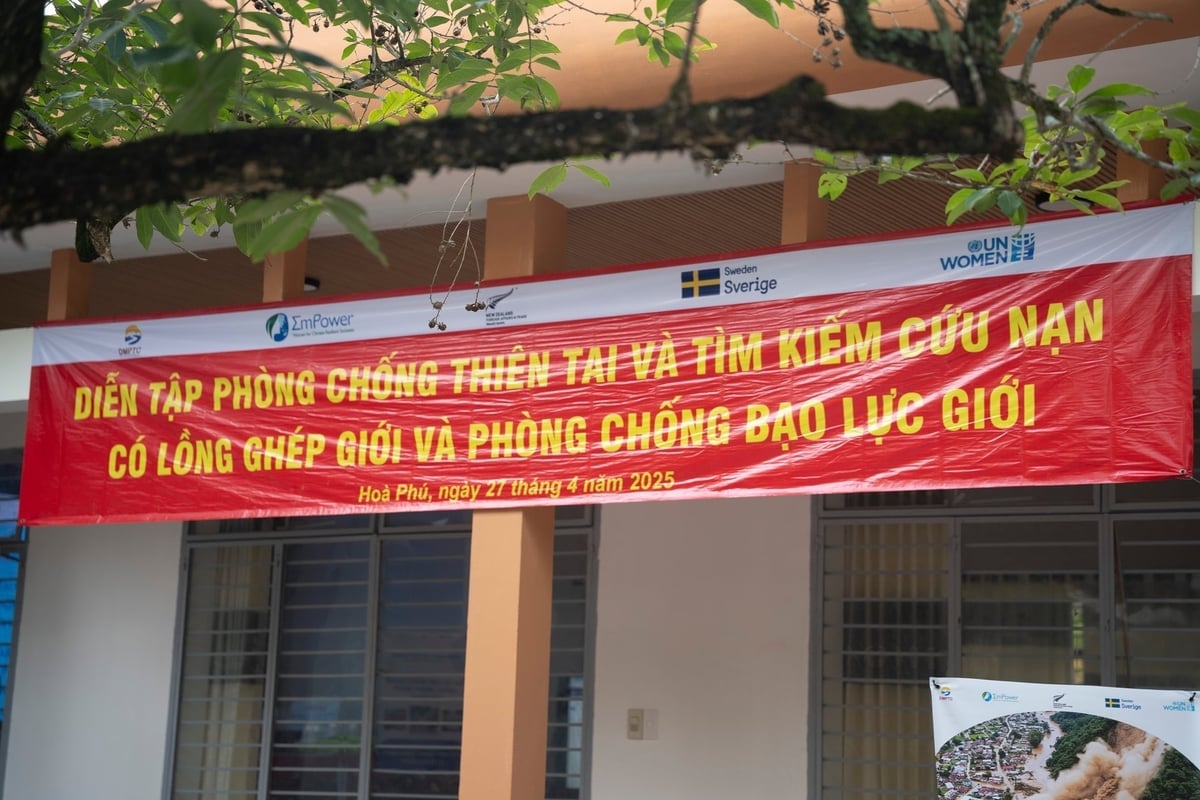
A gender-inclusive disaster preparedness drill in Hoa Phu commune, Da Nang, aims to improve protection for women, children and vulnerable groups. Photo: Hong Ngoc.
On the morning of April 27, nearly 300 residents of Hoa Phu commune (Hoa Vang district, Da Nang city) participated in a disaster prevention, preparedness, and search-and-rescue exercise that included gender aspects and the prevention of gender-based violence. It was the first time that the city implemented a comprehensive exercise model with the objective of more effectively and equitably safeguarding women, children, the elderly, and individuals with disabilities during disasters.
The Disaster Management Policy and Technology Center (under the Directorate of Water Resources and Disaster Management, Ministry of Agriculture and Environment) co-organized the program in collaboration with the Steering Committee for Disaster Prevention and Search-and-Rescue of Hoa Phu Commune. UN Women provided technical support, and the governments of New Zealand and Sweden offer funding.
Women and children are at a disproportionately high risk of mortality, loss of livelihoods, and difficulties in recovery during disasters, as indicated by research conducted by the United Nations. Response plans must be sensitive and responsive to the diverse requirements of communities, as the risk of gender-based violence increases during emergencies.
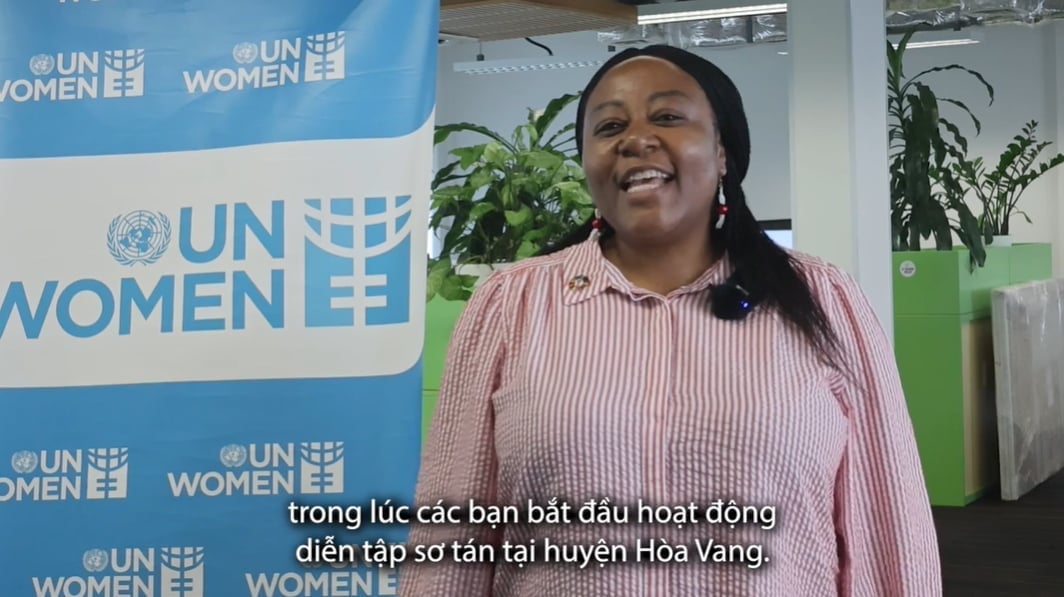
Ms. Caroline T. Nyamayemombe, UN Women Representative in Vietnam, spoke online, emphasizing the importance of integrating gender factors in disaster response. Photo: Hong Ngoc.
Ms. Caroline T. Nyamayemombe, UN Women Representative in Vietnam, underscored the importance of the online training exercise, stating, "Today's training session encourages us to contemplate how we can more effectively address the needs of women, children, persons with disabilities, and other vulnerable groups. If these needs are not addressed promptly, the recovery process will be hindered and community resilience weakened.”
Ms. Rebecca Wood, the Deputy Ambassador of New Zealand to Vietnam, also remarked remotely: "This exercise represents a significant advancement in the provision of emergency responses that are inclusive, gender-sensitive, and responsive to the diverse needs of all community members, irrespective of their gender, age, or ability. We hope this exercise reinforces the message that gender considerations should not be an afterthought but integrated right from the start in all disaster management activities.”
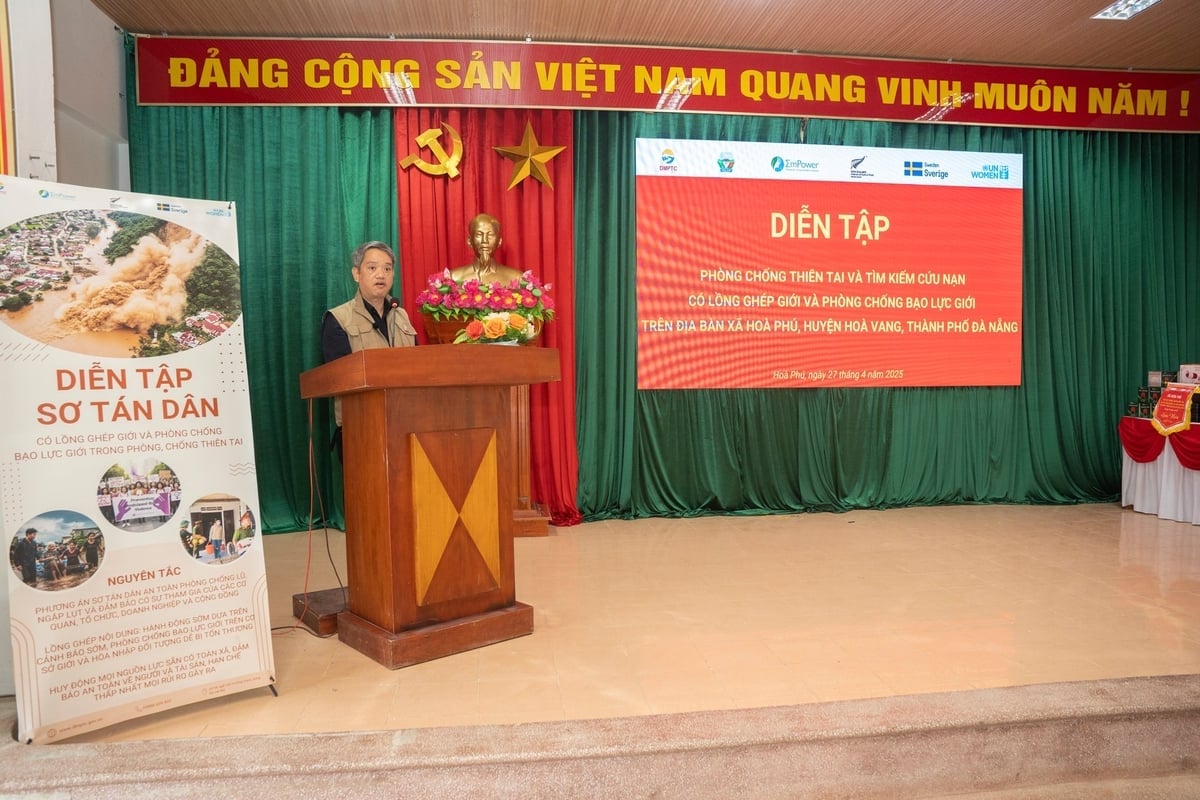
Mr. Bui Quang Huy, Deputy Director of the Center for Policy and Techniques for Natural Disaster Prevention and Control, spoke at the natural disaster prevention and control drill in Hoa Phu commune, Da Nang city. Photo: Hong Ngoc.
"The effectiveness of disaster prevention at the local level is based upon gender equality and the prevention of gender-based violence," stated Mr. Bui Quang Huy, Deputy Director of the Disaster Management Policy and Technology Center. This integration guarantees that women, girls, elderly people, and those with disabilities are prioritized for protection during evacuations and emergency responses, thereby guaranteeing that no one is abandoned.
Gender considerations were integrated into each phase of the training session, in addition to adhering to the "Four On-the-Spot" principle. The primary objective of the activities was to establish a secure environment for vulnerable groups, with the intention of preventing physical, emotional, sexual, and economic misconduct against all community members.
Ms. Ra Pat Thu Phuong (Phu Tuc village, Co Tu ethnic group) remarked on the 2023 storm after the training session: "The land slid violently during the night, and water flooded our house when the floods came." Urgent evacuation was necessary for my family. In a state of apprehension, I couldn't help but envision holding my child tightly and requesting that my parents and husband evacuate promptly.
Ms. Phuong acquired numerous practical skills as a result of her involvement in this event: "I have acquired the ability to evacuate individuals and livestock in order to safeguard our property and lives." Additionally, I received instruction on the identification of domestic violence and sexual abuse at the evacuation shelter, as well as the process of contacting a hotline for assistance.
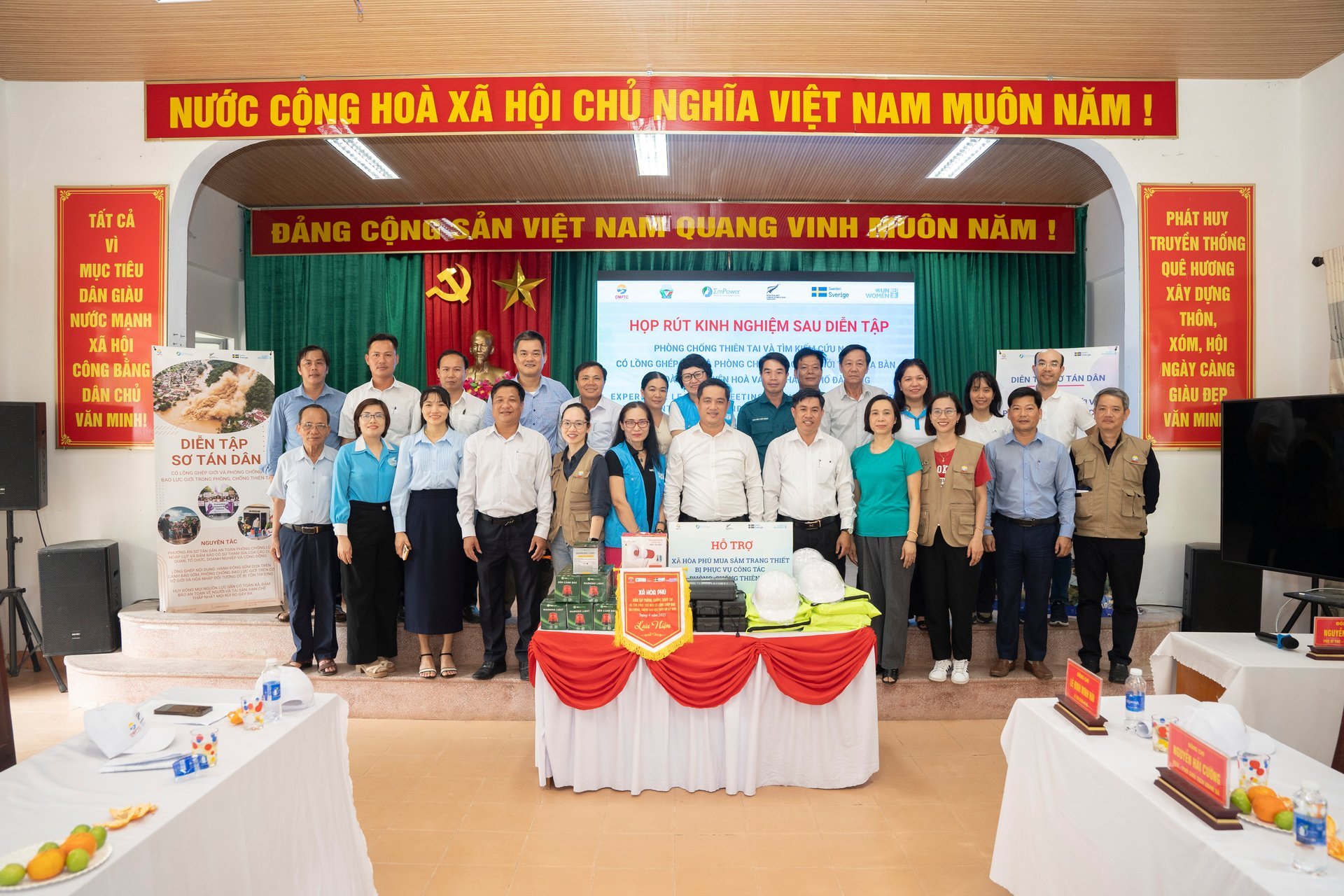
After the gender-integrated disaster prevention exercise, participants and delegates from Hoa Phu commune commemorated the event by taking commemorative photos, thereby fostering the development of more sustainable and secure communities. Photo: Hong Ngoc.
Additionally, she disclosed, "We got informative leaflets, instant noodles, and instant porridge. I was at ease knowing that the shelter had an adequate number of handwashing facilities and separate, clean restroom areas for men and women, which guaranteed the protection of my family and the community."
The exercise at Hoa Phu is expected to lay the groundwork for the nationwide implementation of gender-sensitive disaster management models, thereby promoting the development of more resilient, equitable, and secure communities in the face of climate change.
Translated by Linh Linh

(VAN) Viet Nam is actively preparing to participate in GREEN EXPO 2027 to promote its image as a green, sustainable, and innovative nation on the global stage.

(VAN) Lai Chau is passing by in a hurried rhythm at this time. Everyone is working tirelessly against the clock, devoting all efforts to overcoming the aftermath of the disaster.

(VAN) Some countries consider agriculture a public service, so the state must invest in it, according to Ass. Prof Dr. Dao The Anh, former Deputy Director of the Viet Nam Academy of Agricultural Sciences.

(VAN) The Minister of Agriculture and Environment of the Lao PDR recognizes the VRG's significant contributions over two decades of investment and operations in Laos.

(VAN) The VNMHA held a conference to review its work over the first six months of the year and set out priority directions and tasks for the second half of 2026.

(VAN) Khanh Hoa Sea Festival 2026, themed ‘Colors of the Ocean - Reaching International Scale,’ conveys a message of green marine economic development, integration, and Khanh Hoa's rising position.

(VAN) Viet Nam and the Food and Agriculture Organization of the United Nations (FAO) have launched a project to strengthen water resources management, reduce pollution and restore water quality in the Gulf of Tonkin.
