July 21, 2026 | 21:40 GMT +7
Hotline: 0913.378.918

July 21, 2026 | 21:40 GMT +7
Hotline: 0913.378.918
As the agricultural sector gradually shifts toward modernization, safety and sustainability, greenhouse muskmelon farming models in Long Binh Ward are showing many positive results. In addition to increasing product value, these models are opening new opportunities for local farmers to adapt to climate change and to meet increasingly demanding market requirements.
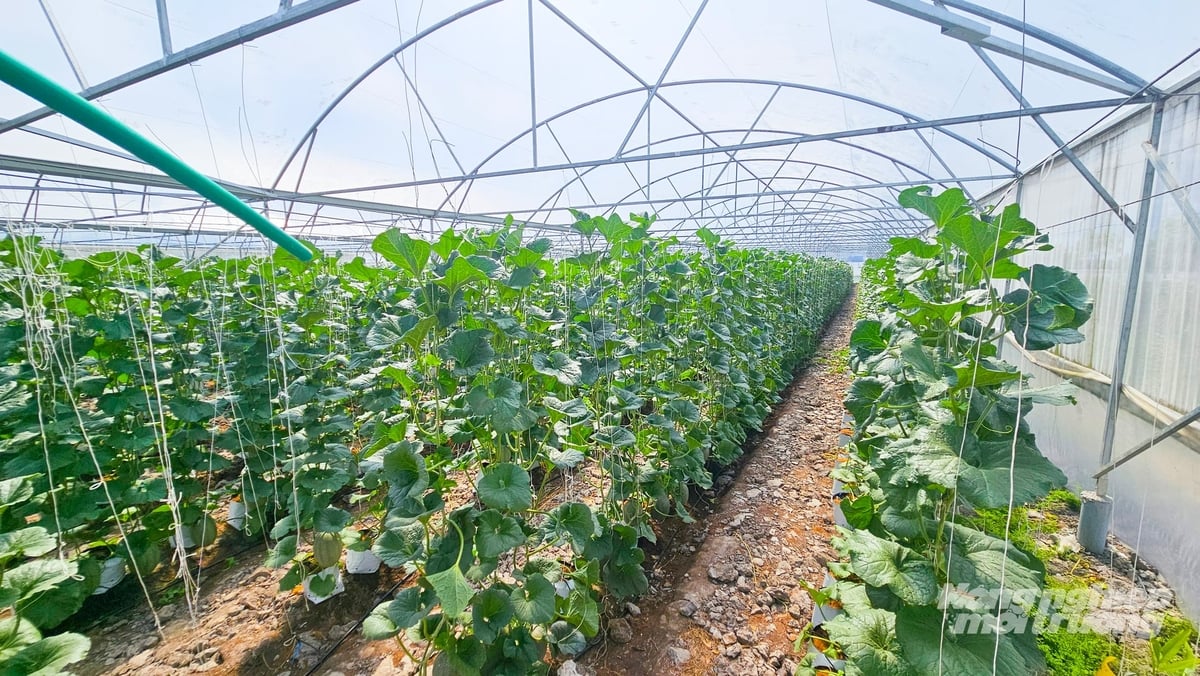
Greenhouse muskmelon farming models in Long Binh Ward help increase the value of agricultural products and open up pathways for clean agriculture development in the locality. Photo: Van Vu.
At Minh Anh Agriculture and Trading Service Cooperative, a clean muskmelon farming model is being systematically implemented across 1.2 hectares, with around 15,000 melon vines per crop and nearly 4 crops produced annually. Key varieties such as green Ha Uyen melons and yellow melons for the Lunar New Year market have gradually established a strong market presence thanks to their consistent quality and attractive appearance.
According to Mr. Duong Le Bang Phuong, “Thanks to the greenhouse model, the cooperative’s muskmelon production has reduced pest and disease pressure and significantly lowered the use of chemical pesticides, thereby improving product quality and safety. Each year, the cooperative supplies around 70-80 tons of melons to the market.”
Currently, about 70% of the cooperative’s melon output is sold through wholesale markets, while the remainder is retailed locally. Selling prices remain relatively stable, ranging from VND 20,000-26,000 per kilogram at wholesale markets, while premium-grade melons can reach up to VND 45,000 per kilogram in retail sales. Under favorable production conditions, the model generates annual profits of around VND 400-500 million before deducting initial investment costs.
However, according to Mr. Phuong, the cooperative still faces many challenges, including unpredictable weather, flooding risks, and especially power outages during the rainy and flood season, which directly affect automated irrigation and crop management systems.
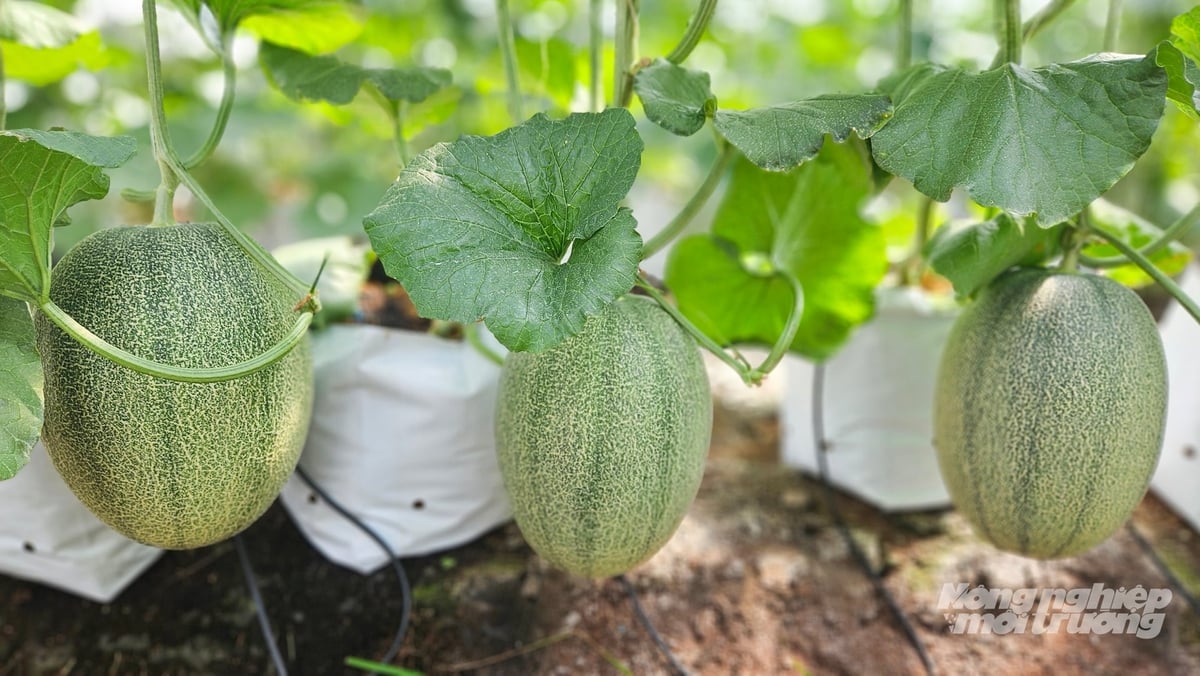
Muskmelons develop uniformly with attractive appearance thanks to the application of clean cultivation processes in greenhouse systems. Photo: Van Vu.
Mr. Nguyen Thanh Dat, a technical officer at Minh Anh Agriculture and Trading Service Cooperative, shared: “Growing melons in greenhouse systems using Israeli irrigation technology helps reduce pesticide costs. Chemical pesticides are used very little, so the products are safer. However, the initial investment cost is about twice as high as open-field cultivation.”
According to Mr. Dat, with 1,000 square meters of greenhouse area, each crop yields 4-5 tons of melons, equivalent to about 3,000 plants. One major advantage is the ability to produce four crops per year, twice as many as with outdoor cultivation. In addition, the automated irrigation system allows flexible adjustment of water and nutrient levels based on weather conditions, reducing labor requirements by approximately 1.5 times.
“The biggest advantage is that we can supply products to higher-end market segments such as supermarkets and resorts, where clean products with traceable origins are prioritized. Once products achieve standards such as VietGAP or OCOP certification, market access becomes much easier,” Mr. Dat added.
Beyond economic efficiency, the model also contributes to environmental protection through closed-loop production processes, substrate reuse, and the use of single-nutrient fertilizers and biological products to process agricultural by-products.
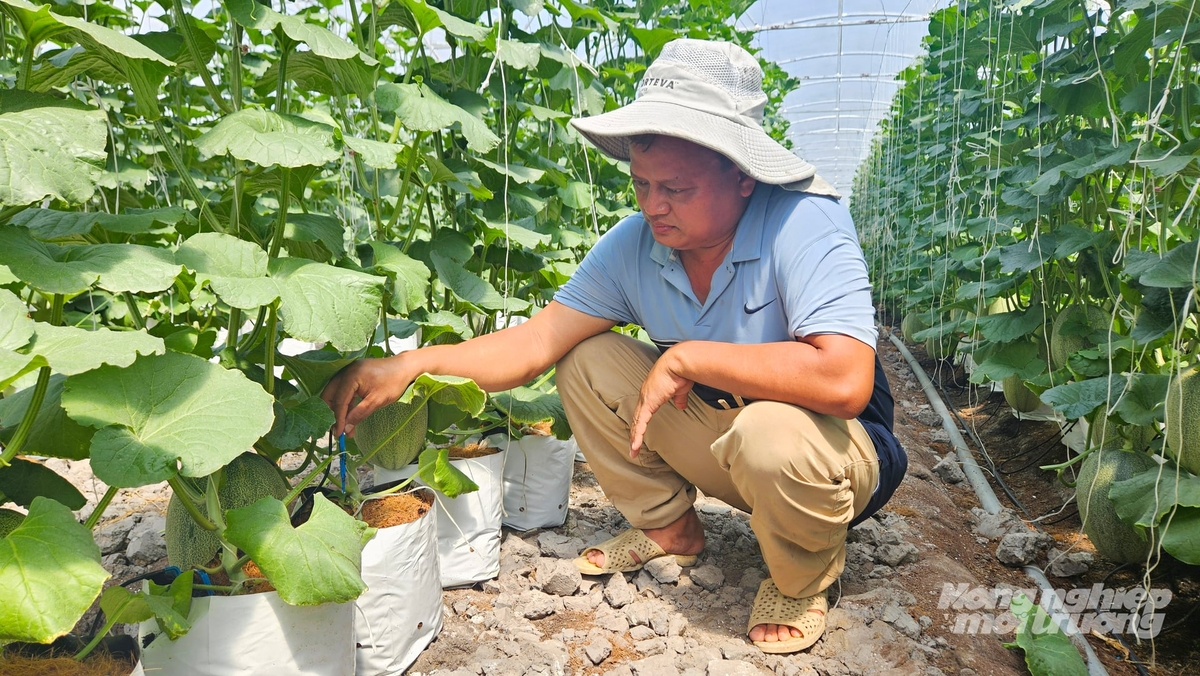
Mr. Nguyen Thanh Dat, a technical officer at Minh Anh Agriculture and Trading Service Cooperative, checks the growth of muskmelons cultivated using automated irrigation systems and modern farming techniques. Photo: Van Vu.
According to Mr. Tran Van Mom, Deputy Head of the Economic, Infrastructure and Urban Division of Long Binh Ward, the locality currently has 16 cooperatives, including 11 operating in the agricultural sector. The muskmelon farming model of Minh Anh Agriculture and Trading Service Cooperative is considered a new model that generates high economic value and is being encouraged for wider replication.
In addition, the ward authorities have focused on guiding cooperatives to treat agricultural by-products with biological products and reuse them to minimize environmental impacts. At the same time, efforts are underway to strengthen value chain linkages among farmers, cooperatives, and businesses to stabilize market access and increase incomes.
Although challenges remain, including limited experience, incomplete understanding of technical processes and constraints in market linkages, greenhouse muskmelon farming models in Long Binh are gradually demonstrating strong potential thanks to support from local authorities and the proactive efforts of farmers.
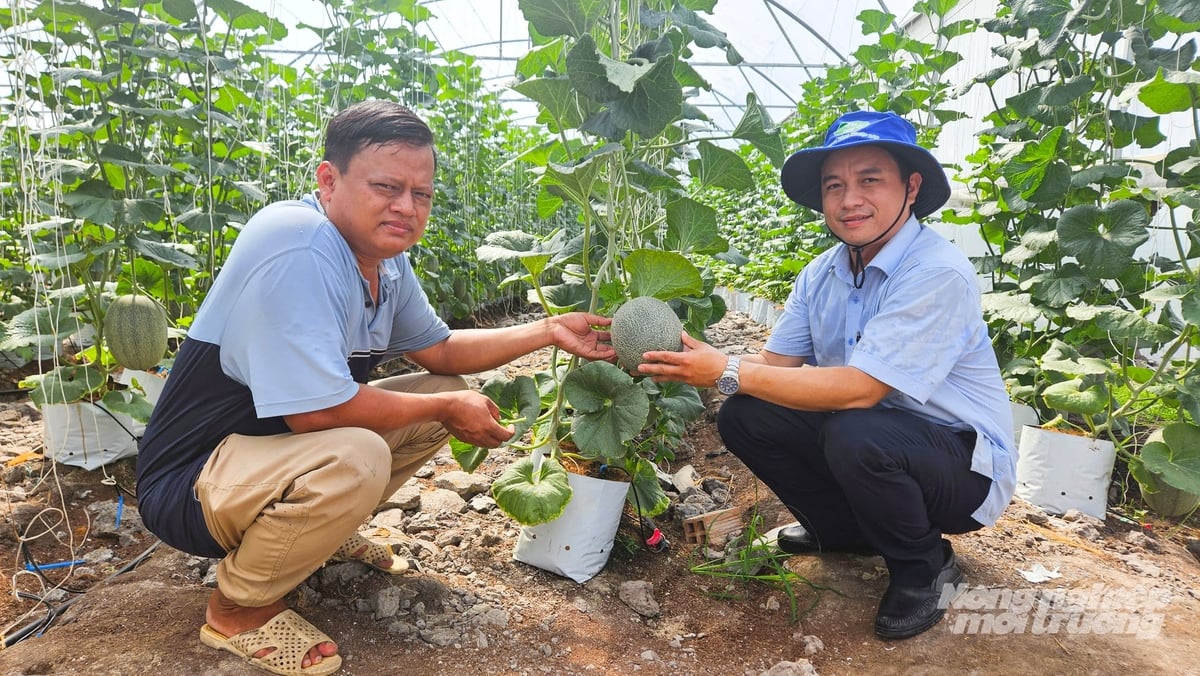
Officials from Long Binh Ward visit and discuss the greenhouse muskmelon farming model at Minh Anh Agriculture and Trading Service Cooperative as part of efforts to expand clean agricultural production in the locality. Photo: Van Vu.
In the coming period, local authorities will continue implementing plans to develop agriculture sustainably, focusing on effective models such as greenhouse muskmelon farming, the application of science and technology, and expanded market linkages.
From rows of melons grown inside greenhouses, a new development pathway is delivering positive results, not only helping increase farmers’ incomes but also contributing to the development of clean, modern and climate-resilient agriculture in Can Tho.
$1 = VND 26,390 (Source: Vietcombank).
Translated by Huong Giang

(VAN) Two Da Nang cooperatives were honored with the ‘Cooperative Star’ award for 2026, affirming the effectiveness of a dynamic, adaptable, and sustainably developing collective economic model.

(VAN) Policy credit has empowered many households in Hoa Vang commune to boldly invest in production, build effective economic models, and boost their income.

(VAN) Recently, the Lao Ministry of Agriculture and Environment delegation visited, worked, and signed a pact with the Vietnam Academy of Agricultural Sciences.

(VAN) Da Nang steps up free rabies vaccination in mountainous communes, delivering vaccines directly to villages to build an immunity shield.

(VAN) Native honeybee farming in Ha Tinh grew strongly, providing stable incomes and promoting sustainable rural economic development.
/2026/07/20/3847-3-113606_381.jpg)
(VAN) The global spread of the SAT-1 FMD virus strain underscores the need for Viet Nam to proactively enhance surveillance and develop response scenarios well in advance.

(VAN) Agricultural by-products are being recognized as resources that can generate new economic value, reduce emissions, and create new opportunities for green growth in circular agriculture.
