July 21, 2026 | 19:01 GMT +7
Hotline: 0913.378.918

July 21, 2026 | 19:01 GMT +7
Hotline: 0913.378.918
After facing persistent challenges related to market access and economic efficiency, the Tien Dien High-Tech Vegetable and Fruit Production Center in Tien Dien Commune, Ha Tinh Province, has found a promising path through the cultivation of Korean melons, creating fresh momentum for the development of high-tech agriculture in the locality.
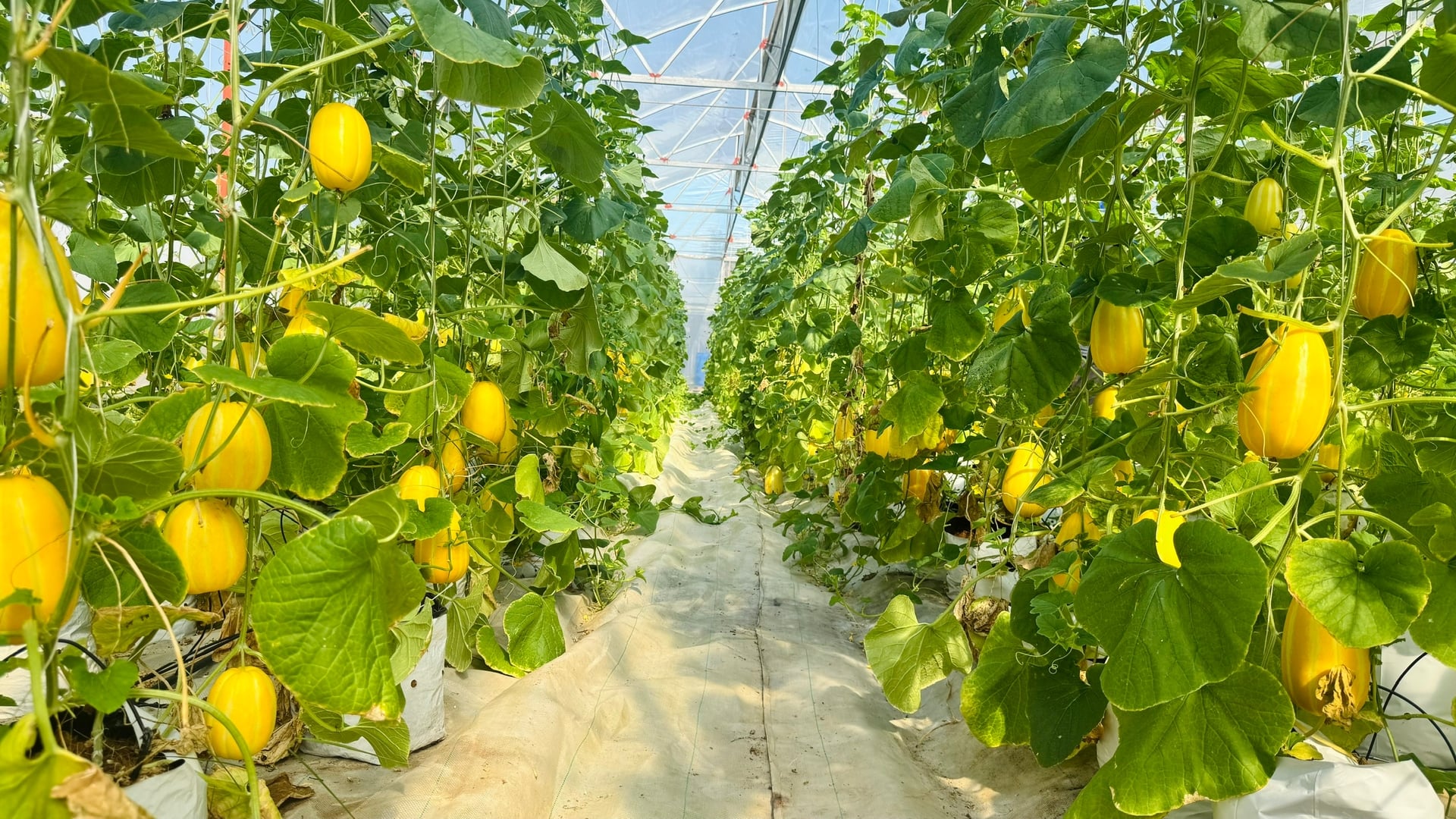
Each growing season, the 500-square-meter greenhouse cultivates nearly 3,000 Korean melon plants, producing around 4 tonnes of fruit. Photo: Anh Nguyet.
Since late May, the 500-square-meter greenhouse at the Tien Dien High-Tech Vegetable and Fruit Production Center has entered the harvest season. Along the trellises, pale yellow Korean melons with their distinctive white stripes are ripening and ready for market. The greenhouse is kept clean and well-ventilated, with a drip irrigation system and environmental controls in place.
Nguyen Thi Minh Nhat, Director of the Tien Dien High-Tech Vegetable and Fruit Production Center, said the center began investing in high-tech agricultural production in 2022, cultivating a range of different crops. However, after implementation, several crops failed to deliver the expected returns due to stringent technical requirements and volatile market demand.
"After studying market demand, we found that Korean melons are highly favored by consumers because of their attractive appearance, excellent quality, and reasonable price. More importantly, this variety adapts well to greenhouse cultivation under local conditions, so the center decided to introduce it into production in 2025," Nhat said.
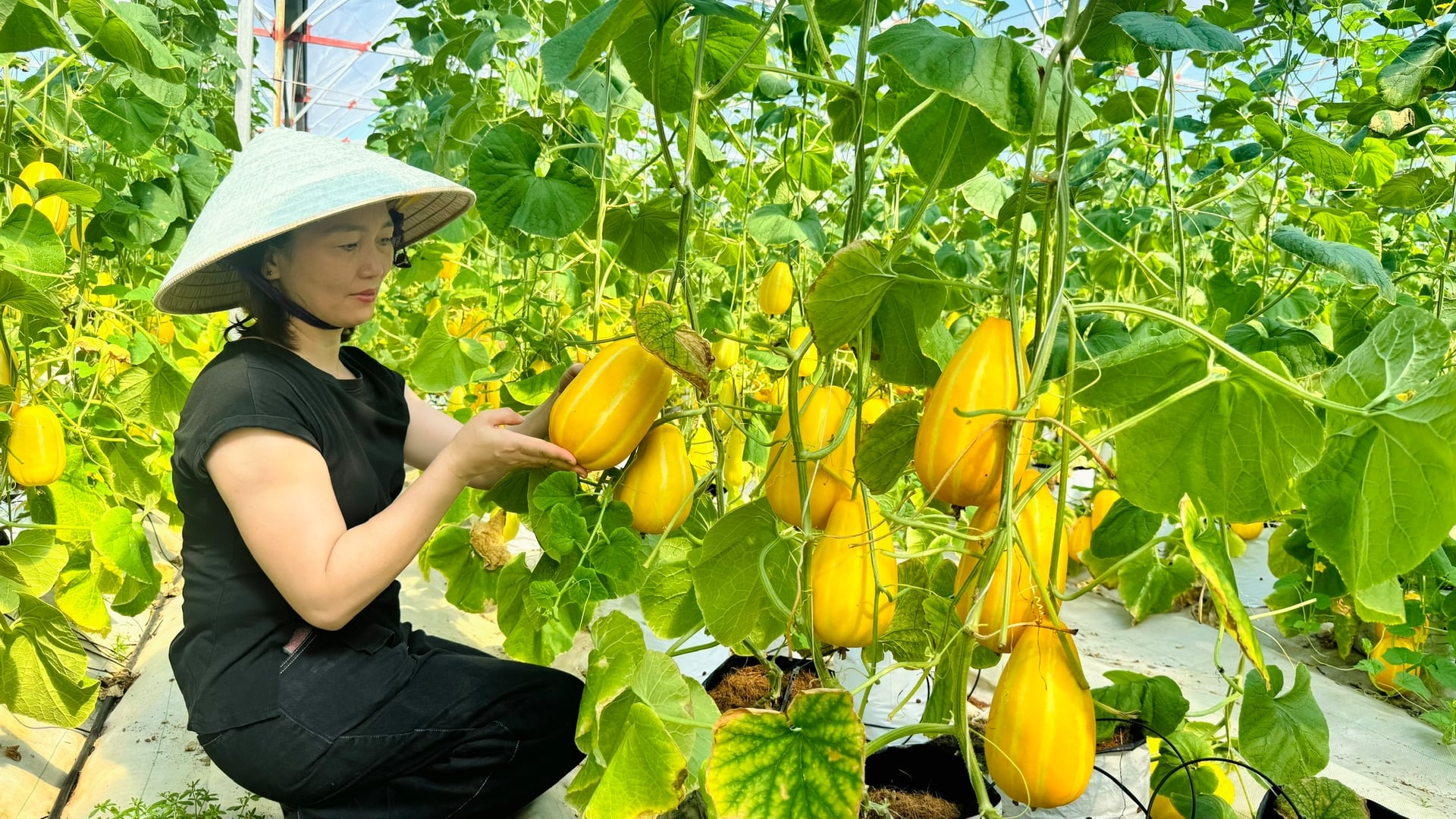
Korean melons weigh an average of 0.6-0.8 kg per fruit. When ripe, they feature a bright yellow rind with distinctive white stripes, crisp flesh, a delicate sweetness, and a characteristic aroma. Photo: Anh Nguyet.
According to Mrs. Nhat, Korean melon has a relatively short cultivation cycle, requiring only 60-70 days from planting to harvest. Each fruit typically weighs between 0.6 and 0.8 kg. When fully ripe, the melons develop a bright yellow skin accented with distinctive white stripes, while the flesh is crisp, juicy, delicately sweet, and pleasantly aromatic.
The Center currently cultivates around 3,000 melon plants per crop in a 500-square-meter greenhouse. By strictly adhering to standardized cultivation protocols, the farm consistently produces approximately four metric tons of melons per harvest. The fruit is marketed through clean produce retailers, direct customer orders, and distribution partners across the province.
With farm-gate prices ranging from VND 35,000 to VND 40,000 per kilogram, each crop generates revenue of roughly VND 140-160 million. To ensure a stable year-round supply, the Center grows three staggered crops annually. After production costs are deducted, the model delivers an annual profit of approximately VND 200-300 million. Beyond generating strong returns for the family, the operation also provides stable employment for two to three local workers, creating a reliable source of income for people in the surrounding community.
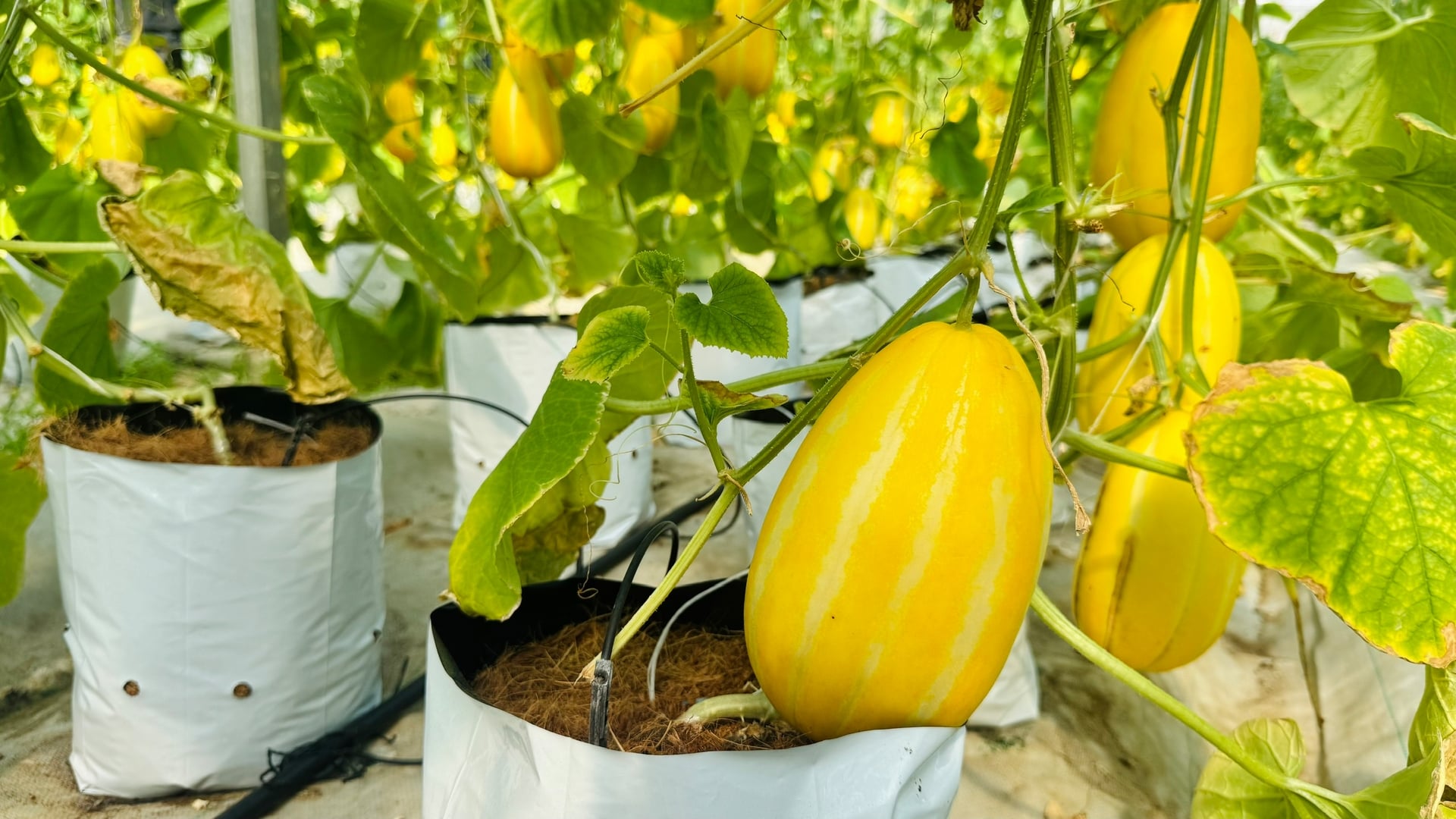
Korean melons are cultivated in a soilless growing medium with a drip irrigation system, ensuring uniform growth and reducing the incidence of pests and diseases. Photo: Anh Nguyet.
According to Hoang Thi Hong Van, a technical officer at the Tien Dien High-Tech Vegetable and Fruit Production Center, all Korean melons are cultivated in an organic growing medium. The substrate is prepared from carefully processed organic materials, helping suppress soil-borne diseases, create favorable conditions for root development, and enhance the plants' nutrient uptake.
Seeds are first germinated in nursery trays before being transplanted into the greenhouse. Throughout the growing season, water and nutrients are delivered through an automated drip irrigation system, allowing precise control of irrigation and fertilization at each stage of plant development while reducing labor requirements and minimizing input waste.
To ensure high yields and premium fruit quality, the Center's technical staff closely monitors temperature and humidity levels inside the greenhouse, particularly during periods of extreme heat. Timely pruning, vine training, artificial pollination, and fruit thinning are also carried out to direct nutrients toward fruit development and maximize crop quality.
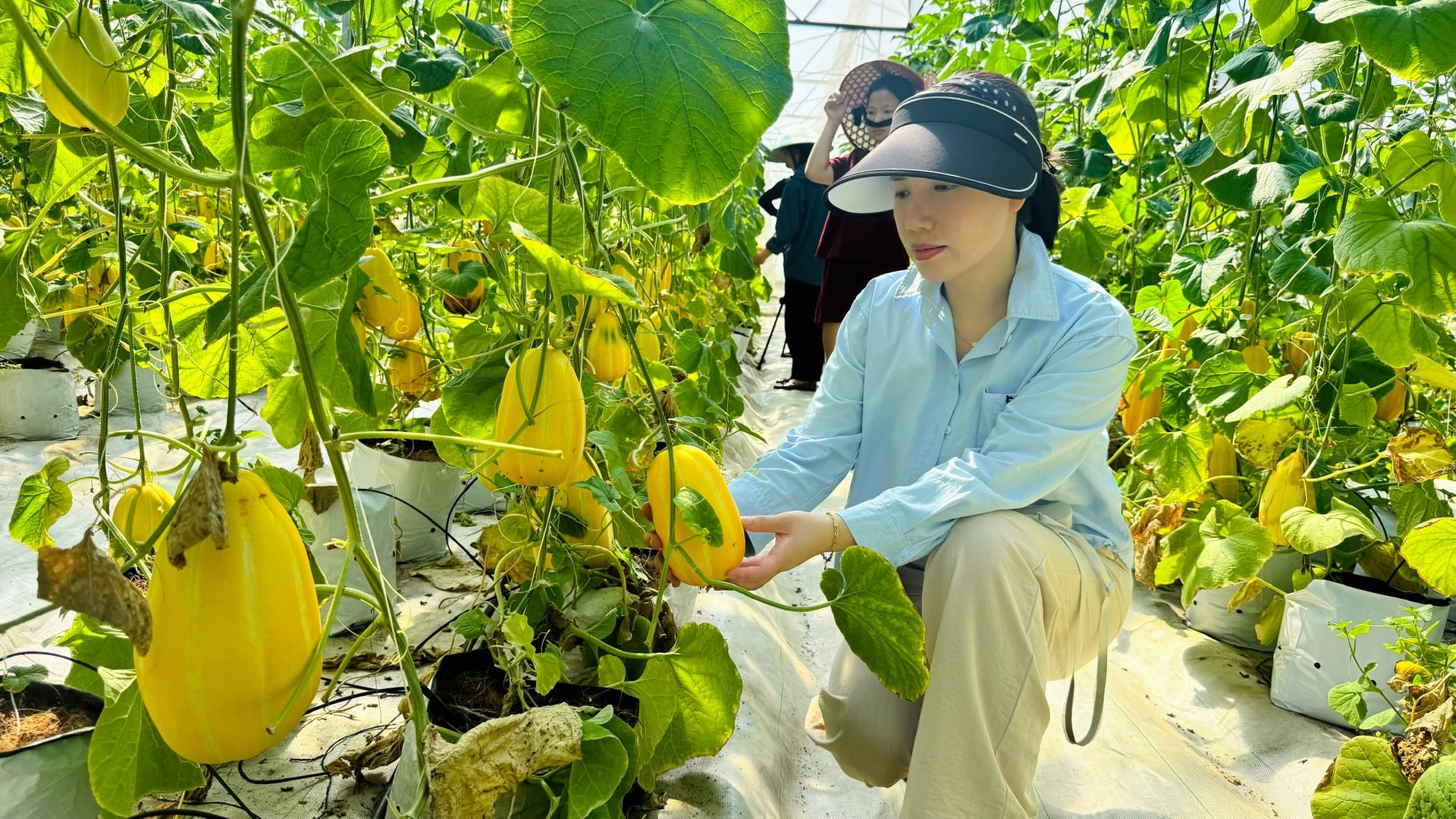
The greenhouse-grown Korean melon garden has become a popular destination, attracting visitors eager to tour the facility and experience the cultivation process firsthand. Photo: Anh Nguyet.
According to Mrs. Van, a key advantage of the model is its ability to mitigate the impact of adverse weather conditions such as heavy rain, strong winds, and pest infestations. In addition, prioritizing biological pest control measures has reduced reliance on crop protection chemicals, resulting in safer produce that meets increasingly stringent market standards.
Le Thanh Binh, Vice Chairman of Tien Dien Commune People’s Committee, said this is one of the locality’s exemplary high-tech agricultural models. The use of greenhouse structures, automated irrigation systems, and safe production practices not only ensures high-quality, safe products but also helps transform local farmers’ production mindset toward more modern, sustainable methods.
The Tien Dien High-Tech Vegetable and Fruit Production Center has also developed an agritourism and experiential model integrated with education and the promotion of high-tech agriculture. Each year, the Center welcomes numerous delegations of visitors, students, and farmers from both inside and outside the locality to tour and learn about the melon cultivation process using soilless substrates in greenhouse conditions.
The model enables people to access new technical advances, exchange production experiences, and raise awareness of high-tech agriculture and safe, clean farming practices.
*$1 = VND 26,466 - Source: Vietcombank.
Translated by Huong Giang
/2026/07/20/1547-1-180442_204.jpg)
(VAN) A farmer in Can Tho has found the secret to raising giant water bugs that produce intensely aromatic essence, earning annual profits of hundreds of millions of dong.

(VAN) From crop conversion to deep processing, Ba Che Commune in Quang Ninh Province is building a comprehensive cinnamon value chain that creates sustainable livelihoods while strengthening the local forestry economy.

(VAN) The ACIAR-SunRice public-private partnership, rooted in science and sustainable development, is expected to support rice farmers in the Mekong Delta.

(VAN) Linking the shrimp, rice, and coffee sectors through a circular economy model is opening up a new pathway for Viet Nam's agriculture.

(VAN) HCMC is accelerating the transition to circular industry by transforming industrial parks into eco-industrial zones, fostering industrial symbiosis, and expanding international partnerships for green manufacturing.
(VAN) The digital map of raw material zones is expected to resolve overlapping investments, ensure production transparency, and accelerate deep processing in the coconut industry.
(VAN) Transforming barren hills once dedicated only to acacia and cassava, the Anh Mai Medicinal Plant Cooperative has found a new direction with red turmeric, opening up sustainable livelihoods for local residents.
