December 30, 2025 | 16:18 GMT +7
Hotline: 0913.378.918

December 30, 2025 | 16:18 GMT +7
Hotline: 0913.378.918
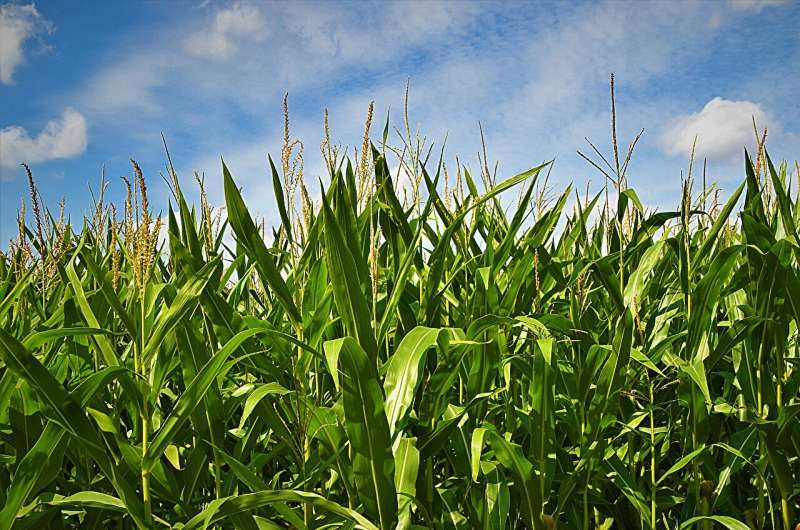
The findings could be helpful to growers as they create management plans for their fields, according to the researchers. Credit: Waldemar/Unsplash.
The study—published in the journal PeerJ—compared using insecticides preventively at planting versus using an integrated pest management (IPM) approach, which calls for insecticides only when a known insect problem exists.
The team also investigated the effects of using cover crops—a crop used to cover and protect soil after harvesting the cash crop—when combined with these treatment plans.
The researchers found that by the third year, some fields that were treated with insecticides and didn't have a cover crop ended up with slightly more weeds—especially marestail. However, planting a cover crop prevented this issue, even in fields that were treated with insecticides.
John Tooker, an author on the paper and a professor of entomology in the College of Agricultural Sciences, said that while he and the other researchers aren't sure what caused these findings, the most likely explanation may be that the preventative insecticides limited the activity of insects that typically eat weeds or weed seeds, allowing the weeds to be more abundant.
He added that the findings could be helpful to growers as they create management plans for their fields, and that while preventively using herbicides makes sense because weeds are such a widespread problem, insect pests are less common.
"Always using an insecticide at planting does not seem to be the best approach in Pennsylvania considering that early-season insect pests tend to be a relatively uncommon problem," Tooker said. "When taking an IPM approach, we advocate for using the right products at the right time to control the right pests, and that will also then help reduce these negative consequences of using these treatments too much."
Elizabeth Rowen, lead author and assistant professor at the University of California, Riverside, said the findings are particularly relevant as weeds are becoming more resistant to glyphosate, a commonly used herbicide.
"Many of the seeds growers use were developed to not be killed by herbicides," she explained. "This allows growers to use glyphosate to control weeds; however, this also results in the evolution of herbicide-resistant weeds, which makes it much harder to control weeds without killing the crops. So, having multiple strategies to help manage weeds is really important."
Insects such as beetles, ants and crickets eat weed seeds, which can make them one of these strategies, she said. But insecticides may affect these beneficial insects in addition to pests, interfering with their ability to eat these seeds and control weed populations.
For the study, the researchers used plots growing corn and soybeans at the Penn State Russell E. Larson Agricultural Research Center. They assigned each plot one of three treatment plans: using preventative insecticides at planting, an IPM treatment plan that used insecticides only when insect pests reached a certain threshold, or no insecticides at all. The team also tested each treatment with and without a cover crop.
The researchers then examined the plots over three years, taking note of several factors along the way, such as cover crop biomass, predator insect communities, weed seed predation, weed populations and crop productivity.
Tooker said that the study provides evidence that an IPM approach can be valuable to growers, especially those with large acreage systems.
"Oftentimes, corn and soybean fields are so big that growers are inclined to do all of the management up front so they don't have to go back and walk the fields," he said. "But our evidence suggests that walking these fields to identify problems as they happen can provide clear benefits in terms of not needing certain pesticides, namely many of the fungicides and insecticides."
Kirsten Ann Pearsons, IPM coordinator at T&L Nursery, who earned her doctorate in entomology at Penn State; Richard Smith, University of New Hampshire; and Kyle Wickings, Cornell University, also co-authored this study.
(Phys.org)

(VAN) From extensive shrimp ponds, baskets of don gathered on the mudflats, to boats carrying visitors to watch birds, all livelihoods here depend on clean water, green forests, and the calls of migratory birds.
/2025/12/26/0703-3-204813_117.jpg)
(VAN) Transparency in information and listening to local people have helped address ground clearance bottlenecks and build social consensus, thereby accelerating the progress of the JICA3 irrigation project.
/2025/12/27/0609-3-233846_327.jpg)
(VAN) The JICA3 project is expected to become a 'water shield,' helping control saltwater intrusion, proactively secure water resources, protect livelihoods, and promote sustainable development in coastal areas.
/2025/12/26/5654-3-164509_655.jpg)
(VAN) As Viet Nam makes strong commitments toward achieving net-zero emissions, controlling and reducing methane emissions in livestock production is increasingly becoming a mandatory requirement.

(VAN) 'People, Primates, Plants: Co-managing Biodiversity and Improving Livelihoods in Vietnam' (the PPP Project) is an international initiative implemented in Vietnam by BGCI, CEGORN, and ICRAF/World Agroforestry.

(VAN) Dak Nong established a risk-level zoning map for coffee, built a digital data platform for the sector, and promoted certified production in line with EUDR.
/2025/12/25/2709-1-211551_295.jpg)
(VAN) In response to the U.S. Marine Mammal Protection Act (MMPA), Gia Lai province is implementing many solutions to protect marine mammals and develop sustainable, responsible fisheries.
