July 21, 2026 | 16:44 GMT +7
Hotline: 0913.378.918

July 21, 2026 | 16:44 GMT +7
Hotline: 0913.378.918
At the Hanoi 2026 Dialogue, jointly organized by the Smart and Sustainable Cities Hub (SSC Hub), RMIT Viet Nam, and the Australia-Viet Nam Policy Institute (AVPI), policymakers, experts, research institutes, universities, and businesses shared experiences and proposed a range of solutions to advance sustainable urban development, green transition, and smart governance.
The event took place as Hanoi had recently approved its Capital Master Plan with a 100-year vision, aiming to develop into a smart, globally integrated city while effectively addressing key challenges such as air pollution, traffic congestion, industrial emissions, and climate change adaptation.
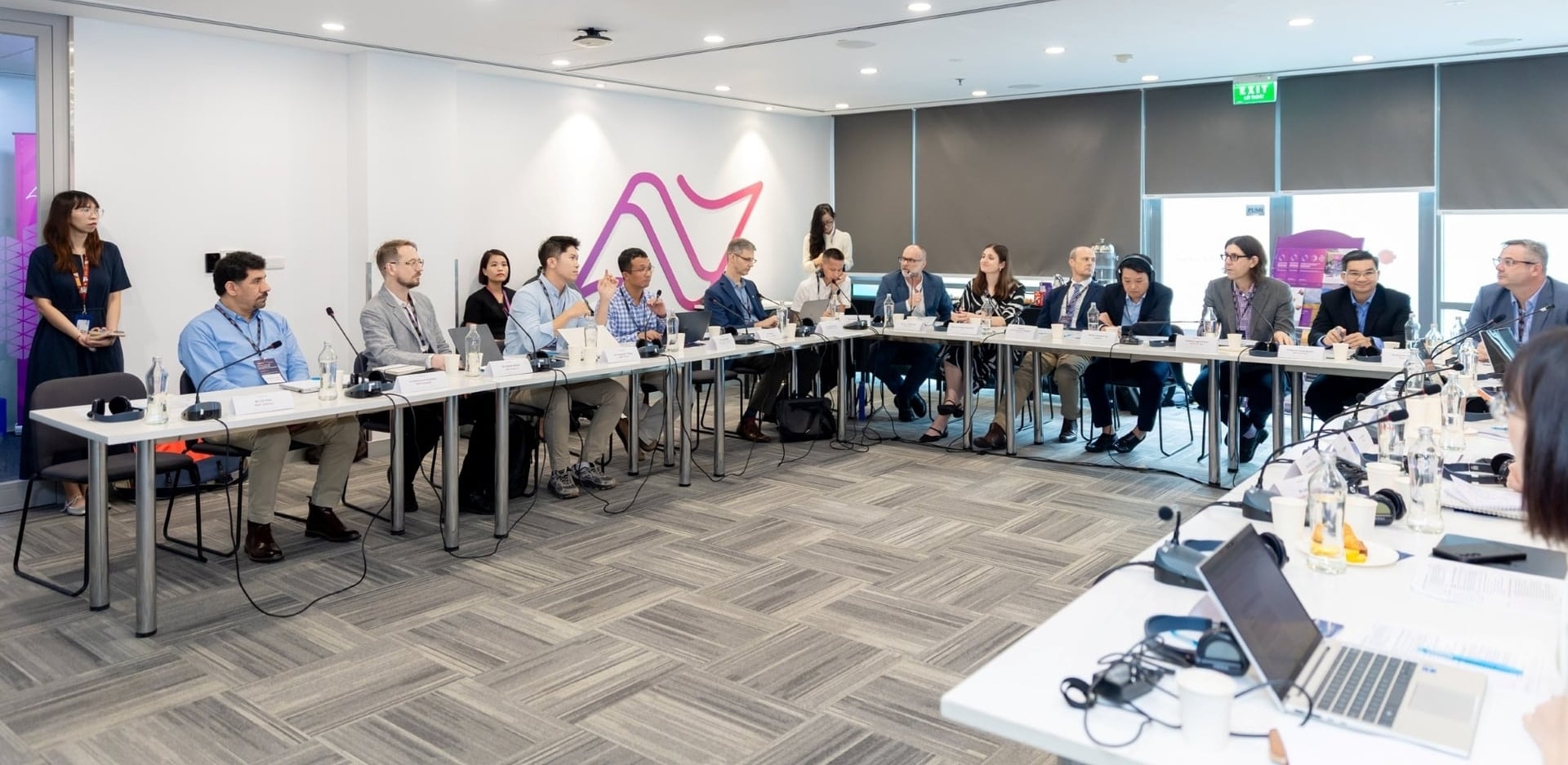
The dialogue was held at the Australia-Viet Nam Policy Institute (AVPI) office on the RMIT Viet Nam campus in Hanoi. Photo: RMIT.
In his opening remarks, Professor Scott Thompson-Whiteside, President and Vice-Chancellor of RMIT Viet Nam, emphasized the importance of collaboration among government agencies, universities, businesses, and international partners through knowledge sharing, the development of effective governance models, and stronger practical cooperation.
He noted that Australia's experience in long-term urban planning, smart governance, and sustainable infrastructure development could help Ha Noi formulate initiatives and policy recommendations suited to its next stage of development.
The discussion sessions covered a wide range of topics, including improving urban quality of life, advancing green development, accelerating industrial transformation, and fostering innovation ecosystems. Participants agreed that effective governance is the key to translating long-term visions into tangible outcomes.
Professor Jago Dodson and Professor Nguyen Quang Trung, Co-Directors of the Smart and Sustainable Cities Hub (SSC Hub), observed that Hanoi's greatest challenge in the coming years will not only be sustaining economic growth but also strengthening its capacity to govern an increasingly complex urban environment.
"As cities expand, development outcomes depend on the ability to coordinate land-use planning, transport, climate adaptation, data management, and public service delivery across multiple levels of government. Therefore, alongside infrastructure investment, cities must also build a workforce of professionals capable of planning and managing urban development," Professor Dodson said.
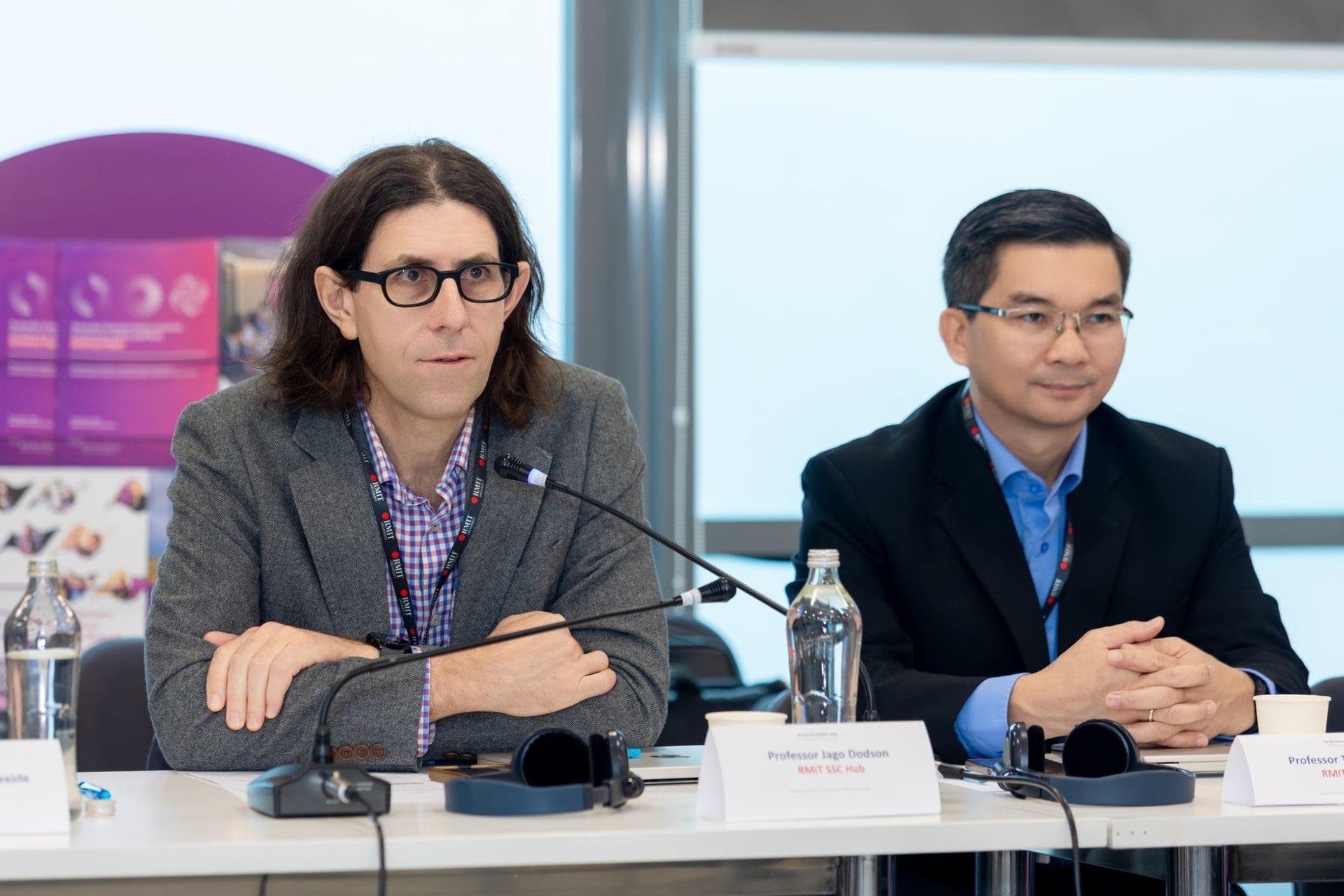
Professor Jago Dodson (left) and Professor Nguyen Quang Trung (right) speak at the dialogue. Photo: RMIT.
The experts also stressed that technology alone is not the determining factor in building successful smart cities. According to Professor Nguyen Quang Trung, many cities around the world are investing in artificial intelligence (AI), digital twins, and urban data platforms. However, these technologies can only deliver their full potential when supported by an appropriate legal framework, standardized data systems, skilled personnel, and transparent governance mechanisms. In this regard, Hanoi's efforts to strengthen digital governance, improve data management, and enhance institutional capacity are laying an important foundation for achieving its long-term development goals.
"Smart technology is a means, while sustainability is the ultimate goal. Cities can adopt and deploy new technologies relatively quickly, but building resilient transport systems, inclusive communities, and low-emission urban environments requires long-term investment and sustained political commitment," he said.
Drawing on international experience, the experts highlighted the development models of Copenhagen, Melbourne, and Tokyo - cities consistently ranked among the world's most livable. Despite their different contexts, they share common strengths in long-term planning, integrated governance, and active community participation.
"For Hanoi, the priority is not to replicate the models of other cities, but to learn from their experiences and draw inspiration to develop an approach to urban planning and governance that reflects Ha Noi's own conditions, needs, and long-term aspirations," Professor Dodson said.
Translated by Phuong Linh

(VAN) Viet Nam is actively preparing to participate in GREEN EXPO 2027 to promote its image as a green, sustainable, and innovative nation on the global stage.

(VAN) Lai Chau is passing by in a hurried rhythm at this time. Everyone is working tirelessly against the clock, devoting all efforts to overcoming the aftermath of the disaster.

(VAN) Some countries consider agriculture a public service, so the state must invest in it, according to Ass. Prof Dr. Dao The Anh, former Deputy Director of the Viet Nam Academy of Agricultural Sciences.

(VAN) The Minister of Agriculture and Environment of the Lao PDR recognizes the VRG's significant contributions over two decades of investment and operations in Laos.

(VAN) The VNMHA held a conference to review its work over the first six months of the year and set out priority directions and tasks for the second half of 2026.

(VAN) Khanh Hoa Sea Festival 2026, themed ‘Colors of the Ocean - Reaching International Scale,’ conveys a message of green marine economic development, integration, and Khanh Hoa's rising position.

(VAN) Viet Nam and the Food and Agriculture Organization of the United Nations (FAO) have launched a project to strengthen water resources management, reduce pollution and restore water quality in the Gulf of Tonkin.
