October 9, 2025 | 11:12 GMT +7
Hotline: 0913.378.918

October 9, 2025 | 11:12 GMT +7
Hotline: 0913.378.918
Prof. Dr. Nguyen Hong Son, Director of VAAS, stated at the 4th Vietnam–Japan Agricultural Technology and Trade Connectivity Workshop, which was jointly organized by the Vietnam Academy of Agricultural Sciences (VAAS) under the Ministry of Agriculture and Environment and several Japanese enterprises, that both Japan and Vietnam have unique advantages and potential for cooperation in agricultural development. Despite being an industrialized country, Japan continues to invest significantly in agricultural research, particularly in plant breeding, high technology, and processing, to enhance the value of its agricultural products.
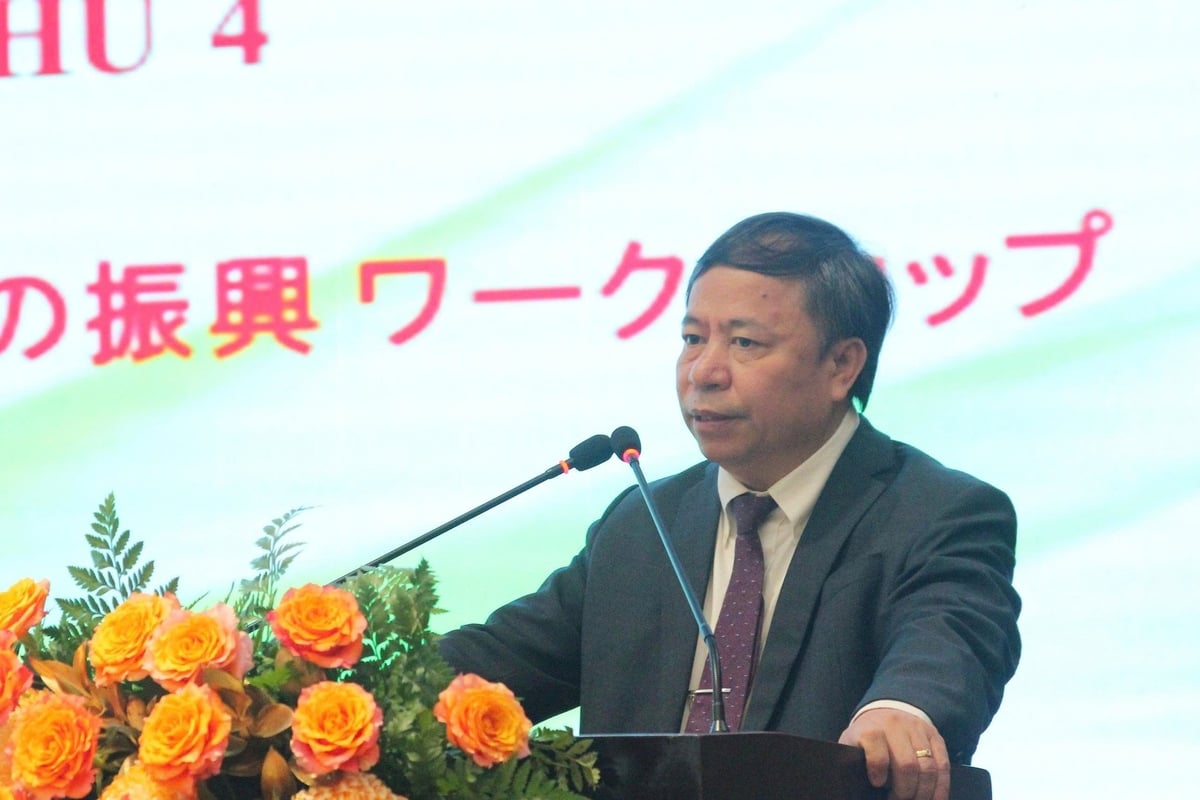
Prof. Dr. Nguyen Hong Son, Director of VAAS. Photo: Phuong Chi.
Although Japan's agriculture is relatively advanced, it still imports agricultural products annually and only meets approximately 45% of domestic consumption demand, according to Prof. Dr. Son. This presents a valuable opportunity for Vietnam to increase its agricultural exports to Japan.
Nevertheless, he emphasized the need for Vietnam to prioritize technological innovation, rigorous production management, and adherence to safe production standards to meet Japan's export requirements.
Prof. Dr. Nguyen Hong Son emphasized that agricultural cooperation, which involves utilizing Japanese high-tech to enhance productivity and product quality for the purpose of export and market expansion, is a critical requirement for both Japanese and Vietnamese enterprises.
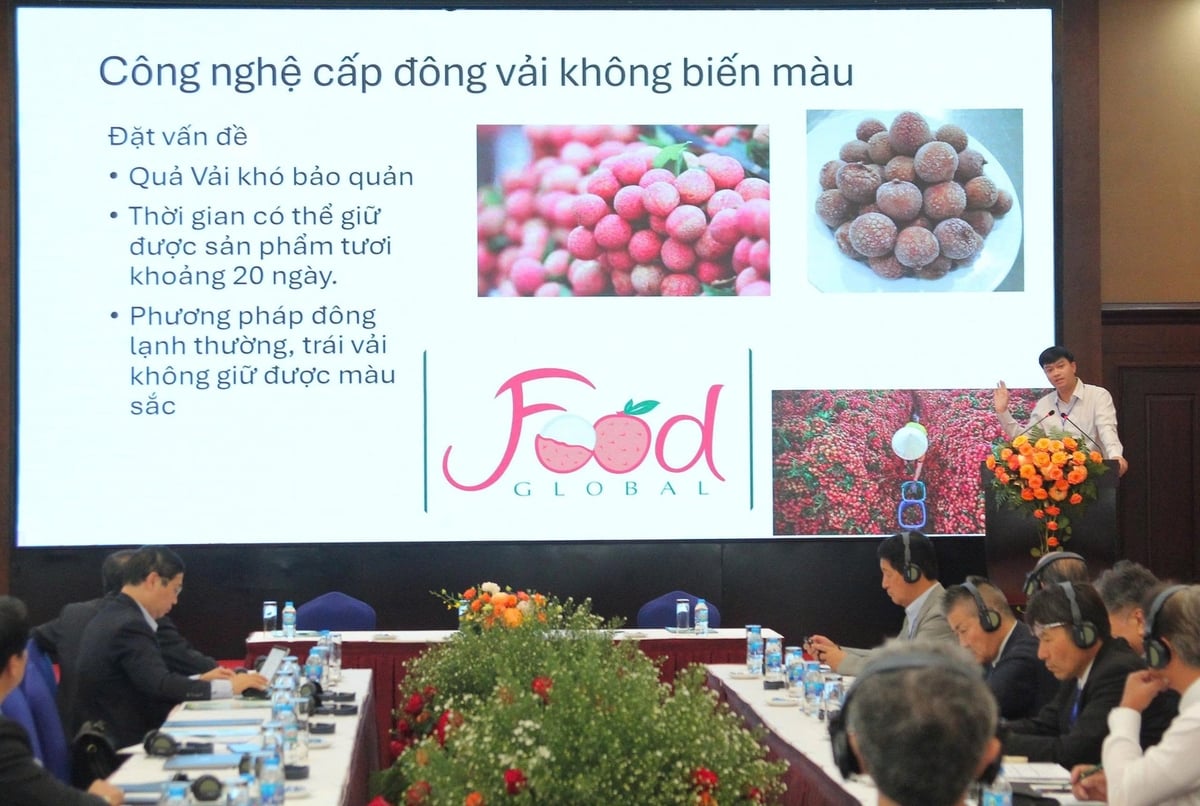
The 4th Vietnam–Japan Agricultural Technology and Trade Connectivity Workshop was jointly organized by the Vietnam Academy of Agricultural Sciences (VAAS) and several Japanese enterprises. Photo: Phuong Chi.
Lam Dong, a prominent flower cultivation region in Vietnam, experiences a 5–7% annual increase in both flower-growing area and yield. The province produced 4.4 billion stems and 400 flower varieties in 2024, spanning approximately 10,800 hectares of flowers. Japan received roughly 118 million flower stems (about 27% of the total exports) and more than 222 million fresh stems and leaves.
Mr. Lai The Hung, Vice Chairman of the Da Lat Flower Association, observed that technical and pricing obstacles have impeded substantial annual increases in export volume, despite the fact that Lam Dong's decorative flowers and leaves have significant development potential in Japan.
Therefore, in order to enhance the production and consumption of flowers, it is imperative that Japanese and Vietnamese enterprises engage in more collaborative efforts. Simultaneously, Mr. Hung advocated for "immediate access to Japanese technologies, equipment, materials, and fertilizers in order to facilitate more comprehensive global integration in the flower production and trade industry."
Japanese enterprises presented a variety of sophisticated agricultural technologies that have the potential to be effective in Vietnam during the workshop. Highlights included the use of phototrophic and lactic acid bacteria to produce sustainable food products, the application of Japanese-standard greenhouse design and construction, the cultivation of high-quality Japanese strawberry varieties, the use of grafting techniques for staked vegetables, and the use of TP-MAP film to preserve the freshness of agricultural products.
Vietnamese enterprises and research institutes also showcased technologies such as non-discoloring lychee freezing, industrial-scale organic and circular agriculture, and digital transformation applications in agricultural production, processing, and consumption.
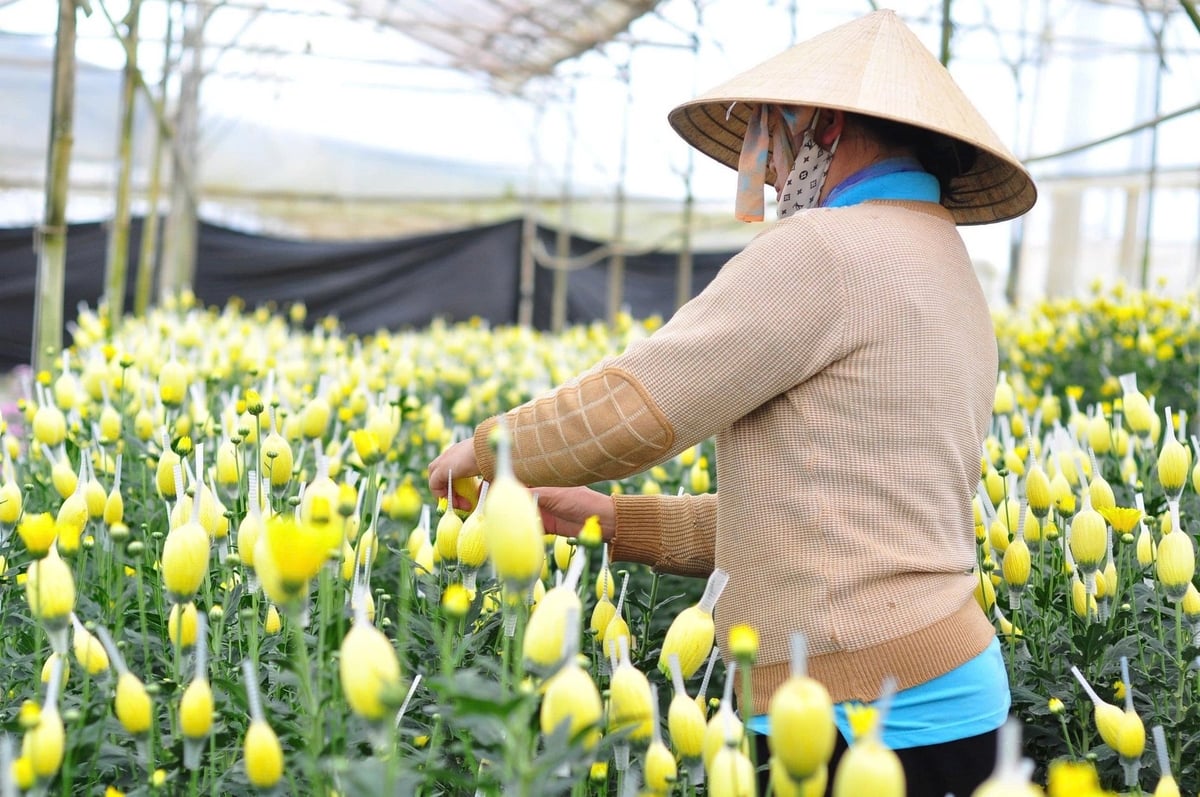
Lam Dong, a prominent flower cultivation region in Vietnam, experiences a 5–7% annual increase in both flower-growing area and yield. Photo: Phuong Chi.
The company distributes Slim White agricultural film in Vietnam, which is available in two types: heat barriers and soil covers, according to Mr. Junji Wantanabe, the General Director of Maruwa Biochemical Company. Slim White enhances product quality by reflecting infrared rays in hot conditions, thereby reducing air, soil, and water temperatures to produce a cooler environment.
The production procedures of numerous prominent flower enterprises in Da Lat use Slim White. According to feedback from partners, this product has substantially enhanced the quality of flowers, ensuring they remain fresh even in severe weather conditions.
"We have devised a comprehensive support plan to guarantee that farmers receive the maximum benefit. Initially, we actively introduce the product to local communities, facilitating their exploration and testing. Afterward, we will provide customized support policies to maximize effectiveness and improve productivity and quality, as determined by practical assessments conducted by farmers," stated Mr. Wantanabe.
Dr. Nguyen Quy Duong, Deputy Director of the Department of Crop Production and Plant Protection, stated that the Ministry of Agriculture and Rural Development (now the Ministry of Agriculture and Rural Development) has provided substantial support to facilitate scientific and technological exchanges between Vietnam and Japan over the years. Resolution 57 has most recently facilitated the advancement of scientific and technological advancements, thereby strengthening bilateral collaboration.
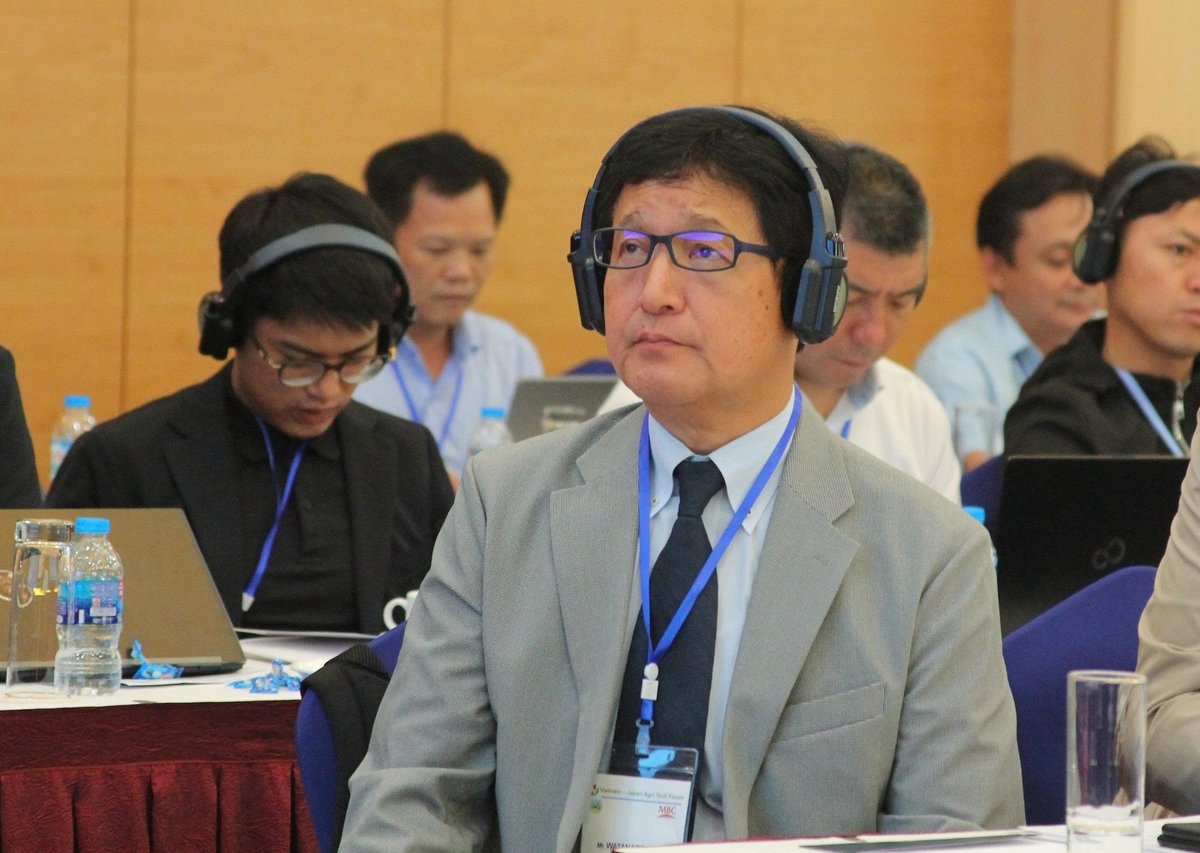
Japanese enterprises presented a variety of sophisticated agricultural technologies that have the potential to be effective in Vietnam during the workshop. Photo: Phuong Chi.
"VAAS and its affiliated institutes have established close partnerships to assess Japanese crop varieties, technologies, and products." Dr. Duong also confirmed that our department actively encourages and supports the integration of advanced Japanese agricultural technologies into Vietnamese production.
Nevertheless, he identified a significant obstacle: the high price of importing certain Japanese products into Vietnam.
VAAS proposed and received approval from Japanese businesses to evaluate technologies and production methods suitable for Vietnamese conditions, aiming to resolve this issue. Upon validation, Vietnam would increase domestic production, thereby avoiding expensive imports and lowering product prices.
Furthermore, Japanese enterprises have consented to the transmission of microbial strains and technologies for the treatment of environmental pollution, plant protection, and the production of biological products. The VAAS laboratories will be upgraded to generate source materials, which will be subsequently connected to Vietnamese factories to produce commercial products for the domestic market, thereby further reducing costs.
The workshop also included the signing of cooperation agreements on the research and evaluation of new crop production technologies, the transfer of advanced cultivation techniques between VAAS and Japanese enterprises, and the establishment of commercial development partnerships between Vietnamese and Japanese businesses.
Translated by Linh Linh

(VAN) The European Commission has launched an inquiry into tightening European animal welfare regulations.

(VAN) Scientific research, international cooperation, and the quality of human resources are three key orientations for implementing commitments at the UNOC-3.

(VAN) The Department of Climate Change (Ministry of Agriculture and Environment) held a conference lately this week to discuss the topic ‘Implementing Viet Nam's Commitments at the COP26 Conference’.

(VAN) The Ministry of Agriculture and Environment has signed Decision No. 4024, approving the 'Low-emission crop production project for 2025-2035, with a vision to 2050'.

(VAN) The People’s Committee of Nghe An Province had requested measures to protect marine mammals to avoid the risk of being “flagged” by trade partners.

(VAN) To date, the system of legal documents regulating sustainable forest management and sustainable forest management certification has been increasingly improved, basically meeting practical requirements.

(VAN) The draft policy on soil health is regarded as an important step forward, contributing to a more comprehensive approach to soil quality management.
