July 21, 2026 | 16:08 GMT +7
Hotline: 0913.378.918

July 21, 2026 | 16:08 GMT +7
Hotline: 0913.378.918
On April 14, Deputy Minister of Agriculture and Environment Phung Duc Tien chaired a meeting with leaders of the Department of Animal Health and Production (DAHP), the Department of Science and Technology, and vaccine manufacturers to assess the situation and develop response plans for the foot-and-mouth disease (FMD) SAT-1 strain.
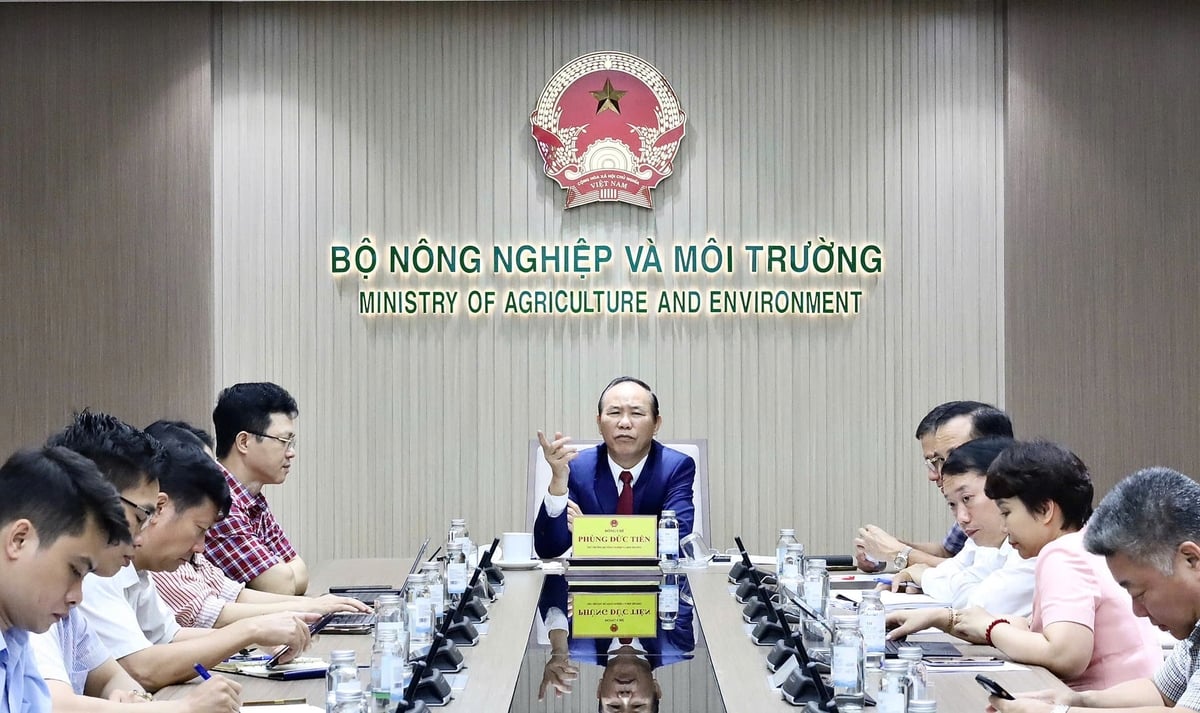
Deputy Minister of Agriculture and Environment Phung Duc Tien chairs an emergency meeting on response to the FMD SAT-1 strain. Photo: Hong Ngoc.
Recent international reports indicate the rapid spread of this FMD strain in the Middle East, particularly outbreaks in provinces bordering China, such as Gansu and Xinjiang. Given that this highly dangerous variant has never circulated in Viet Nam, the Deputy Minister stressed that early and proactive preparedness is essential to protect the livestock sector.
According to reports from the DAHP and consulting experts, FMD SAT-1 is classified as highly virulent, comparable to the most aggressive variants of type O viruses.
The most concerning factor is the mortality rate observed in the field. Among adult cattle, such as buffaloes and cows, mortality ranges from 5%-10% but can rise to 20%-50% depending on herd health conditions. Pigs are the most severely affected. Adult pigs have a mortality rate of around 20%, while piglets may reach 50%-80% due to heart failure and severe respiratory impacts caused by the virus.
The current domestic veterinary system focuses on monitoring common serotypes, such as O, A, and Asia-1. For the SAT-1 strain, diagnosis is hampered by limited testing materials. The National Center for Veterinary Diagnosis No. I is urgently procuring primers (gene segments) and specialized chemicals abroad, with efforts underway to finalize testing procedures as soon as possible.
Regarding this matter, the Deputy Minister directed laboratories to promptly finalize testing methods and prepare test kits for use in surveillance at border gates, high-risk areas, and key regions. Early detection will be crucial for rapid containment.

According to Deputy Minister Phung Duc Tien, if the FMD SAT-1 strain enters Vietnam, it could cause extremely severe damage to more than 10 million head of cattle and over 31 million pigs nationwide. Photo: TL.
A key focus of the meeting was selecting appropriate vaccines. Experts proposed using monovalent SAT-1 vaccines to ensure high efficacy and concentrated antibody levels. While multivalent vaccines offer broader coverage, monovalent vaccines provide faster and stronger protection in emergency situations.
Challenges remain in supply and cost. Imported vaccines may cost up to VND 40,000 per dose, with delivery times potentially taking up to six months. Therefore, the Deputy Minister instructed the DAHP to expedite import procedures and to explore vaccine sources from multinational corporations whose vaccines have proven effective in neighboring countries.
At the same time, the Ministry assigned the Department of Science and Technology to collaborate with domestic producers to study epidemiological characteristics and test local vaccine production for future self-sufficiency.

Early prevention of the FMD SAT-1 strain is an urgent requirement to protect pig farms. Photo: PV.
As for transmission risks, the Deputy Minister highlighted illegal cross-border trade and the transport of livestock as major threats. Strengthening border control is a top priority. Authorities were instructed to urgently propose coordination with the Ministry of Public Security, the Ministry of Defense, and border provinces to enhance control measures. Localities must strictly manage slaughterhouses in border areas and prevent the circulation of livestock of unknown origin.
“The veterinary system must uphold its responsibility, coordinate with local authorities to contain outbreaks at the grassroots level, and avoid lapses that could lead to large-scale crises as seen in previous epidemics,” the Deputy Minister stressed.
Concluding the meeting, Deputy Minister Phung Duc Tien tasked the DAHP with finalizing a four-phase action plan for submission to the Ministry of Agriculture and Environment. All units are required to maintain constant readiness, treating disease prevention as a central task to safeguard farmers’ livelihoods and national food security in the new context.
DAHP has developed the Viet Nam Animal Disease Information System (VAHIS) - an online platform that helps manage and report animal disease information quickly and accurately, replacing traditional reporting methods using written documents and emails. It has as replaced traditional written reporting methods, enhancing proactive disease prevention and control.
Translated by Samuel Pham

(VAN) Viet Nam is actively preparing to participate in GREEN EXPO 2027 to promote its image as a green, sustainable, and innovative nation on the global stage.

(VAN) Lai Chau is passing by in a hurried rhythm at this time. Everyone is working tirelessly against the clock, devoting all efforts to overcoming the aftermath of the disaster.

(VAN) Some countries consider agriculture a public service, so the state must invest in it, according to Ass. Prof Dr. Dao The Anh, former Deputy Director of the Viet Nam Academy of Agricultural Sciences.

(VAN) The Minister of Agriculture and Environment of the Lao PDR recognizes the VRG's significant contributions over two decades of investment and operations in Laos.

(VAN) The VNMHA held a conference to review its work over the first six months of the year and set out priority directions and tasks for the second half of 2026.

(VAN) Khanh Hoa Sea Festival 2026, themed ‘Colors of the Ocean - Reaching International Scale,’ conveys a message of green marine economic development, integration, and Khanh Hoa's rising position.

(VAN) Viet Nam and the Food and Agriculture Organization of the United Nations (FAO) have launched a project to strengthen water resources management, reduce pollution and restore water quality in the Gulf of Tonkin.
