December 30, 2025 | 16:24 GMT +7
Hotline: 0913.378.918

December 30, 2025 | 16:24 GMT +7
Hotline: 0913.378.918
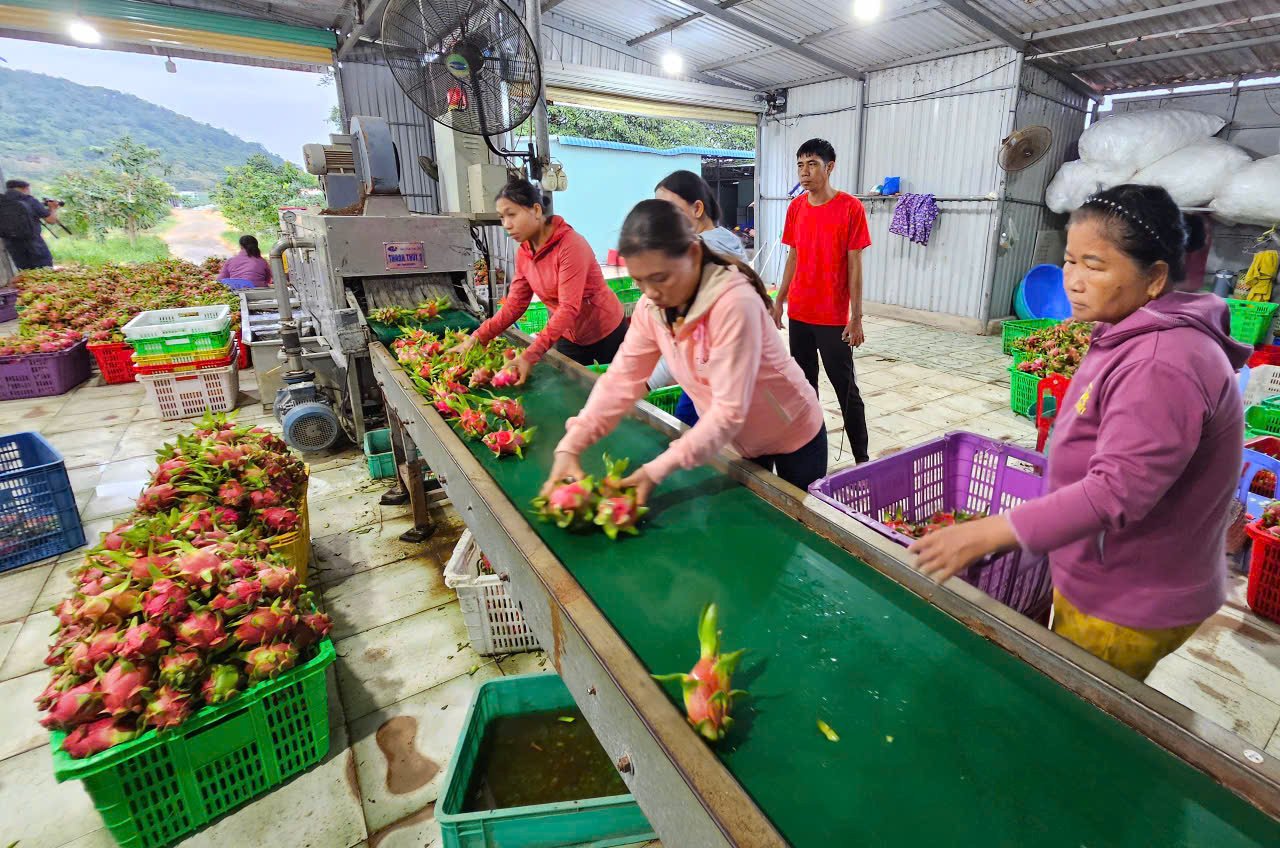
Preliminary processing of dragon fruit for packaging and export to various markets.
Binh Thuan is considered the “dragon fruit capital” of Vietnam, with a cultivation area of over 26,000 hectares, mostly white-flesh varieties. Of this, over 9,500 hectares are certified under VietGAP standards, and 453 hectares under GlobalGAP standards. The province currently has 548 planting area codes for export and 260 packing facility codes.
In 2024, the province harvested nearly 580,000 tons of dragon fruit. According to the 2025 plan assigned by the Binh Thuan People’s Committee, the expected harvest is 575,000 tons.
The Binh Thuan Department of Industry and Trade reported that in the early months of 2025, both domestic and export demand for fruit remained high, helping stabilize dragon fruit prices.
In the first three months of the year, the price of white-flesh dragon fruit ranged from 15,000 to 25,000 VND per kilogram, allowing farmers to make a profit. However, prices have recently dropped to 10,000–12,000 VND per kilogram and are forecast to decline further as the main harvest season approaches.
According to compiled data from northern border provinces (Lang Son, Lao Cai, Ha Giang, Quang Ninh), in the first five months of 2025, approximately 300,000 tons of dragon fruit were exported through northern border gates, most of which came from Binh Thuan.
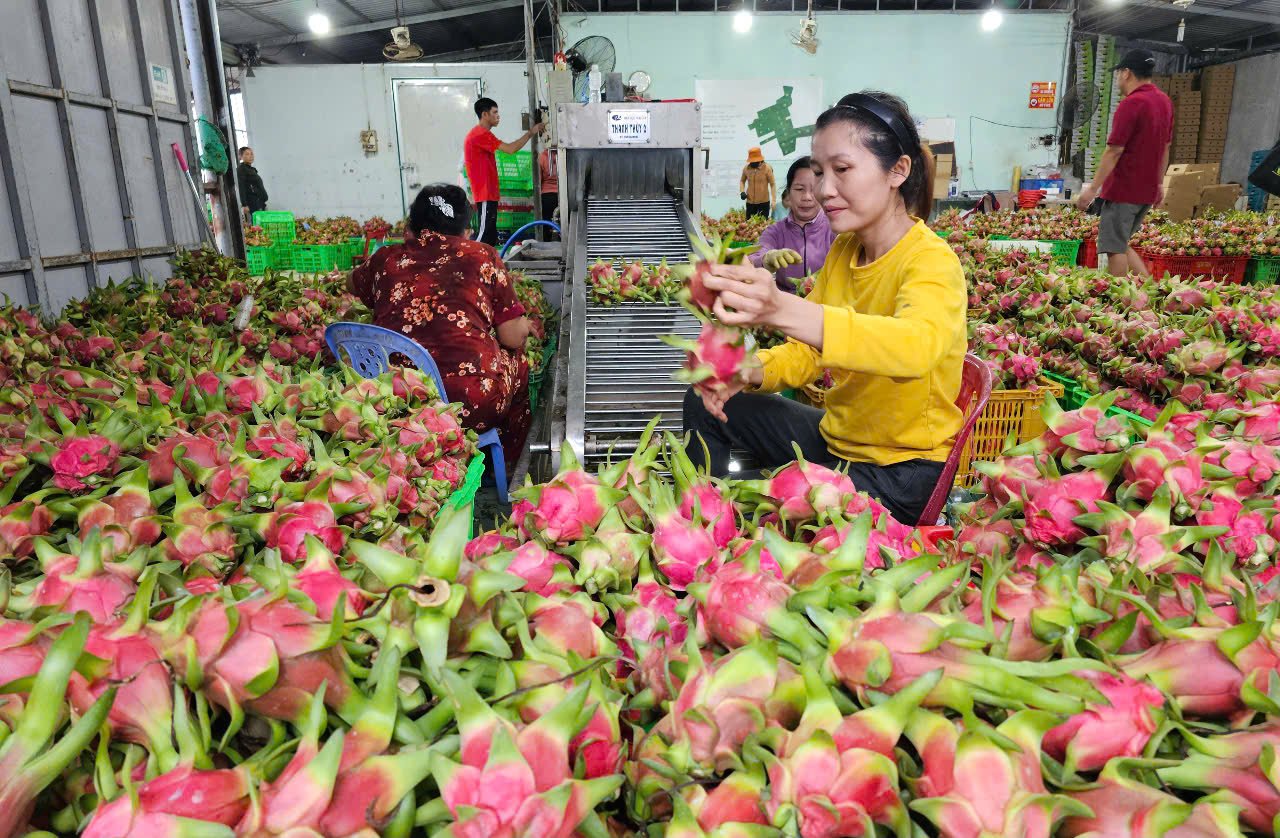
In the first five months of 2025, Binh Thuan's dragon fruit exports showed positive growth.
Mr. Bien Tan Tai, Deputy Director of the Binh Thuan Department of Industry and Trade, stated that for official dragon fruit exports, enterprises in the province recorded an estimated turnover of USD 5.53 million over the past five months, equivalent to 5,092 tons of fresh dragon fruit.
The primary export markets for Binh Thuan dragon fruit include China, South Korea, India, the UAE, Australia, New Zealand, and the Russian Federation.
“According to our assessment, in the first five months of 2025, Binh Thuan’s dragon fruit exports have maintained a positive growth trend, with export turnover increasing by 20.65% and volume by 9.79% compared to the same period last year. This demonstrates the close guidance of local authorities and relevant sectors in implementing and promoting trade promotion activities, maintaining traditional markets, and exploring new potential markets for trade and connection,” Mr. Tai remarked.
He added, “At the same time, businesses have made great efforts to enhance product quality and actively participate in trade promotion activities, fairs, and exhibitions to expand their markets and improve their competitive position. This shows that enterprises are not only focusing on production but also on promoting their products and connecting with customers.”
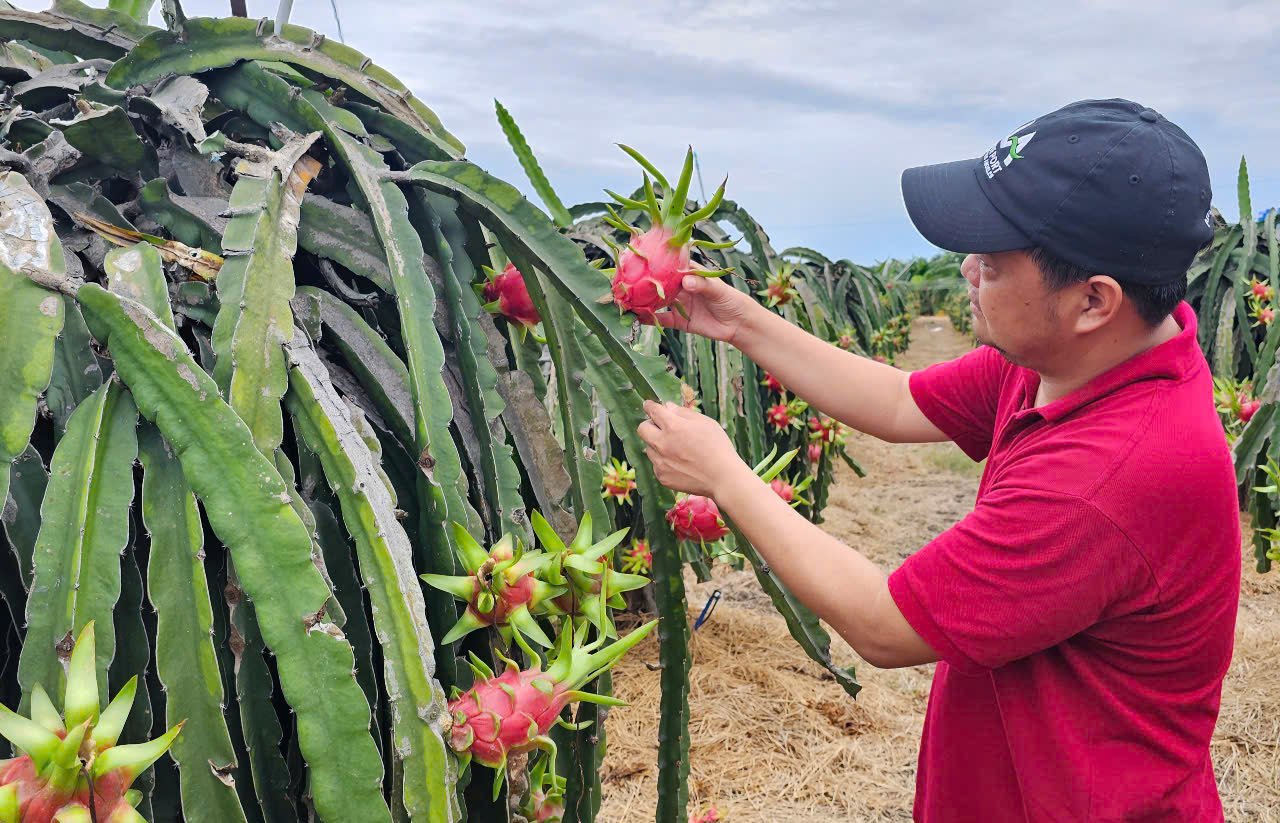
Binh Thuan is the dragon fruit production hub of the country.
In 2025 and the years to come, China will remain a major consumer market for Vietnamese agricultural products, including dragon fruit from Binh Thuan province. However, China is no longer a “lenient” market, as it has strengthened the enforcement of standards related to origin traceability, labeling, and more stringent quarantine regulations. In addition, other importing markets such as the United States, the European Union, and Taiwan are also introducing increasingly strict regulations on food safety and tightening pesticide residue inspections. These factors present significant challenges for the export of agricultural products in general, and dragon fruit in particular, from Binh Thuan.
Therefore, to further enhance the value of dragon fruit, especially by promoting official export channels, leaders of the Department of Industry and Trade believe that local enterprises and farmers need to strengthen quality control from the very beginning of the production process, including cultivation, intensive farming, care, harvesting, preliminary processing, and export packaging.
At the same time, it is essential to strictly comply with regulations regarding the management of planting area codes and packing facility codes to ensure both quality and food safety. Most importantly, businesses must fully adhere to the import requirements set by partner countries, and regularly update themselves on changes in market demands in order to develop appropriate sourcing, processing, and export strategies.
In addition, businesses and farmers must strengthen their supply chain linkages to improve product quality. This should go hand in hand with investments in product design and attractive packaging that aligns with consumer preferences, contributing to the sustainable development of Binh Thuan’s dragon fruit industry as well as the local agricultural sector.
To expand markets, the Department of Industry and Trade recommends that businesses allocate resources and actively participate in domestic and international trade promotion programs in the near future. These efforts will help foster trade connections, introduce products, and seek out customers and distribution channels to further develop consumer markets.
According to Mr. Tai, businesses should also focus on domestic customers by paying close attention to consumer needs and improving product quality, especially in today’s context where consumers place a high value on health and food safety.
$ 1 = VND 26.075 - Source: Vietcombank.
Translated by Phuong Linh

(VAN) Located in three former provinces, Nam Dinh, Thai Binh, and Ninh Binh, and now in two provinces, Ninh Binh and Hung Yen, "Red River Delta" is the name of Vietnam's first interprovincial coastal wetland World Biosphere Reserve.
/2025/12/29/1046-1-210728_624.jpg)
(VAN) In 2025, Viet Nam recorded severe and extreme disasters, breaking multiple historical records and causing heavy losses in lives, property, and infrastructure nationwide.

(VAN) Applied technologies, water-saving irrigation is a strategic solution to promote climate-resilient agriculture and strengthen water security in the uplands.
/2025/12/29/3936-3-163422_251.jpg)
(VAN) Can Gio mangrove forest in particular and the entire Can Gio Mangrove Biosphere Reserve in general hold great potential for carbon credits.

(VAN) Chu Pah Rubber has announced its products that comply with the EU Deforestation Regulation (EUDR), affirming its commitment to sustainable production and product origin transparency.

(VAN) Deputy Director Nguyen Hoai Nam stated that a digital data platform will be developed with agricultural sector databases, utilizing AI to help farmers make informed decisions on 'watering correctly, sufficiently, and efficiently.’
/2025/12/29/4841-2-134224_777.jpg)
(VAN) From only about 10 individuals in 2009, the wild elephant population in Dong Nai has recovered to nearly 30 animals after more than 10 years.
