July 21, 2026 | 07:10 GMT +7
Hotline: 0913.378.918

July 21, 2026 | 07:10 GMT +7
Hotline: 0913.378.918
In the context of sustainable development, women are increasingly affirming their role as an important force capable of creating positive changes in everyday life. To realize this potential, the project “Creating opportunities for women in Central Viet Nam to improve livelihoods and protect the environment and natural resources through the application of green and circular economy,” funded by the European Union (EU), has focused on a key objective: strengthening women’s capacity through in-depth training programs.
According to Ms. Duong Thi My Hanh, Deputy Director of the Ba Tu Agricultural and Construction Cooperative, when participating in circular economy projects, women are provided with knowledge, technical support, and training. As a result, all processes, from processing and production to business operations and product consumption, are optimized and become more efficient.
In addition to knowledge transfer, the project also helps women identify and leverage local resources to develop sustainable livelihoods. Through training activities on the green economy and circular economy, along with the Asset-Based Community Development (ABCD) approach, women are encouraged to proactively harness local strengths, thereby building livelihood models that are aligned with real needs and local conditions.
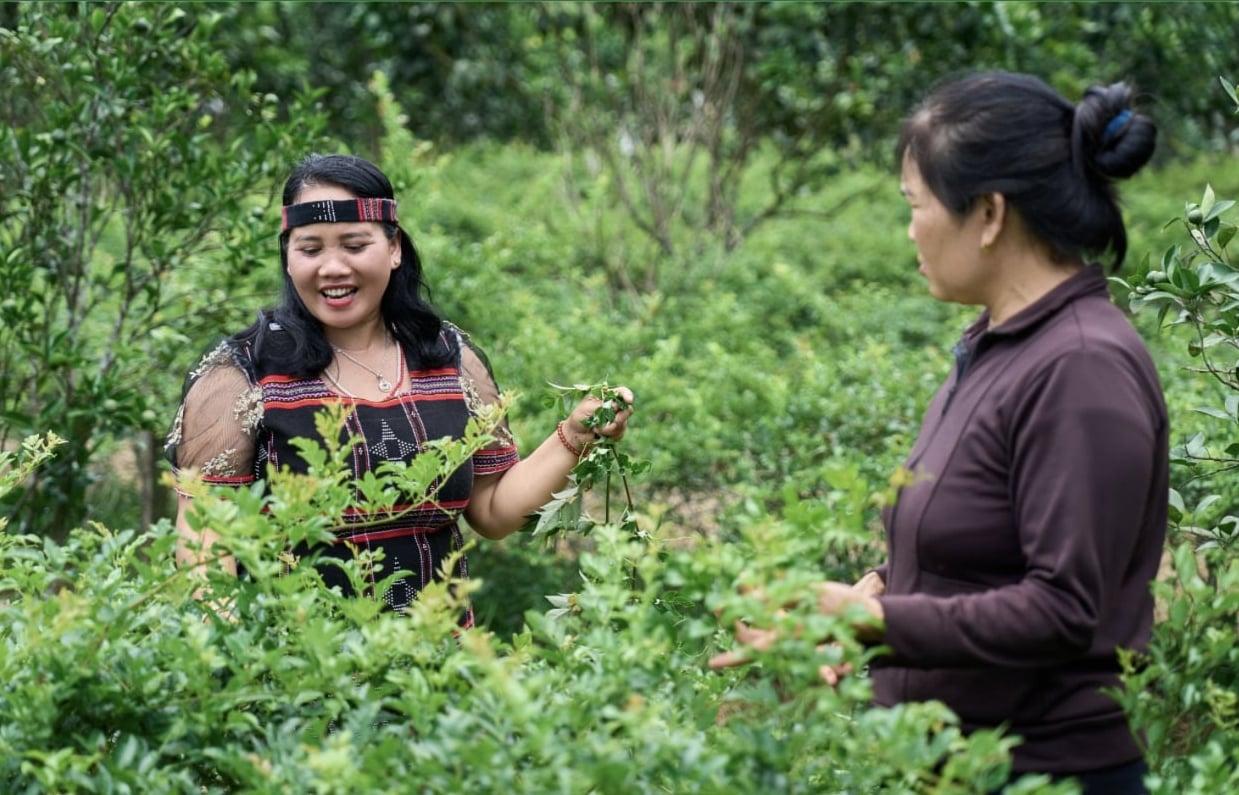
Cơ Tu women participate in developing a sustainable vine tea production model in a mountainous commune of Da Nang. Photo: EU Delegation.
In Hai Van ward (Da Nang), a group of local women has developed a bio dishwashing liquid production model using orange peels, making use of organic by-products to create an environmentally friendly product while also helping reduce household waste.
Meanwhile, in areas where the Co Tu ethnic community lives, local women are gradually developing vine tea products from indigenous medicinal plants. This model not only helps enhance the value of local natural resources but also creates additional livelihood opportunities linked to the preservation of traditional knowledge.
The distinctive feature of the project does not lie in supporting a specific model, but in its approach to empowering the community. Through activities implemented by the Green Viet Biodiversity Conservation Centre (GreenViet) together with local partners, many women have become key actors connecting and driving development activities within their communities.
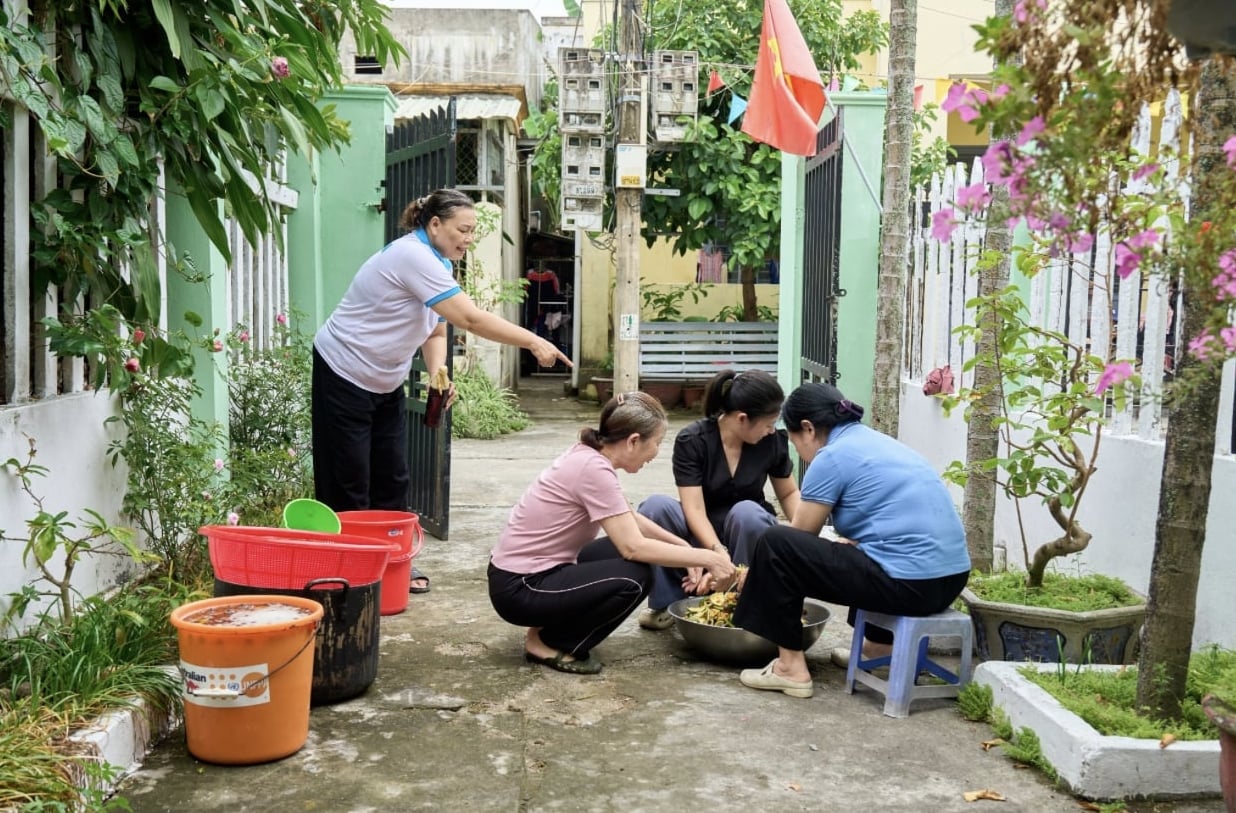
The bio dishwashing liquid production model developed by women in Hai Van ward has been researched and scaled up after a study visit to Hoi An and Cu Lao Cham under the framework of the project. Photo: EU Delegation.
“In the four-year duration of the project, we place top priority on strengthening women’s capacity. Capacity-building is essentially giving the community a ‘fishing rod’ so they can actively ‘go fishing’ on their own, thereby creating sustainable, long-term livelihoods. If we only focus on supporting small, superficial models, it is difficult to ensure sustainability. Internal capacity is the true driving force, the core foundation that enables communities to independently operate models and develop their economy,” emphasized Mr. Tran Huu Vy, Director of GreenViet.
In the project implementation areas, women are not only involved in developing green livelihood models but also actively share experiences and mobilize local people to participate in environmental protection and sustainable economic development activities. Through this, the project aims to increase incomes by 30% through production and business activities, as well as ensure that 70% of local residents understand green economy and circular economy concepts.
An EU representative expressed confidence that when given opportunities, women are not only beneficiaries but can also become a driving force for positive change in their communities. On the journey toward a green future, sustainable changes can begin from very familiar elements: shared knowledge, connected resources, and women being empowered to become agents of change.
Translated by Phuong Linh
/2026/07/20/3847-3-113606_381.jpg)
(VAN) The global spread of the SAT-1 FMD virus strain underscores the need for Viet Nam to proactively enhance surveillance and develop response scenarios well in advance.

(VAN) Agricultural by-products are being recognized as resources that can generate new economic value, reduce emissions, and create new opportunities for green growth in circular agriculture.

(VAN) The project aims to help ethnic minority women strengthen their agricultural processing skills, develop climate-resilient livelihoods, and improve their incomes.

(VAN) The BLOOM project, funded by the Government of Canada, aims to restore ecosystems while improving livelihoods for ethnic minority women in Dak Lak.

(VAN) After three years, the CDP Tra Vinh project marked a significant turning point in helping coastal communities improve the capacity to effectively adapt to climate change.

(VAN) Ho Chi Minh City is expanding 'Responsible Green Tick' meal model, leveraging traceability applications to transparently manage supply chains and elevate the quality of school meals.
/2026/07/17/3034-2-132636_532.jpg)
(VAN) The coffee nursery of Nghia Hoa Agricultural Service Cooperative in Gia Lai has become one of the region's trusted suppliers of coffee seedlings for local growers.
