June 5, 2026 | 07:27 GMT +7
Hotline: 0913.378.918

June 5, 2026 | 07:27 GMT +7
Hotline: 0913.378.918
This concern has prompted Binh Phuoc province to collaborate with local and national agencies to protect wildlife. On October 30, the province hosted the seminar of Binh Phuoc says no to illegal wildlife use at Bu Gia Map National Park in Bu Gia Map district.
Dr. Vuong Duc Hoa, Director of Bu Gia Map National Park, explained that wildlife plays a crucial role in the natural environment and human life. Wildlife contributes to maintaining ecological balance in natural ecosystem. Research has shown that ecosystems depend on the interrelationships among species and their habitats. The loss of an important species disrupts the ecosystem balance and impacts other species. Many plant species rely on birds, mammals, or insects for dispersal or pollination. If a species responsible for plant dispersal disappears, it affects the development of vegetation.
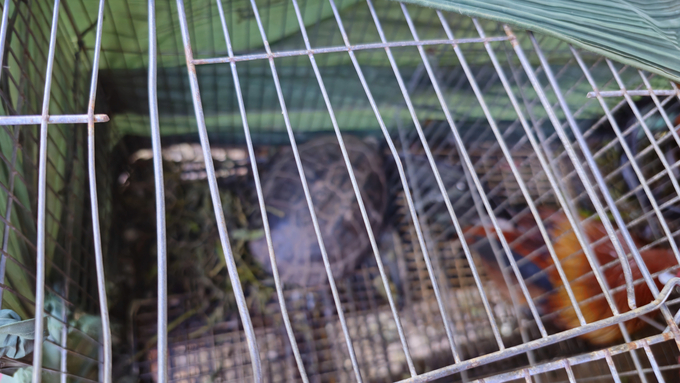
Although the trade and consumption of wildlife have significantly decreased, conservation efforts are showing positive progress, yet incidents still occur. The image shows a metal cage holding several wild chickens and two turtles at a residence in a border area. Photo: Hong Thuy.
In addition to their ecological values, wildlife species also provide ecosystem services that contribute to sustainable economic benefits for nations and communities. According to calculations by scientists, at a global level, wildlife has generated billions of dollars in profits for tourism companies each year through nature-based tourism activities and wildlife viewing. Communities living near these areas benefit from stable incomes that meet their daily essential needs.
In recent years, thanks to advocacy efforts and the decisive involvement of regulatory authorities, along with stricter legal regulations, the trade and consumption of wildlife have significantly decreased. Conservation efforts have shown positive changes, with more active participation from local communities living near forests and society as a whole.
Many people have said no to the use of wild products and are actively participating in efforts to promote the protection of endangered and rare species. Numerous individuals have proactively contacted conservation agencies to hand over wild animals to the authorities for rescue and return to their natural environment.
"However, wild species are still being severely impacted and threatened by human activities. The populations of wild animals are declining due to pressures from hunting, habitat loss due to rampant exploitation of natural resources, and the conversion of natural forests for socio-economic development. Additionally, environmental pollution, climate change, and various other human activities are severely affecting wild species and their natural habitats" Dr. Hoa said.
At the workshop of Binh Phuoc province, there was participation from leaders of the Regional III Forestry Department, the Binh Phuoc Forestry Sub-Department, the Department of Agriculture and Rural Development of Binh Phuoc, the Police, and the Border Guard.
Binh Phuoc currently has nearly 56,000 hectares of natural forest, which is home to many endangered and rare wild species that are being protected in Cat Tien National Park and Bu Gia Map National Park. Specifically, Bu Gia Map National Park contains 832 species, including many rare and valuable ones such as the black-legged gibbon, banteng, red-crowned crane, leopard cat, and Java pangolin, along with hundreds of reptile species.
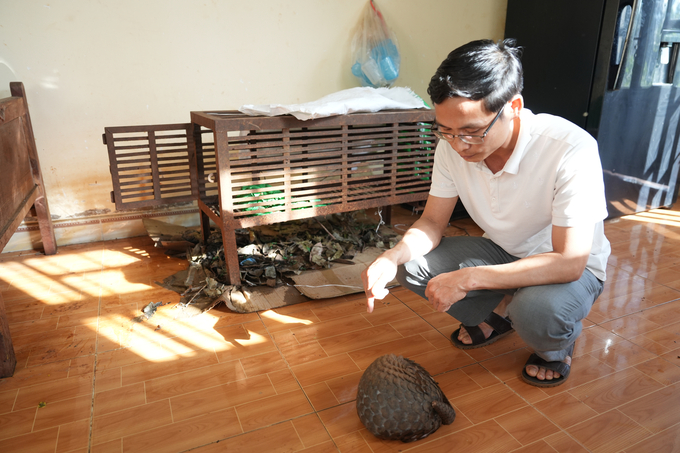
A Java pangolin surrendered by local residents has just been received by the Wildlife Rescue Center. Photo: Hong Thuy.
Mr. Nguyen Van Thai, Director of the Vietnam Wildlife Conservation Center, noted that in recent years, efforts to protect and conserve forest ecosystems have seen positive changes. However, the trade and consumption of wildlife still occur quietly in many localities, especially in large urban areas and forested regions. The battle against the consumption and trade of wildlife remains fierce. Authorities continue to uncover numerous wildlife trafficking and consumption cases each year. "To contribute to the protection of nature, the Vietnam Wildlife Conservation Center is the organizer of this workshop, with the participation of representatives from forestry, agriculture, police, and border forces. We have all agreed to commit to protecting wildlife through specific solutions" Mr. Thai stated.
One of the solutions proposed by Mr. Duong Van Lam, Head of the Regional III Forestry Sub-Department, at the workshop is to enhance the role of local residents as the "eyes and ears" specifically the village elders, village leaders, and respected individuals in the community. Additionally, it is essential to establish a close connection with local people, fostering a strong relationship between officials and the community. "Each official must be a shining example for the people to follow, maintaining high standards in all actions and words by engaging with the community, sharing and explaining the benefits of protecting ecosystems, forests, and wildlife, which ultimately safeguards their own living environment and that of their descendants. Once they understand, they will voluntarily cooperate with us", Mr. Lam said.
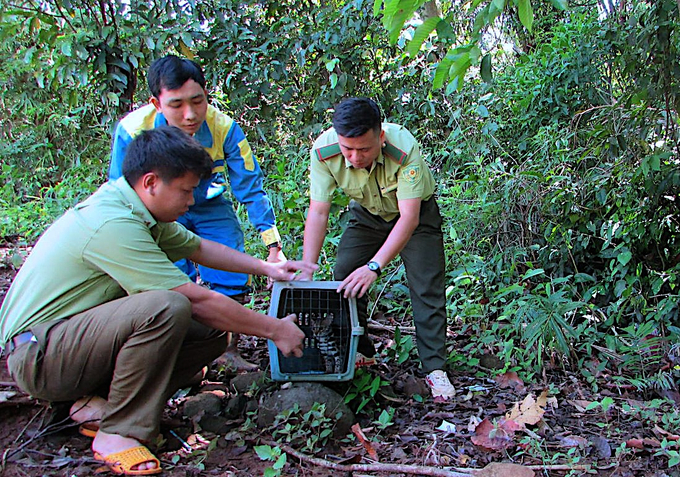
The authorities in Binh Phuoc have released a wildcat back into its natural habitat after its rescue. Photo: HT.
Mr. Le Cong Su, Deputy Head of the Bu Gia Map National Park Forestry Department, shared some solutions implemented by the unit in forest protection based on the principle of "Protecting forests at the root." This involves identifying areas at high risk of encroachment and establishing checkpoints to patrol and protect those areas. Forest management units in the area and neighboring units need to coordinate closely, facilitating information sharing, exchanges, and support to fulfill their duties effectively. Additionally, the unit is applying scientific and technological advancements in forest patrol and protection efforts.
At the workshop, Mr. Pham Thuy Luan, Director of the Binh Phuoc Department of Agriculture and Rural Development, stated that efforts to protect and conserve wildlife are being vigorously implemented in the province and are becoming increasingly effective. Each year, the province organizes the reception and rescue of hundreds of animals voluntarily surrendered by residents, releasing an average of 80 to 100 endangered and rare wildlife species back into their natural habitat after rehabilitation.
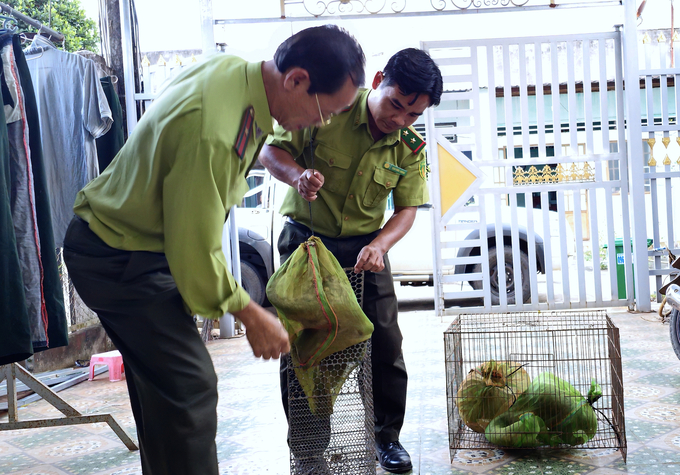
The Binh Phuoc Forestry Department has received two Java pangolins and one civet cat handed over by residents. Photo: Hong Thuy.
"To ensure the effectiveness of wildlife conservation and protection, in addition to the solutions proposed at the workshop, forest management units need to enhance their patrol, inspection, and control activities to prevent unauthorized entry into the forests, as well as to stop the setting of traps and the hunting of wildlife. There should be plans for monitoring and conservation, especially for rare, endangered, and endemic species at risk of extinction. The forestry forces, police, border guards, market management, and forest owners need to cooperate in sharing information, patrolling, inspecting, preventing, and strictly addressing violations of wildlife protection laws and any actions against officials performing their duties", said Mr. Pham Thuy Luan, Director of the Binh Phuoc Department of Agriculture and Rural Development.
Translated by Kieu Chi

(VAN) Due to heatwaves and water shortages, weed outbreaks are surging in the Mekong Delta’s summer-autumn rice crop. Dong Thap is ramping up early-season weed management to cut costs and safeguard yields.

(VAN) At the Vegetable and Fruit Seed Research and Production Farm in Bac Ha, pear, peach, and plum orchards are carefully maintained to conserve valuable genetic resources and support the development of temperate fruit crops.
/2026/06/02/4947-3-223411_779.jpg)
(VAN) Protecting forests not only preserves natural resources but also helps safeguard water sources, living environments, and the foundation for long-term sustainable development.

(VAN) Jackfruit prices remain low despite the recent increase as exports to China struggle. Dong Nai is tightening quality control to restore the market.

(VAN) Mekong Delta farmland is degrading due to chemical abuse. Restoring soil with organic and microbial fertilizers while reducing chemicals is now urgent.
/2026/06/01/1824-2-211343_500.jpg)
(VAN) Quang Ngai province is implementing many measures to protect sargassum resources, contributing to restoring aquatic resources, preserving biodiversity, and creating sustainable livelihoods.

(VAN) Farmers in Phu Thuan Commune, Da Nang preserve healthy soil and maintain chemical-free farming seasons, producing clean sesame and bean export products.
