July 21, 2026 | 21:43 GMT +7
Hotline: 0913.378.918

July 21, 2026 | 21:43 GMT +7
Hotline: 0913.378.918
Since the beginning of 2026, banana exports in Dong Nai Province have shown many positive signals, with higher selling prices, stable output, and continued market expansion. These results not only bring higher incomes for farmers but also reaffirm bananas as one of the province’s key crops.
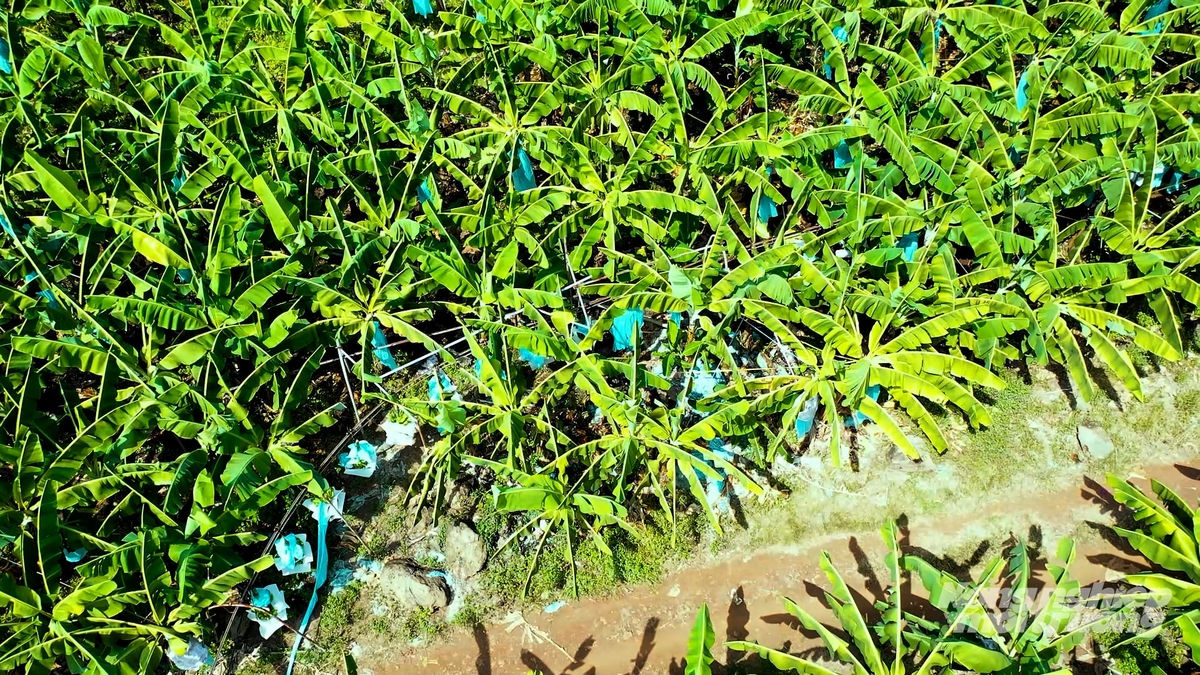
All cooperatives strictly adhere to banana production standards to meet increasingly stringent market requirements, particularly in China. Photo: Minh Sang.
By the end of 2025, Dong Nai’s total banana-growing area exceeded 20,000 hectares, with output reaching 94,000 tons. This is one of the sectors with strong export advantages, thanks to suitable soil conditions, farmers’ long-standing cultivation experience, and the increasing application of scientific and technological advances in production.
At the start of 2026, the banana export market improved significantly, with tissue-cultured bananas at times exceeding VND 20,000 per kilogram due to strong demand in both domestic and export markets. Although prices have now adjusted to around VND 14,000 per kilogram at the farm gate, growers are still making good profits and expect a “bumper crop with good prices” this year.
According to Pham Van Quy, a banana farmer in Thanh Son Commune, although input costs have risen sharply, with fertilizer and material prices increasing by 30–40%, and weather conditions have delayed harvests by about 15–30 days, stable selling prices have helped offset these costs.
“The key is to strictly follow production processes to meet increasingly high market requirements, especially from China. Farms that meet standards can proactively choose their buyers,” Quy shared.
Ly Minh Hung, Director of Thanh Binh Cooperative (Bau Ham Commune), said that in 2026, there is still significant room for growth in both fresh banana exports and processed banana products. “By building standardized export-oriented raw material areas, our cooperative has in recent years proactively expanded into more demanding markets, thereby increasing added value not only for fresh bananas but also for processed products from banana fruit and stems,” Hung said.
Thanks to high economic efficiency, banana cultivation areas in Dong Nai continue to expand. Many farmers have invested in large-scale production, with some cultivating over 100 hectares and planning further expansion to seize market opportunities.
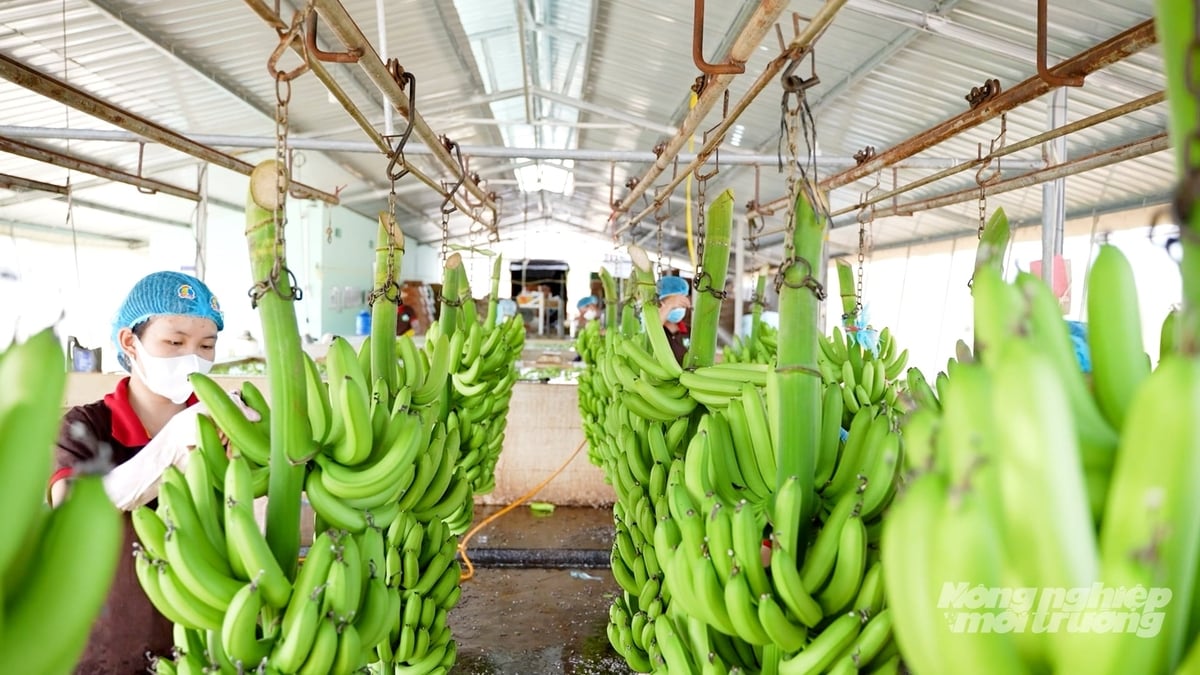
Many packing facilities in Dong Nai Province have invested to meet export standards for international markets. Photo: Minh Sang.
According to the Dong Nai Department of Agriculture and Environment, the province currently has 194 growing area codes covering about 14,000 hectares, along with 52 certified packing facilities serving exports to major markets such as China, the United States, Europe, and Australia. The banana sector alone comprises 54 growing areas covering more than 7,250 hectares and 37 certified packing facilities eligible for export to international markets.
One notable highlight in the banana sector is the increasingly close linkage among farmers, cooperatives, and enterprises. Businesses not only purchase products but also provide technical guidance, quality control, packaging, and export services, forming closed-loop production chains.
Mai Thi Huong, Director of Dong Nai Agricultural Aquaculture XNK Company Limited, said that import markets, especially China, are tightening standards on pesticide residues and plant quarantine. Therefore, quality control must be implemented right from the production stage at the farm level.
According to Le Thi Anh Tuyet, Deputy Director of the Dong Nai Department of Agriculture and Environment, bananas are one of the province’s key crops, with production oriented toward concentrated, export-standard production. At the same time, the province continues to attract investment to replicate fruit export value chains, gradually building the Dong Nai fruit brand in international markets.
The provincial agricultural sector will continue to support businesses and farmers in overcoming difficulties and expanding standardized growing areas, while attracting investment in processing and agricultural branding. In the coming period, Dong Nai aims to develop modern agriculture, apply high technology, and strengthen value chain linkages from production to consumption. This is a key solution for improving quality and meeting increasingly stringent export market requirements.
Amid rising global demand, bananas are expected to soon join Viet Nam’s “billion-dollar fruit export club”.
In reality, with advantages in production scale, farming experience, and strong business participation, Dong Nai bananas are poised for major breakthrough growth. However, for sustainable development, the core factors remain improving product quality, complying with international standards, and systematically building agricultural brands. This is not only the inevitable path for the banana sector but also the way for Dong Nai’s agriculture, in particular, and Viet Nam’s agriculture, in general, to assert their position in the global market.
“The fruit and vegetable sector, especially key products such as bananas, durian, and pineapple, still has significant room for growth. In addition to maintaining traditional markets, the sector is gradually expanding into more demanding markets and increasing export value,” emphasized Nguyen Van Muoi, Deputy Secretary General of the Vietnam Fruit and Vegetable Association.
* $1 = VND 26,331 - Source: Vietcombank.
Translated by Huong Giang

(VAN) Viet Nam is actively preparing to participate in GREEN EXPO 2027 to promote its image as a green, sustainable, and innovative nation on the global stage.

(VAN) Lai Chau is passing by in a hurried rhythm at this time. Everyone is working tirelessly against the clock, devoting all efforts to overcoming the aftermath of the disaster.

(VAN) Some countries consider agriculture a public service, so the state must invest in it, according to Ass. Prof Dr. Dao The Anh, former Deputy Director of the Viet Nam Academy of Agricultural Sciences.

(VAN) The Minister of Agriculture and Environment of the Lao PDR recognizes the VRG's significant contributions over two decades of investment and operations in Laos.

(VAN) The VNMHA held a conference to review its work over the first six months of the year and set out priority directions and tasks for the second half of 2026.

(VAN) Khanh Hoa Sea Festival 2026, themed ‘Colors of the Ocean - Reaching International Scale,’ conveys a message of green marine economic development, integration, and Khanh Hoa's rising position.

(VAN) Viet Nam and the Food and Agriculture Organization of the United Nations (FAO) have launched a project to strengthen water resources management, reduce pollution and restore water quality in the Gulf of Tonkin.