July 21, 2026 | 16:50 GMT +7
Hotline: 0913.378.918

July 21, 2026 | 16:50 GMT +7
Hotline: 0913.378.918
At the working session on March 27, Deputy Prime Minister Tran Hong Ha highly appreciated the WB's role as a leading development partner, having effectively supported Viet Nam in many fields such as infrastructure, institution building, human resource development and sustainable development.
The Deputy Prime Minister affirmed Viet Nam's support for the WB's water-sector initiatives, such as "Water for the Future" and the "Country Water Compact," noting that these initiatives align with Viet Nam's practical needs.

Deputy Prime Minister Tran Hong Ha receives and works with the World Bank Division Director for Viet Nam, Cambodia, and Lao PDR, Mariam J. Sherman, on March 27. Photo: VGP.
In the agriculture and environment sectors, WB projects have provided practical support for irrigation systems, water resource management, and water supply, particularly in rural areas and the Mekong Delta, contributing to ensuring water security, dam safety, and sustainable development.
ODA programs, concessional loans, and technical assistance projects supported by the WB have played a crucial role in ensuring water and food security, developing agriculture, improving people's livelihoods and enhancing climate change resilience.
Regarding water resources, the Deputy Prime Minister stated that Viet Nam pays special attention to ensuring cross-border water security, especially in the Mekong and Red River basins. These two basins are of significant importance; their effective management will help secure about 40-50% of water-use sustainability.
The Deputy Prime Minister requested the WB to increase its support for Viet Nam, both in technical design and finance, regarding integrated river basin management and water control solutions. These are decisive factors for socio-economic development policymaking and ensuring sustainable national defense and security.

The Deputy Prime Minister requested the WB to enhance both technical design and financial support for Viet Nam in integrated river basin management and water control solutions. Photo: VGP.
Thanking the Deputy Prime Minister for his time, Ms. Mariam J. Sherman highly appreciated Viet Nam's consensus and strong commitment to the WB's cooperative initiatives in water resource management. According to her, participating in global initiatives not only helps elevate the national image but also creates opportunities for Viet Nam to leverage resources and expertise from the WB.
She noted that the WB can provide a comprehensive support package, including technical expertise, financial assistance, and international experience, to help Viet Nam effectively implement cooperative initiatives in water security, agriculture and the environment. Simultaneously, the WB is promoting an approach that strengthens private-sector resource mobilization to support upcoming development goals.
Further discussing cooperation orientations, Deputy Prime Minister Tran Hong Ha stated that the private sector is increasingly prioritized for access to development resources. The Deputy PM clarified that when the private sector participates in major projects, particularly in the water sector, there must be a mechanism to ensure equivalent conditions to those for state-owned enterprises. Furthermore, for commercial projects, the approach must be appropriate and distinct from that used for public infrastructure works.
"The Government is expediting the refinement of mechanisms related to accessing credit, loans, and accompanying conditions. I urge the World Bank to jointly review and adjust problematic policies to align with reality", the Deputy Prime Minister said.
Regarding water resource management, the Deputy Prime Minister believed Viet Nam can contribute practical experience to global initiatives, though support from international organizations and experts is still needed. Among these, there is an urgent need to enhance planning capacity that is adaptive to climate change, shifting from a "disaster prevention" mindset to multi-purpose irrigation planning that supports adaptation.
Taking Hanoi's Capital planning as an example, the Deputy Prime Minister emphasized the need for an integrated approach, starting from the Red River basin planning as a foundation for urban and long-term development. Alongside this is the urgent challenge of inter-reservoir management, including multi-purpose irrigation and hydropower reservoir systems, which requires research and the establishment of an effective coordination mechanism with technical support from the WB.
The Deputy Prime Minister also stressed the need for close coordination among agencies, such as the Ministry of Finance and the Ministry of Agriculture and Environment, in determining the criteria for selecting priority projects. Accordingly, it is necessary to clarify which components require WB technical assistance and which require loans, creating a unified basis during implementation.
For WB, public investment will need to strike a balance between safeguarding land and infrastructure that remain vital to local livelihoods, and building the skills, resilience, and support that people need to pursue opportunities in an adaptive future
Translated by Hong Ngoc
/2026/07/20/1547-1-180442_204.jpg)
(VAN) A farmer in Can Tho has found the secret to raising giant water bugs that produce intensely aromatic essence, earning annual profits of hundreds of millions of dong.

(VAN) From crop conversion to deep processing, Ba Che Commune in Quang Ninh Province is building a comprehensive cinnamon value chain that creates sustainable livelihoods while strengthening the local forestry economy.

(VAN) The ACIAR-SunRice public-private partnership, rooted in science and sustainable development, is expected to support rice farmers in the Mekong Delta.

(VAN) Linking the shrimp, rice, and coffee sectors through a circular economy model is opening up a new pathway for Viet Nam's agriculture.

(VAN) HCMC is accelerating the transition to circular industry by transforming industrial parks into eco-industrial zones, fostering industrial symbiosis, and expanding international partnerships for green manufacturing.
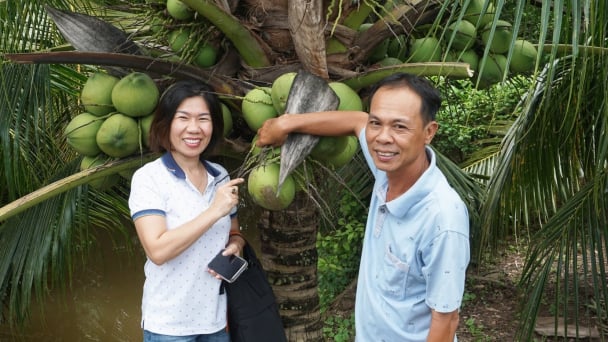
(VAN) The digital map of raw material zones is expected to resolve overlapping investments, ensure production transparency, and accelerate deep processing in the coconut industry.
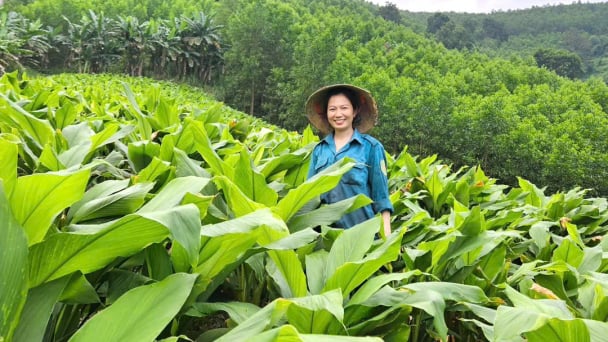
(VAN) Transforming barren hills once dedicated only to acacia and cassava, the Anh Mai Medicinal Plant Cooperative has found a new direction with red turmeric, opening up sustainable livelihoods for local residents.
