November 28, 2025 | 00:00 GMT +7
Hotline: 0913.378.918

November 28, 2025 | 00:00 GMT +7
Hotline: 0913.378.918
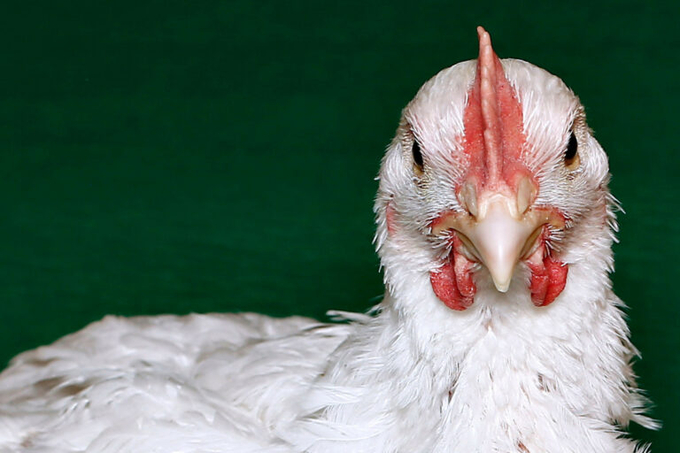
The Humane League argues that the government is acting unlawfully by allowing the use of ‘fast-growing’ broilers in meat production. Photo: Canva.
The case was originally heard 14 months ago in October 2023 when the campaign group said that by allowing the use of such birds, the Department of Environment, Food and Rural Affairs (Defra) was breaching its Welfare of Farmed Animals (England) Regulations in 2007. The Humane League has stressed that the genetic makeup of fast-growing broilers meant at the birds suffered.
The genetic makeup of broilers
That ruling had said Defra was not breaking the law by allowing ‘fast-growing’ production and the Court of Appeal backed that decision. In his ruling, judge Stephen Males did accept that birds should not be kept for farming purposes if they can be expected to suffer “because of their genetic makeup”, but he did not specify this was the case necessarily with modern broilers.
Around 1 billion birds a year are reared intensively in the UK with conventional meat production making up 75% of the market, with the British Poultry Council saying it was driven by consumer demand for efficient, low-impact production that was affordable and upheld good welfare standards.
Underscoring the crucial role of the poultry industry
Richard Griffiths, British Poultry Council chief executive, told industry media: “Today’s decision underscores the crucial role industry plays in ensuring UK food security through responsible and efficient practices. No alternatives can match the balance of innovation and productivity that British poultry production strikes.”
Griffiths added that over 90% of production is certified through the Red Tractor Assurance scheme, with BPC members working closely with regulators to consistently improve welfare.
“I hope today’s judgment reinforces the trust and helps reiterate that British poultry meat producers are committed to driving animal welfare standards,” he added.
Dismissed on a technicality?
The Humane League said the appeal had been dismissed on a technicality, adding the ruling had provided an interpretation of the law that closely aligned with its case.
Sean Gifford, Humane League UK managing director, said: “This historic ruling exposes the government’s failure to address the biggest animal welfare crisis of our time. Over one billion thinking, feeling chickens are leading lives of misery because of their fast-growing genes, and the court had ruled that this type of suffering should be prohibited by law.”
Emma Slawinski, RSCPA director of policy and campaigns, added: “This is a significant and vital step in improving the lives of meat chickens who currently live short, brutal lives, who can often struggle to stand, suffer from heart defects, and even sudden death, and should lead to a seismic change for billions of meat chickens.”
(Poultryworld)

(VAN) On November 27, in the meeting with Minister Tran Duc Thang, Mayor Yin Yong shared Beijing’s experience to improve environment and air quality.

(VAN) After 30 years, both sides identified strategic areas of cooperation: sustainable production, increasing coffee value and training for farmers.
/2025/11/27/4910-4-164708_294.jpg)
(VAN) On the afternoon of November 27 in Beijing, Minister of Agriculture and Environment Tran Duc Thang held a working session with several major Chinese enterprises operating in the agriculture and environment sector.

(VAN) The Department of Animal Health issued a provisional guideline requesting local authorities to increase surveillance, collect samples for testing, and conduct epidemiological investigations according to the established procedure.

(VAN) The United Nations recommends that Vietnam utilize data and artificial intelligence to enhance early disaster warnings and reduce GDP losses by 3.2% in the context of climate change.

(VAN) On the morning of November 27 in Beijing, Minister Tran Duc Thang and the Deputy Commissioner General of the General Administration of Customs of China signed a protocol on fresh jackfruit exports.

(VAN) As floodwaters recede, a vast network of irrigation works across eastern Gia Lai is emerging in a state of severe disrepair, with extensive damage demanding urgent restoration ahead of the 2025-2026 winter-spring cropping season.
