July 21, 2026 | 21:48 GMT +7
Hotline: 0913.378.918

July 21, 2026 | 21:48 GMT +7
Hotline: 0913.378.918
At the workshop “Carbon emission reduction in Viet Nam’s sugarcane sector - from field pilots to scaling directions” recently organized by the Agro-Forestry Policy Research Network, Dr. Cao Anh Duong, Director of the Sugarcane Research Institute, said that pressure from global climate commitments, domestic regulations and the greening of trade is forcing the sector to restructure.
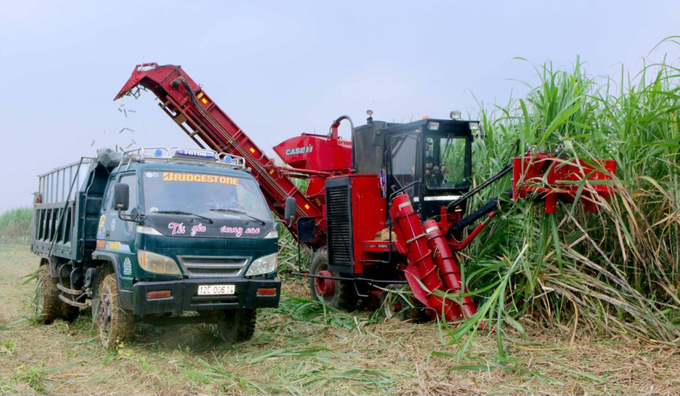
The sugarcane sector is under pressure to restructure across cultivation, processing, and value chain organization.
According to Dr. Duong, major markets are increasingly linking environmental criteria with trade. Mechanisms such as the EU’s Carbon Border Adjustment Mechanism (CBAM) mean that high-emission enterprises risk losing market access, facing difficulties in mobilizing capital and gradually being excluded from global supply chains. “For an open economy like Viet Nam, staying outside this trend is nearly impossible,” he said.
Domestically, following commitments at COP26 to achieve net-zero emissions by 2050, along with regulations on greenhouse gas inventories and emission reduction roadmaps, enterprises are required to gradually comply. Emission reduction is not only a compliance cost but also an investment that increases enterprise value, enhances brand positioning and opens access to green finance.
However, the current state of the sugarcane sector shows that the transition is not easy. Dr. Duong described it as still characterized by small-scale, fragmented production. Linkages between enterprises and farmers remain loose. Most sugar mills do not own land but contract with farmers, providing capital, seeds, fertilizers, and inputs, then purchasing raw materials. Yet these linkages are unstable, seasonal, and lack clear legal mechanisms for benefit-sharing among stakeholders.
“If farmers are no longer profitable and abandon sugarcane, sugar mills will lose their foundation for survival,” Dr. Duong warned.
Regarding emissions, Dr. Duong pointed out that within the entire supply chain, the cultivation stage is the largest source, accounting for up to 80%, mainly due to fertilizer use, especially nitrogen fertilizers, fossil fuel consumption and the practice of burning cane leaves before or after harvest.

Sugarcane has high biomass and a large proportion of by-products.
In many growing areas, farming practices increase emissions. For example, burning cane leaves after harvest remains common because farmers are concerned about regrowth and pest control. However, burning both increases emissions and removes a significant source of organic matter that could be returned to the soil. With current yields, cane tops and leaves left in the field can reach 15–25 tons per hectare.
Sugarcane also offers advantages that few commodities possess, such as high biomass, strong carbon sequestration capacity, a high proportion of by-products, and potential for circular economy development. Dr. Duong noted that only part of the cane is used for sugar extraction, while the remainder consists of tops, leaves, bagasse, molasses, and filter cake. Bagasse can be used for biomass power generation, molasses for ethanol production, animal feed or food processing, and filter cake for organic fertilizer production.
One notable initiative is a low-emission sugarcane farming project implemented by Lam Son Sugar Company in cooperation with Japan. The pilot project covers more than 500 hectares, with the longer-term goal of expanding to about 8,000 hectares of Lam Son’s raw material area, and potentially larger if proven effective.
This model focuses on changing farming practices to reduce emissions and increase soil carbon sequestration. Specifically, it reduces nitrogen fertilizer use, increases organic fertilizers, limits burning of residues after harvest, and reduces tillage frequency. Satellite data, soil analysis, and digital technologies are used to monitor emissions and support measurement, reporting, and verification (MRV) systems.
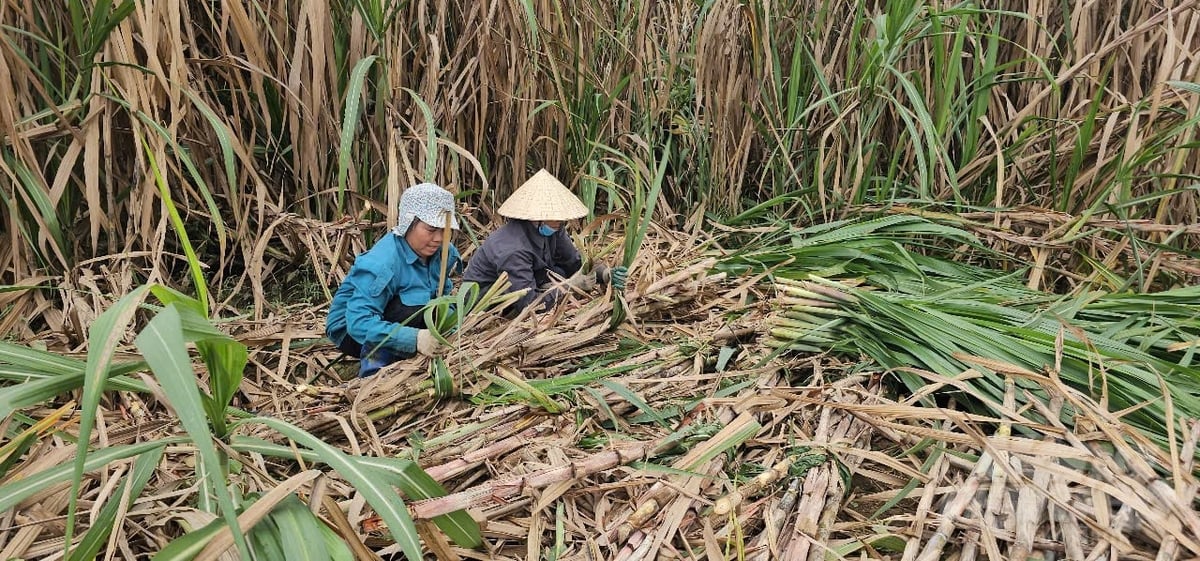
The total sugarcane cultivation area nationwide is currently about 200,000 hectares.
The project also aims to generate carbon credits, initially estimated at about 3 per hectare, but preliminary results indicate the actual figure is around 1.5, half the expected level. This highlights the complexity of the carbon equation in the sugarcane sector. “The direct economic value from carbon credits is not yet attractive enough to be a primary driver for enterprises,” Dr. Duong said. Small, fragmented farming areas and inconsistent data further increase costs and make scaling more difficult.
Nevertheless, Dr. Duong emphasized that carbon should not be seen as the sole objective but rather as a tool and an added-value component in the restructuring process. Greater value lies in optimizing farming systems, reducing chemical fertilizers, lowering input costs, improving soil quality, minimizing pollution from biomass burning, standardizing production data, and enhancing corporate governance. In other words, the benefits of transition lie in the overall efficiency of a more sustainable production model.
This view is supported by Mr. To Xuan Phuc, an expert from Forest Trends. He noted that the sugarcane sector shares similarities with coffee, rubber, cashew, and other industrial crops, including weak farmer-enterprise linkages, lack of benefit-sharing mechanisms, overuse of inputs, prolonged monoculture, and risks of soil degradation.
Mr. Phuc also pointed out that the domestic carbon market could be a promising direction. As high-emission enterprises in Viet Nam are required to meet emission reduction obligations, demand for domestic carbon credits may increase, creating opportunities for agriculture, including sugarcane. However, for this to materialize, a clear legal framework is essential, particularly regarding measurement, verification, carbon credit ownership and benefit-sharing mechanisms.
Translated by Huong Giang

(VAN) Viet Nam is actively preparing to participate in GREEN EXPO 2027 to promote its image as a green, sustainable, and innovative nation on the global stage.

(VAN) Lai Chau is passing by in a hurried rhythm at this time. Everyone is working tirelessly against the clock, devoting all efforts to overcoming the aftermath of the disaster.

(VAN) Some countries consider agriculture a public service, so the state must invest in it, according to Ass. Prof Dr. Dao The Anh, former Deputy Director of the Viet Nam Academy of Agricultural Sciences.

(VAN) The Minister of Agriculture and Environment of the Lao PDR recognizes the VRG's significant contributions over two decades of investment and operations in Laos.

(VAN) The VNMHA held a conference to review its work over the first six months of the year and set out priority directions and tasks for the second half of 2026.

(VAN) Khanh Hoa Sea Festival 2026, themed ‘Colors of the Ocean - Reaching International Scale,’ conveys a message of green marine economic development, integration, and Khanh Hoa's rising position.

(VAN) Viet Nam and the Food and Agriculture Organization of the United Nations (FAO) have launched a project to strengthen water resources management, reduce pollution and restore water quality in the Gulf of Tonkin.
