July 21, 2026 | 16:33 GMT +7
Hotline: 0913.378.918

July 21, 2026 | 16:33 GMT +7
Hotline: 0913.378.918
Recently, Vice Chairman of Ca Mau Provincial People's Committee Le Van Su and leaders of provincial departments had a courtesy meeting with Ms. Raïssa Marteaux, Consul General of the Kingdom of the Netherlands in Ho Chi Minh City, during her working visit to Ca Mau province.

Vice Chairman of Ca Mau Provincial People's Committee Le Van Su pays a courtesy call to Ms. Raïssa Marteaux, Consul General of the Kingdom of the Netherlands in Ho Chi Minh City. Photo: Ca Mau Newspaper.
According to Ca Mau Newspaper, Ca Mau province being selected to implement the "Sustainable Shrimp Sector Governance" Project, co-funded by ActionAid International (Netherlands) and the European Union, is a testament to the interest of international partners in the province's shrimp industry. The project is expected to help Ca Mau improve the governance capacity of the shrimp sector, promote production according to ESG standards, increase climate change resilience and enhance the added value and competitiveness of shrimp products in the international market.
Ms. Raïssa Marteaux affirmed that the Netherlands and Viet Nam are important partners in sustainable agricultural development. Simultaneously, she highly appreciated the cooperation between Ca Mau province and the Netherlands in sustainable aquaculture, highlighted by the Sustainable Aquaculture Development Program following an integrated approach (CombiTrack) and the investment projects of Dutch enterprises in the province.
Vice Chairman of Ca Mau Provincial People's Committee Le Van Su informed the delegation about the province's development orientation with key projects such as the Hon Khoai dual-use general port, Nam Can Economic Zone, energy projects, and the plan to expand Ca Mau Airport. The two sides also discussed various contents related to investment cooperation, infrastructure development, promoting climate-resilient production models and strengthening connections with Dutch financial institutions.
Over the past years, the Dutch Government has supported Viet Nam in general and the Mekong Delta region in particular in implementing many programs for sustainable agricultural and fisheries development, climate change adaptation, water resources management, greenhouse gas emission reduction and circular economy promotion. The cooperative programs have contributed to improving the management capacity of the fisheries sector, enhancing the application of science and technology and supporting locals and businesses in shifting production towards a green, sustainable direction.

Ms. Raïssa Marteaux, Consul General of the Kingdom of the Netherlands in Ho Chi Minh City, presents a souvenir to Vice Chairman of Ca Mau Provincial People's Committee Le Van Su. Photo: Ca Mau Newspaper.
Concluding the courtesy meeting, Provincial People's Committee Vice Chairman Le Van Su expressed his desire to continue receiving the Consul General's attention and support in connecting Dutch agencies, businesses and investors with Ca Mau province; strengthening cooperation in water resources management, technology transfer, digital transformation, human resource training and sustainable, climate-resilient shrimp sector development.
Following the courtesy meeting, the delegation will visit Tan Phat Loi Cooperative (Tan Lap hamlet, Tan An commune) and De Heus Group's RAS-IMTA Project (Cai Nuoc hamlet, Phu Tan commune).
Translated by Hong Ngoc
/2026/07/20/1547-1-180442_204.jpg)
(VAN) A farmer in Can Tho has found the secret to raising giant water bugs that produce intensely aromatic essence, earning annual profits of hundreds of millions of dong.

(VAN) From crop conversion to deep processing, Ba Che Commune in Quang Ninh Province is building a comprehensive cinnamon value chain that creates sustainable livelihoods while strengthening the local forestry economy.

(VAN) The ACIAR-SunRice public-private partnership, rooted in science and sustainable development, is expected to support rice farmers in the Mekong Delta.

(VAN) Linking the shrimp, rice, and coffee sectors through a circular economy model is opening up a new pathway for Viet Nam's agriculture.

(VAN) HCMC is accelerating the transition to circular industry by transforming industrial parks into eco-industrial zones, fostering industrial symbiosis, and expanding international partnerships for green manufacturing.
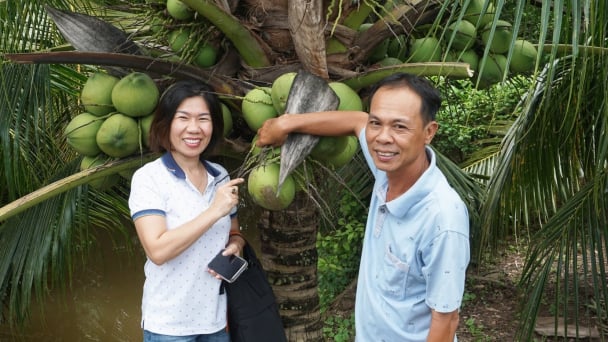
(VAN) The digital map of raw material zones is expected to resolve overlapping investments, ensure production transparency, and accelerate deep processing in the coconut industry.
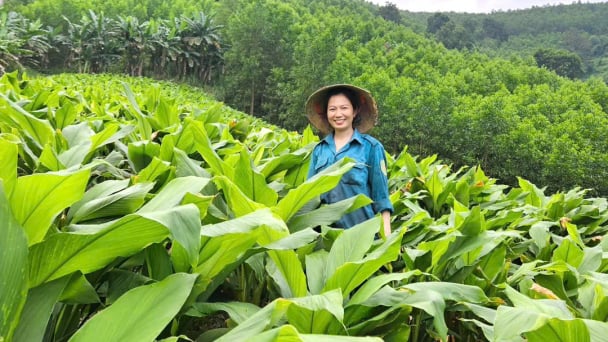
(VAN) Transforming barren hills once dedicated only to acacia and cassava, the Anh Mai Medicinal Plant Cooperative has found a new direction with red turmeric, opening up sustainable livelihoods for local residents.
