June 3, 2026 | 23:20 GMT +7
Hotline: 0913.378.918

June 3, 2026 | 23:20 GMT +7
Hotline: 0913.378.918
In recent years, the issue of “food and food security” has once again become a focal point of global economic and policy forums. The COVID-19 pandemic disrupted raw material supply chains; fertilizer prices and transportation costs surged; maritime transport experienced repeated disruptions; the prolonged US-China trade war continued; the Russia-Ukraine conflict expanded; and, more recently, the Israel-Hamas conflict emerged. All of these factors have created continuous upheavals on the global economic map, placing agriculture before unprecedented challenges.
In 2025, Vietnam’s total export turnover of agricultural, forestry, and fisheries products is estimated to reach around USD 70 billion, officially surpassing the previous record set in 2024 (USD 62.4 billion), despite ongoing global uncertainties.
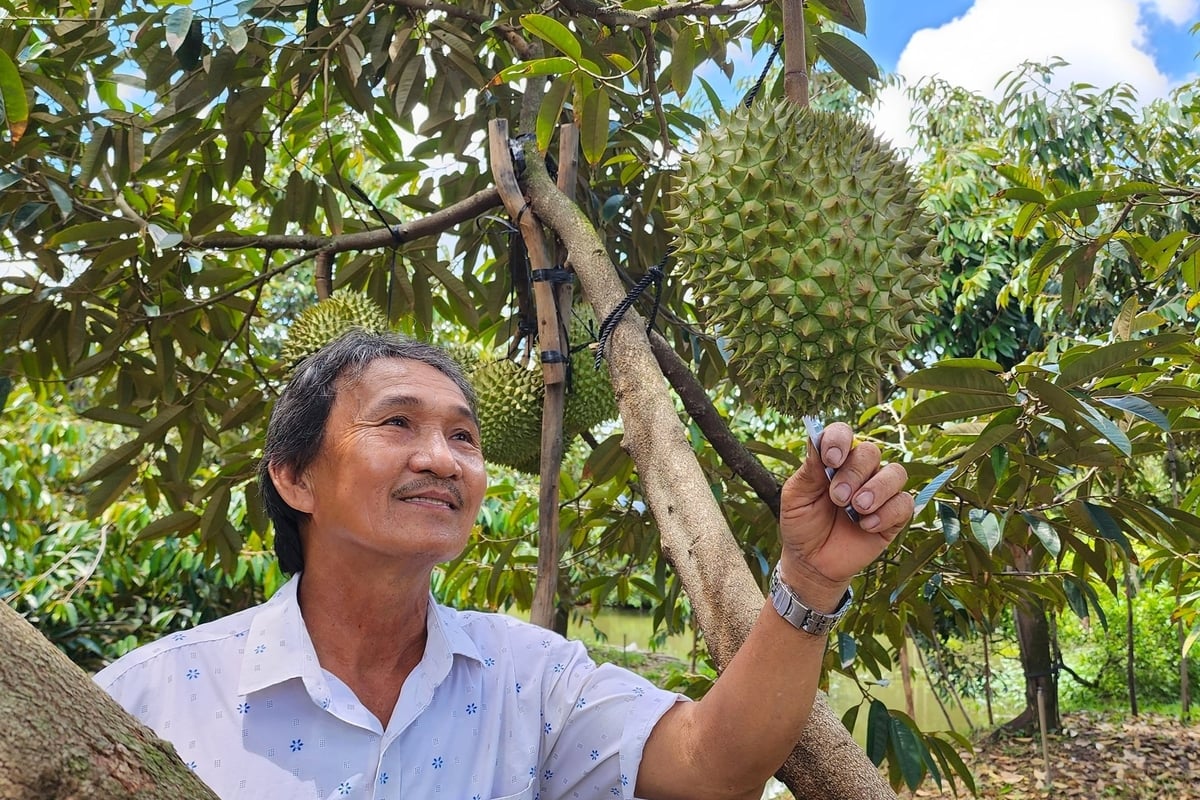
Vietnamese agriculture is aiming for an export target of USD 100 billion in the future. Photo: Nguyen Co.
Vietnamese agriculture currently contributes more than 12 percent of GDP and serves as a vital pillar of national trade. However, the traditional production model has reached its limits. Productivity growth has slowed; crop and livestock diseases are difficult to control; young labor is increasingly reluctant to remain in farming; while the added value of agricultural products remains far below their inherent potential.
On the global landscape, agriculture stands at the center of intense disruptions. Global food value chains are becoming ever more tightly interconnected: a breakdown in just one link, whether transportation, fertilizers, or raw materials, can trigger widespread price fluctuations. The COVID-19 pandemic clearly exposed this fragility. Many countries faced food shortages, grain and animal feed prices surged, and agricultural trade was disrupted on an unprecedented scale.
In this context, Vietnamese agriculture cannot remain on the sidelines. The process of globalization, pressure from green standards, climate change, and growing requirements for traceability are forcing the agricultural sector to restructure itself.

Traceability requirements are forcing the agricultural sector to restructure. Photo: Minh Ngoc.
The concept of “smart agriculture” often immediately evokes images of drones, IoT sensors, or fields managed by satellites and data platforms.
First is the State, which formulates policies and development strategies, while creating a legal environment and investment mechanisms for science and technology.
Second are Research Institutes and Universities, the centers that generate new knowledge and core technologies for agriculture. From laboratories, numerous new crop varieties, AI algorithms, and IoT technologies are developed, tested, and refined.
Third are Enterprises, the actors capable of moving technology beyond the research stage to become products with commercial value. Enterprises are responsible for design, manufacturing, distribution, and scaling up solutions. They are also the driving force behind market competition and economic value creation.
Finally are Farmers, the people who directly operate in the fields. Their decision to adopt or not adopt technology is the ultimate measure of that technology’s success.
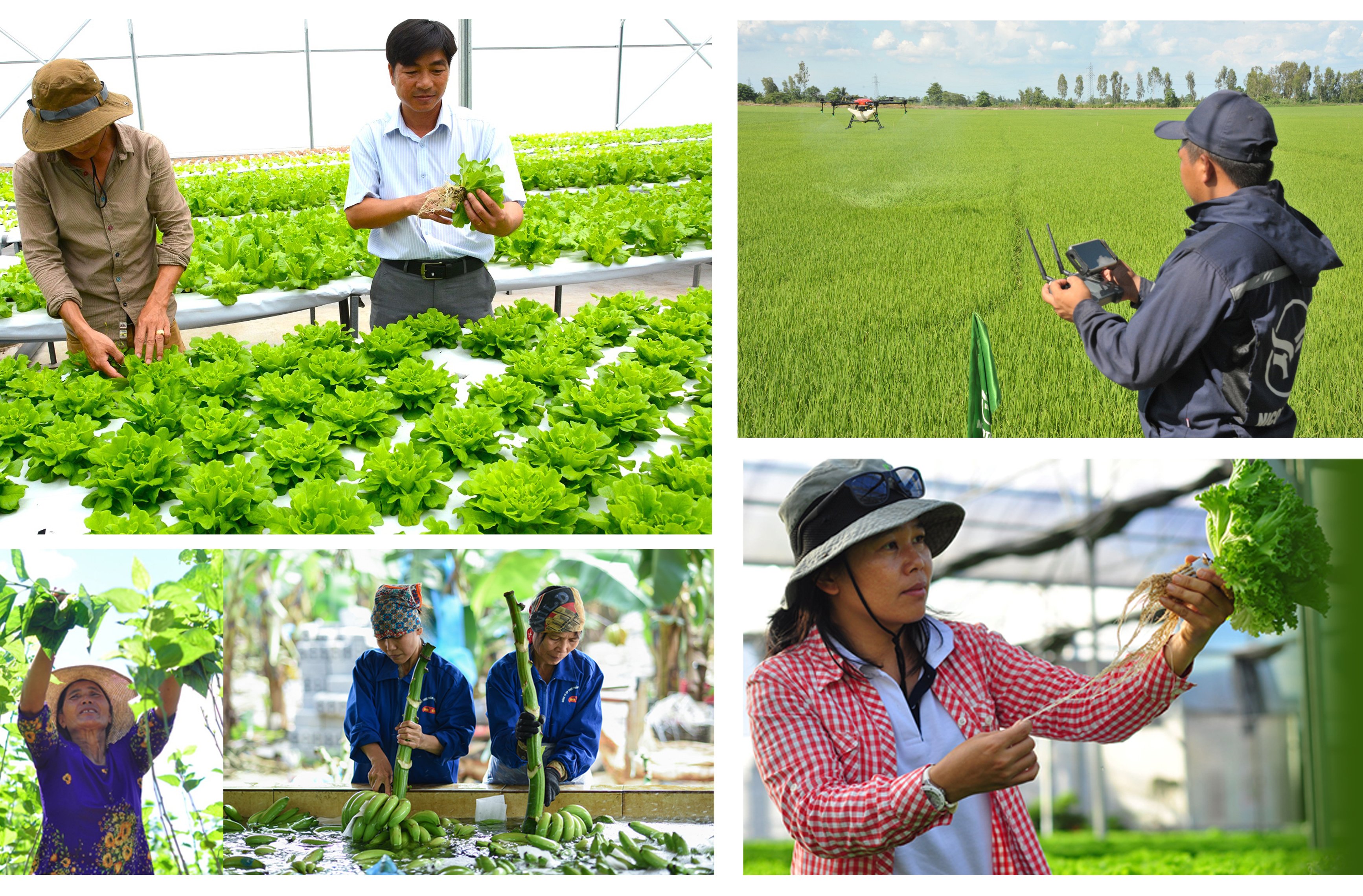
An agricultural ecosystem in which enterprises play the central role in commercialization, the decisive factor ensuring that science does not remain confined to paper. Photo: Minh Ngoc.
The 4D framework consists of four interconnected stages: Discover - Define - Develop - Deliver. This is the core development cycle, starting with the correct identification of agricultural problems, such as low productivity, disease outbreaks, high labor costs, or climate change, followed by the definition of specific objectives and the development of appropriate solutions. The final stage is bringing technology to the market through piloting and commercialization. In other words, 4D helps transform laboratory knowledge into real-world products.
Meanwhile, the 4F cycle (Fit - Form - Function - Finance) serves as an optimization filter, ensuring that technology is not only technically sound but also aligned with market demand and production conditions. An AI or IoT product only has value if its design is user-friendly, its functions address real problems, and its cost is affordable for farmers. The 4F framework is the feasibility check mechanism at every stage of development.
Many scientists believe that combining 4D and 4F can help agriculture save significant resources. When applied to agricultural AI and IoT, this framework can reduce testing costs by around 30 percent and shorten the time needed to bring products from idea to market.

Technology is only a tool; people are the driving force, and knowledge is the foundation. Photo: Ngoc Anh.
A smart agricultural ecosystem cannot be built solely with machines, devices, or algorithms. The implementation process is designed around five clear steps, reflecting a structured and strategic approach.
First, identifying State-level priorities based on long-term strategies. This step provides a “compass” for the entire system, avoiding fragmented investment and ensuring that resources are directed toward the most practical objectives.
Second, selecting promising research projects from Research Institutes and Universities. This is the gateway through which scientific knowledge enters real life, transitioning from ideas and models to pilot products.
Third, organizing and allocating resources, from budgets to data, from analytical infrastructure to technical facilities. Without resources, innovation remains only a slogan.
Fourth, training professional teams, considered the “genes” that shape the ecosystem. Training is not only for scientists, but also for operational engineers, management staff, and farmers who use the technology.
Fifth, evaluating effectiveness and scaling up based on real results. This feedback loop allows the ecosystem to develop sustainably, avoid risks, and adjust strategies in a timely manner.
In building a smart agricultural ecosystem, Viet Nam is facing three market model options, each reflecting a different strategic direction in organizing production, distribution, and technology commercialization.
The first model: Concentrated value chains. In this model, multiple enterprises participate in providing solutions, from crop varieties and fertilizers to IoT devices, management software, and product outputs, focusing on specific key agricultural products.
The second model: Agricultural e-commerce platforms. This is a “connective” market structure. Through digital platforms, producers can directly reach consumers, processing enterprises, and logistics systems. Traceability, product identification, and quality control become major competitive advantages.
The third model: Integrated solutions led by core enterprises. While the first two models emphasize networks, this model focuses on core technologies.

Data technology and artificial intelligence are being widely applied in agriculture, allowing farmers to move beyond reliance on traditional experience such as “watching the sky and the land” as before. Photo: Tran Anh.
Smart agriculture is not merely about producing more output on the same area of land. More importantly, it lies in the ability to control input costs and manage production risks, encompassing factors such as fertilizers, pesticides, water resources, labor, and technical equipment. This is the decisive factor that enables Vietnamese agriculture to move away from the model of “increasing output by increasing costs,” a model that has revealed many limitations over the past decade.
Smart agriculture can create profound social transformation: reshaping production mindsets, elevating the status of farmers, and bringing Vietnamese agriculture closer to the development models of advanced economies. As the world faces climate change, resource scarcity, and prolonged market volatility, a smart agricultural ecosystem can become the foundation for Vietnam not only to remain resilient but also to break through. This is the new image that the agricultural sector is striving toward: confident, modern, transparent, and more sustainable than ever.
The world is changing every day. Old norms of agricultural production are reaching their ultimate limits. If Viet Nam continues to rely on traditional practices, experience-based methods, manual labor, and fragmented supply chains, competitive opportunities may slip away in the era of globalization.
Conversely, if Vietnam seizes the golden moment of digital transformation, it can become a new destination for high-tech agriculture in Southeast Asia, where artificial intelligence, data, and automation converge with land, climate, and centuries-old farming expertise. A smart agricultural future is not a distant dream. It lies at the intersection of technology, enterprises, and science. When these three elements converge, they create a development structure strong enough to redefine production value, protect the environment, and increase farmers’ incomes. The essential prerequisite, however, remains determination: determination to invest, determination to change, and determination to believe in knowledge.
Translated by Huong Giang

(VAN) Preparations for the art night 'Viet Nam's Seas – A Journey of Green Space' are being carried out urgently in Cua Lo, Nghe An, despite the scorching weather conditions.

(VAN) Dak Lak farmers are strengthening environmental protection and climate adaptation through improving awareness, innovation, and green farming models.

(VAN) Dak Lak has been proposed as the first locality in Viet Nam to pilot a project addressing climate change-related loss and damage.

(VAN) Viet Nam presents advantages for developing agricultural tourism including low costs, diverse climate conditions, landscapes, and a tropical agricultural system.

(VAN) Permanent Deputy Prime Minister Pham Gia Tuc, Chairman of the National Committee for APEC 2027, chaired the third meeting of the Committee.

(VAN) To celebrate World Environment Day, Lao Cai residents are exchanging plastic waste and used books for green plants through a community recycling campaign.

(VAN) Local authorities across Hai Phong are rolling out a series of activities to mark World Environment Day 2026 and the Month of Action for the Environment.
