July 21, 2026 | 16:35 GMT +7
Hotline: 0913.378.918

July 21, 2026 | 16:35 GMT +7
Hotline: 0913.378.918
On the sidelines of the APEC Ministers Responsible for Food Security Meeting in Incheon, Republic of Korea, Acting Minister of Agriculture and Environment of Vietnam Tran Duc Thang met with Mr. Kim In Joong, Chairman of the Korea Rural Community Corporation (KRC). The two sides agreed to broaden cooperation in agricultural and rural infrastructure as well as smart agriculture, with a view to sustainable development during the 2026–2030 period.
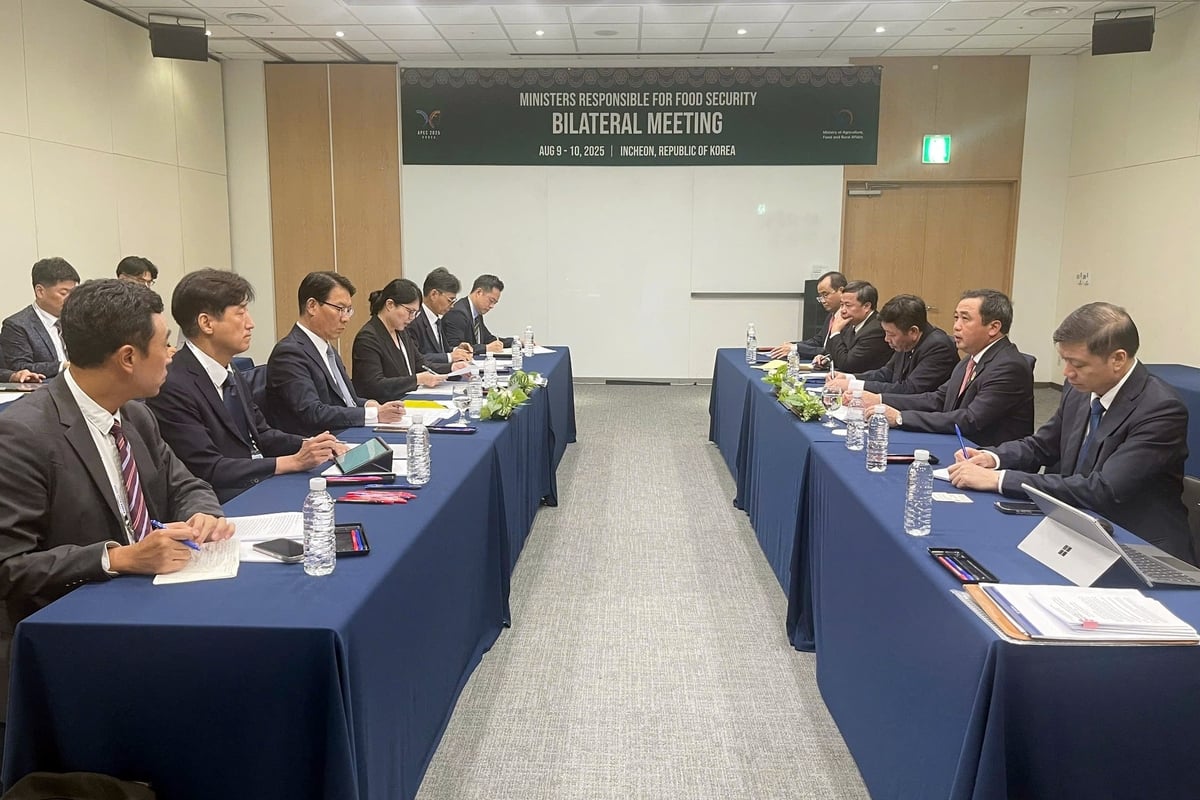
Acting Minister of Agriculture and Environment of Vietnam Tran Duc Thang meets with Mr. Kim In Joong, Chairman of the Korea Rural Community Corporation. Photo: Thanh Nguyen.
At the meeting, Acting Minister Tran Duc Thang highly appreciated KRC’s contributions to Vietnam’s agriculture and rural development, particularly through technical cooperation programs that have delivered tangible results and provided direct support to local communities.
The Acting Minister emphasized that Vietnam regards the Republic of Korea as a top-priority partner in agricultural and rural development. He welcomed the idea of formulating a 2026–2030 Master Plan for Cooperation between the Ministry of Agriculture and Environment of Vietnam (MAE) and KRC, viewing it as a strategic framework to guide long-term projects, diversify investment models, and leverage each side’s strengths. The Ministry’s Department of International Cooperation will serve as the focal point to work with KRC in finalizing this plan as soon as possible.
In discussions with Chairman Kim In Joong on the next phase of cooperation, Acting Minister Tran Duc Thang proposed giving priority to ODA projects and non-refundable aid, focusing on several promising product groups such as winter crops like napa cabbage and radish in the Red River Delta, northern mountainous areas, and the Central Highlands; temperate fruit trees such as apples, pears, and plums in the northern mountainous provinces and the Central Highlands; and spices and medicinal plants such as cinnamon, ginseng, and herbal crops in the northern mountainous provinces and the Central Highlands.
He also stressed the need for cooperation in smart agriculture, high-tech applications, and supply chain integration and requested that KRC consider supporting major infrastructure projects such as irrigation systems, climate change adaptation works, and an Early Warning Center for disaster risks in agricultural production.
For his part, KRC Chairman Kim In Joong expressed his pleasure in welcoming the Minister and the working delegation, noting that KRC has always regarded Vietnam as one of its most successful partners in international cooperation. He affirmed that KRC is working closely with the Ministry’s Department of International Cooperation to develop new projects for 2027, which may include expanding collaboration in smart farms and agricultural infrastructure and exploring appropriate loan financing sources.
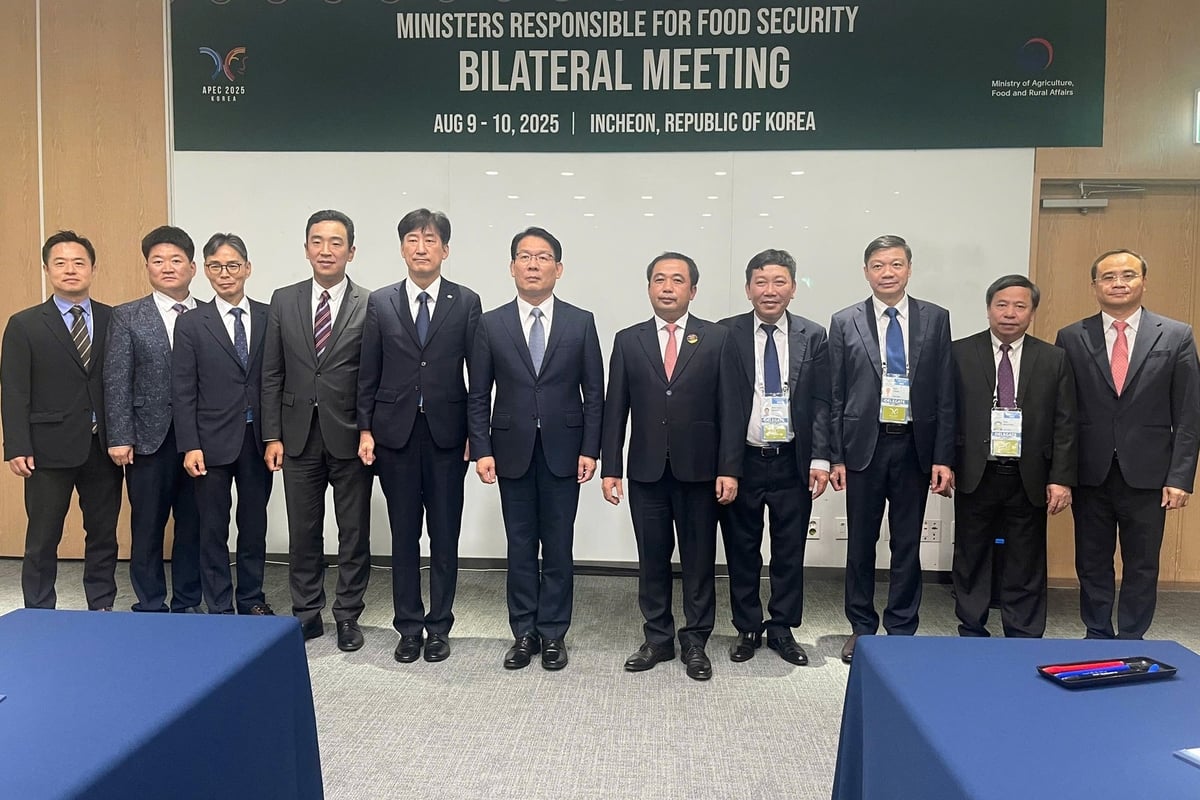
Mr. Kim In Joong, Chairman of the Korea Rural Community Corporation, poses for a commemorative photo with the delegation from the Ministry of Agriculture and Environment of Vietnam, led by Acting Minister Tran Duc Thang. Photo: Thanh Nguyen.
Chairman Kim In Joong also commended the ongoing and completed projects in Vietnam, such as carrot preservation and preliminary processing, rice value chains, and smart farms for vegetable and pig production, all of which have yielded positive results and could be replicated on a larger scale. He affirmed his readiness to consider new proposals from Vietnam, including those in the areas of agricultural technical service centers and the “New Village” (Saemaul Undong) movement.
Acting Minister Tran Duc Thang noted that the Korea New Village (Saemaul Undong) movement has been highly successful. Currently, 60% of Vietnam’s population lives in rural areas, and the country is eager to learn from and apply this model in practice. In this spirit, Acting Minister Tran Duc Thang extended a cordial invitation to Chairman Kim In Joong and his colleagues to visit Vietnam in the near future to conduct on-site surveys, assess the effectiveness of existing projects, and discuss new cooperation initiatives in detail.
Both sides expressed confidence that the close and productive partnership between MAE and KRC will continue to be strengthened, bringing tangible benefits to farmers and rural communities in both countries.
Saemaul Undong (New Village Movement) is a rural development program launched by the Republic of Korea in 1970, aimed at improving living standards and narrowing the urban–rural gap. The movement is built on three core values: diligence, self-reliance, and cooperation. The government provided initial resources, such as cement, steel, and materials, while villagers discussed, contributed labor, and took the lead in upgrading their communities. Villages competed with one another, and projects with proven results received continued support. As a result, infrastructure improved, incomes rose, and people’s mindsets shifted from dependency to self-sufficiency. Saemaul Undong became a symbol of success in Korea’s industrialization and has been shared as a model with many countries, including Vietnam.
Translated by Phuong Linh

(VAN) Viet Nam is actively preparing to participate in GREEN EXPO 2027 to promote its image as a green, sustainable, and innovative nation on the global stage.

(VAN) Lai Chau is passing by in a hurried rhythm at this time. Everyone is working tirelessly against the clock, devoting all efforts to overcoming the aftermath of the disaster.

(VAN) Some countries consider agriculture a public service, so the state must invest in it, according to Ass. Prof Dr. Dao The Anh, former Deputy Director of the Viet Nam Academy of Agricultural Sciences.

(VAN) The Minister of Agriculture and Environment of the Lao PDR recognizes the VRG's significant contributions over two decades of investment and operations in Laos.

(VAN) The VNMHA held a conference to review its work over the first six months of the year and set out priority directions and tasks for the second half of 2026.

(VAN) Khanh Hoa Sea Festival 2026, themed ‘Colors of the Ocean - Reaching International Scale,’ conveys a message of green marine economic development, integration, and Khanh Hoa's rising position.

(VAN) Viet Nam and the Food and Agriculture Organization of the United Nations (FAO) have launched a project to strengthen water resources management, reduce pollution and restore water quality in the Gulf of Tonkin.
