December 2, 2025 | 10:02 GMT +7
Hotline: 0913.378.918

December 2, 2025 | 10:02 GMT +7
Hotline: 0913.378.918
Muong La Nature Reserve, with a total area of over 17,000 hectares, is home to numerous species listed in the Vietnamese Red List. Its diverse ecosystem thrives due to its vast natural forest cover, which constitutes more than 70% of the total area. Managing and monitoring such a large area presents considerable challenges, especially in patrols, tracking wildlife traces, and preventing forest fires.
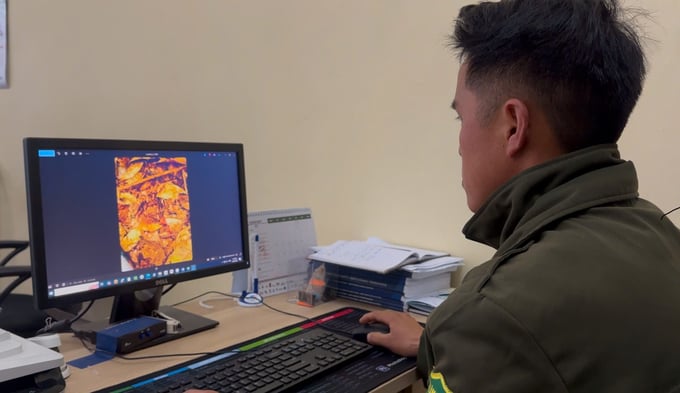
Once unusual traces are detected, photos are immediately sent through the SMART application, linked to specific coordinates. Photo: Duc Binh.
Previously, forest rangers had to rely on manual methods, using notebooks and paper maps, which made recording, storing, and analyzing data challenging.
To address these limitations, the Muong La Nature Reserve Management Board has implemented SMART (Spatial Monitoring and Reporting Tool). This is a data management and patrol reporting system. According to Mr. Bui Le Tru, Deputy Director of the reserve, the entire area is currently monitored by 21 members, including management staff. Since the reserve's forests are located in a tropical climate with rugged mountainous terrain and unpredictable weather conditions, patrol operations face numerous challenges.
Previously, notebooks and equipment carried during patrols often got wet and blurred, making it difficult to record and collect data. The implementation of SMART has helped forest rangers and community patrol team members enhance the effectiveness of their patrols. Instead of manually noting coordinates, taking separate photos, and analyzing them later, they can now collect data directly in the field, including images and coordinates, and instantly upload the information to the system for quick processing and analysis.
The integrated map within the application helps accurately determine patrol routes, minimizing errors and optimizing both patrol time and management oversight of on-the-ground patrol activities.
According to the leadership of the Nature Reserve Management Board, forest rangers and members of community patrol teams only need to take photos of their patrol groups and send the information to the specialized department. This allows management to track which areas have been patrolled and identify those that require more attention.
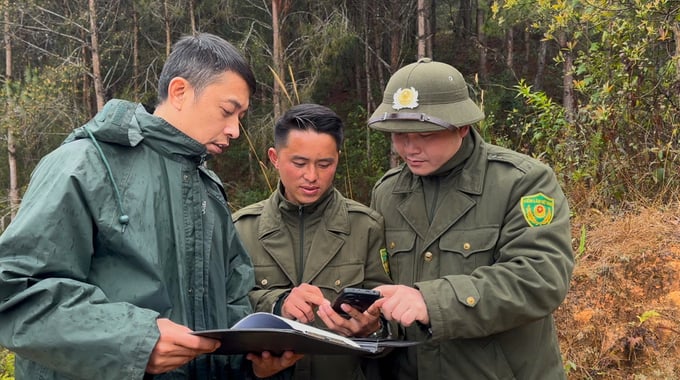
After one month of training, forest rangers have become proficient in using the features of the SMART application.
The application of technology has integrated satellite technologies (satellite maps, GPS positioning), enabling quick identification of specific locations. In case of incidents, information can be rapidly shared with management levels for timely assessment and response planning.
Every month, the management board organizes training sessions for local residents on forest protection, using SMART to store images and participant information. This helps track the level of awareness about forest conservation within the community and adjust training content accordingly.
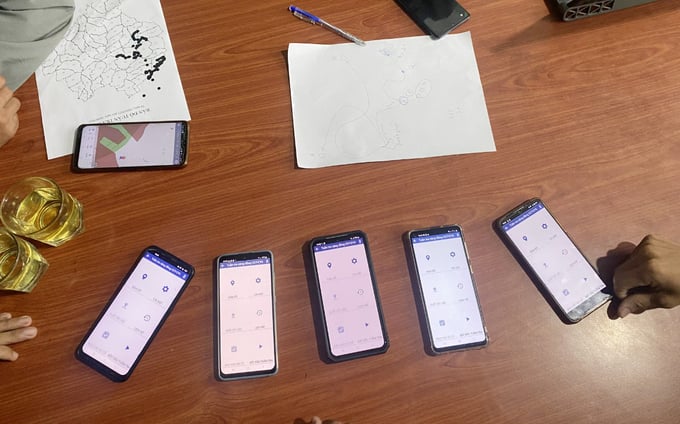
The SMART tool installed on forest rangers' phones facilitates patrol and forest protection work. Photo: Quang Yen.
Although the implementation of SMART brings many benefits, it still faces certain challenges. Kháng A Trống, a forest ranger manager at Muong La Nature Reserve, shared: “The application’s data is quite large, which drains the battery on mobile devices, especially during patrols that last more than 4–5 days. To ensure sufficient battery life, we have to carry multiple backup chargers. In some remote forest areas with weak signals, data transmission is also affected to some extent.”
According to Mr. Trong, to overcome these challenges, forest rangers must carry extra backup batteries, and for longer patrols, some members even carry two phones to rotate usage. Currently, the management board is proposing that the Forest Protection Department invest in additional equipment, from phones to computers, to maximize the use of the SMART application. The unit also arranges for its members to participate in training courses and guidance sessions under various programs and projects organized by different organizations.
Translated by Kieu Chi

(VAN) The Institute of Agricultural Sciences for Southern Vietnam (IAS) marked its 100th anniversary in Ho Chi Minh City, celebrating a century of growth as a leading institute contributing significantly to Viet Nam’s agricultural development.

(VAN) An increasing number of livestock farms are using biogas generators to create a source of renewable electricity, helping to save costs and mitigate environmental pollution.

(VAN) Small changes in rice cultivation, from irrigation methods and straw collection to input management, are paving a new way for Vietnam's agriculture in the journey toward emission reduction.

(VAN) With the project of converting biogas into renewable electricity, Australia is both helping pig farms reduce their energy costs by up to 25% and contributing to environmental protection.
![Hue aims for Net Zero: [1] Initial steps from green transportation](https://t.ex-cdn.com/nongnghiepmoitruong.vn/608w/files/huytd/2025/11/28/0853-anh-6-giao-thong-xanh-hue-094717_940-153724.jpg)
(VAN) For sustainable development, Hue City is implementing many solutions to promote green transportation, which is an important initial step on the journey to building a Net Zero Hue.

(VAN) Nghe An Province, one of the localities with the largest forest area in Vietnam, is set to gain significant benefits from the implementation of forest carbon credit payments.

(VAN) Circular agriculture helps Mekong Delta farmers cut greenhouse gas emissions while boosting incomes through efficient reuse of agricultural by-products.
