June 2, 2026 | 19:50 GMT +7
Hotline: 0913.378.918

June 2, 2026 | 19:50 GMT +7
Hotline: 0913.378.918
Editor’s note: Hydrometeorological forecasting and agricultural production are intrinsically and inseparably linked. In the context of increasingly complex and unpredictable climate change, which significantly impacts agricultural activities, the role of hydrometeorological forecasting has become even more crucial, helping to guide the development of a smart and sustainable agriculture.
Vietnam is a country with strong advantages in agriculture, producing many commodities that rank among the top in the world. Agricultural production in Vietnam is inherently tied to weather and climate, making it one of the most vulnerable sectors to natural disasters. Therefore, throughout the development of the hydrometeorological sector, weather forecasting for agriculture has always played a key role in supporting farmers across the country.
Mr. Hoang Duc Cuong, Deputy Director of the Viet Nam Meteorological and Hydrological Administration (under the Ministry of Agriculture and Environment), shared: From the earliest days of the sector’s establishment 80 years ago, the first weather forecasts were specifically designed to support salt production and processing. To this day, the Administration continues to provide specialized, long-term, and seasonal forecasts to identify hydrometeorological trends early, enabling localities to promptly adjust crop schedules and structures to minimize potential losses.
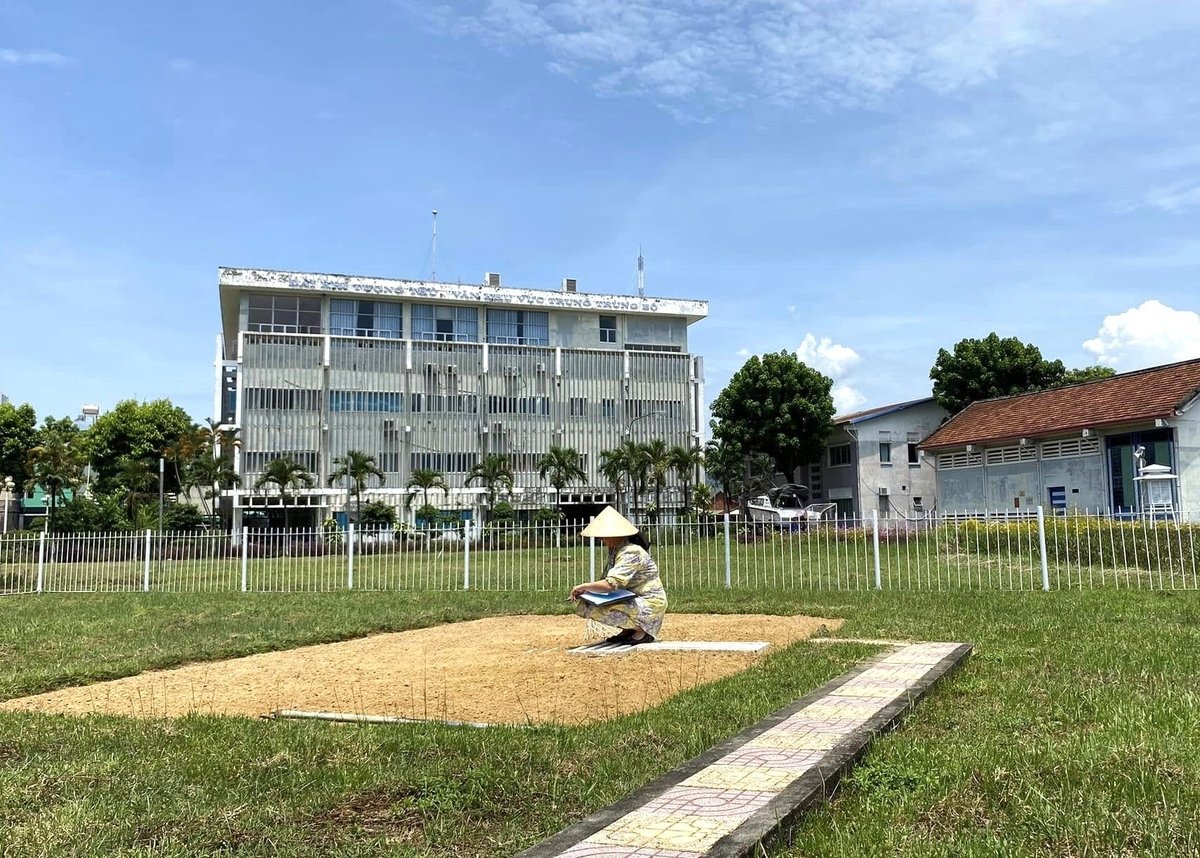
A meteorological observer at the Central Hydrometeorological Station monitors meteorological factors and soil moisture. Photo: Viet Nam Meteorological and Hydrological Administration.
Currently, the Viet Nam Meteorological and Hydrological Administration provides weather forecasts to the Plant Protection and Production Department. Weekly forecasts cover seven key agricultural ecological regions, including the Northern Midland and Mountainous areas, Red River Delta, North Central, South Central Coast, Central Highlands, Southeast, and Mekong Delta, with basic meteorological data such as temperature, humidity, and rainfall from representative weather stations. Monthly reports also include an evaluation of the previous month’s weather conditions and a forecast of weather trends for the upcoming month, along with comparisons to the same period last year.
According to Mr. Mai Van Khiem, Director of the National Center for Hydro-Meteorological Forecasting (under Viet Nam Meteorological and Hydrological Administration), during early May, July, and November, the Administration issues weather trend forecasts specifically for the summer-autumn, autumn-winter, and winter-spring crop seasons. When abnormal weather conditions arise, supplementary bulletins are released promptly to support agricultural production.
During the annual irrigation period in the Northern Delta region, the Administration provides detailed hydrological forecasts regarding water levels at the Son Tay hydrological station in Hanoi. These forecasts are sent to the Department of Water Works Management and Construction, provincial Departments of Agriculture and Environment, and irrigation companies to assist in planning the operation of temporary pumping stations and organizing water intake back into the system through sluices.

Hydrological forecasts serve as the basis for regulating the operation of pumping stations that supply water for agricultural production. Photo: EVN.
Based on these forecasts, the National Load Dispatch Center organizes the operation of hydropower plants to increase water flow downstream and ensure stable electricity supply for pumping stations, while the Department of Water Resources Management (under the Ministry of Agriculture and Environment) supervises reservoir operations according to regulations.
“These forecast bulletins help relevant agencies proactively manage water intake for irrigation, ensuring the safety of water resources and electricity supply for agricultural production activities,” Mr. Khiem said.
Through specialized agricultural weather bulletins, the Viet Nam Meteorological and Hydrological Administration provides updates on agricultural meteorological conditions (such as accumulated effective temperature, effective rainfall, drought/wetness, hydrology, and weather impacts on production), along with recommendations and assessments of weather favorability for crops and guidance for appropriate farming practices. These serve as the basis for local agricultural sectors to plan production aligned with weather conditions, while also advising farmers to proactively implement suitable sowing, care, and harvesting measures for effective outcomes.
Currently, hydrometeorological information primarily focuses on supporting crop production and disaster prevention, while the agricultural sector covers a wide range of fields, including livestock, forestry, aquaculture, and salt production. The challenge lies in how the meteorological and hydrological sector can better understand the information needs of these diverse agricultural fields and expand its service scope. From there, it can provide timely support and deliver specific, practical recommendations closely aligned with actual production conditions.
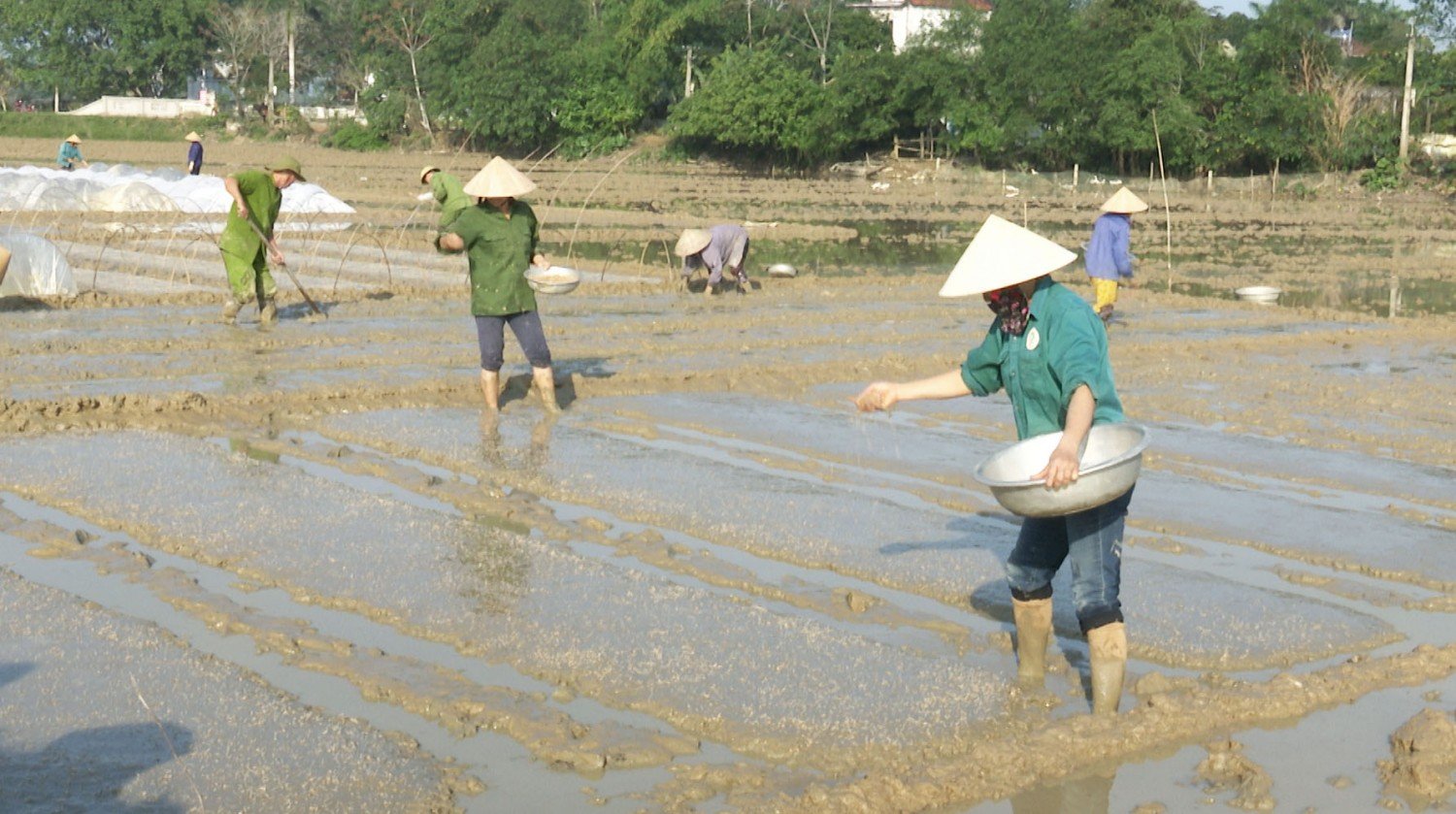
All areas of agricultural production are closely tied to weather, climate, and hydrology. Photo: Ha Tinh New Rural Development Program.
According to Deputy Director Hoang Duc Cuong, the biggest challenge remains the lack of basic data from production activities. For example, to forecast impacts on livestock or aquaculture sectors, meteorological staff need detailed and specific information about the characteristics and growth patterns of the plants or animals, combined with weather, hydrological, and climate data, in order to provide accurate advice to farmers.
In the short term, the Administration will continue to issue agricultural weather bulletins and water resource forecasts to support agricultural production and water management. At the same time, it will strengthen long-term marine weather forecasting to support aquaculture and fishing activities, as well as forecasts for search and rescue operations at sea.
Looking ahead, there needs to be close coordination in building and disseminating information between the meteorological agencies and agricultural production management bodies, especially the relevant units under the Ministry of Agriculture and Environment (such as the Plant Protection and Production Department; Department of Livestock Production and Veterinary Medicine; Directorate of Fisheries; Forestry and Forest Protection Department; and the National Agricultural Extension Center). This includes researching the integration and sharing of information within these units, particularly seasonal data (such as timing, production progress, production orientation, varieties, pests, and diseases) to produce more accurate agricultural weather forecasts.
Mr. Cuong proposed that to make forecasts more realistic and proactively manage economic development in general and agriculture in particular, a suitable mechanism for information exchange between these units must be created. This is a favorable condition at present, as all these units now operate under the same umbrella of the Ministry of Agriculture and Environment.
According to Professor Tran Thuc, Chairman of the Viet Nam Meteorological and Hydrological Society, integrating meteorological and hydrological data into agricultural resource management and early warning systems will support the development of smart agriculture that adapts to climate change. This integration helps increase the efficiency of land use, fertilizers, and irrigation, while reducing greenhouse gas emissions. Moreover, unified policies under the management of the Ministry of Agriculture and Environment will also facilitate the development of forecasting teams with interdisciplinary knowledge, working closely with production realities to provide more detailed and timely information.
Translated by Phuong Linh
/2026/06/01/1824-2-211343_500.jpg)
(VAN) Quang Ngai province is implementing many measures to protect sargassum resources, contributing to restoring aquatic resources, preserving biodiversity, and creating sustainable livelihoods.

(VAN) Farmers in Phu Thuan Commune, Da Nang preserve healthy soil and maintain chemical-free farming seasons, producing clean sesame and bean export products.

(VAN) Alongside his lush golden melon ready for harvest, Nguyen Van Truong from Ha Tinh province is eager to collect another 4,000 Hami melon plants.

(VAN) Summer-autumn crop season is peaking with effectively new weed, pest control to help reduce production costs and improve yields.

(VAN) Save Vietnam’s Wildlife (SVW) has launched the country’s first mobile nature center, using three interactive exhibition buses to promote nature conservation.

(VAN) A project funded by non-refundable official development assistance (ODA) from the German government will focus on restoring natural forests, strengthening forest management, and conserving biodiversity in Quang Ngai Province.
/2026/05/30/4118-3-142117_486.jpg)
(VAN) The pilot deployment of an aquatic weed harvester is expected to help reduce pollution and clear water flow, contributing to the development of a green, clean Hue City.
