November 25, 2025 | 13:11 GMT +7
Hotline: 0913.378.918

November 25, 2025 | 13:11 GMT +7
Hotline: 0913.378.918
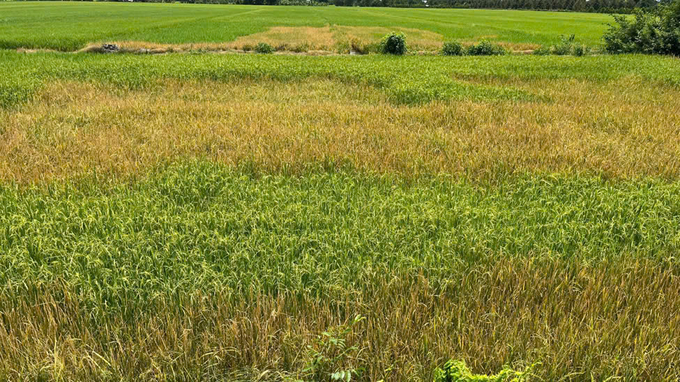
Farmers using land-clearing herbicides in response to severe weedy rice infestations. Photo: Kieu Cong Vinh.
Weedy rice (Oryza sativa f. spontanea) is a globally present agricultural pest that affects numerous rice fields in Vietnam, particularly in the Mekong Delta region.
Recent studies and social media reports indicate that weedy rice is a growing concern for rice farmers due to its superior survival and growth in conditions similar to cultivated rice. Moreover, it competes for space, nutrients, water, and sunlight, in addition to serving as a host for various rice pests. Consequently, weedy rice leads to reduced yields, lower grain quality, and higher production costs for farmers.
Surveys conducted in several provinces across the Mekong Delta revealed that weedy rice infestations are increasingly common, affecting both direct seeding and traditional transplanting systems region-wide. Occurrence rate varies depending on the rice cultivation method, with higher infection rates found in fields that employ a direct seeding approach due to the lack of selective pressure for cultivated rice and the absence of effective water management systems to control weedy rice growth.
Farmers in the Mekong Delta have widely adopted the direct seeding model due to labor shortages and reduced production costs. However, this method facilitates the spread of weedy rice, as its seeds, which bear multiple similarities to cultivated rice, are sown alongside regular rice plants.
Weedy rice shares genetic similarities with cultivated rice, making it difficult to distinguish between the two. It also demonstrates strong survival and growth, even in adverse environmental conditions, with an early and easy seed shedding stage. Its seeds may have a prolonged dormancy period or none at all, allowing them to germinate in anaerobic conditions. Additionally, weedy rice can crossbreed with cultivated rice or wild rice, creating a diverse and complex hybrid population, further complicating management and control efforts.
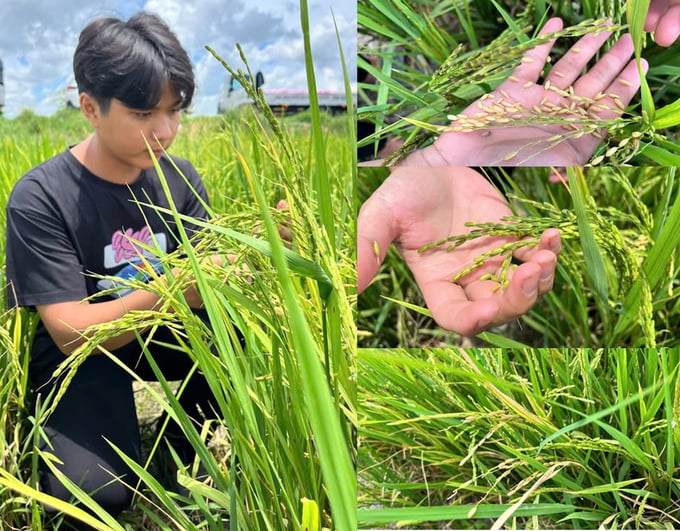
Weedy rice has an early flowering and seed shedding stage, with seed shedding possible even during the milk stage. Photo: Nguyen The Cuong.
Contaminated seeds during the harvesting, processing, and sowing processes are the main causes of weedy rice infestations. Studies have shown that farmers are prone to inadvertently sowing seeds mixed with weedy rice, which further exacerbates the spread of this pest.
Limited herbicide options, particularly solutions that can control weedy rice without affecting cultivated rice, pose a significant challenge for chemical control efforts. Additionally, poor water management practices can accelerate the spread of weedy rice.
The use of machinery in planting, harvesting, and post-harvest processing has significantly contributed to the spread of weedy rice in Vietnam, particularly in the Mekong Delta region. Despite the improvement to production efficiency, machinery has unintended consequences, such as spreading weedy rice seeds through improperly maintained combine harvesters or transferring seeds via soil preparation equipment and other field transport tools from heavily infested to clean fields.
Farmers have a growing concern for the rapid spread of weedy rice, especially in the Mekong Delta, which is the country’s primary rice-producing region. The increase in weedy rice not only negatively impacts rice yields but also threatens Vietnam’s food security and its position as a leading rice exporter.
Recent discussions on social media highlight the worries and frustrations of farmers facing weedy rice infestations. Notably, farmers have expressed concerns regarding the lack of effective solutions and requested support from agricultural extension agencies and the government in accessing clean seeds and effective weed control methods.
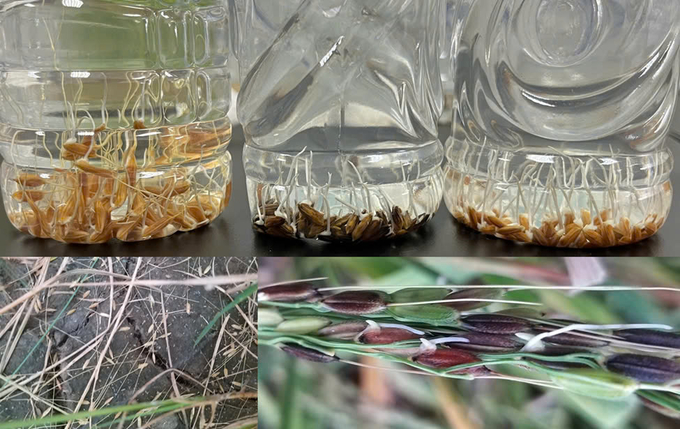
Weedy rice seeds germinate and grow anaerobically under laboratory conditions. Photo: Kieu Cong Vinh, Ho Le Thi, Nguyen The Cuong.
Scientists estimate that weedy rice infestations can cause yield losses in the range of 30 to 50%, depending on the severity of the infestation and the management method. The economic impact is especially severe for smallholder farmers who lack the resources to address this issue.
Rice farmers have also raised concerns regarding herbicide resistance in weedy rice populations. Continuous use of the same type of herbicide can lead to the development of herbicide-resistant strains, further affecting control efforts.
Weedy rice poses a serious and growing threat to rice production in the Mekong Delta. Key factors contributing to the problem include the widespread use of direct seeding methods, low-quality seeds, poor management of mechanized rice production equipment, and ineffective weed management strategies. The genetic similarities between weedy rice and cultivated rice, combined with a lack of targeted herbicide options, render weedy rice a particularly difficult pest to control.
Accordingly, local governments should encourage farmers to use clean and certified seeds to minimize the risk of contamination with weedy rice seeds. Strict enforcement of seed certification programs is essential to prevent the spread of weedy rice.
Furthermore, rice farmers must be equipped with the knowledge of integrated weed management strategies, including water management, crop rotation, and mechanical weeding, to reduce reliance on chemical herbicides and delay the development of herbicide resistance.
Government agencies should provide additional support in the form of clean seed subsidies, farmer training programs, and resources for implementing sustainable rice farming practices.
By addressing these challenges, Vietnam can mitigate the impact of weedy rice and promote the success and sustainability of rice production in the Mekong Delta.
Stakeholders should prioritize investment and research into the development of specialized herbicides for controlling weedy rice or high-yield rice varieties with strong competitive and inhibitory abilities against weedy rice. Additionally, research into effective weedy rice control solutions, coupled with increased communication regarding pest and preventive measures, is crucial.
Translated by Nguyen Hai Long

(VAN) Heavy rains make aquatic species more vulnerable to disease. Proactive water management and high-tech systems help farmers prevent outbreaks and protect yields.

(VAN) Greenhouses are shifting production mindsets in Binh Lu commune, enabling farmers to ‘weather the sun and rain’ and secure stable vegetable harvests throughout the year.

(VAN) Green transition is crucial for the Mekong Delta amid climate change and stricter standards, offering a path toward sustainability.

(VAN) Dong Thap promotes agricultural restructuring, forms large specialized farming zones, raises the value of agricultural products and develops toward ecological and high-tech directions.
/2025/11/22/4018-4-213342_747.jpg)
(VAN) The Mekong Delta Agricultural Experts Club has attracted 143 experts and researchers to participate in providing consultancy and contributing initiatives to the development of one million hectares of high-quality rice.

(VAN) Ca Mau’s development of OCOP products opens a path to increasing cooperatives value, helping boost income, expand markets, and affirm collective economy's role.

(VAN) Turning seemingly ordinary coconut shells into unique jewelry and artwork, Nguyen Bang Nhi spreads the value of local culture through her brand, Cocohand.
