December 1, 2025 | 13:17 GMT +7
Hotline: 0913.378.918

December 1, 2025 | 13:17 GMT +7
Hotline: 0913.378.918
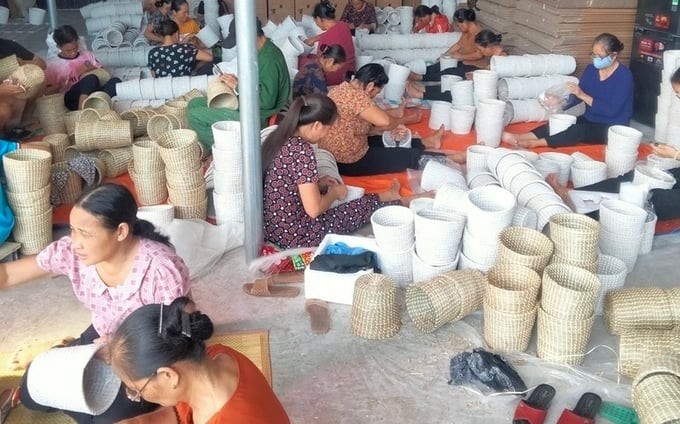
About 3 million rural workers are working in craft villages. Photo: Do Huong.
Statistics from the Department of Economic Cooperation and Rural Development, Ministry of Agriculture and Rural Development show that Vietnam has 5,400 craft villages, of which over 2,200 are recognized as craft villages. About 3 million rural workers are working in craft villages. Craft villages contain economic value and many cultural and spiritual values...
Le Duc Thinh, Director of the Department of Economic Cooperation and Rural Development, acknowledged that although Vietnamese craft village products are very sophisticated and artisans are highly skilled, they are still weak in design. Therefore, in recent years, the Ministry of Agriculture and Rural Development has worked with the world and European craft councils... and brought Vietnamese handicraft products to Milan, Italy, to introduce products and exchange between artisans. However, the number of participating products is still limited.
In particular, at the 2023 Vietnam Craft Village Conservation and Development Festival, Hanoi has cooperated with Lund University (Sweden) to bring artisans to exchange and update on design. Along with that is the cooperation in building models of craft villages and eco-tourism in Bat Trang and Duong Lam, Le Duc Thinh informed.
The Ministry of Agriculture and Rural Development is also coordinating with the Ministry of Culture, Sports, and Tourism to organize a handicraft product contest associated with the Exhibition "Colors of cultural heritage, nature and traditional handicraft products of Vietnam" in 2024.
The contest helps promote traditional craft villages and streets across the country, preserving and promoting the national cultural identity of traditional occupations, craft villages, and craft villages. The authors who win the contest will be one of the conditions for proposing recognition of artisans at all levels.
According to the Organizing Committee, all organizations and individuals who are capable of creating and producing handicraft products following the regulations are eligible to participate in the competition. The handicraft products will be divided into 5 groups: ceramics and glass; weaving, embroidery, knitting, crochet; rattan, bamboo, natural leaves; stone, wood, lacquer, mother-of-pearl inlay and other groups (horns, metals, flowers, paintings, etc.).
The Organizing Committee will accept entries from October 28 to November 1, 2024, at the Vietnam Exhibition Center for Culture and Arts, No. 2 Hoa Lu, Le Dai Hanh Ward, Hai Ba Trung District, Hanoi.
Deputy Minister of Agriculture and Rural Development Tran Thanh Nam said that in the context of many fluctuations in the world economy, the COVID-19 pandemic and especially storm No.3 have greatly affected the raw material areas of handicraft villages. Many handicraft enterprises went bankrupt, many artisans had difficulty selling their goods.
However, the creativity of artisans and enterprises is abundant; many Vietnamese handicraft products are diverse and can continue expanding their markets to other countries.
To meet the standards and tastes of consumers worldwide, the requirements for aesthetics and creativity in each handicraft product are very high. The products made must serve life.
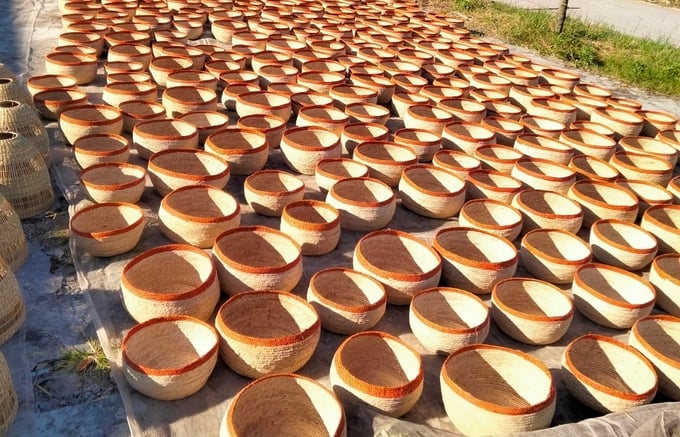
The Ministry of Agriculture and Rural Development wants to restore rural industries, which crystallize the nation's cultural values. Photo: Do Huong.
According to Deputy Minister of Agriculture and Rural Development Tran Thanh Nam, three issues in the value chain of the handicraft industry must be connected and supported, namely "raw material areas - artisans - enterprises". The state's support of mechanisms and policies will bring about efficiency in developing this industry in the future.
"We hope businesses join forces through industry associations to have a common voice. Only then can we introduce handicraft products and OCOP products to the international community", Deputy Minister Tran Thanh Nam said and suggested that the Associations need to gather businesses and build catalogs introducing handicraft products so that they can be sent to Vietnamese embassies in other countries to help promote and introduce them to international friends.
"I am ready to send documents to the Counselors and Vietnamese Embassies in all countries to send the catalog there. It could be one book every three months. In addition to e-commerce, this is a convenient diplomatic route," said the Deputy Minister.
For the domestic market, Deputy Minister Tran Thanh Nam suggested that the Rural Development Departments of provinces, cities, and enterprises coordinate with the Agricultural Trade Promotion Center to organize monthly and quarterly seminars to promote and display handicrafts and OCOP products according to each theme.
Translated by Huong Giang

(VAN) The signing of a protocol between Viet Nam and China on the export of fresh jackfruit represents a significant milestone in agricultural trade cooperation between the two countries.

(VAN) On November 27, the Ninh Binh Department of Agriculture and Environment and the Institute for Green Growth Research organized a training course on greenhouse gas inventory for businesses.

(VAN) China’s cooking oil is suddenly flooding into India. It all comes down to a soybean surplus that Beijing doesn’t quite know what to do with.

(VAN) An Giang promotes supply-demand connections, standardizes quality and builds value chains, creating a foundation for sustainable bird’s nest development and aiming to expand exports.
/2025/11/24/5339-4-nongnghiep-075331.jpg)
(VAN) Recently, the conference on 'Sustainable Fisheries Linkage Chain - Tilapia for Export' took place in Tien Hai commune, Hung Yen province.
/2025/11/21/4309-2-153400_128.jpg)
(VAN) Green and low-emission rice is paving the way for Vietnamese rice to enter high-end markets, marking the beginning of a transformation journey toward greening and elevating the national rice brand.

(VAN) ‘Right to Win’ outlines a national action plan that shapes a new vision for Viet Nam’s agriculture in an era of renewal and global integration.
