July 21, 2026 | 21:04 GMT +7
Hotline: 0913.378.918

July 21, 2026 | 21:04 GMT +7
Hotline: 0913.378.918
At the forum "Solutions to enhance competitiveness and promote export of key fruit products: passion fruit, banana, pineapple, coconut" held on July 18, technology emerged as a critical enabler for agriculture, helping to resolve key challenges related to market access, export, and value addition.
According to Assoc. Prof. Dr. Pham Anh Tuan, Director of the Vietnam Institute of Agricultural Engineering and Post-Harvest Technology (VIAEP), tropical fruits such as passion fruit, banana, and pineapple are climacteric fruits that ripen after harvest and are highly perishable. Therefore, they require appropriate preservation technologies.
The Institute's modern laboratories have been focusing on studying the physiological and biochemical properties of these fruits, along with the causes of spoilage, in order to identify suitable processing, packaging, and preservation technologies that help extend shelf life and enhance value chains.
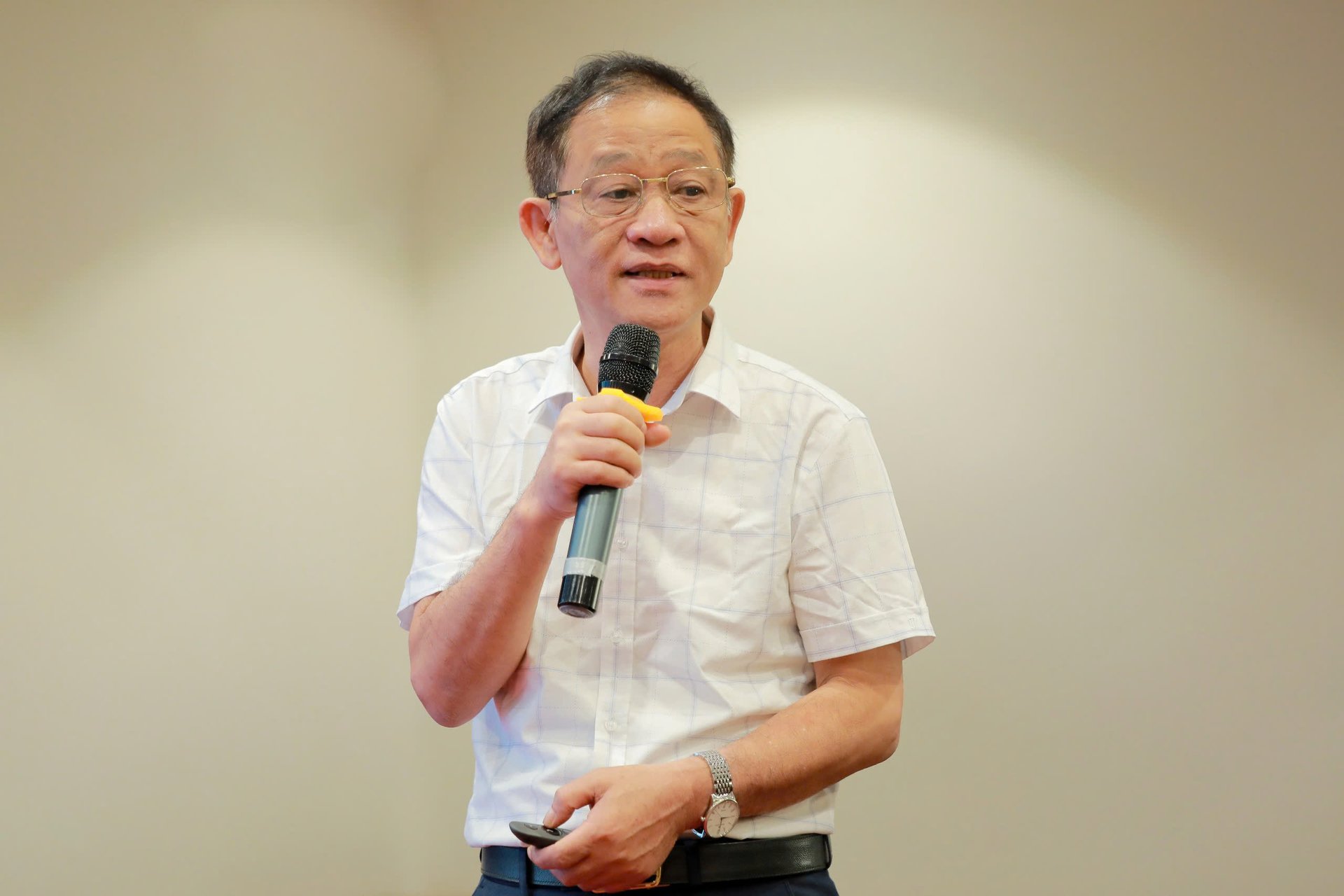
Assoc. Prof. Dr. Pham Anh Tuan, Director of the Institute of Agricultural Engineering and Post-Harvest Technology presented on technology application for fruit pre-processing, preservation, and value chain development. Photo: Nguyen Thuy.
Over the years, VIAEP has successfully researched, mastered, and transferred a range of outstanding technologies. Among these is phytosanitary treatment (PP technology) for export purposes, which is integrated with the use of by-products to produce organic fertilizers, animal feed, activated charcoal, and food-grade additive powders. Notably, the development of edible coating technology has significantly extended fruit shelf life. For instance, while passion fruit preserved through conventional freezing lasts only 25 days, using an edible film can extend this to up to 55 days.
The Institute has also mastered and built a high-performance rapid freezing system using liquid coolants with a capacity of 500kg/hour. This system offers superior energy efficiency saving over 50% compared to conventional air-based freezing methods (like ABF and IQF) and delivers better quality frozen products.
For fruits that require drying, such as banana and pineapple, two core technologies heat pump drying and freeze-drying have proven highly effective. The heat pump drying system, with a capacity of 1-2 tons per module, operates at low temperatures (40-45°C), allowing it to retain the fruit’s natural color, flavor, and nutrients while minimizing oxidation and microbial growth. However, this method should be paired with pre-drying treatment to address slower moisture removal in large-sized or moisture-bound products.
Meanwhile, freeze-drying (sublimation drying) is another breakthrough, enabling nearly complete retention of a fruit’s natural structure and flavor by removing moisture at low temperatures under vacuum conditions. Although the initial investment is high, it is ideal for producing premium-quality export goods.
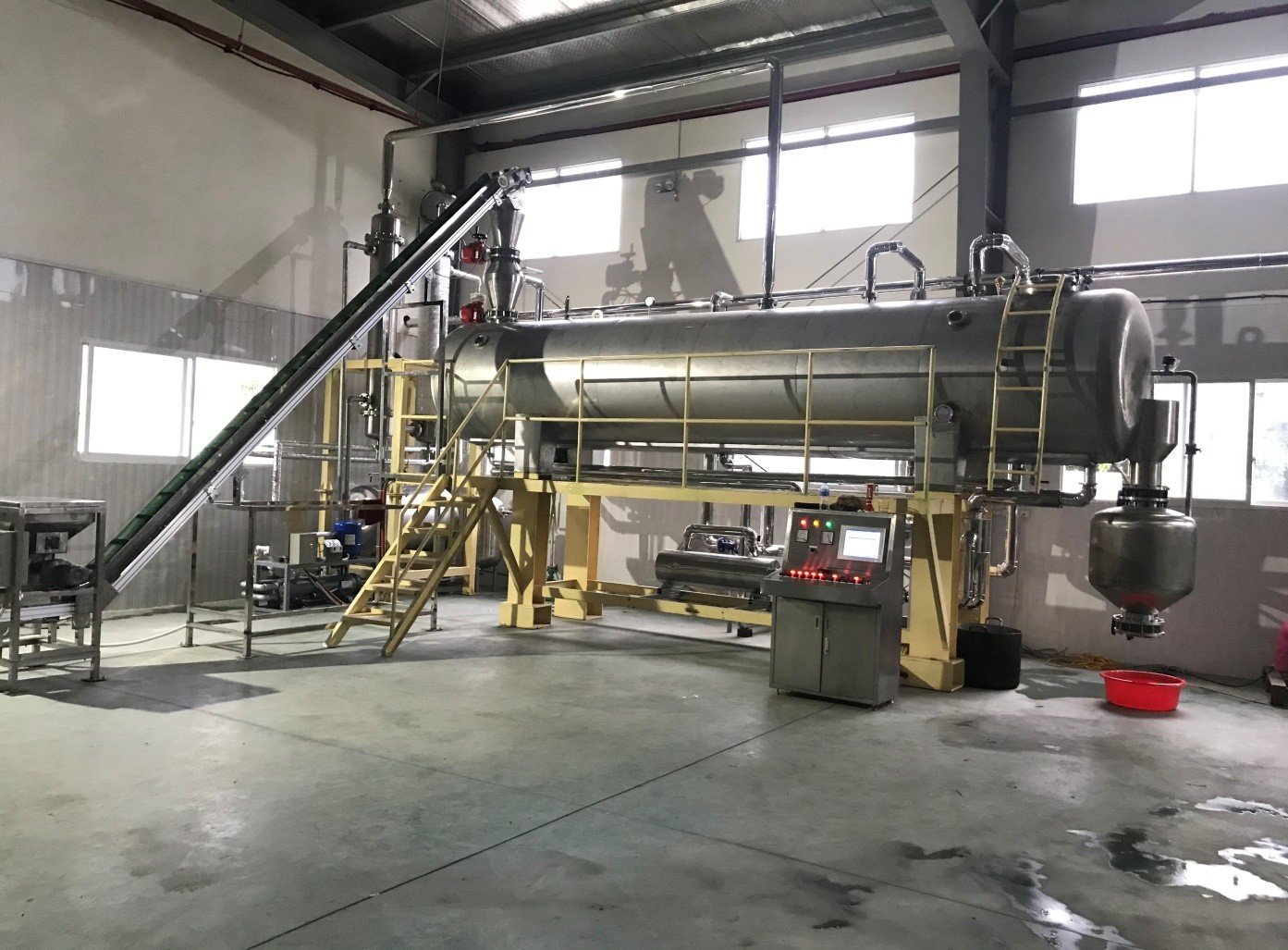
Continuous vacuum frying system with automatic control, capacity of 200–300 kg/hour. Photo: VIAEP.
The Institute is the first in Vietnam to develop and master continuous vacuum frying technology. The system maintains stable operations in a vacuum environment (600-650 mmHg), producing high-quality fruit snacks such as banana or pineapple chips that retain vibrant colors and have lower oil content due to limited oxidation.
In the area of freezing, the Liquid Freezer system is a technological breakthrough. It reduces freezing time to just 18-20 minutes at -45°C, consumes 50% less electricity, and is produced domestically at only 30% the cost of imported systems. This method preserves the structure, color, and texture of fruits, making it ideal for whole fruits such as ripe bananas, coconuts, or pineapples.
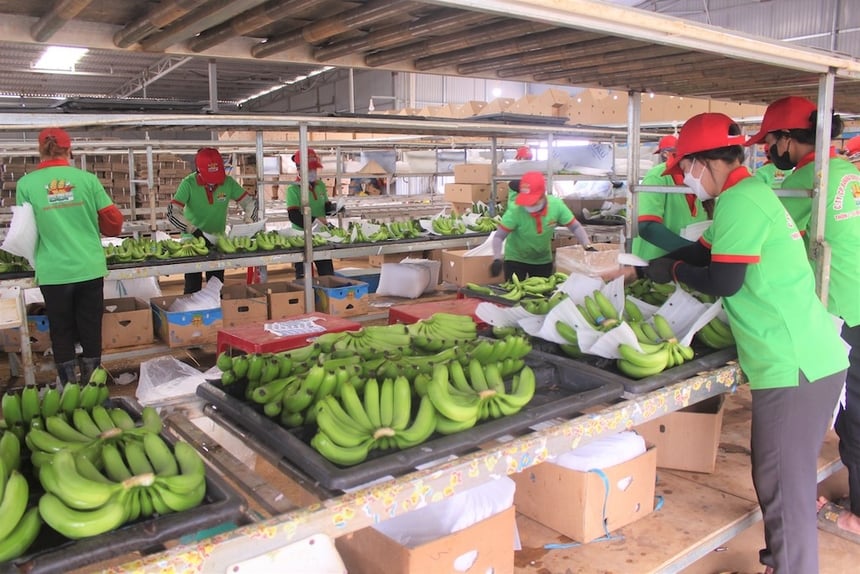
Diversified processing equipment chains increase agricultural value. Photo: VNbusiness.
In terms of deeper processing, the Institute has developed a banana puree processing line with a capacity of 2 tons/hour. This line achieves a recovery rate of over 50%, allows for 12-18 months of shelf life, and costs only 35% compared to similar European imports. Moreover, the system can be adapted for other fruits such as avocado, mango, and durian.
For agricultural product often affected by the price competitiveness, VIAEP has developed multiple value-added processing technologies. These include the production of lycopene-rich concentrate, probiotic yogurt, jelly, and fermented feed made from by-products. These innovations not only boost product value but also provide sustainable market outlets for farmers.
Assoc. Prof. Dr. Pham Anh Tuan emphasized the Institute’s commitment to consulting, supporting, and transferring technology to businesses to improve post-harvest preservation capabilities. "It is essential to clearly identify the scale of production and investment direction. Based on that, scientists can provide tailored recommendations, select suitable contractors for workshop construction, and offer ongoing support especially for small and medium-sized enterprises," Dr. Tuan stated.

(VAN) Viet Nam is actively preparing to participate in GREEN EXPO 2027 to promote its image as a green, sustainable, and innovative nation on the global stage.

(VAN) Lai Chau is passing by in a hurried rhythm at this time. Everyone is working tirelessly against the clock, devoting all efforts to overcoming the aftermath of the disaster.

(VAN) Some countries consider agriculture a public service, so the state must invest in it, according to Ass. Prof Dr. Dao The Anh, former Deputy Director of the Viet Nam Academy of Agricultural Sciences.

(VAN) The Minister of Agriculture and Environment of the Lao PDR recognizes the VRG's significant contributions over two decades of investment and operations in Laos.

(VAN) The VNMHA held a conference to review its work over the first six months of the year and set out priority directions and tasks for the second half of 2026.

(VAN) Khanh Hoa Sea Festival 2026, themed ‘Colors of the Ocean - Reaching International Scale,’ conveys a message of green marine economic development, integration, and Khanh Hoa's rising position.

(VAN) Viet Nam and the Food and Agriculture Organization of the United Nations (FAO) have launched a project to strengthen water resources management, reduce pollution and restore water quality in the Gulf of Tonkin.
