November 27, 2025 | 01:57 GMT +7
Hotline: 0913.378.918

November 27, 2025 | 01:57 GMT +7
Hotline: 0913.378.918
On the morning of April 10, the Department of Climate Change under the Ministry of Agriculture and Environment (MAE), in collaboration with the Swiss Agency for Development and Cooperation - Embassy of Switzerland and the International Finance Corporation (IFC), organized the Vietnam Carbon Market Forum 2025.
The Vietnam Carbon Market Forum 2025 aims to address the growing demand for information related to carbon market issues, providing the business community with a clearer understanding of the mechanisms, policies, and roadmap for the establishment and operation of the carbon market in Vietnam.
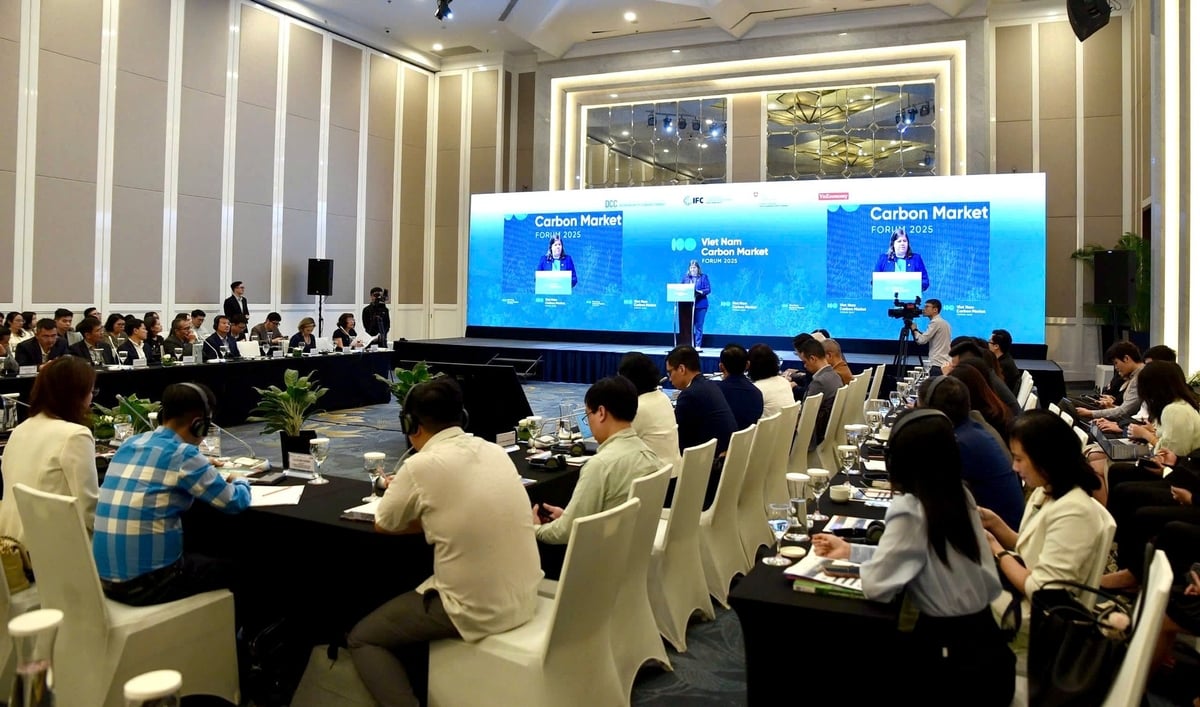
The Vietnam Carbon Market Forum 2025 took place in Hanoi. Photo: Kieu Chi.
In his opening remarks at the forum, Mr. Tang The Cuong, Director General of the Department of Climate Change, emphasized: “The forum serves as a platform to advance Vietnam’s international commitments on climate change, particularly the goal of achieving Net Zero by 2050. The establishment and development of the carbon market is a strategic step for Vietnam.”
He added that, through the Vietnam Carbon Market Forum 2025, private sector enterprises will be able to make the necessary preparations to actively participate in the carbon market. At the same time, it provides an opportunity for government agencies to gather timely, practical, and diverse insights as a basis for researching, formulating, and improving policies, ensuring their effective implementation.
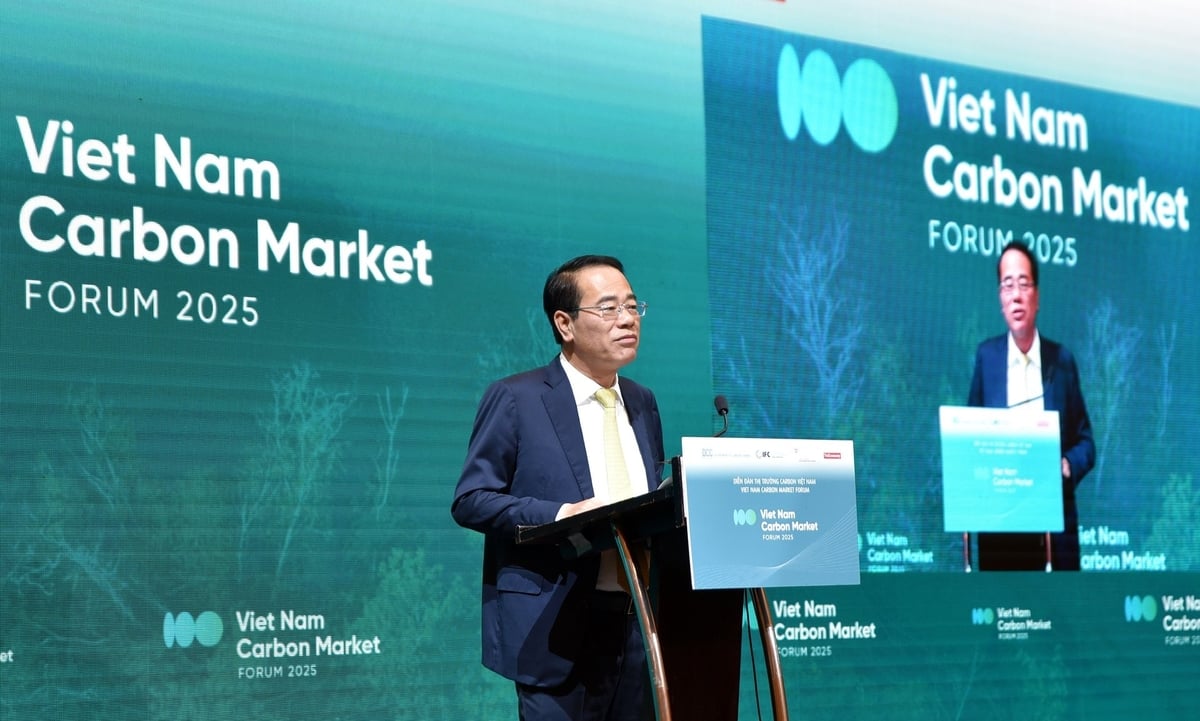
Mr. Tang The Cuong, Director General of the Department of Climate Change: Developing the carbon market is a strategic policy in Vietnam. Photo: Kieu Chi.
According to Decision No. 232/QD-TTg issued by the Prime Minister on January 24, 2025, regarding the establishment of a carbon market in Vietnam, the roadmap for the Vietnam carbon market is divided into three phases. The period prior to June 2025 focuses on developing the legal framework and technical infrastructure; from June 2025 to the end of 2028 marks the pilot operation phase; and from 2029 onward, the carbon market is expected to be officially operational nationwide.
In terms of institutional development, Vietnam has enacted the Law on Environmental Protection 2020, which reflects a transition from a “brown economy” toward a green transformation. MAE is closely and actively collaborating with the Ministry of Finance to draft a decree on the domestic carbon trading platform, as well as regulations related to international carbon credit exchange activities under the framework of the Paris Agreement.
“The Vietnamese ministries and agencies are aiming to rapidly develop the carbon market by introducing widely recognized carbon pricing instruments such as carbon taxes and credit trading mechanisms,” said Mr. Cuong.
He further emphasized that carbon pricing tools play a vital role in the market, including both compliance carbon markets and voluntary carbon markets. The development of a carbon market is expected to drive the adoption of low-emission technologies in Vietnam.
The Director General of the Department of Climate Change also affirmed that Vietnamese businesses are now showing strong readiness to engage in green transition initiatives, particularly in the areas of green banking and sustainable project development.
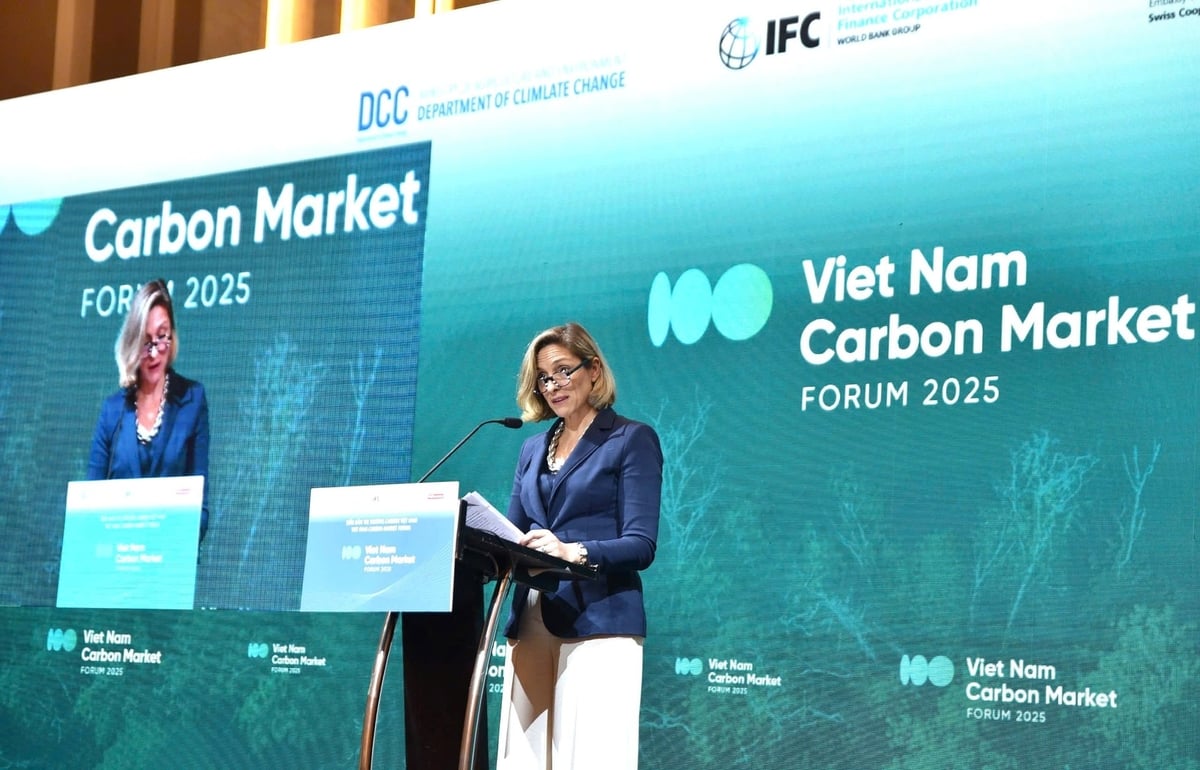
Mrs. Elvira Morella, Manager, Country Advisory & Economics, East Asia Pacific, International Finance Corporation (IFC). Photo: Kieu Chi.
Mrs. Elvira Morella, Manager, Country Advisory & Economics, East Asia Pacific, International Finance Corporation (IFC), shared: “We highly appreciate the role of the private sector in driving innovation, practicing sustainable development, and contributing to the achievement of net-zero emissions and other climate goals by 2050. Globally, more than 2,000 companies have already made commitments to achieve Net Zero under a shared international framework.”
She noted that the IFC has provided financing to Vietnamese enterprises in various sectors, including agriculture and infrastructure development. The IFC’s total annual commitments reach approximately USD 2 billion, with a strong focus on investing in green and sustainable projects.
Echoing the IFC representative’s remarks, Mrs. Sibylle Bachmann, Head of Development Cooperation at the Embassy of Switzerland, also emphasized the essential role of the private sector. She pointed out that greenhouse gas emissions do not recognize national borders, and therefore, a coordinated global approach is necessary to effectively address climate change.
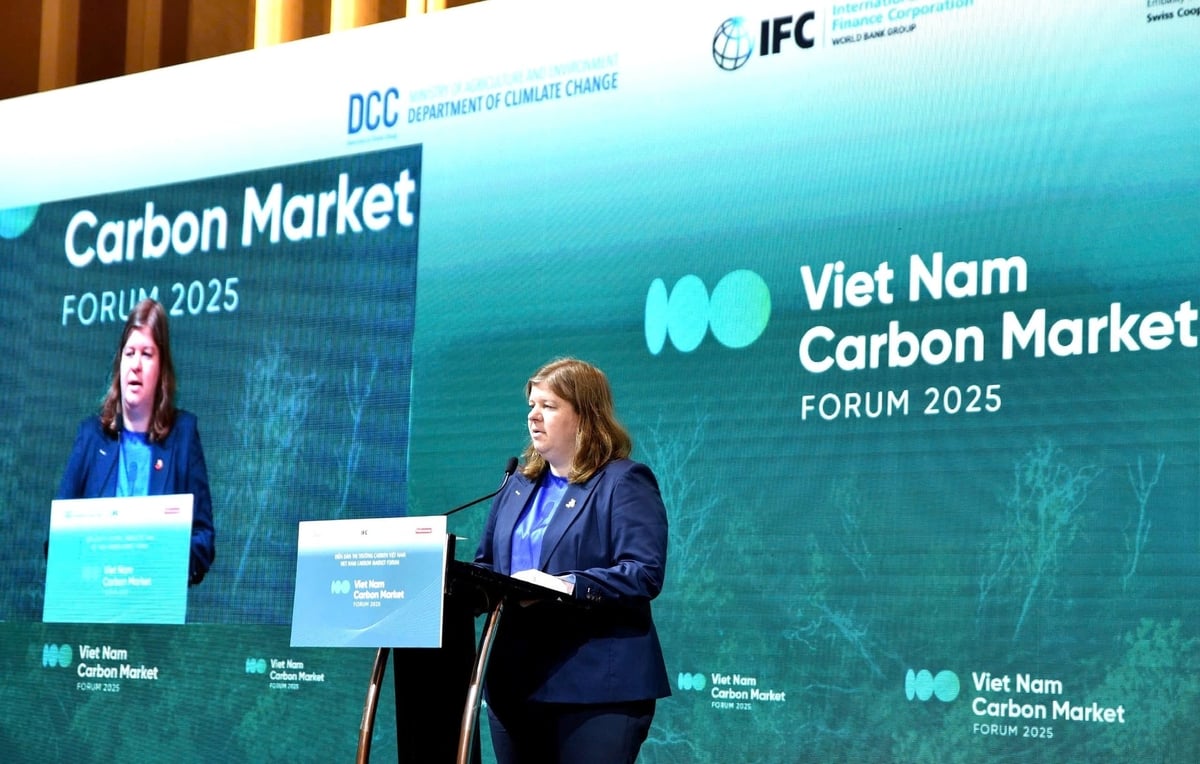
Mrs. Sibylle Bachmann, Head of Development Cooperation at the Embassy of Switzerland. Photo: Kieu Chi.
Switzerland is a country that has undergone rapid industrialization and modernization, with a legal framework on climate change. It actively promotes international cooperation to achieve common climate goals, ensuring strong connectivity and the development of intelligent, forward-looking climate policies.
During the 2025-2028 period, climate finance is identified as a priority and a core pillar in Switzerland’s cooperation with Vietnam. The Embassy of Switzerland in Vietnam is committed to accompanying the country on its journey toward achieving the Net Zero target. The Swiss representative expressed hope that Vietnamese businesses will take a proactive and dynamic approach, emphasizing the importance of establishing a transparent market, embracing innovation, and turning global climate ambitions into effective and practical actions.
The Vietnam Carbon Market Forum 2025 welcomed the participation and active engagement of the Department of Climate Change (MAE), along with representatives from specialized departments and agencies responsible for carbon market development under the Ministry of Finance and the Ministry of Industry and Trade.
In addition, the forum brought together representatives from international organizations, investment funds, banks, consulting and service providers, industry associations, and businesses that are currently interested in or actively participating in the carbon market.
Translated by Kieu Chi

(VAN) China’s cooking oil is suddenly flooding into India. It all comes down to a soybean surplus that Beijing doesn’t quite know what to do with.

(VAN) An Giang promotes supply-demand connections, standardizes quality and builds value chains, creating a foundation for sustainable bird’s nest development and aiming to expand exports.
/2025/11/24/5339-4-nongnghiep-075331.jpg)
(VAN) Recently, the conference on 'Sustainable Fisheries Linkage Chain - Tilapia for Export' took place in Tien Hai commune, Hung Yen province.
/2025/11/21/4309-2-153400_128.jpg)
(VAN) Green and low-emission rice is paving the way for Vietnamese rice to enter high-end markets, marking the beginning of a transformation journey toward greening and elevating the national rice brand.

(VAN) ‘Right to Win’ outlines a national action plan that shapes a new vision for Viet Nam’s agriculture in an era of renewal and global integration.

(VAN) Lam Dong’s farmed sturgeon output this year is expected to reach 2,300 tons, worth VND 450 billion, affirming the brand’s position on the market.

(VAN) A surge in Ukrainian egg exports, largely driven by soaring sales to the UK over the last few years, has notably pushed up egg prices on the domestic market.
