May 19, 2026 | 04:32 GMT +7
Hotline: 0913.378.918

May 19, 2026 | 04:32 GMT +7
Hotline: 0913.378.918
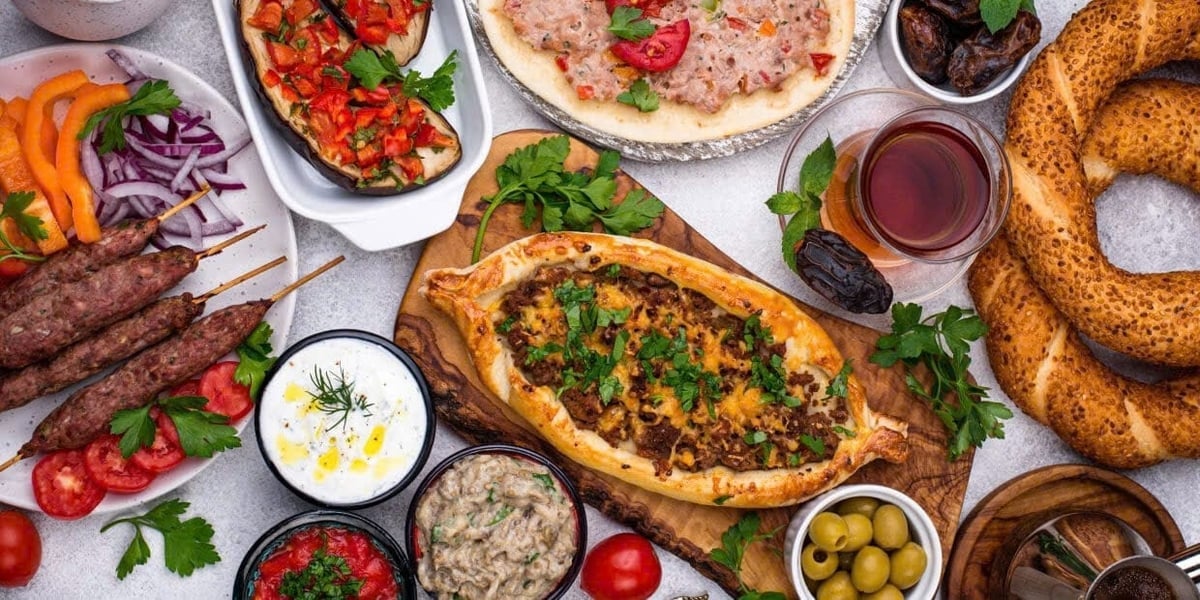
The Halal economy is emerging as an important pillar of the world economy. Photo: ISA Halal.
On April 17 in Hanoi, the University of Commerce, the Vietnam Academy of Social Sciences, the Institute for South Asian, West Asian, and African Studies, and the Ho Chi Minh National Academy of Politics co-hosted the 1st International Scientific Conference on “Innovation, Integration, and Sustainable Development,” with the 2025 theme being “Developing Vietnam’s Halal Economy and Trade.”
The conference brought together scholars, policymakers, diplomats, and entrepreneurs from universities, research institutes, government agencies, embassies, and domestic and international enterprises to exchange experiences, assess the current situation, and propose solutions for developing the Halal economy and promoting Halal goods exports.
Assoc. Prof. Dr. Nguyen Hoang, Rector of the University of Commerce, stated that, in terms of size, spending, sector diversity, and future growth prospects, this is an extremely promising market.
Currently, over 2 billion Muslims reside in 112 countries and territories, of which 57 are members of the Organisation of Islamic Cooperation (OIC). This accounts for approximately 25% of the world’s population, with 62% of them living in Asia, particularly within the Association of Southeast Asian Nations (ASEAN).
According to Assoc. Prof. Dr. Nguyen Hoang, Vietnam is emerging as a new economic star in the global supply chain. It holds favorable conditions for Halal industry development, including advantageous geography, strengths in agriculture, food, tourism, and services, and comprehensive international economic integration via many major regional economic agreements, including next-generation free trade agreements.
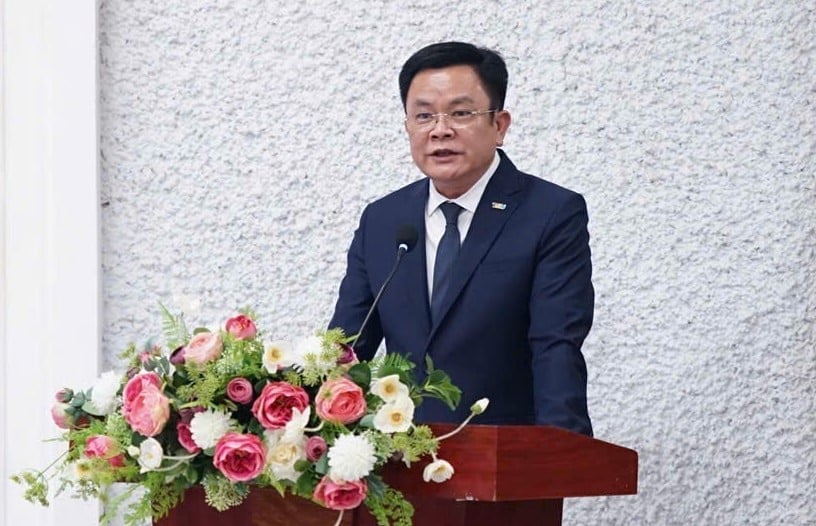
Associate Professor, Dr. Nguyen Hoang speaking at the Workshop. Photo: Linh Linh.
“The opportunity for Vietnam to participate in the global Halal market is immense—not only for diversifying markets and developing tourism but also for exporting key Vietnamese products and attracting financial investment from international and regional corporations into Vietnam. This would help Vietnamese businesses and localities improve competitiveness, enhance human resource quality, and promote technology transfer, particularly in production, processing, preservation, and transportation technologies that meet Halal standards,” the University of Commerce representative emphasized.
According to Mr. Ali Akbar Nazari, Ambassador of the Islamic Republic of Iran, the food sector is one of the most significant segments of the Halal economy, accounting for approximately 65% of total Halal trade.
In 2023, this sector generated USD 2.3 trillion in revenue and is projected to reach USD 5.3 trillion by 2030, with a compound annual growth rate (CAGR) of 10.5%. Moreover, Halal food is expected to account for 20% of global food trade in the near future.
“The increasing global demand for Halal products offers unprecedented cooperation opportunities,” emphasized Ambassador Ali Akbar Nazari, while affirming that the potential for cooperation between Iran and Vietnam in the Halal market is significant.
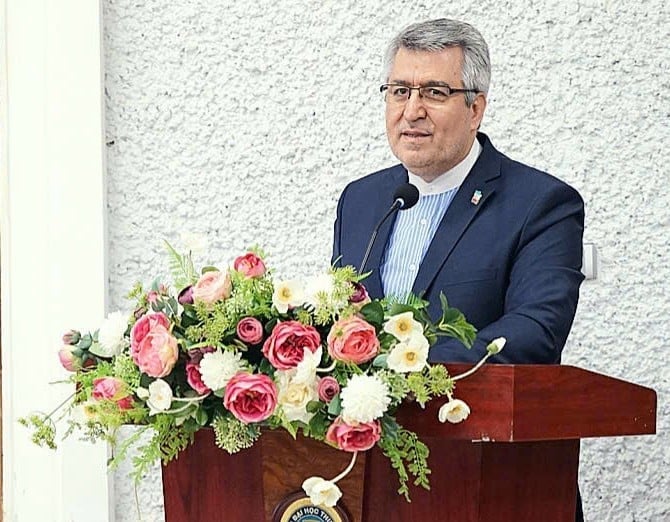
Ambassador Ali Akbar Nazari said that food is one of the most important segments of the Halal economy. Photo: Linh Linh.
Further elaborating on the Asia-Pacific region—which has the world’s largest Muslim population and plays a central role in this dynamic market, consuming over 63% of global Halal products—Ambassador Nazari highlighted Vietnam’s strategic position as a vital gateway to this vast market. Furthermore, with Vietnam’s aspirations to expand Halal product exports, especially to West Asia, Iran could serve as a natural bridge and ideal partner to help achieve this goal.
“Iran is willing to share its experience, resources, and regulatory systems in the Halal industry. We seek to cooperate with Vietnam in areas such as establishing Halal certification procedures, organizing training programs and expert seminars. By sharing technical knowledge and operational experience, we can assist Vietnam in developing a robust Halal infrastructure that meets the expectations of the global market,” said Ambassador Ali Akbar Nazari.
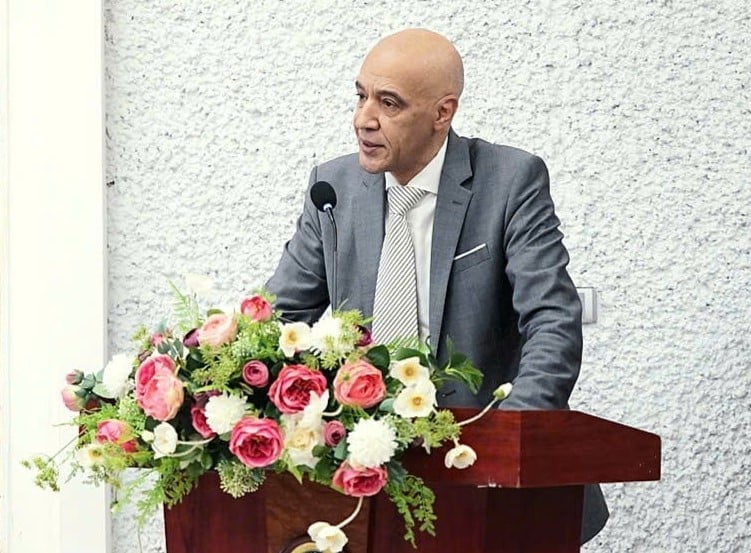
Ambassador Jamale Chouaibi highlighted that Morocco could become a bridge for Vietnamese Halal products to enter African, Middle Eastern, and European markets. Photo: Linh Linh.
Echoing Iran’s viewpoint, Mr. Jamale Chouaibi, Ambassador of the Kingdom of Morocco to Vietnam, suggested that the two countries could enhance cooperation in the exchange of technical expertise. Technical collaboration between the two sides could focus on building Halal certification infrastructure, such as laboratories, auditing systems, and aligning Halal standards with international norms.
Regarding market access, Morocco could serve as a gateway for Vietnamese Halal products to enter African, Middle Eastern, and European markets. Conversely, Vietnam could also support Moroccan products in reaching Southeast Asian consumers.
“In addition, Morocco-Vietnam cooperation could be formalized through agreements and memoranda of understanding (MoUs) aimed at harmonizing standards and streamlining Halal certification processes—thus facilitating bilateral trade and expanding market access,” emphasized Ambassador Jamale Chouaibi.
The Halal economy has emerged as a key pillar of the global economy, extending far beyond Muslim communities to become a global force. The current size of the Halal market is around USD 8 trillion and is forecast to grow to USD 12 trillion within the next five years.
Translated by Linh Linh

(VAN) Exports are rising sharply thanks to demand. However, booming orders are causing domestic prices to fluctuate, creating opportunities and challenges.

(VAN) Vietnamese durian is ready to 'knock on the door' of the Indian market this coming July, driving toward the country's $4.5 billion export target for 2026.

(VAN) With the foundation, Vietnamese durian has a basis to recover and continue growing toward the USD 4.5 billion milestone in 2026.
/2026/05/17/3703-1-113449_224.jpg)
(VAN) Fruit and vegetable exports posted strong growth in the first four months of the year, boosting confidence that the sector will reach a total export turnover of USD 10 billion this year.

(VAN) After a highly volatile period in 2025, durian exports from Viet Nam are showing strong momentum in the first months of 2026.
/2026/05/14/0447-4-110216_76.jpg)
(VAN) AFF exports reached USD 23.04 billion in the first four months of 2026, up 5.4%. The agriculture and environment sector recorded a trade surplus of USD 5.39 billion.

(VAN) Facing mounting cost pressures and global competition, Viet Nam’s pepper and spice industry is maintaining position through deep processing.
