November 27, 2025 | 22:01 GMT +7
Hotline: 0913.378.918

November 27, 2025 | 22:01 GMT +7
Hotline: 0913.378.918
On September 13th, Bac Lieu held a conference to review the results of the 3-year implementation of the project “Building Bac Lieu into the national center for the shrimp industry”.
The conference was attended by leaders from departments, divisions and institutes under the Ministry of Agriculture and Rural Development, as well as leaders from research institutes, schools, businesses, cooperatives and shrimp farmers.
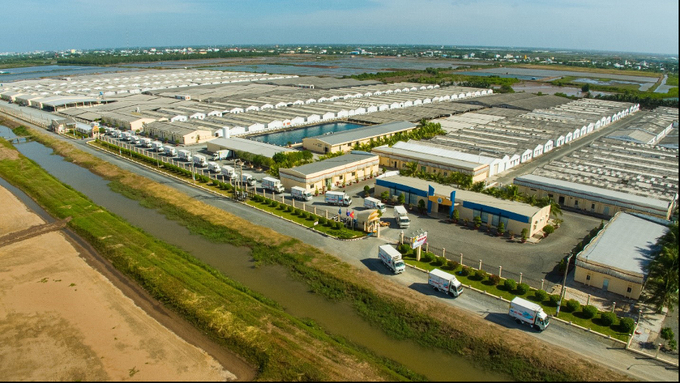
An overview of the Viet Uc high-tech shrimp seed production zone in Bac Lieu.
After more than 3 years of implementing the project “Building Bac Lieu into the national center for the shrimp industry”, Bac Lieu has achieved significant results by developing all three areas: shrimp seed production, commercial shrimp farming and processing.
Bac Lieu is the leading province in the Mekong Delta region in high-quality shrimp seed production, accounting for over 50% of the region’s production and more than 22% of the country’s total.
Currently, the largest shrimp seed production zone in the country is located in Bac Lieu, covering an area of 102 hectares with a capacity of 15 billion seeds/year. This zone is also one of the most technologically advanced, aimed at producing high-quality shrimp seeds that are well-suited to local conditions and meet the needs of local and neighboring shrimp farmers.
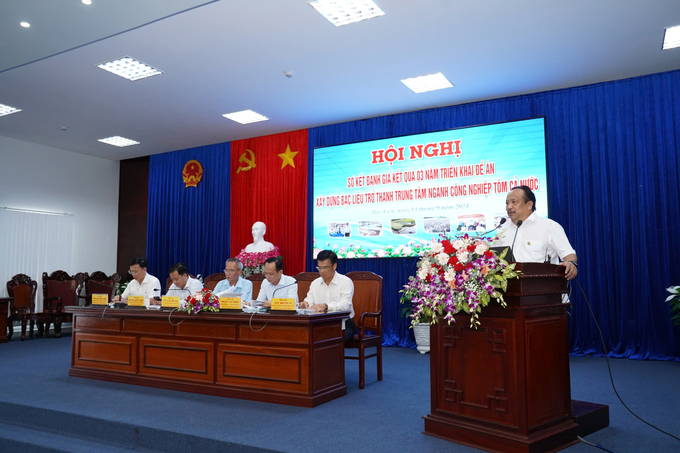
Mr. Trinh Trung Phi, Deputy General Director of Technical Operations for Commercial Shrimp at Viet Uc, shared at the conference.
At this conference, Viet Uc Group also shared practical solutions to collaborate with Bac Lieu in enhancing the value of Vietnamese shrimp. This includes providing high-quality seeds for successful farming, spreading high-tech shrimp farming solutions that are free from antibiotics, environmentally friendly and setting directions to conquer both domestic and international markets with the “Perfect shrimp” product.
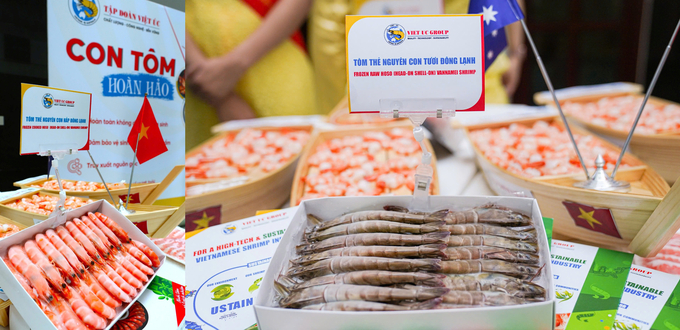
Viet Uc’s “Perfect shrimp” product has successfully entered many demanding international markets.
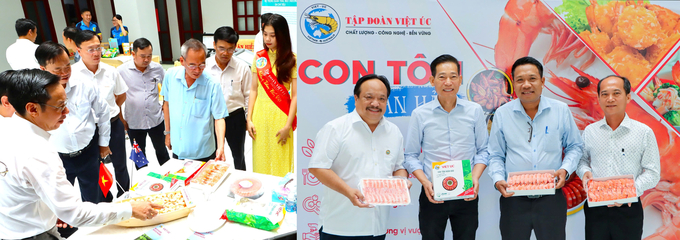
Local leaders, visitors and others were impressed by the freshness and visual appeal of the product.
As part of the event, Bac Lieu province organized a fundraising campaign to share the hardships with people in the northern region who have been affected by Typhoon No. 3 (Yagi).
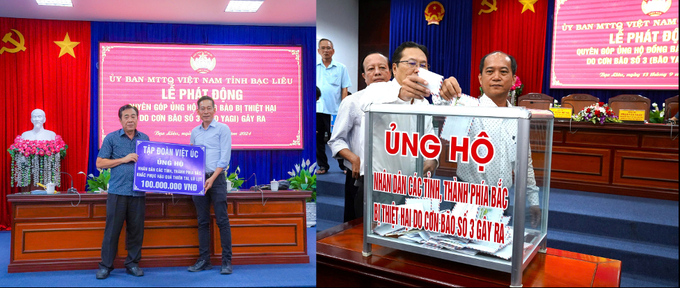
Businesses and individuals came together to make contributions.
The review conference was successfully held with high participation and determination from local leaders, as well as the support of businesses, associations, research institutes and universities. Bac Lieu has set specific goals to implement the project "Building Bac Lieu into the national center for the shrimp industry". In particular, the province is working urgently to deploy practical solutions, support businesses and connecting to collectively elevate Vietnamese shrimp.
Translated by Phuong Linh

(VAN) On November 27, in the meeting with Minister Tran Duc Thang, Mayor Yin Yong shared Beijing’s experience to improve environment and air quality.

(VAN) After 30 years, both sides identified strategic areas of cooperation: sustainable production, increasing coffee value and training for farmers.
/2025/11/27/4910-4-164708_294.jpg)
(VAN) On the afternoon of November 27 in Beijing, Minister of Agriculture and Environment Tran Duc Thang held a working session with several major Chinese enterprises operating in the agriculture and environment sector.

(VAN) The Department of Animal Health issued a provisional guideline requesting local authorities to increase surveillance, collect samples for testing, and conduct epidemiological investigations according to the established procedure.

(VAN) The United Nations recommends that Vietnam utilize data and artificial intelligence to enhance early disaster warnings and reduce GDP losses by 3.2% in the context of climate change.

(VAN) On the morning of November 27 in Beijing, Minister Tran Duc Thang and the Deputy Commissioner General of the General Administration of Customs of China signed a protocol on fresh jackfruit exports.

(VAN) As floodwaters recede, a vast network of irrigation works across eastern Gia Lai is emerging in a state of severe disrepair, with extensive damage demanding urgent restoration ahead of the 2025-2026 winter-spring cropping season.
