December 18, 2025 | 23:41 GMT +7
Hotline: 0913.378.918

December 18, 2025 | 23:41 GMT +7
Hotline: 0913.378.918
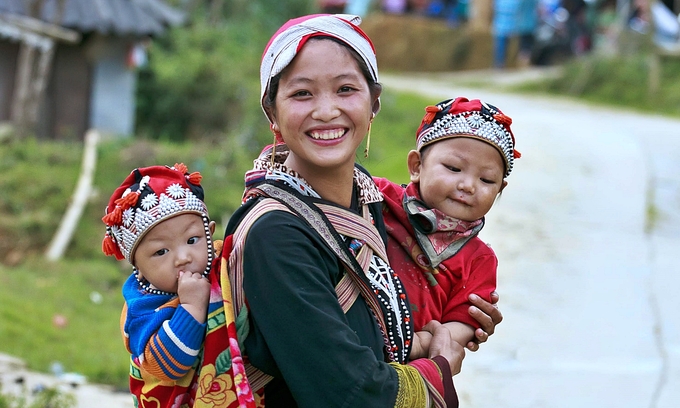
Vietnam currently ranks in the middle of the rankings on the Human Development Index.
In the report of the United Nations Development Programme (UNDP) published on March 14, Vietnam's Human Development Index (HDI) in 2022 is 0.726, ranked 107th out of 193 countries and territories.
From 1990 to 2022, Vietnam's HDI value has changed from 0.492 to 0.726, increase of nearly 50%. In the 1990s, when UNDP first introduced HDI calculation references, Vietnam was relatively low in the ranking
However, after more than 30 years, Vietnam is now in the middle of the rankings and has continuously maintained progress throughout the past time.
Ms. Ramla Khalidi, the UNDP Resident Representative in Vietnam said: “Vietnam remains a country with high levels of human development throughout the difficult years of the Covid-19 pandemic. As human development continues to be central to the country's development strategy, we have seen significant results over the past decades.”
Although Vietnam are doing well in some aspects such as education and labor force participation, they still need to pay more attention to the gender division of labor, according to Ms. Khalidi. UNDP leaders acknowledge that more stable, high-paying jobs are often reserved for men in Vietnam.
Besides, women still account for a small percentage of leadership roles in the Government, Parliament and in the private sector.
As part of the global increase, Vietnam's HDI is predicted to reach a record high in 2023. However, UNDP predicts that the increase will not be uniform across all regions. Rich countries are experiencing record levels of human development while half of the world's poorest countries remain below pre-crisis levels.
This organization commented that uneven development progress is leaving the poorest behind, worsening inequality and causing political polarization on a global scale.
One of the reasons causing inequality is the excessive concentration on economic. The UNDP report said that nearly 40% of global trade in goods is concentrated in 3 countries or less. In 2021, the market capitalization of the world's three largest technology companies surpassed the gross domestic product (GDP) of more than 90% of the world's countries.
Mr. Achim Steiner, the UNDP Global Director General, admitted: “The human development gap is widening, showing that the trend of gradually reducing inequality between rich and poor countries over the past 20 years is being reversed."
This deadlock, according to the UNDP leaders, will cause significant damage. Among them, there is a lack of synergy to promote action on climate change, digitalization or poverty. In addition, inequality exacerbates polarization and further erodes trust in people and institutions around the world.
On March 11, in New York, Vice President Vo Thi Anh Xuan met with UNDP General Director Achim Steiner. UNDP affirmed that the two sides share the same priorities on green transformation and digital transformation, and are ready to support Vietnam in implementing its commitment to achieving net zero emissions by 2050, as well as implementing partnership relations. a just energy transition, accelerating decarbonization and ensuring access to clean and affordable energy.
The Vice President thanked UNDP for accompanying and supporting Vietnam for nearly 50 years, with total aid reaching nearly 1 billion USD. She also requested that UNDP continue to support the implementation of the plan to mobilize resources to implement the Just Energy Transition Partnership (JETP); economic and social development program for the Mekong Delta and effective and sustainable use of Mekong River water resources.
Translated by Bao Ngoc

(VAN) Cuba is currently streamlining procedures to attract investors, with many new policies shaped by the practical experiences of Vietnamese projects operating in the country.

(VAN) Patrol Team No. 15 has been executing patrol, inspection, and control duties in the Southwest waters, a region identified as having a high risk of violations.

(VAN) UNICEF, IOM, and the U.S. Department of State have worked together to ensure the justice system becomes a protective shield for children and other vulnerable groups.

(VAN) As a key driving force of green transition, the circular economy is being identified as a strategic pillar of Viet Nam's new growth model.

(VAN) UNICEF and IOM receive this aid and provide essential services to assist families affected by recent storms and floods.

(VAN) Circular economy is regarded as a suitable pathway for Viet Nam’s fisheries sector, helping to improve production efficiency, optimize resources, and reduce environmental pressure.

(VAN) Vietnam and the UK are promoting cooperation in agriculture, environment, renewable energy, and green transition, with the goal of achieving Net Zero.
