August 11, 2025 | 19:27 GMT +7
Hotline: 0913.378.918

August 11, 2025 | 19:27 GMT +7
Hotline: 0913.378.918
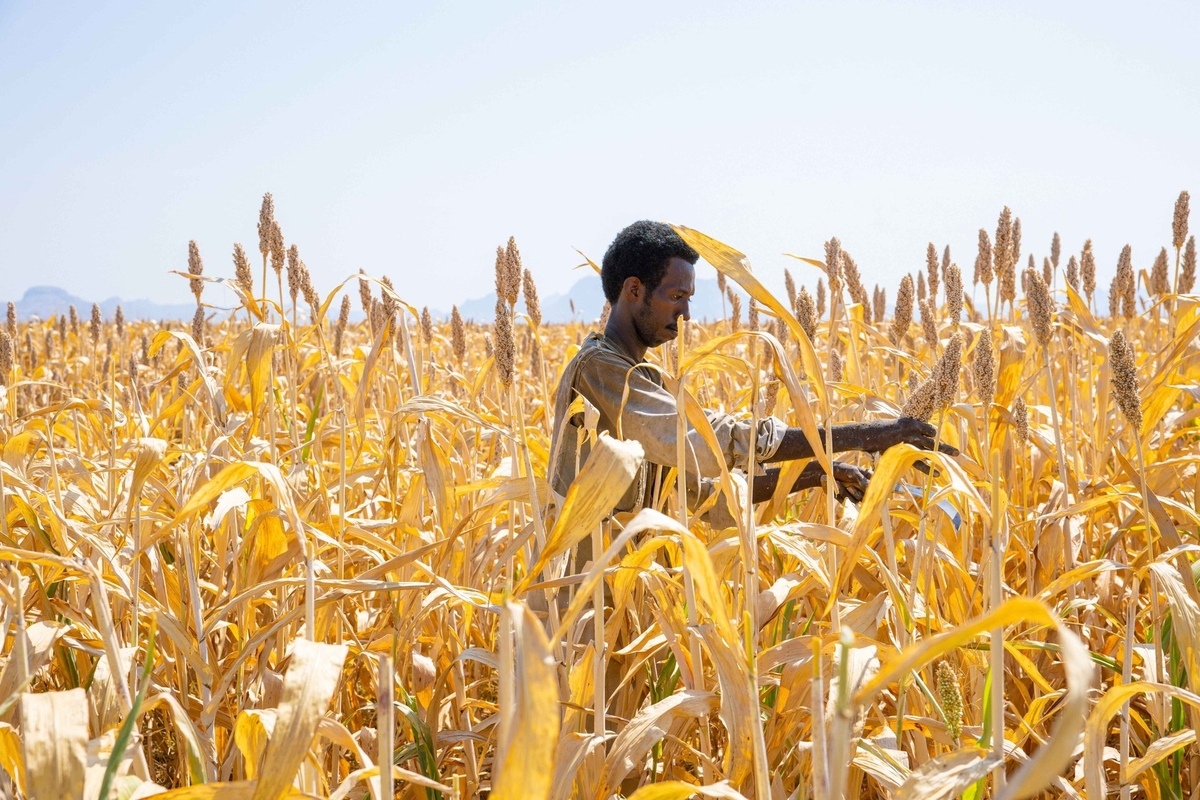
Sorghum harvesting in 2024, Reifi Kassala, Kassala State. Photo: FAO/Mahmoud Shamrouk.
In April 2023, violent conflict broke out between the Sudanese Armed Forces and the Rapid Support Forces in the capital city, Khartoum. Two years on, the crisis has spiraled into one of the world’s worst humanitarian emergencies – triggering the largest displacement crisis globally and unprecedented levels of hunger.
Sudan is facing a severe food security catastrophe. Nearly 30.4 million people – almost two-thirds of the population, including 15.6 million children – require urgent humanitarian assistance. More than half the population is acutely food insecure, with famine already confirmed in multiple areas.
Agriculture, the main source of food and income for up to 80 percent of the population, is being dismantled by violence, displacement and economic collapse. With the lean season nearing and below-average rainfall forecast this year, the window to prevent further deterioration is closing fast.
Here are five things you should know about how the conflict is threatening agriculture and food security in Sudan:
1. Food insecurity has reached historic levels – and the 2025 planting season hangs in the balance
Conflict continues to rage through Sudan, leaving more than half the population acutely food insecure. Famine conditions have been confirmed in at least five areas, and millions are at immediate risk of famine in the conflict‑affected regions of Darfur, Khartoum and Kordofan. This marks the highest level of food insecurity recorded in the Sudan’s history.
Children haven’t been spared. According to the United Nations Children’s Fund (UNICEF), more than 3.2 million children under the age of five projected to face acute malnutrition in 2025.
FAO is ready to deliver time-sensitive support to help farmers plant on time, but additional funding is urgently needed to procure and distribute seeds. Without it, many farmers may miss this critical planting window, leading to reduced harvests, deeper food insecurity and fewer options for families already under immense pressure. Timely action now can still make a difference.
2. Limited access remains a persistent challenge
This crisis is not only about food scarcity – it’s about access. Markets have been looted, supply chains severed and roads rendered unsafe. Essential items like seeds, fertilizer and fuel are out of reach, and prices have soared. Many families simply cannot access or afford what they need to survive.
Limited access continues to block life-saving aid from reaching millions—especially those trapped in conflict zones such as Darfur and the Kordofan regions. Humanitarian workers themselves face grave dangers. Since the onset of the conflict, more than 110 aid workers have been killed, injured, abducted or remain missing.
Without safe, unhindered access, the crisis will only deepen. Urgent action is needed to ensure life-saving support can reach every corner of the country.
3. Key production areas face severe disruption
Sudan’s agriculture sector is under growing strain as the ongoing conflict continues to disrupt key production areas. Farmers have been displaced and forced to leave their lands, and access to production inputs and safe access to farmland is becoming increasingly challenging with each passing day. This disruption not only jeopardizes the livelihoods of rural communities but also poses a serious threat to the country’s overall crop production and food security.
4. Livestock interventions are critically underfunded
Livestock systems are also under immense pressure. The destruction of vaccine manufacturing and veterinary supply chains has left millions of animals exposed to disease. For many rural households, livestock is more than a source of income – it’s a cornerstone of nutrition, resilience and food security. As animal health worsens, so do the prospects for entire communities.
In 2024, FAO vaccinated 2.8 million animals, distributed 8 300 goats and delivered 850 tonnes of feed and mineral licks to livestock keeping families. At the same time, it delivered about 5 300 tonnes of certified seeds to 2.8 million people – enabling them to plant and rebuild livelihoods.
These interventions directly supported food production and income generation, but they only scratched the surface of what is needed. Without scaled-up support, more families will lose their crops, animals and the ability to feed themselves.
5. The crisis risks becoming forgotten
While other crises dominate headlines, Sudan’s descent into famine continues largely out of sight. In 2024 only 37 percent of the requested funding was received. Now in 2025, with humanitarian budgets tightening, the outlook remains deeply uncertain. This level of support falls dangerously short in a country where one in two people are acutely food insecure. Behind every number is a person navigating impossible choices just to survive.
With famine confirmed in at least five areas and millions more at risk, far more must be done to ensure the world doesn’t look away and that families aren’t left to face this crisis alone.
Emergency agricultural assistance is one of the most cost-effective and impactful ways to respond to crisis. It enables families to grow their own food and protect their livelihoods. When combined with food or cash assistance, these interventions strengthen food availability, improve nutrition and contribute to greater stability – while also lowering overall humanitarian costs. Most importantly, they align with what affected communities are asking for: the means to meet their own needs, remain in their homes where possible and shape their own recovery.
For rural populations, livelihoods are the strongest defense against hunger and malnutrition. In a context of growing needs and limited funding, investing in agriculture is not just effective – it’s essential.
In 2025, FAO plans to reach 14.2 million people with time-critical assistance across Sudan. The Organization urgently seeks USD 156.7 million to bolster food production, protect livestock and help the agriculture sector recover before conflict destroys the gains sown by generations.
(FAO)

(VAN) Officials are debating how to placate farmers’ need for migrant labor without appearing to offer amnesty to undocumented immigrants.
(VAN) New partnership to help over 150,000 people enhance food production, incomes and climate resilience across 15 provinces by May 2026.
(VAN) Floods that damaged hydropower dams in Nepal and destroyed the main bridge connecting the country to China show the vulnerability of infrastructure.
(VAN) Immediate and sustained ceasefire and unhindered humanitarian access are critical to avert imminent Famine.
(VAN) FAO-led publication outlines structure and highlights agenda including new harmonized indicators and capacity building accessible to all.
(VAN) Energy group experts left after draft guidance on global warming plans ‘did not reflect the industry view’.
(VAN) Special Event in New York explores the causes, consequences and solutions to the 2021-2023 food price inflation.
