December 9, 2025 | 20:37 GMT +7
Hotline: 0913.378.918

December 9, 2025 | 20:37 GMT +7
Hotline: 0913.378.918
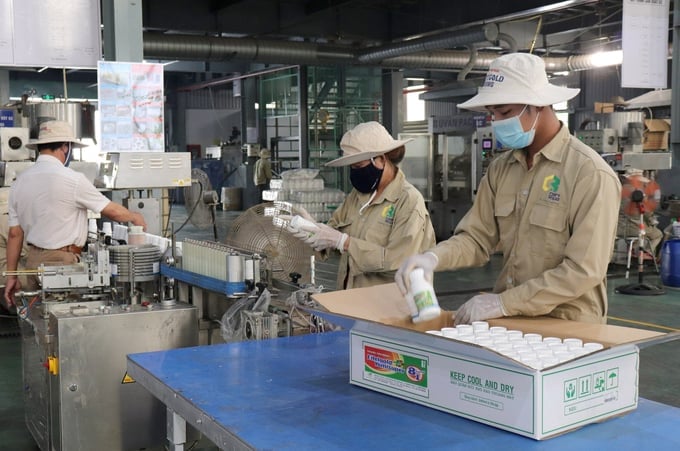
Pesticide production at a factory. Photo: Thanh Son.
The Plant Protection Department (PPD) organized a conference on "Promoting the Development of Pesticide Production in Vietnam" on July 24 in Ho Chi Minh City. During the event, Bui Thanh Huong, Head of the Pesticide Management Department, stated that Vietnam's pesticide production industry is relatively young, having only begun development in recent years, particularly after the Law on Plant Protection and Quarantine came into effect in 2015.
To date, Vietnam houses 96 pesticide production facilities with a total capacity of over 300 thousand tons per year, producing 31 different types of pesticides. The pesticide industry is inexperienced in terms of the production of active ingredients; the production scale is limited; and the distribution is uncoordinated, resulting in high transportation costs. Furthermore, Vietnam currently lacks large-scale biological pesticide production facilities.
Conversely, the scale of the pesticide market in Vietnam is rapidly expanding. According to Mordor Intelligence, the size of the pesticide market in Vietnam is estimated to reach 558.74 million USD by 202, and 682.95 million USD by 2029.
Consequently, the PPD organized a conference on "Promoting the Development of Pesticide Production in Vietnam" to enhance international integration; facilitate the exchange of scientific information, technical advancements, and advanced technology in pesticide production, with a focus on the production of biological pesticides among the business community; and promote cooperation in developing pesticide production. The conference aims to lead Vietnam's pesticide industry towards gaining proficiency in the technology to produce advanced pesticides; producing biological pesticides on a large scale with high efficiency, low toxicity, and safety for humans, ecosystems, and the environment.
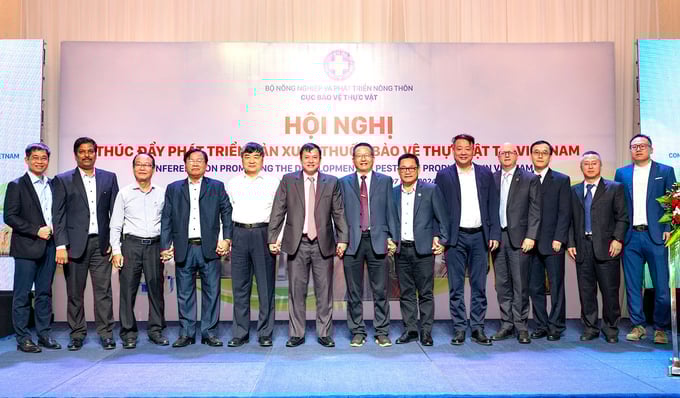
The conference saw the participation of various international delegates from China, India, and CropLife. Photo: Thanh Son.
The conference was also a practical and significant activity within the framework of cooperation between the Plant Protection Department and the Institute for the Control of Agrochemicals, Ministry of Agriculture (ICAMA) of China. Notably, China has remained as the largest supplier of pesticides and active ingredients to Vietnam for multiple years, accounting for nearly 70% of Vietnam's total pesticide imports.
According to Dang Van Bao, Chairman of CropLife Vietnam, each member company of CropLife requires an average of 301 million USD and 12.3 years to introduce a new pesticide active ingredient to the market. These figures have increased significantly compared to previous surveys. In particular, expenses have increased 25 times compared to investments made 20 years ago.
Among these costs, the time and expenses for safety evaluation and registration account for the largest proportion of the total time and cost needed to introduce a new pesticide active ingredient. This increase indicates that Vietnamese companies are gradually meeting higher standards of efficacy, safety, and suitability with each new pesticide technology introduced. Additionally, members of CropLife Vietnam are continually increasing their investment in R&D activities (creating new technologies and products) for biological pesticides, from 16 million USD to 26 million USD, marking an increase of 62.5% compared to previous research efforts.
Huynh Tan Dat, General Director of the PPD, also emphasized that the development of a new pesticide active ingredient requires extensive investments in equipment and personnel. As a result, companies investing in pesticide production are shifting their focus towards the processing and blending stages to create new pesticide products that meet the requirements for biological efficacy, safety for agricultural products, humans, and the environment.
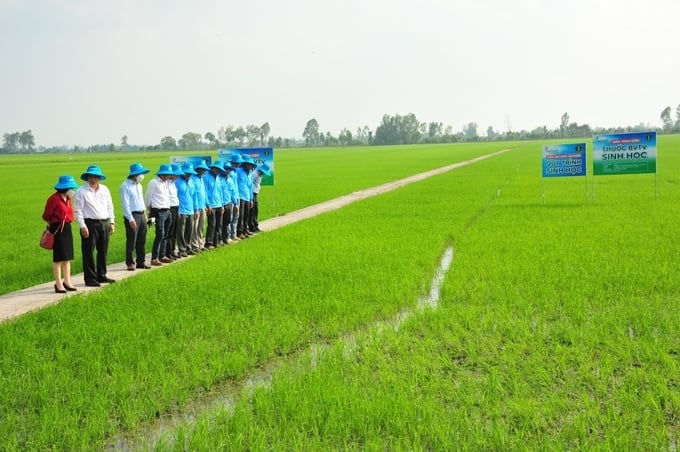
Promoting the domestic production of biological pesticides enables the sustainable, organic, and ecological development of agriculture. Photo: VAN.
The development of processing technology is another viable solution for the pesticide industry amidst the current developmental background.
"Promoting the large-scale production of biological pesticides is a viable solution for the development of Vietnam's pesticide industry, as Vietnam possesses an abundant source of high-quality microorganisms and herbs that can produce highly effective biological pesticides. The production and use of biological pesticides is also a strong global development trend," emphasized General Director Huynh Tan Dat.
According to Nguyen Van Son, Chairman of the Vietnam Pesticide Association (VIPA), Vietnam imports a significant amount of finished pesticide products for domestic consumption every year. Consequently, the development of pesticide processing technology in Vietnam is crucial, allowing stakeholders to promptly supply pesticides to meet domestic needs; create suitable pesticide formulations to control pests, ensure product quality, and meet plant protection requirements for sustainable agricultural production and safe agricultural products. This initiative will allow stakeholders within the pesticide industry to gradually develop and master processing technology; thereby contributing to the creation of a high-quality workforce in pesticide production and processing.
Chairman Nguyen Van Son emphasized the importance of utilizing existing internal resources, enhancing the education of new technologies, and strengthening international cooperation activities in the development of pesticide processing technology in Vietnam.
"During the development of the Project for the Production and Application of Biological Pesticides, the Ministry of Agriculture and Rural Development has outlined several key tasks and solutions including: developing the production and use of biological pesticides; promoting scientific research, technology transfer, and the application of biological pesticides. Additionally, the Ministry aims to enhance agricultural extension activities with regards to the production and use of biological pesticides. The goal is to increase the portion of biological pesticide products in the list of pesticides permitted for use in Vietnam to 30 percent of the total number of pesticides."
Huynh Tan Dat, General Director of the Plant Protection Department
Translated by Nguyen Hai Long
![Unlocking carbon credit potential: [1] Toward a green economy](https://t.ex-cdn.com/nongnghiepmoitruong.vn/608w/files/huyenvt (e)/2025/12/09/1340-2-130237_804.jpg)
(VAN) Thanh Hoa is advancing the development of carbon credits from forests and agriculture, generating sustainable income, improving livelihoods, and moving toward a green and low-emission economy.

(VAN) After three years, Project FST/2020/123 collected approximately 3,000 insect specimens, classified them into about 50 morphological groups, and identified around 40 species, including several new species.
/2025/12/01/0509-2-175427_206.jpg)
(VAN) Emission-reducing coffee areas in Lam Dong have entered the new crop with stable yields, improved quality, and a remarkably enhanced cultivation environment.

(VAN) The Institute of Agricultural Sciences for Southern Vietnam (IAS) marked its 100th anniversary in Ho Chi Minh City, celebrating a century of growth as a leading institute contributing significantly to Viet Nam’s agricultural development.

(VAN) An increasing number of livestock farms are using biogas generators to create a source of renewable electricity, helping to save costs and mitigate environmental pollution.

(VAN) Small changes in rice cultivation, from irrigation methods and straw collection to input management, are paving a new way for Vietnam's agriculture in the journey toward emission reduction.

(VAN) With the project of converting biogas into renewable electricity, Australia is both helping pig farms reduce their energy costs by up to 25% and contributing to environmental protection.
