December 17, 2025 | 18:44 GMT +7
Hotline: 0913.378.918

December 17, 2025 | 18:44 GMT +7
Hotline: 0913.378.918
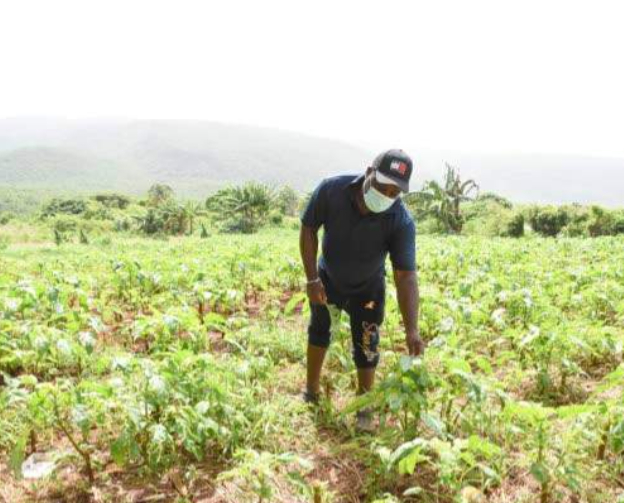
The price increases have pushed up their costs...and as a result reduced their profit significantly. Photo: Jamaicaobserver
Scores of farmers across Jamaica are reeling from rising prices for fertiliser, crop seedlings, and seeds, which have significantly hiked their production costs.
President of the Jamaica Agricultural Society (JAS) Lenworth Fulton says prices are up by 100 per cent for some varieties of fertilisers. He is recommending that the authorities consider options for agricultural inputs, including locally produced organic fertiliser to reduce the pressure on farmers.
“The price increases have pushed up their costs...and as a result reduced their profit significantly. Fertiliser has gone up by an average of 40 per cent, and some types of fertiliser like urea [ammonium nitrate] have experienced a more than 100 per cent increase in the last year being a petroleum by-product,” said Fulton.
“There is a steady increase in the price of seeds — carrot, cabbage — all of them with commensurate increases in the price of the input chemical — the insecticides, fungicides, nematicides, rodenticides,” Fulton added.
Checks made by the Observer yesterday with wholesale and retail distributor of agricultural products, H&L Agro — a subsidiary of Hardware and Lumber (H&L) Limited — showed a quarter pound of carrot carandai selling for $3,149.66; 100 grams of sweet pepper selling for $1,707.50; 2,000 seeds of cabbage tropicana being sold for $1,875.86; 50 pounds of fertiliser selling for $5,100; while 50 kilogrammes of fertiliser was being sold for $11,101.18. These prices did not include General Consumption Tax (GCT).
In calling on the Government to support the production of local organic fertiliser, Fulton suggested that some of the money now being used to subsidise traditional fertiliser should be use to support manufacturers of local organic varieties.
“These are local companies making organic fertiliser from the local material and it is recommended that you can use a blend of inorganic and organic to cut the price of fertiliser to the farmer,” said the JAS president.
“This would have the same effect on plant growth and productivity, while improving the quality of the soil. We are making [the] recommendation now that we start to shift our fertiliser to part local production. Also, if that is done it would provide jobs for people working in the local organic fertiliser sector,” added Fulton.
Agriculture and Fisheries Minister Audley Shaw, on September 22, announced that his ministry would be providing $100 million in support to farmers to offset the price of fertilisers.
At that time Shaw said the support was being provided against the background of the rising cost of fertiliser, which has been negatively affecting the cost of production for farmers.
“As such, support will be provided in the amount of $100 million for fertilisers to allow for a 15 per cent reduction in the price for four select products that are most widely used by the farmers,” said Shaw in the House of Representatives.
He said the price reduction for fertiliser would be applied at the point of purchase to registered farmers islandwide for a period effective October 1 to December 31, or until the $100 million was exhausted.
“The ministry will be working with Newport Fersan (Jamaica) Limited, the sole manufacturer of fertiliser in Jamaica, and other importers of fertiliser to provide this support,” Shaw said.
But Fulton said the organic producers are calling for 30 per cent of that $100 million to be put in their business.
“Organic producers would take anything between 10 and 30 per cent of that to produce organic fertiliser for Jamaica,” said Fulton.
Orville Morgan, a farmer in Old England, south of Mandeville, said his business has been dealt a major blow.
“The experience has been very difficult in the sense that the prices of chemicals, fertiliser, and seeds have been increasing big time, and we are not talking about a five or 10 per cent; we are talking about a major increase. It is hard to absorb, and then with all that is happening now, as a farmer selling in the field to the vendors, or the middle, it is not as profitable,” said Morgan.
The father and son duo of Javian and Vivian Morgan, who operates a farm in New Forest, Manchester, also complained about the rising cost of inputs.
“Fertiliser make some really drastic [increase] where we as farmers have to screw down our heads and look on what we really a do. We can't squander money like that,” said Javian Morgan.
“The things [are] expensive; a $9,000 for a bag of fertiliser down yah, and the pesticides very expensive. You have to buy the best [pesticide] for down here suh ... If you try to dodge and get the cheaper pesticide you lose everything,” added Vivian Morgan.
(Jamaicaobserver)

(VAN) 2025 AQUASTAT Water Data indicates that pressure on freshwater resources is growing as demand increases in regions of scarcity.

(VAN) Planet-warming pollution rates exploded after the end of World War II. James Watt’s steam engine launched the Industrial Revolution in 1769.

(VAN) The British Department for Environment, Food & Rural Affairs (Defra) has amended and extended a derogation for organic poultry and pigs, which currently allows up to 5% non-organic protein in feed.

(VAN) The Ah Louis Store in San Luis Obispo, California, turns into a winter wonderland every holiday season.

(VAN) Japanese feed millers are increasingly incorporating corn into their rations, in response to sustained high rice prices, according to a recent Grain and Feed Update from the Foreign Agricultural Service (FAS) of USDA.

(VAN) The event calls for urgent action to preserve glaciers, and recognises Mountain Future Award-winning projects in Colombia, Kyrgyzstan and Pakistan that protect mountain ecosystems and build resilience.

(VAN) New evidence shows that the health impacts of the Industrial Revolution varied more widely than previously believed, challenging the longstanding narrative that rural communities remained comparatively untouched.
