July 21, 2026 | 21:21 GMT +7
Hotline: 0913.378.918

July 21, 2026 | 21:21 GMT +7
Hotline: 0913.378.918
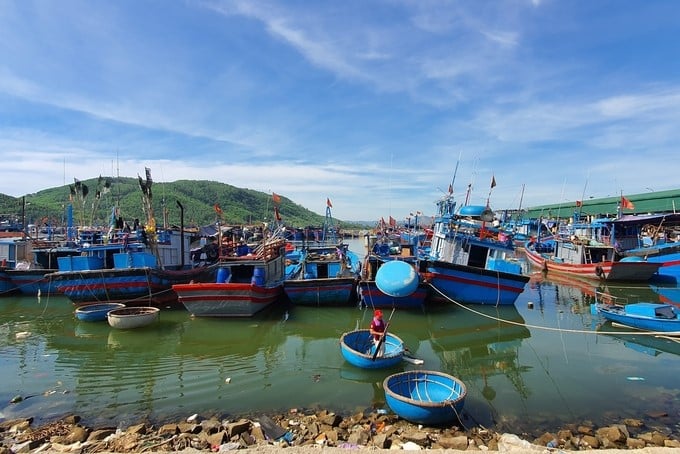
Quang Ngai province will ban seafood exploitation in two coastal waters in November every year. Photo: L.K.
On October 31, the Quang Ngai Department of Agriculture and Rural Development announced that this province had issued a regulation on areas banned from seafood exploitation for a fixed term in coastal waters in the area.
Accordingly, the sea areas where seafood exploitation is prohibited for a fixed term include the Southern sea area of Ly Son island district with an area of more than 7.6 hectares and the coastal area of Duc Pho town with an area of more than 7.4 hectares. The exploitation ban period is from November 1 to November 30 every year.
This exploitation ban aims to protect areas where aquatic species concentrate on breeding and areas for nursery and young aquatic species according to the Planning for protection and exploitation of aquatic resources for the 2021–2030 period, with a vision to 2050, which has been approved by the Prime Minister.
The Quang Ngai Department of Agriculture and Rural Development requests coastal localities and relevant units to widely inform the people, especially ship owners, captains, and crew members, to know the two areas that are banned from seafood exploitation. At the same time, focus on disseminating and raising awareness for fishermen to strictly comply with the regulations of law during the seafood exploitation process to protect long-term livelihoods.
"During the ban period, if fishermen intentionally violate the law, depending on the nature and severity of the violation, they may be subject to administrative sanctions or criminal prosecution," said Mr. Nguyen Duc Binh, Deputy Director of the Quang Ngai Department of Agriculture and Rural Development.
Quang Ngai province's waters have high biodiversity with nearly 1,300 aquatic species, including 36 endangered and rare species. However, in recent years, there is still a situation where fishermen use electric pulses, explosives, and banned fishing tools for exploitation and catching, leading to the depletion of aquatic resources.
Translated by Thu Huyen

(VAN) International resource mobilization for energy transition investment projects has yet to keep pace with Vietnam’s efforts to improve its energy policy framework.
(VAN) Viet Nam's forestry sector is shifting from resource extraction to the development of strategic ecological infrastructure, opening new drivers for the green economy and the carbon market.
![Scientists' strength: [8] Fairness and creative motivation](https://t.ex-cdn.com/nongnghiepmoitruong.vn/608w/files/content/2026/07/16/pgsts-dang-van-dong-cham-soc-hoa-lay-on-103239_191-082039.jpg)
(VAN) Scientists must enjoy proportionate benefits from the intellectual products they create.

(VAN) The sugarcane industry is shifting its focus from expanding cultivation area to improving the quality of raw material zones in order to build sustainable competitive advantage.
![HCMC fisheries complies with the law: [Final] Technology fills the gaps](https://t.ex-cdn.com/nongnghiepmoitruong.vn/608w/files/huytd/2026/07/17/1455-3-133654_171.jpg)
(VAN) Through smart vessel positioning solutions and the digitalization of fishing logbooks, HCMC is proactively tightening control of inactive fishing vessels, closing management loopholes from shore.
![Scientists' strength: [7] Waiting for a broad mechanism](https://t.ex-cdn.com/nongnghiepmoitruong.vn/608w/files/anhntk/2026/06/23/1119-dsc00323-nongnghiep-081103.jpeg)
(VAN) Besides developing new rice varieties, scientists also have to worry about finances, resources, and research aspirations.
![Scientists' strength: [6] Need a medicine strong enough](https://t.ex-cdn.com/nongnghiepmoitruong.vn/608w/files/benlc/2026/07/12/1618-chatgpt-image-12_15_17-10-thg-7-2026-122814_896.jpeg)
(VAN) Retaining scientists requires not only income but also a conducive research environment, a meritocratic mechanism, and trust.
