December 17, 2025 | 18:48 GMT +7
Hotline: 0913.378.918

December 17, 2025 | 18:48 GMT +7
Hotline: 0913.378.918
The use of inorganic fertilizers (also known as chemical fertilizers) has left many consequences for the environment and affects the quality of agricultural products because only about 50% of the fertilizer is absorbed by plants, 50 the remaining % will be washed away, absorbed into the water source or evaporated, causing environmental pollution.
Following the direction of the Minister of Agriculture and Rural Development to promote the production and using organic fertilizers and biological pesticides, the Plant Protection Department signed a cooperation plan for the period 2021 - 2025 with enterprises producing and trading fertilizers and pesticides.
In particular, "The Cooperation plan to implement the program to develop the production and using organic fertilizers, and use efficiently and balanced" was signed by the Department of Plant Protection and 8 fertilizer production and trading enterprises. Besides, "the Cooperation commitment in implementing guidelines for safe and effective use of pesticides, developing biological pesticides use and production" - was also signed by the Department of Plant Protection together with 7 pesticide manufacturing and trading enterprises.
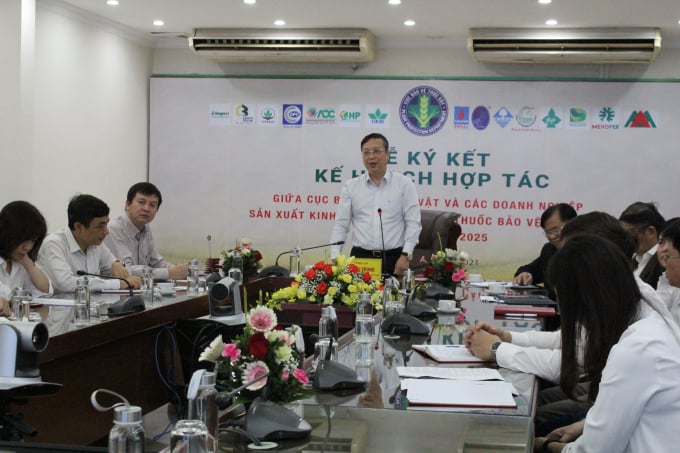
The signing ceremony of cooperation between the Plant Protection Department and enterprises producing and trading fertilizers and pesticides. Photo: Trung Quan.
Mr. Hoang Trung, Director of the Plant Protection Department, said that this cooperation aims to build a specific mechanism and encourage the participation of fertilizer and pesticide production enterprises in promoting organic agricultural production, thereby contributing value to society, bringing benefits to farmers and businesses.
Key activities in the cooperation plan include:
Develop a set of scientific documents, organize training courses, and guide farmers on safe, effective, and responsible pesticides and fertilizers using. Prioritize using organic fertilizers and biological pesticides and reduce using chemical pesticides.
Training and signing with agents to commit to trading fertilizers and pesticides to ensure quality, traceability, transparency of information and brands. Guide farmers to use fertilizers and pesticides in a reasonable, responsible, safe and effective manner. Committed to implementing the program with farmers to protect the environment.
Enterprises will work with the Plant Protection Department and localities to build a model of safely and effectively using pesticides and fertilizers in the direction of ecological agriculture and sustainable development.
Application of new technologies, digital technologies, and modern equipment in the production and use of fertilizers and new generation pesticides.
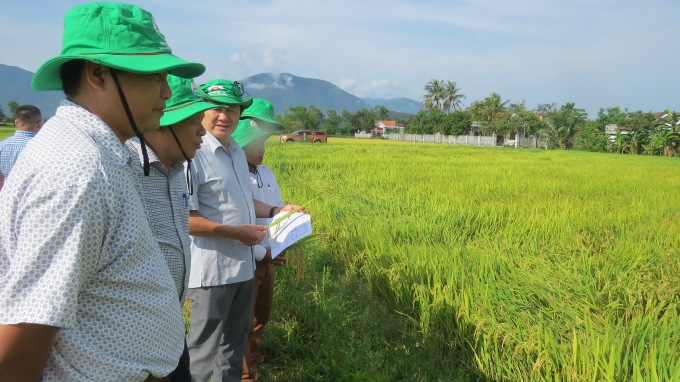
The Plant Protection Department and businesses will build 176 organic fertilizer models for the period 2021-2025. Photo: TL.
According to the content of cooperation, in the period 2021-2025, the parties will coordinate to build 176 organic fertilizer models with an area of 442 hectares, with a total cost of VND 15.7 billion.
Mr. Nguyen Van Son, Chairman of the Vietnam Pesticide Association (VIPA), expressed that biological pesticides are inevitable in the agricultural industry today and in the future. However, it is necessary to have the right investment and synchronous solutions to promote biological pesticides.
According to Mr. Son, the first thing to do is change people's attitudes and habits of using pesticides.
In addition, the management agencies should study the price subsidy for people to use biological pesticides in the early stages. Because, will not see the effect right away when using pesticides, along with the high cost.
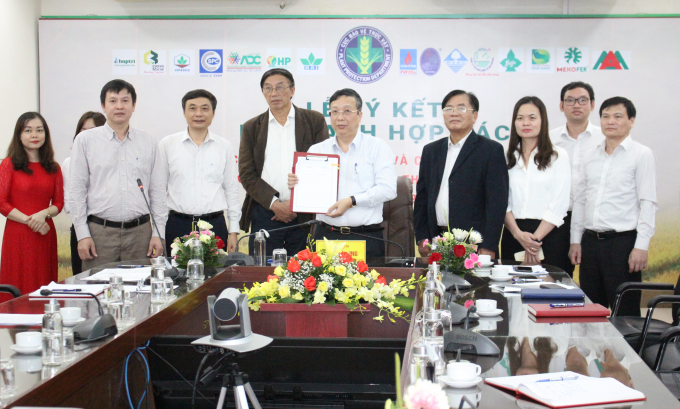
The signing ceremony was conducted online by the Vietnam Association of Pesticides Manufacturing and Trading Enterprises representatives. Photo: Trung Quan.
Enterprises also suggested to the Ministry of Agriculture and Rural Development, the Department of Plant Protection, and other management agencies to continue simplifying the pesticide registration procedures in the future to help reduce costs. The goal is that by 2025, 30% of names of biological pesticides on the pesticides list are allowed to be circulated and used in Vietnam.
In addition, VIPA also recommended the government research and have the policy to reduce import tax on biological pesticides to 0%, along with reducing taxes on domestic production and research of pesticides, etc.
Regarding the research of biopesticides in the country, Mr. Son said that the Government should have the policy to focus on investing infeasible projects, linking researches of institutes, schools, and centers with other enterprises to ensure the quality and cost of output products.
Translated by Ha Phuc

Professor Nguyen Duc Ngu, the third generation of leaders since the establishment of Vietnam’s Hydrometeorology sector has witnessed and lived through the long arc of its development.

(VAN) Climate change, saline intrusion, and unsustainable farming practices are depleting agricultural land in the Mekong Delta. Restoring soil health is a key solution for the future of agriculture.

(VAN) Agroforestry coffee not only enhances coffee quality but also helps farmers in Quang Tri enter carbon credit market with high expectations.

(VAN) Towards Net Zero 2050, fertilizer manufacturers are proactively developing bio-based products, reducing emissions, and demonstrating responsibility to the environment.

(VAN) The smart rice cultivation model, which reduces methane emissions and aims at developing agricultural carbon credits, has been deployed in Thai Nguyen province and delivered positive results.

(VAN) The purpose of this visit is to unify the proposal for a technical assistance project supporting sustainable agricultural and forestry development in Angola.
![Unlocking carbon credit potential: [3] New direction for rice production](https://t.ex-cdn.com/nongnghiepmoitruong.vn/608w/files/huyenvt (e)/2025/12/10/3428-2-092319_209.jpg)
(VAN) Low-carbon rice models in Thanh Hoa are opening up opportunities for a green, circular agriculture, aiming at carbon credit generation.
